Summary

There is a push for healthcare interoperability in Canada. Government officials and providers are focused on fully utilizing available technologies to provide actionable data to improve patient care. Large EHR companies are on the scene to help Canadian health systems move toward Stage 7 of the HIMSS Electronic Medical Record Adoption Model (EMRAM). This would represent full adoption and the harnessing of technology to support optimized care. An active archive is a smart solution to incorporate into interoperability plans. The archive supports long-term retention of medical records and the goal of a more connected health system.

Join Fellow Healthcare IT Pros

Tips, Guides, News & More

Sign Me Up
Archiving Supports Connected Health

Since the Canada Health Infoway nonprofit was created in 2000 to accelerate EHR implementation across the country, there have been many steps forward, and some hurdles. This is much like what is happening in other developed countries. While interoperability still is reported as a chief barrier, bright spots are API, voice recognition, machine learning development and pockets of healthcare provider organizations making significant strides in EMR adoption and their abilities to share information.

To date, seven Canadian medical facilities have achieved Stage 7 of the HIMSS EMR adoption with an additional ten currently at Stage 6. The Stage 7 certification is the highest level and measures clinical outcomes, patient engagement, and clinician use of EMR technology to strengthen organizational performance and health outcomes across patient populations. That said, there is a long way to go toward nationwide interoperability.

In the near term, the Canadian healthcare system is expected to see a greater focus on presenting meaningful data to clinicians with smart searches, analytics and predictive modeling that will move big data to actionable data and improve patient care. This is good news for the estimated 500,000 potential EHR users, known as healthcare professionals in Canada.

Today there are numerous digital health advances in Canada that link patient registries and providers with drug, lab and diagnostic imaging systems, clinical reports and immunizations. About 93 percent of primary care physicians currently use EMRs and 100% of Canadians have at least one hospital clinical report, or their immunization available in electronic form.  In addition, authorized clinicians can access this information outside of a hospital.

Supporting this effort, some of the biggest U.S.-based EHR companies have significant business interests in Canada, specifically: MEDITECH, Epic and Oracle Cerner. With medical record retention ranging from 5-16 years (depending on the specific rules from the Province or territory), with some records required for an additional 10 years after the patient reaches the age of maturity, there is a need for clinical, HIM, legal, research and other professionals to retain access to patient and business records for decades.

The goal in Canada is for a better-connected health information system

There is a push in Canada for a more connected health system. The chief benefits would include health system savings of $1 billion per year, with most benefits attributed to: reduced duplication of diagnostic testing, more effective use of inpatient settings, more effective use of emergency department and more effective ambulatory interactions.

The road to EHR adoption and advancement is unique in Canada as provinces and territories are responsible for developing their own electronic information systems, with national funding. Overall, EHR interoperability is limited and patients have reduced access to their own health records.

There is room for growth with health information management in Canada, and the four main drivers include:

  1. The need to improve performance and increase the sustainability of the health system
  2. The shifting expectations of the approximately 38.7 million Canadians
  3. The growth of digitized health data to support healthcare insights and inform care
  4. The advances that make certain new technologies more viable and easier to use, and traditional ones more cost-effective

EHR system replacement is a natural part of health information evolution

As EHR systems are upgraded and replaced, often there is a need to retain access to the health and business records for many years following a system replacement. As such, a record retention strategy and active archive plan will be needed.

An active archive supports long-term health data retention requirements

While there isn’t a one-size-fits-all answer for legacy data availability, HealthData Archiver® offers the flexibility necessary and ensures critical health data is available when, where and how it is needed. This improves work flows, provides accurate data for patient care, and supports efficient search.

As EHR systems age or are replaced with a new go-forward platform, there are decisions that need to be made about how much data should be migrated to the go-forward EHR and how to securely store the remaining legacy data in an active EHR archive.

Security concerns exist in Canada, just as there are similar issues as in other areas around the world with bad actors coming from both inside and outside the provider organizations. As a HITRUST certified vendor, we join global organizations who follow the rigorous HITRUST protocols across healthcare and all industries to safeguard sensitive information and manage information risk.  We’ve developed a resource with 10 privacy and security questions to ask your future data archiving partner to make sure your data is safe.

The data management experts at Harmony Healthcare IT deliver data where it is needed

We work with healthcare teams in Canada to map out and perform extractionmigration, conversion and long-term data management strategies based on retention guidelines and the organization’s needs. It’s important that your health data is available and actionable in either the go-forward EHR or the active archive. Further, our team can customize features to meet your specific needs, should that be that the archive support French and English records or other unique features needed within your organization.

Strong, useful product features also support the fact that 100% of clients surveyed by KLAS Research report that Harmony Healthcare IT is part of their organization’s long-term plans. Our experience with more than 550 different EMR systems, means Harmony Healthcare IT team members stand ready to roll up their sleeves and help healthcare IT teams in Canada work through their health data management projects.

Are you ready to organize your health data and offer clinicians a Single Sign-On to maintain ongoing access to complete patient records?

Let’s connect.

This blog is updated from a previous version published on Feb 18 2021

Healthcare IT tips, guides, news & more delivered to your inbox

Learn More

Summary

In the past few years, thousands of medical practices have closed with others being acquired by hospitals, health systems or other groups. As the consolidation and closings trend continues, there are several regulatory-based action steps to ensure the long-term secure archival and future accessibility of patient, employee, and business records.

Join Fellow Healthcare IT Pros

Tips, Guides, News & More

Sign Me Up

The fallout from COVID-19 on medical practices includes more than eight percent (around 16,000 medical practices) closing, with another seven percent unsure of their long-term survival. With more than 108,000 physicians leaving private practice from 2019-2022, industry analysts say many more are teetering on the economic brink. Recent announcements like Amazon acquiring One Medical, with the intent to deliver virtual and community-based care with a membership fee, may further disrupt the healthcare delivery system.

For those medical practices that do not close their doors, survival sometimes comes in the form of being acquired. Hospitals and other groups acquired 36,200 additional physician practices between 2019-2022, charting a 38 percent increase of hospital or corporate-owned practices from 38.9 percent in January 2019 to 53.6 percent in January 2022. Currently, more than 73 percent of U.S. physicians are employed by hospitals, health systems or corporate entities, up from 62 percent in 2019.

What to do when your practice is closing or being acquired

There are several steps involved in closing a medical practice to ensure overall business and legal obligations are met. The American Academy of Family Physicians has a checklist that covers the necessary actions to notify staff, patients, payers, suppliers, as well as tasks for patient scheduling, accounts receivable, equipment and more.

AHIMA provides guidance for what to do with medical records.  This includes guidance that: If records are not transferred to another healthcare provider, records may be archived with a reputable commercial storage firm.  Further guidance from AHIMA: Circumstances involving the transfer of health records as the result of closure are within the HIPAA definition of healthcare operations, so organizations must refer to applicable state and other federal laws to determine if stricter requirements exist before transferring records.  Stricter requirements may refer to unique record retention circumstances, such as Medicare records including skilled nursing facilities and home care agencies, correctional health records and records for alcohol and drug abuse treatment.

For those practices that are being acquired, the best practice is to work through a legacy data management plan to determine which records may be migrated into the new organization’s EHR and which records should be stored in an active archive to meet long term record retention requirements.

Checklist: Nine action steps to secure medical records and other records due to a practice closure or acquisition

We have compiled a general list of steps to follow if your medical practice is facing a closure or acquisition. This list is intended as a starting point, as each organization’s unique needs would inform a more complete strategy.

  1. Contact your state government and/or liability insurer. This is the first call that needs to be made to gather all of the state-specific guidelines.
  2. Obtain legal advice. The second call is to consult with an attorney to make sure legal bases are covered in terms of notifying relevant parties in a timely manner and complying with medical retention and destruction laws.
  3. Review state record retention laws. HIPAA covered entities must keep EHR and other medical records that demonstrate compliance for at least six years. However, there may be additional state laws that expand medical retention requirements.
  4. Create a Legacy Data Management Plan. Creating or updating a long-term plan for historical records will look different for practices that are closing vs. being acquired, but each must include provisions to comply with HIPAA, state and federal laws. Key steps will include a documented system inventory and system prioritization for possibly converting and migrating some records to a new EHR (for those being acquired), with plans to decommission legacy servers and archive historical records.
  5. Obtain authorization to transfer patient records. Medical records cannot be transferred to another physician without patient consent. Patients must be given an option to choose another doctor and have a copy of their records sent to the physician of their choice. Keep a copy of this authorization in the original record. This includes written agreements for any other physician or practice who will hold the records and the arrangement to transfer records at patient requests.
  6. Contact any third parties who store the records. It can take several months’ notice to extract the records and allow for the decommissioning of the EHR system which stops the costly licensing or other fees.
  7. Transfer legacy clinical and business records into an active archive. A smart and economical option for retaining EMR and ERP data is to utilize a solution like HealthData Archiver® that supports the long-term data management strategy for your healthcare organization. An active archive meets retention requirements, cuts costs and supports cybersecurity efforts by consolidating information silos. It is important to compare apples to apples when reviewing archive vendor capabilities. This template can help you during the RFP process. And, this cybersecurity resource can help you ask your future archiving vendor partner some key questions related to their security practices.
  8. Choose a trusted agent to manage future Release of Information requests. Keeping in mind all of the regulatory requirements, including the 21st Century Cures Act, patient records must remain accessible after closure or M&A. Most records must remain available for six years to meet HIPAA regulations, while other factors may extend the number of years (including if the patient is a minor or certain medical conditions, such as behavioral health or oncology) up to 20+. A records custodian can take over the responsibility to process future release of information requests. It is important to trust this important role to an organization that offers assurances and proof that they will fully comply with HIPAA laws.
  9. Shred paper records that qualify for destruction. After confirming record retention requirements, use a professional to destroy the records that meet the criteria to be destroyed. Ensure there is a certificate of destruction.

Choosing a trusted source for ongoing Records Release services is important as future requests may be needed for patient care, litigation, insurance audits, and other reasons.

Medical practices are facing marketplace changes and financial pressures. With these challenges, some organizations will close, and others will be acquired. In either scenario, the Harmony Healthcare IT team is equipped to support healthcare practices to ensure there is a plan to keep patient, employee and other business records secure, accessible and deliverable to requestors. Now and in the future.

It’s not too early to reach out.

Let’s connect.

Healthcare IT tips, guides, news & more delivered to your inbox

Learn More

Summary

Health IT integration between primary care and behavioral health is the focus of a study that suggests that since half of all behavioral health disorders are treated in primary care, there should be a broader integration of records available to link the complete medical picture. In this blog, we look at the implications, concerns and considerations for health IT professionals in the evolving landscape of the 21st Century Cures Act and behavioral health record interoperability.

Join Fellow Healthcare IT Pros

Tips, Guides, News & More

Sign Me Up
Mental Health Month Blog Featured Image

About half of all Americans will meet the criteria for a diagnosable behavioral health condition sometime in their life, with the delay between symptom onset and treatment averaging about 11 years. With the pandemic bringing out an urgent need for more mental health treatment especially for the Gen Z audience, a study conducted by Harmony Healthcare IT revealed 31% of Gen Zers rate their overall mental health as bad with 26% diagnosed during the pandemic.

A research collaborative of national health IT experts says there are several immediate action steps that providers can take to help improve earlier diagnosis and treatment. With 80% of people with a behavioral health disorder visiting a primary care provider at least once a year, the report calls for healthcare technology to better integrate electronic records between behavioral health and primary care.

ECRI’s Partnership for Health IT Patient Safety along with the Electronic Health Record Association (EHRA) shared a white paper with specific recommendations to develop and implement health IT to support and enhance the integration needed between behavioral health and primary care.

The Role of Primary Care and the EHR as First Responders to Behavioral Health Issues

With 50% of all behavioral health disorders treated in primary care, the report highlights concerns that are most often reported first during these general office visits, including:

  • Mental health problems
  • Substance use problems
  • Behaviors that contribute to chronic health conditions (e.g., asthma, diabetes, high blood pressure) ― stressful life situations or crises
  • Stress-related physical symptoms
  • Opportunity to communicate to the patient the benefits of regular use of primary healthcare while avoiding unnecessary emergency department or urgent care visits or hospital use

The research recommends five technology-based action steps healthcare organizations could take to integrate behavioral health into primary electronic health EHR systems, and include:

  1. Make sure behavioral health screening tools are integrated and accessible in the EHR.
  2. Put triggers in place that can set off medical support that integrates behavioral health and primary care. This action may require additional best practices such as “break-the-glass” audit feature that could allow clinicians emergency access to certain behavioral/mental health information in an emergency.
  3. Make documentation better to help link behavioral health and primary care.
  4. Ensure secure and collaborative information sharing.
  5. Set up EHRs so that patient information sharing is consistent with regulations, policies and patient requests. This means enabling EHRs to segment patient information for exchange that meets all regulations and requirements.

The 21st Century Cures Act’s Impact on Behavioral Record Sharing

There are very specific regulatory guidelines in place that govern the documentation and sharing of behavioral health information. Generally, HIPAA does not include psychotherapy notes as part of its designated record set. HIPAA dictates that psychotherapy notes are kept separate and does not allow the provider to make most disclosures about psychotherapy notes without the patient’s authorization and does not allow for automatic patient access to the notes.

However, the Cures Act mandates a new standard record set called the United States Core Data for Interoperability (USCDI) for inclusion in electronic record transfer between providers and between providers and patients. The USCDI includes “progress notes” and doesn’t make a distinction between progress notes and psychotherapy notes. Some providers are making patient progress notes a deliverable, arguing that the progress notes support medical transparency and increase trust between providers and patients. They claim this also allows the patient an opportunity for reflection and oversight of their care, reduces errors and promotes person-centered communication. Others are keeping psychotherapy notes excluded from the Open Notes Rule as long as they are stored separately. However, if the psychotherapy notes reference content that is considered medical record notes, they cannot be blocked. Examples of mental health-oriented, medical record notes include:

  • Diagnosis
  • Symptoms
  • Functional status
  • Treatment plans
  • Prognosis
  • Progress to date
  • Session start and stop times
  • Test results
  • The modalities and frequencies of treatment furnished
  • Medication prescription and monitoring

Further, new HIPAA regulations are expected to be published later this year that could include updates that impact mental health record sharing, such as:

  • Covered entities will be permitted to make certain uses and disclosures of PHI based on their good faith belief that it is in the best interest of the individual.
  • Covered entities will be allowed to disclose PHI to avert a threat to health or safety when harm is “seriously and reasonably foreseeable.” (The current definition is when harm is “serious and imminent.”)

While more clarity may be forthcoming on what information should be shared from behavioral health records, one thing is clear: Health IT solutions can support behavioral and medical records to help improve outcomes.

Whether a provider utilizes a stand-alone behavioral health EHR – such as Anasazi, CareLogicEHR, Netsmart, myAvatar, Credible, Accumedic, DrChrono, InSync Healthcare Solutions, Mindlinc, NextGen, SimplePractice, ThereapyNotes, or Valant – or a mental health platform from another EHR like Cerner or Epic, access to the complete patient record is vital. A longitudinal view can provide critical information to support overall patient care and help deliver better outcomes.

As EHRs get replaced and retention laws can span decades, an active archive solution may be required to maintain access to legacy records. HealthData Archiver® is a secure record-storage solution that seamlessly integrates legacy records into a searchable and easy-to-use format so that important records are at your fingertips anytime you need them – including behavioral health notes secured with role-based access controls. With Single Sign-On capability from the active EMR to HealthData Archiver®, clinicians can have access to the complete patient record at the point of care, whether that be bedside, in an office, or through a telehealth visit.

As guidance continues to evolve around best practices and regulations for behavioral health records, healthcare providers need to be prepared with data management practices and solutions that are agile and secure for long-term record management. That includes active archiving as a strategy.

Whether you are implementing or replacing a new behavioral health EMR, we can help.

Let’s talk.

Note: This blog is updated from a previous version published May 6, 2022

Healthcare IT tips, guides, news & more delivered to your inbox

Learn More

Summary

If your practice or hospital is among those that may soon close its doors, or is in the midst of an acquisition, it’s time to develop a record retention and release strategy. Here are tips and considerations for securing electronic medical and other records for the long-term.

Join Fellow Healthcare IT Pros

Tips, Guides, News & More

Sign Me Up
Senior Male Caucasian Doctor With Stethoscope In Medical Scrubs

The financial impact of COVID-19 on U.S. hospitals and health systems continues with industry analysts reporting that hospitals will be in a “tough spot for the foreseeable future.”

For some smaller hospitals and physicians offices, the pandemic accelerated the financial challenges that have been forcing consolidation for the past decade. In a survey of 2,774 doctors, 42 percent had to lay off or furlough staff and 10 percent predict they will close because of financial shortfalls. In an unusual twist, 236 of the doctors surveyed have received patient donations from online fundraisers.

Bottom line: COVID-19 and the shifting delivery of medical care will continue to affect how many of the nation’s 6,146 hospitals will remain open. And, with more doctors now employed by health systems than in private practice, there are increased pressures to consolidate or face going out of business.

All Providers Should Develop a Legacy Data Management Strategy

When a practice closes, it’s time to develop a record retention strategy if one is not already in place. This entails putting a plan into action for securing electronic records long-term. While this certainly includes protected health information for patients as dictated by the organization’s medical record retention policy, it also includes other business and employee information like general ledger, accounting and HR record retention.

Every Legacy Data Strategy Should Include a Provision for Future Release of Information Requests

An important part of every legacy data management plan is to ensure that the records will be secure and accessible for future release of information requests. Possible future requests may be needed for patient care, litigation, insurance audits, workers’ compensation, validation of employment and other reasons. Our Records Release service provides customized options, with a general plan to:

  • Extract data from legacy systems (clinical, financial and administrative)
  • Store discrete data in an active archive with release of information workflows
  • Provide a web landing page for requestors to learn about the record release process
  • Offer a secure information provision to requestors such as patients, employers and payers
  • Deliver a detailed audit trail of the record release process with date and time stamping

Our team is equipped to support organizations at any stage of a possible closure or impending acquisition.

Ready to Begin? Tips for securing medical and other records during a practice or hospital closure or acquisition

Here’s a quick checklist for electronic medical solutions for closing hospitals:

  • Obtain Legal Advice – Work with an attorney to make sure legal bases are covered in terms of notifying relevant parties in a timely manner and complying with medical record retention and destruction laws.
  • Review your state law – Each state has different medical record retention requirements. Confirm you know what is expected so your organization is in compliance. Get more information on state medical record retention here.
  • Review Medical Record Retention Options – If you haven’t already invested in transferring legacy medical records into an archive, now might be the time to investigate your options. Records can be stored electronically in a vendor-managed cloud with information released for a fee using an 800-number and/or online request for payers, patients, employers, lawyers, auditors, etc. Contact Harmony Healthcare IT for more information about health data archival.
  • Create a Legacy Data Management Plan – The data experts at Harmony Healthcare IT have put together a process that has helped hundreds of ambulatory and acute care organizations evaluate their legacy clinical, financial, HR and ERP system portfolio to create a Legacy Data Management Strategy that works. The process guides providers through a system inventory, financial forecast and system prioritization for decommissioning legacy systems enterprise-wide.
  • Choose a trusted agent to manage future release of information requests – Harmony Healthcare IT is in a unique position to offer this service with its broad experience with more than 550 clinical and financial software brands. As a HITRUST CSF®-certified organization, we follow some of the highest security protocols in the industry to safeguard patient and employee records with personally identifiable and protected health information.
  • Consult an Authority before Closing the Practice Doors — The American Academy of Family Physicians (AAFP) has a complete checklist for closing a medical practice. In terms of EMR, they recommend that you:
    • Arrange for safe storage for both paper and electronic medical records.
    • Notify your state medical board of the storage location.
    • Determine the correct amount of time your medical records should be stored, as defined by your state law.
    • Make sure the storage facility has experience handling confidential patient information and HIPAA agreements.
    • Establish a mailing address or PO Box for medical record requests after closing.
    • Arrange for storage of personnel and other records according to your state law.
    • Organize the disposal or proper storage of clinic documents such as financial records, patient education materials, brochures, etc.

For the complete checklist, click here.

How Long Should Inactive or Deleted Medical Records be Stored?

There are many factors to consider to ensure compliance with regulatory requirments for patient, employee and business records once a facility has closed or is being acquired. It is important to follow the HIPAA definition of healthcare operations and ensure applicable state and other federal laws (21st Century Cures Act, etc.) are being followed.

In addition to record retention capabilities, a best practice for long-term data management includes a purge policy and plan. HealthData Archiver® has industry-leading purge features which include:

Purge Rules. Designed to accept a multitude of if-then scenarios based on record retention policies. The archive also is flexible in how it creates, manages, and allows for exceptions to the purge rules. Criteria for record destruction might include date of last service, date of discharge, date of birth, or data type, etc. Records also can be excluded from purge through the assignment of status codes such as legal, hold, RAC audit, clinical research or other similar situations which might prevent a medical record from being destroyed.

The purge option includes automatic and manaul configurations, a proof of purge certificate of destruction as well as purge delay and un-purging capabilities for a specified time period.

Final disposal of the data is based on the contractual agreement for Data Disposition which applies to destruction, return or storage of the data at each stage of the data lifecycle.

Are Medical Records Generally Stored in One Place?  

Most archived records are stored in a hosted private cloud-based infrastructure to support a cost-effective, secure and efficient long-term storage solution that also enables future release of information requests. There are other options that can be considered on a case-by-case basis.

There also are decisions to be made about the best solution for long-term storage based on the type of records to be stored and the future expected use cases for the data.

HealthData Archiver® is a good choice if the data requires frequent access for release of information. With its broad data intake capabilities, flexible storage structures and discrete data availability for interoperability, HealthData Archiver® can accommodate as many instances of legacy systems as the Customer has in its application portfolio, including clinical to financial and business source systems.

HealthData Lockeris a cold storage data solution intended for occasional access (less than once per year) by a technical resource via a file copy of ODBC connection. This solution is a good choice for inactive data, where there is not a user base, when limited access is appropriate and long-term potential for access via an OBDC connection would be adequate.

HealthData AR Manager®. Works with accounts receivable information that must be placed into an archive solution. It is a comprehensive billing and collections option that can support wind down.

Hospital

Editor’s Note: This blog was updated from a previous version that was published in June 2018.

Healthcare IT tips, guides, news & more delivered to your inbox

Learn More

Summary

A unique data management scenario was in front of this Florida healthcare system due to its organizational structure, acquisition strategy, and state law. Read more to learn the solution and benefits this healthcare system achieved by archiving.

Join Fellow Healthcare IT Pros

Tips, Guides, News & More

Sign Me Up

The Situation

A unique data management scenario was in front of this Florida healthcare system due to its organizational structure, acquisition strategy, and state law. The organization had two nonprofit hospitals categorized as public entities. It was conducting numerous acquisitions of physician groups on various electronic health record (EHR) systems. And the health system’s Government-in-the-Sunshine laws (aka: Florida Sunshine laws) required it to retain medical records in perpetuity.

To ensure compliance with many layers of regulatory requirements, the information technology (IT) governance team at the health system needed a legacy data management strategy that would enable long-term and ongoing access to patient records as well as a plan to integrate numerous physician groups into Greenway Intergy, the organization’s go-forward EHR for ambulatory. Besides the regulatory requirements, other key drivers for archiving included cost savings and security benefits.

The Solution

To support its acquired physicians, the organization determined it needed an active archive solution like HealthData Archiver® to consolidate and store the legacy records securely.

The health system opted to archive nearly everything from the acquired systems. It was important for clinicians and physicians to have a fresh start in the EHR going forward, as well as the ability to access the legacy records through the archive.

The archiving projects came with unique variables based on the types of specialty practices being acquired and the legacy applications involved. The team from Harmony Healthcare IT archived EHRs like Allscripts Touchworks, Greenway, athenaNet, UroChartEHR and RemedyEHR. With each acquisition, the Consolidated Clinical Document Architecture (CCDA), if available, would be migrated to the go-forward EHR and the entire record set loaded into HealthData Archiver®. This retention plan would provide the health information
management (HIM) team with a means for historical patient records to remain accessible, usable, secure and compliant long term.

Archiving was a cost-effective solution, as the organization found it was more expensive to keep paying for EHR maintenance/upgrades and for the staff expertise to keep legacy systems operating. Not to mention, there are security risks in keeping so many legacy systems up and running.

With Harmony Healthcare IT’s support and its HealthData Archiver® active archive solution, the health system is able to meet its data management transparency and agility requirements, which also sets the stage for the organization to comply with the federal requirements of the 21st Century Cures Act.

Benefits & Results

Access
Clinicians are able to access the legacy records in HealthData Archiver® for better patient care.

Record retention in perpetuity
Compliance meets its unique record retention requirements based on state, medical condition, and other requirements.

Increased security
The security team, by decommissioning legacy systems no longer supported by the vendor, fortifies its defenses against cybersecurity attack.

Cost savings
Finance benefits from HealthData Archiver® by removing legacy system maintenance costs for software, hardware, and administration labor burden.

Streamlined application portfolio
The IT organization consolidates its application footprint by following a decommissioning schedule based on legacy application contract renewals, account receivables wind-down schedules, security risks, new application go-live dates and data conversion plans.

Healthcare IT tips, guides, news & more delivered to your inbox

Learn More

Summary

In its 34th year, HIP Week recognizes health information professionals with a mission of “empowering people to impact health.” Keeping health information accessible when and where it is needed, Harmony Healthcare IT not only appreciates and supports health information professionals worldwide but also aligns with three priorities of AHIMA’s 2023 Advocacy Agenda.

Join Fellow Healthcare IT Pros

Tips, Guides, News & More

Sign Me Up
Health Information Week 2023 Featured Image

Health Information Professionals (HIP) Week, April 18-24, 2023, recognizes the tremendous contributions HIP teams make to improve the quality of patient care. With a mission of “empowering people to impact health,” the belief is that great possibilities are achieved when we work together toward a common goal. This common goal, with HIP leadership, is to transform health and healthcare by connecting people, systems, and ideas.  With that in mind, here is how Harmony Healthcare IT’s HealthData Platform product and service offerings support three priorities of The American Health Information Management Association (AHIMA) 2023 Advocacy Agenda.

  • Improving the Patient Health Journey through Access to Information, Privacy and Equity

As a data management firm that moves and stores patient, employee and business records for healthcare organizations, Harmony Healthcare IT offers solutions that align with interoperability practices defined in the 21st Century Cures Act and represent best practices for security and privacy. Our goal is to provide legacy data in a consumable format that aligns with CCDA and FHIR standards to harmonize technology with the patient care experience. Whether you are preparing active or legacy patient records for interoperability, our team of experts may be called upon to assist with the development of a data management strategy and how legacy data will play a role.

  • Ensuring the Quality and Integrity of Health Information

When it comes to archiving medical records, every data element must be retained with 100% accuracy. Our data validation process is vital to ensuring the consistency, accuracy, completeness and quality of every record that is migrated from a legacy system to be archived. Our integrated validation process is a standard feature within our long-term record storage platform, HealthData Archiver®®.  Designed with the health information professional in mind, the feature eliminates manual spreadsheets and emails often associated with the validation reporting process between client and vendors. This is a time saver and reduces potential errors during the archival process.

In addition, HealthData Archiver® includes strike thru, notes and addenda features. These features show how data was displayed in the source system (pre-archive) and, subsequently, when it was changed or corrected (post-archive). This could be helpful if a result was erroneously recorded in the source system, or if a document that should be part of the original legal record never got scanned pre-archive.

  • Advancing Healthcare Transformation

This priority focuses on improving workflows, interoperability, and security.

  • Workflows – Harmony Healthcare IT’s HealthData Archiver® offers:
    • Release of Information. Individual patient records can print on demand using flexible print filters and/or pre-defined print templates.  Templates can default to common record request types such as patient, attorney, payer, or employer to ensure that compliant record sets are generated consistently and efficiently.  Multiple record requests can be generated in batch and/or by date range—a great feature for rapid compliance to bulk records requests (I.e., an audit).
    • Record Purge. Designed to accept a multitude of if-then scenarios based on record retention policy, HealthData Archiver® is flexible in how it creates, manages, and allows for exceptions with purge rules. Criterion for record destruction might include date of last service, date of discharge, date of birth, document, or data type (i.e., behavioral health), etc.  Exceptions may include legal hold, RAC audit, clinical research or other similar situations which might prevent a medical record from being destroyed.
  • Interoperability – Harmony Healthcare IT’s HealthData Integrator® addresses:
    • Single Sign-On (SSO). SSO from the go-forward EHR to our active archive, HealthData Archiver®, provides clinicians with instant accessibility to the historical patient record. From their EHR, clinicians seamlessly connect, in patient-context, to the legacy medical record. This workflow enhancing feature is available for major EMR brands, including Epic, Cerner, MEDITECH, Allscripts, Athena and others. It also supports numerous formats like Oauth/OpenID, Advanced Encryption Standard (AES), and Security Assertion Markup Language (SAML 2.0).
    • Patient Matching. We ensure that patient information is as accurate as possible. There are many master patient indexing processes taking place within different health systems and with EHR and archiving vendors that Harmony Healthcare IT navigates and utilizes to tie archived records in HealthData Archiver® to the right patient in the go-forward EHR. 
    • 21st Century Cures Act. We align our efforts to support our clients’ needs for data integration in the face of growing requirements—partnering with them in the planning, strategy and implementation steps needed to meet the Cures Act requirements for interoperability. Check out our resources on this topic for more information:
  • Security – From a security standpoint, legacy EHR systems are ranked as the number one “bad practice” for healthcare delivery organizations of all sizes. Our team works with providers to prepare for technology-based disasters, natural disasters, and physical disasters. With some integrated delivery networks managing up to hundreds of legacy systems with varying degrees of security and stability still intact, an important step forward is to consolidate legacy patient, employee, and business data silos to ensure safe record retention for the next 7, 10 or even 25+ years. Harmony Healthcare IT’s focus on managing data exclusively for the healthcare industry drives our commitment to security, such as our endpoint detection and response tools as well as our achievement of HITRUST CSF® certification and subsequent re-certifications.

Harmony Healthcare IT’s cloud-based storage solutions, HealthData Archiver®HealthData AR Manager® and HealthData Locker provide options to enable stored data for interoperability leveraging HealthData Integrator®. These integrated solutions can help HIP teams in healthcare settings worldwide.

Recognizing that Harmony Healthcare IT’s solutions are counted on by HIP professionals worldwide, our team is committed to continuously strengthening its platform and delivering capabilities necessary for HIP professionals to do their job efficiently and securely.

Congratulations to everyone involved in HIP Week – our team couldn’t do data migration and archival without you. #HIPWeek23

Healthcare IT tips, guides, news & more delivered to your inbox

Learn More

Summary

New HealthData Integrator® offering, Secure Record Delivery, enables transmission of an archived patient record to an EHR endpoint for 21st Century Cures Act compliance

Join Fellow Healthcare IT Pros

Tips, Guides, News & More

Sign Me Up
Secure Record Delivery

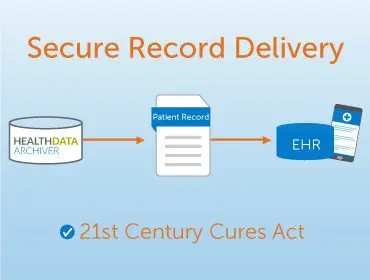
Harmony Healthcare IT (Harmony), a leading data management firm, released a new HealthData Integrator® offering, Secure Record Delivery, to help U.S. healthcare providers comply with the 21st Century Cures Act (Cures Act). The solution enables the transmission of an archived patient record from Harmony’s HealthData Platform to an electronic health record (EHR) endpoint.  

This interoperability advancement supports best practices in health data exchange, providing consumer access to historical patient records as regulations and penalties around the Information Blocking provisions of the Cures Act expand. Historical medical records are made accessible to patients in a familiar manner so the facility may meet an exception to the Information Blocking provision of the Cures Act [45 CFR 171.103].  

“As part of the Cures Act’s call for greater interoperability, healthcare providers may not ‘knowingly or unreasonably interfere’ with the exchange of electronic health information (EHI),” said Dave Navarro, Senior Director of Data Science at Harmony Healthcare IT. “As archived patient records are EHI, they should be included with active EHR records when a consumer request is fulfilled. We’ve developed a secure means by which to integrate that historical EHI into the EHR or patient portal so it can be included in the release of information.”  

Secure Record Delivery is made available through HealthData Integrator®, the data activation component on Harmony Healthcare IT’s market-leading HealthData Platform. HealthData Platform is an enterprise-wide, cloud-hosted infrastructure that secures patient, employee, and business records for healthcare delivery organizations.  

Secure Record Delivery enables HealthData Platform users to navigate the Information Blocking Provision of the Cures Act and better serve patients. The solution is aligned with current and anticipated future designated record set requirements for the information that must be provided for patient record requests to remain compliant with the provision.   

To date, there are two phases for the Information Blocking timeline:  

  • Phase 1, which has been active since April 2021, states that EHI is limited to data defined by the United States Data for Core Interoperability V1 (USCDI V1). The data included in USCDI is a content standard that is a baseline of health data elements such as demographics, problems, allergies, medications, and clinical notes.  
  • Phase 2 began Oct. 6, 2022, and includes a broader set of “all patient EHI” which has organizations reviewing their definition of a HIPAA designated record set. The Harmony Healthcare IT solution is aligned with current and future versions of the USCDI.  

Implementation of Secure Record Delivery by Harmony Healthcare IT’s clients include the following benefits: 

  • Satisfies the Information Blocking Provision of the 21st Century Cures Act by allowing the delivery of an archived medical record to an active EHR endpoint or patient portal for consumer access 
  • Securely integrates with industry-leading EHRs with the use of application programming interfaces (APIs) and other encryption methods (See listing on Epic’s Connection Hub)  
  • Increases patient satisfaction by allowing electronic delivery of a more complete historical record upon request

For more information about HealthData Integrator® Secure Record Delivery and its impact on historical patient record request fulfillment in relation to the 21st Century Cures Act, listen to this HealthData Talks podcast episode with guest Dave Navarro, Senior Director of Data Science at Harmony Healthcare IT.  

Healthcare IT tips, guides, news & more delivered to your inbox

Learn More

Summary

Patients are getting more comfortable with health IT and accessing their health records in apps and online. A recent study found patients have strong opinions relating to the accessibility of their own medical records as well as sharing their records with clinicians. As health IT professionals gear up to meet 21st Century Cures Act requirements, the role of the empowered patient cannot be ignored.

Join Fellow Healthcare IT Pros

Tips, Guides, News & More

Sign Me Up
Patients' most wanted list

COVID-19 accelerated the opportunity for patients to utilize technology and take a more active role in accessing their providers and their own electronic records. During the pandemic, telemedicine went from niche to necessity, and patients and physicians gained valuable experience working together with technology-assisted options. Now, the 21st Century Cures Act further expands the requirements for electronic data sharing from provider-to-provider and provider-to-patient

Patients are increasing their use of technology and expect their electronic health records to  keep pace with their demands.

Patient engagement has rapidly increased due to activities such as the electronic availability of medical records, online appointment scheduling systems, and electronic messaging apps that allow patients to communicate directly with healthcare providers. In addition to information collected in traditional care settings, the integration of data generated by personal devices is being actively integrated into patient medical records.  Today, over one billion devices currently are in use and the wearable medical tech market is expected to grow at 26.8% CAGR through 2028. Wearables include tech devices that have sensors to measure activity levels, steps walked or other environmental indicators and can include smart watches, smart goggles, fitness trackers and other tech devices that push the data to apps on users’ mobile phones. This type of personal device data can provide valuable insights when integrated with traditional clinical data sources.

In thinking about their electronic health record expectations, a recent national survey for The PEW Charitable Trusts found that:

  • Most Americans want their data to be more accessible and better protected.
  • About half of all respondents had accessed their digital personal health record

However, there are differences in the priorities patients place on the top 10 types of data they want clinicians to share between providers versus the types of medical data they perceive as most important to be able to engage with for themselves.

Top 10 types of data patients want their clinicians
to be able to share in a provider-to-provider exchange
Top 10 types of medical information patients
would like to access for themselves
1. Allergies (80%) 1. Laboratory test results (89%)
2. Immunizations (78%) 2. History of medical conditions (88%)
3. Medications and prescription medications (78%) 3. List of medications and prescription medications (87%)
4. Vital signs (76%) 4. Vital signs (87%)
5. Radiology images and reports (76%) 5. Immunizations (87%)
6. Advanced care plans and directives (76%) 6. Treatment plans (87%)
7. Laboratory test results (74%) 7. Radiology images and reports (87%)
8. History of medical conditions (71%) 8. Physician and clinical notes (84%)
9. Treatment plans (70%) 9. Insurance billing and claims (84%)
10. Family medical history (69%) 10. Allergies (83%)

Patients report that provider access and interoperability with their medical records should expand beyond current requirements.

In the survey, 81 percent said different providers should be able to share health data about shared patients, specifically advanced care plans, end-of-life preferences, images, and family medical histories – items that current federal data-sharing policies don’t require.

The ONC is laying the foundation to empower patients to better access their electronic health records. ONC guidance includes a requirement that EHRs are available to patients through standardized mechanisms such as FHIR API standards, further supporting patient-facing apps to develop faster and better.

Note: The U.S. Core Data for Interoperability (USCDI) is a standardized core set of baseline health data needed to support patient care and facilitate patient access using health IT. The ONC says it will expand over time via a predictable, transparent, and collaborative public process. USCDI currently includes data classes such as: Allergies, Clinical Notes, Diagnostic Imaging, Health Concerns, Lab Tests and Reports, Problems, Vital Signs, Medications, Procedures, Immunizations, and more.

Implementing USCDI will help common components of a patient’s health record to integrate across various systems and applications. The ONC also requires that EHR vendors support the capture of specific data elements such as   race, ethnicity, and language  which support health equity and public health data  initiatives.

Patients report that the federal government should include incentives for the prompt adoption of national data standards so that EHRs can easily share data.

Additional patient insights support the federal government acting to:

  • Ensure the national data set that EHRs must be able to share should include all the elements that patients want their providers to document and share
  • Update privacy laws to account for new developments, such as use of new health-related apps
  • Researching biometrics (such as fingerprints) to potentially improve the accuracy of patient matching.

The time is now for Health IT to get it right.

As your team continues to refine its strategy and action steps to meet the Cures Act guidelines and best practices for the clinical data within your care, Harmony Healthcare IT can be a valued resource. Check out these past Interoperability Updates from David Navarro, Senior Director of Data Science, Harmony Healthcare IT:

Legacy health data is in play for interoperability as retention requirements can span decades.

As decisions are made to decommission a legacy system, structured and unstructured data is either extracted and converted to a go-forward system (i.e., Epic, Cerner, MEDITECH) or migrated and secured into an active archive solution such as HealthData Archiver®.  HealthData Archiver®® is an application that stores records of any type   and provides on-demand access via a user interface with intelligent workflows (i.e., release of information for HIM users or single sign-on for clinicians as integrated on Epic’s App Orchard and marketplaces for other leading EHRs)

HealthData AR Manager® maintains necessary interfaces to claims scrubbers, clearinghouses, lockboxes, general ledgers, and statement firms, to store and manage legacy financial records that require complete accounts receivable wind down by revenue cycle users

Records are then activated for interoperability with other systems, entities or consumers via HealthData Integrator®, which provides a set of tools or APIs based on common industry standards such as USCDI, FHIR, HL7, C-CDA, XML, or Direct.

Thinking about your lifecycle data management strategy?

Let’s connect.

Healthcare IT tips, guides, news & more delivered to your inbox

Learn More

Summary

New release of information service supports healthcare facilities facing closure or M&A in meeting long-term regulatory requirements for protected health information.

Join Fellow Healthcare IT Pros

Tips, Guides, News & More

Sign Me Up
Records Release Service

Harmony Healthcare IT, a first-to-market innovator of health data management solutions, today announced a new Records Release service that allows healthcare providers (or their trustees) to confidently outsource release of information responsibilities. Outsourcing medical or employee records release is often a necessary option for healthcare facilities facing department/facility closure or merger and acquisition (M&A). This new service offering supports an industry need for lifecycle data solutions as it has been reported rural hospitals are at risk of shutting down and that a steady consolidation of health systems through M&A is expected to continue through 2030. 

According to state guidelines, the rules set by the Health Insurance and Portability and Accountability Act (HIPAA), and the 21st Century Cures Act (Cures Act), patient records must remain accessible after closure or M&A.  While most healthcare records must be retained for a minimum of six years to meet HIPAA regulations, other factors can impact medical record retention periods such as whether the patient is a minor or if they were treated for a specific medical condition (e.g., behavioral health or oncology).   

“Working through records management when a healthcare facility closes or gets acquired can be complex,” said Jon Grenier, MPA, Senior Director of Product Strategy at Harmony Healthcare IT. “The long-term plan for personally identifiable information requires an experienced and knowledgeable coordinator to manage the statutory requirements once a medical facility will no longer handle the records itself.”  

The Harmony Healthcare IT team is in a unique position to offer this Records Release service with its broad experience of working with more than 550 clinical and financial software brands for data migration or archival from electronic medical record, practice management, and human resource software. This new offering supports the future release of information that may be needed for patient care, litigation, insurance audits, workers’ compensation, validation of employment, and other reasons.   

While each hospital or medical practice closure or acquisition is unique, generally, the Harmony Healthcare IT Records Release services will include: 

  • Data extraction from legacy systems (clinical, financial, or administrative) 
  • Discrete data storage in an active archive with release of information workflows 
  • A web landing page for requestors to learn about the record release process 
  • Secure information provision to requestors such as patients, employers, and payers 
  • A detailed audit trail of the record release process with date and time stamping 

The Harmony Healthcare IT team is equipped to support healthcare delivery organizations to ensure there is a plan to keep patient, employee, and other business records secure, accessible, and deliverable to requestors.  

HITshow callout for Records Release blog

More information about the Records Release service is available here 

Additional resources that focus on how to plan for department and facility closures or M&A include: 

When Medical Departments Close, Continued Access to Records is Critical 

What to do with Medical and Other Records when a Hospital or Practice Closes due to COVID-19 or other Business Reasons 

Health Records Must Survive a Hospital or Medical Practice Closure 

Mergers and Acquisitions: But What About the Legacy Data? – Healthcare Data Management Software & Services | Harmony Healthcare IT (www.harmonyhit.com) 

For more information about Harmony Healthcare IT, visit: https://www.harmonyhit.com 

Healthcare IT tips, guides, news & more delivered to your inbox

Learn More

Summary

When an EHR platform like Quest Diagnostics’ Quanum® Practice Solutions is sunset, healthcare providers can exercise one of two options to secure legacy records and comply with medical record access regulations. The first option is to migrate legacy data into an active archive, releasing requested records utilizing existing staff. The second option is to outsource record release services to a qualified record custodian. With either option, the transition from Quanum must occur by December 31, 2023.

Join Fellow Healthcare IT Pros

Tips, Guides, News & More

Sign Me Up
Quest Diagnostics to Sunset Quanum Practice Solutions

When Will Quest Sunset Quanum?

Quest Diagnostics recently announced it will sunset its Quanum® Practice Solutions (formerly Care360) at the end of 2023 to better align with the consolidation of independent physician practices that now deliver care as part of a hospital health system. This announcement includes two products: Quanum Electronic Health Record (EHR) and Quanum Electronic Prescribing (ePre). The company published a fact sheet with additional information for current clients.

Quanum EHR serves small to medium-sized medical practices, some of which may include physicians who are close to retirement.  With this in mind, Quanum users may consider two options that will both secure legacy records and comply with medical record consumer access regulations detailed in the 21st Century Cures Act.

Legacy Record Options for Quanum Users

Option 1: Archive with Release of Information Workflows for Existing Staff

Physicians that will continue practicing have an option to migrate legacy data into an active archive such as HealthData Archiver®.  This is a long-term legacy data storage solution offering a graphical user interface and built-in workflows so release of information requests may be easily fulfilled by existing medical practice staff after a new EHR replaces Quanum.  Archiving Quanum eliminates the costly and complex option of mapping and converting its data to the new EHR or practice management system that will replace it.  Rather, Quanum data is migrated to the archive discretely (versus as PDFs) to make problems, allergies, medications, immunizations, lab results, and other clinical data points readily available for search, sort, and filter.  The archive is affordable, secure, and HIPAA-compliant for the duration of the record retention period.

Option 2: Archive with Release of Information Outsourced to a Records Release Custodian

Physicians that will retire from practicing have an option to outsource record release services to a qualified medical records management custodian, such as Harmony Healthcare IT.  This kind of partnership will ensure that patient records from Quanum will be secure and accessible as records requests are made from parties such as patients, lawyers, employers, or insurance carriers for the duration of the record retention period.  While this service does not take on legal record custodianship, it does provide Quanum data storage in an active archive, a web landing page for requestors, secure provision of records to requestors, and a complete audit trail and accounting of requests fulfilled each month.

The Time to Take Action is Now

With either Quanum legacy records option, the transition from Quanum Practice Solutions (formerly Care360) to an active archive or outsourced records management custodian must occur by December 31, 2023.

Learn more about creating a legacy data strategy or outsourcing records release after a medical practice closure . That strategy will ensure necessary access to historical patient, employee, and business records to meet federal and state record retention requirements.

Work with a trusted legacy data partner to keep legacy records secure and accessible for the future

Harmony Healthcare IT, a data management firm specializing in legacy record storage and release, has migrated and archived data from more than 550 software brands for providers nationwide.  For four consecutive years, the Harmony team has ranked number one for Data Archiving, Data Extraction and Migration with Black Book Rankings, a division of Black Book Market Research.  This achievement underscores a commitment to keeping patient, employee, and business records accessible, usable, interoperable, secure, and compliant for decade to come.

We’re ready to connect and talk through your organization’s specific needs, challenges and next steps.

Healthcare IT tips, guides, news & more delivered to your inbox

Learn More