Summary

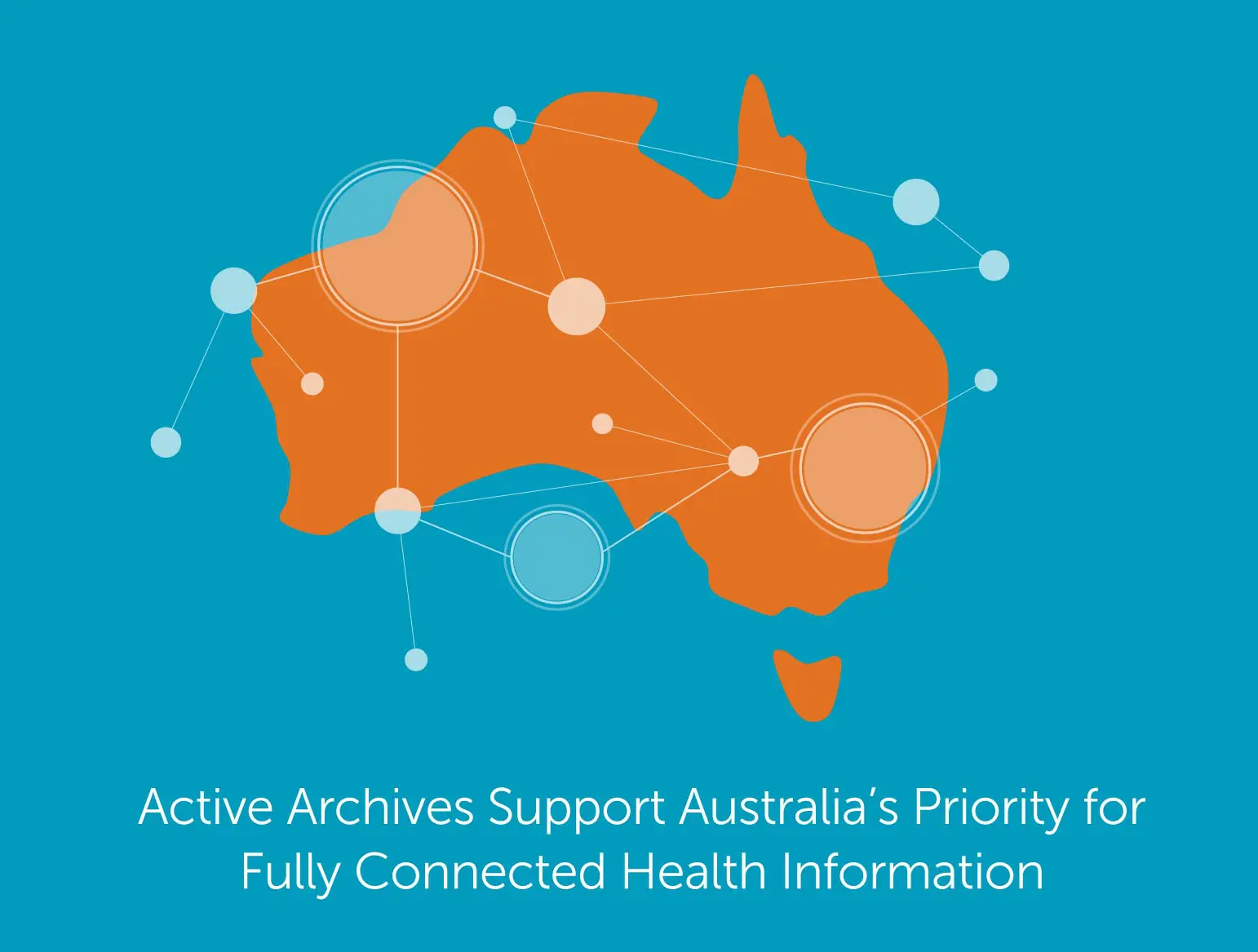
In Australia, there is a major push toward full interoperability for healthcare records. The goal is for health information to flow freely to patients and between clinicians from multiple settings. There are efforts underway to help guide this quantum leap forward to deliver, “Immediate access to critical diagnostic information wherever requested,” as described by an official from the country’s Digital Health Agency. To achieve a fully connected future, an active archive solution like HealthData Archiver®® can support the long-term accessibility of patient records.

Join Fellow Healthcare IT Pros

Tips, Guides, News & More

Sign Me Up
Active Archives Support Connected Health in Australia

Australia is regarded as a digital health leader with a number of initiatives and programs in place to support the increased use of technology solutions across its healthcare ecosystem. This is in part due to the efforts of The Australian Digital Health Agency, established in 2016, which has national responsibility for the country’s digital health strategy. The agency supports a connected healthcare system that is accessible (for patients and clinicians), progressive, and secure.

As the country continues to address its forward-thinking digital health strategy, there will be even more of a focus on patient engagement and connecting healthcare records across different providers. Innovative technology solutions, including a modern EHR coupled with an active archive solution like HealthData Archiver®, can support the overall information sharing goal to connect patients and clinicians to the comprehensive medical record, especially when there are electronic health record (EHR) upgrades and replacements.

My Health Record allows every Australian to access and update records.

One of the biggest digital health initiatives in Australia is its interoperable national e-health program based on personally controlled unique identifiers. The My Health Record program, which is a result of the My Health Records Act of 2012,  is an electronic medical record program that allows patients to access and manage their health records. Patients can view their records and add information about allergies, adverse reactions, and other updates to ensure the records are accurate. All healthcare providers in the country have achieved the ability to use of this system within the last few years.

To help guide the effort, the Digital Health Agency created the National Digital Health Strategy for 2023-2028 with four digital health priorities:

  1. Digitally enabled: Health services are connected, safe, secure, and sustainable.
  2. Person-centered: Australians are empowered to look after their health and wellbeing, with the right information and tools.
  3. Inclusive: Equitable access to health services, when and where they are needed.
  4. Data-driven: Readily available data informs decision making at the individual, community, and national level, contributing to a sustainable health system.

This national strategy includes input from public and private sectors with the aim to deliver an inclusive and sustainable health system for all Australians through a connected and digitally-enabled health system.

The goal in Australia is for a fully connected health information system with the patient at the center.

Record sharing (interoperability) is a top priority.

A Health Information Gateway is underway that will provide a secure and scalable platform for exchanging and accessing health information. The Gateway is positioned to integrate health information from multiple sources into clinical information systems. This supports the overall national health strategy and specifically the My Health Record patient system.

Speaking of the Gateway, Amanda Cattermole, Australian Digital Health Agency CEO said:
“A connected healthcare system is at the heart of the National Digital Health Strategy and while our national digital health infrastructure has already delivered significant benefits for Australians, it is now time to modernise and unlock the potential that new technologies offer.”

Digital tools deliver quantum leap with immediate access to diagnostics.

The Agency’s chief clinical advisor, Dr. Steve Hambleton shared in a recent press release:

“Immediate access to critical diagnostic information wherever requested is a quantum leap forward in supporting clinicians to make the best decisions for the patient. Digital tools will never replace doctors, but doctors who use digital tools will likely replace doctors who don’t.”

Interoperability challenges remain in connecting records across multiple locations and between different systems.

While a fully connected health ecosystem is the goal, there are inherent challenges in sharing records between different electronic health record (EHR) platforms. There are efforts underway to transform the My Health Record system to better meet health information sharing requirements for consumers and healthcare providers. Recently, the government invested several million dollars to help health software vendors connect to My Health Record. Funding also was allocated toward establishing a national legislative framework for national health information sharing across settings and borders.

Healthcare IT tips, guides, news & more delivered to your inbox

Learn More

Summary

New archive feature gives clinicians a “heads up” to historical patient records in EHR 

Join Fellow Healthcare IT Pros

Tips, Guides, News & More

Sign Me Up
Harmony Healthcare IT Legacy Record Indicator

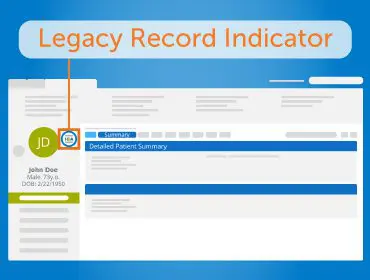
Harmony Healthcare IT’s latest first-to-market innovation, Legacy Record Indicator, provides a visual cue in the EHR signaling when there are patient records linked in the active archive, HealthData Archiver®. This advanced feature empowers healthcare providers with immediate knowledge that a historical patient record is present. This is important as legacy records hold years of historical clinical data and valuable insights into the patient’s medical journey.  

In healthcare, every minute saved by implementing more efficient clinical workflows supports improved patient outcomes. Currently, medical providers spend an average of 16 minutes per patient in the EHR with roughly five minutes of that time focused on chart review. Providing a visual indicator alerting the clinician to important historical patient health information reduces the number of clicks and saves the clinician time. 

“Our team is driven to innovate technology-based solutions like the Legacy Record Indicator to serve our customers and solve industry problems,” said David Navarro, Senior Director of Data Science at Harmony Healthcare IT. “This integration brings an immediate alert of historical records to clinicians at the point of care to improve workflow efficiencies and better inform treatment decisions.”  

With more than half of all adults (51.8%) in the U.S. with a diagnosed chronic condition (arthritis, cancer, heart disease, asthma, hypertension, stroke, etc.) and 27.2% with multiple chronic conditions, providing clinicians with a visual indicator to view the longitudinal patient history, only when there is a historical record present, supports a streamlined approach to comprehensive health information.  

Legacy Record Indicator benefits, include: 

  • Instant Identification – A visual icon alerts the user if a patient has an archived record from within the EHR’s patient chart.  
  • Single Sign-On Convenience – The ability to access archived records from the indicator button. 
  • Configurable Display – Options to choose where the indicator appears within EHR (i.e. story board, print group or navigation pane). 
  • Direct Integration – The indicator leverages HL7 v2 interface with a custom HealthData Archiver® observation. 

This new feature highlights our concentrated effort and focus on improving the patient and clinician experience by advancing our HealthData Integrator® capabilities. This integration improves the connectivity between HealthData Archiver® and the go-forward EHR by allowing Single Sign-On from the visual indicator within the active patient record.  

Legacy Record Indicator is currently available for Epic users. HealthData Archiver® is available in Connection Hub on Epic Showroom. Live and in use at many Epic customer sites since the integration was first made available in 2019, HealthData Archiver® supports efficient management of historical patient, employee, and business records. 

For more information about HealthData Platform and how it can serve healthcare provider organizations, visit www.www.harmonyhit.com. 

Note: Epic is a trademark of Epic Systems Corporation. 

Healthcare IT tips, guides, news & more delivered to your inbox

Learn More

Summary

When there is a new EHR system, medical data conversion quickly becomes a top priority. The urgency centers around getting all the relevant data into the new system. There are many reasons a conversion is needed, including to streamline data access, enhance patient care and ensure records are accessible and meet the organization’s compliance and regulatory requirements. Conversion can be a complicated process to transfer patient health data from one format or system to another. EMR data conversion services are very specialized and critical to ensure the absolute integrity of the clinical data as it is moved from one EMR or EHR to another. There is one chance to get it right.

Join Fellow Healthcare IT Pros

Tips, Guides, News & More

Sign Me Up
What is EMR Data Conversion

What is an EMR?

An electronic medical record (EMR) is a digital version of a patient’s paper chart. It contains their medical information including medical history, diagnosis, medication, treatment plans, immunizations, allergies, and lab test results.

What is the difference between an EMR and an EHR?

Electronic Medical Records (EMRs). Store and manage patient data within the medical practice but are not designed for easy transfer (interoperability) between different healthcare facilities or providers. EMRs are helpful to track data over time, identify which patients are due for preventative screenings, provide longitudinal monitoring for items like blood pressure readings or vaccinations.

Electronic Health Records (EHRs). Does everything that an EMR can do and more. EHRs focus on the broader/total health of the patient. EHRs are designed to share information between other providers, labs, and specialists. EHRs are also more equipped to provide patient access.

EHR adoption rates have surged over the past few years. As of 2021, 96 percent of non-federal acute care hospitals and nearly 4 in 5 office-based physicians have implemented a certified EHR system.

Why is an EMR conversion important? What are the benefits and why it is necessary.

When there is a decision to switch EHRs, there needs to be a legacy data strategy about what to do with the historical data that needs to be retained to meet the 21st Century Cures Act as well as federal and state record retention laws.

The plan should include an inventory of all applications/data, an overall strategic roadmap and a determination of which data to convert. Check out our blog on Data Conversion Process Steps for additional guidance.

Often, the decision includes migrating and converting the most recent 18-24 months to the new go-forward EHR, with the remaining data going to an active archive. This allows the legacy applications to be decommissioned which provides many benefits.

The benefits of an EMR conversion with an active archive include:

  • Ongoing access to clinical, financial, and business data in a more equipped EHR system.
  • Reduced risk
  • Lower labor burden
  • Lower costs than maintaining out of production software applications
  • Increased interoperability and being better positioned for the future

Common conversion pitfalls and what kind of timing to expect

One barrier to conversion can be whether the source vendor has encrypted data that is not accessible for normal extract, transform and load (ETL) processes. In these cases, it may be necessary to negotiate with the vendor to obtain the encrypted data. While this problem has existed for many years, the advent of the 21st Century Cures Act – Information Blocking provision, makes it illegal to block or terminate access to protected health information (PHI) maintained by the business associate for or on behalf of the covered entity.

Further, the business associate is required to maintain the availability of the PHI and ensure that it is accessible and usable upon demand. Ideally, the original EHR contract includes information about data transition rights and obligations, which will minimize the risk of data disruption should there be an EHR change in the future.

Recommended transition rights and obligations to have in an EMR vendor contract:

It is advisable to evaluate the length of the initial term of the EHR vendor’s services and support for both cloud-based and licensed EHRs. The ONC has examples of contract language for transition services that may be helpful.

Four items to review and confirm (ideally prior to signing an initial contract) include:

  1. EHR software under license. Make sure you are clear on the vendor support timing in the contract. Sometimes even with a perpetual license, there is a limit on the timing that support is included. Make sure you have the right to use the software during a stated transition period following the end of services.
  2. Auto-renewal for cloud-hosted EHRs. If the service contract contains automatic renewal periods, this means the contract continues in effect unless either party objects by a specific date. So as not to forget about this provision, it might make sense to add in a clause that the contract does not renew without notice.
  3. Transition services. While it may be difficult to predict what types of transition services might be needed, it is important to obtain the EHR vendor’s agreement to provide a reasonable degree of transition assistance.
  4. Data transfer and conversion. It may be helpful to specify a deadline for all data conversion should it become necessary to part ways. This is an important point to have in place up front.

 Conversion services support lifecycle data management

Our deep experience with over 550 legacy applications has helped our team develop best practices, conversion scripts and efficient methods to obtain and render documents for archival.  For example, eClinicalWorks most often hosts the application and must provide both discrete data and documents to ensure accurate and complete conversions are possible. In other cases, there are documents that will need to be converted to PDFs on the fly within the archive, HealthData Archiver®.

The reward of a successful conversion

A new EHR offers exciting possibilities that can be realized once there is a successful conversion of the clinical, financial, and business data to the new system. Having the right health data management solutions in place supports improved care coordination and the industry shift toward patient-centric models. With the organization’s data streamlined into the go-forward EHR with legacy data in an active archive the provider is well positioned for current and future business demands.

FAQs

What does an EMR stand for in healthcare?
EMR stands for electronic medical record. It refers to a patient’s digital records or charts that are at a clinician’s office. The information includes clinical notes, medications, medical history, and diagnoses. The EMR is focused on treating the patient within a single practice.

What is the difference between EMR and EHR?
The main difference between an electronic medical record (EMR) and electronic health record (EHR) is that the EHR is a much broader system with capabilities to share information across different health care settings. EHRs support coordinated care and allow authorized users, including patients, access to the patient’s health information.

Do all hospitals and healthcare facilities use an EHR?
Most hospitals and healthcare facilities utilize an electronic health record (EHR). Currently, 78 percent of office-based physicians and 96 percent of all non-federal acute care hospitals have adopted a certified EHR. Having a modern EHR helps healthcare providers better meet the requirements of the 21st Century Cures Act which includes interoperability (record sharing) requirements.

What happens to old data in healthcare?

Old data is referred to as legacy data in healthcare. There are a few options for what to do with legacy data within an organization, including maintaining the legacy systems, converting the legacy data to the new EHR, archiving the legacy data to PDFs and archiving the legacy data discretely within an active archive. Archiving the legacy data discretely is often the best choice as it provides the best value and keeps the legacy data accessible, usable, sharable and secure to meet compliance and regulatory requirements.

Healthcare IT tips, guides, news & more delivered to your inbox

Learn More

Summary

Harmony Healthcare IT, a data management firm that works with health data, surveyed over 1,000 Americans about their moving habits and the impact it has on their healthcare and medical records.  


Join Fellow Healthcare IT Pros

Tips, Guides, News & More

Sign Me Up

According to the U.S. Census Bureau, more than eight million Americans will move in one year. There are a variety of reasons people change their homes. According to our survey, Americans have been moving in the last 5 years because of living situation changes (switching roommates, getting married, etc.), buying a home, or because they wanted to live somewhere different.  

While Americans make sure to prioritize housing and neighborhoods when deciding where to live, one important issue often gets put on the back burner: healthcare.  

5 Ways Americans Find New Doctors Near Them

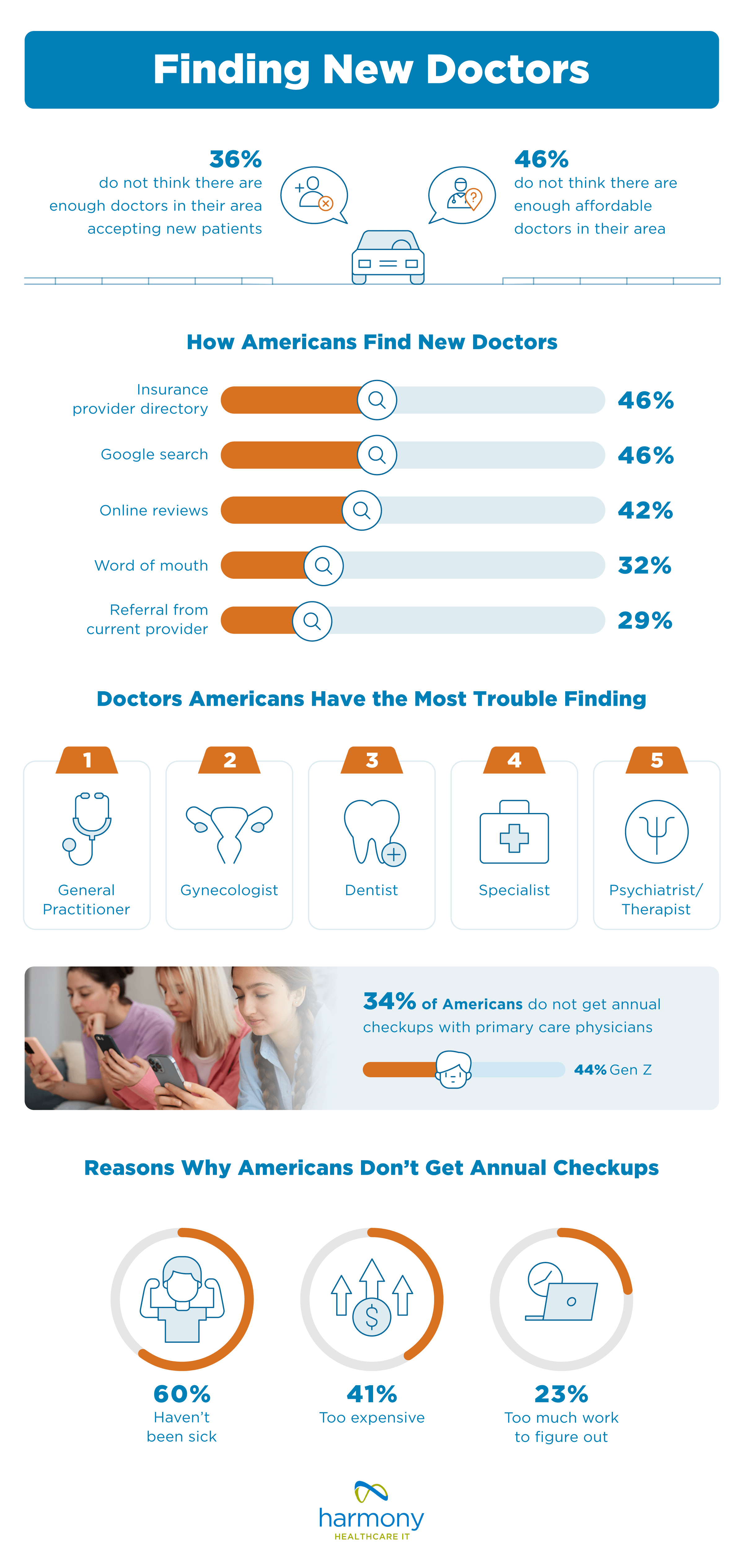
5 ways Americans find new doctors near them - www.harmonyhit.com report The process of finding a new doctor can be challenging. More than 1 in 3 (36%) Americans do not think there are enough doctors in their area accepting new patients. Others struggle to find doctors that they can afford. Nearly half (46%) of Americans do not think there are enough affordable doctors close to where they live.  

In general, Americans have the most trouble finding general practitioners followed by gynecologists (for women), dentists, specialists, as well as mental health professionals such as psychiatrists or therapists. While it may seem daunting, there are five ways Americans commonly find new doctors near them.   

  1. Insurance provider directory: Nearly half (46%) of Americans go straight to their insurance to avoid insurance issues and headaches. Insurance providers often have online directories where users can search for doctors within or near their zip code.  
  2. Google search: Others turn to search engines like Google, searching for phrases such as “doctors near me” to see which providers are closest to the vicinity of where they live.  
  3. Online reviews: Many look specifically at reviews for doctors. Reviews can be found anywhere from insurance directories to search engines to sites specifically made for physician reviews (i.e. Healthgrades, Zocdoc, etc.).  
  4. Word of mouth: 32% of Americans turn to family, friends, or other trusted people for recommendations on which doctor or healthcare provider to see.  
  5. Referral from current provider: Some ask their current provider for a referral when looking for a new doctor.  

Reasons Americans Skip Annual Checkups

However, some Americans do not regularly go to the doctor. Whether moving or not, 34% do not get annual checkups with a primary care physician. For Gen Z, that statistic is even higher with 44% not going regularly for physicals.  

The main reason Americans skip annual checkups is because they haven’t been sick. Over 2 in 5 (41%) say it’s just too expensive, and 23% admit that it’s too much work to find a primary care provider.  

91% of Americans do not Prioritize Healthcare When Choosing Homes

Issues finding doctors after moving - www.harmonyhit.com 

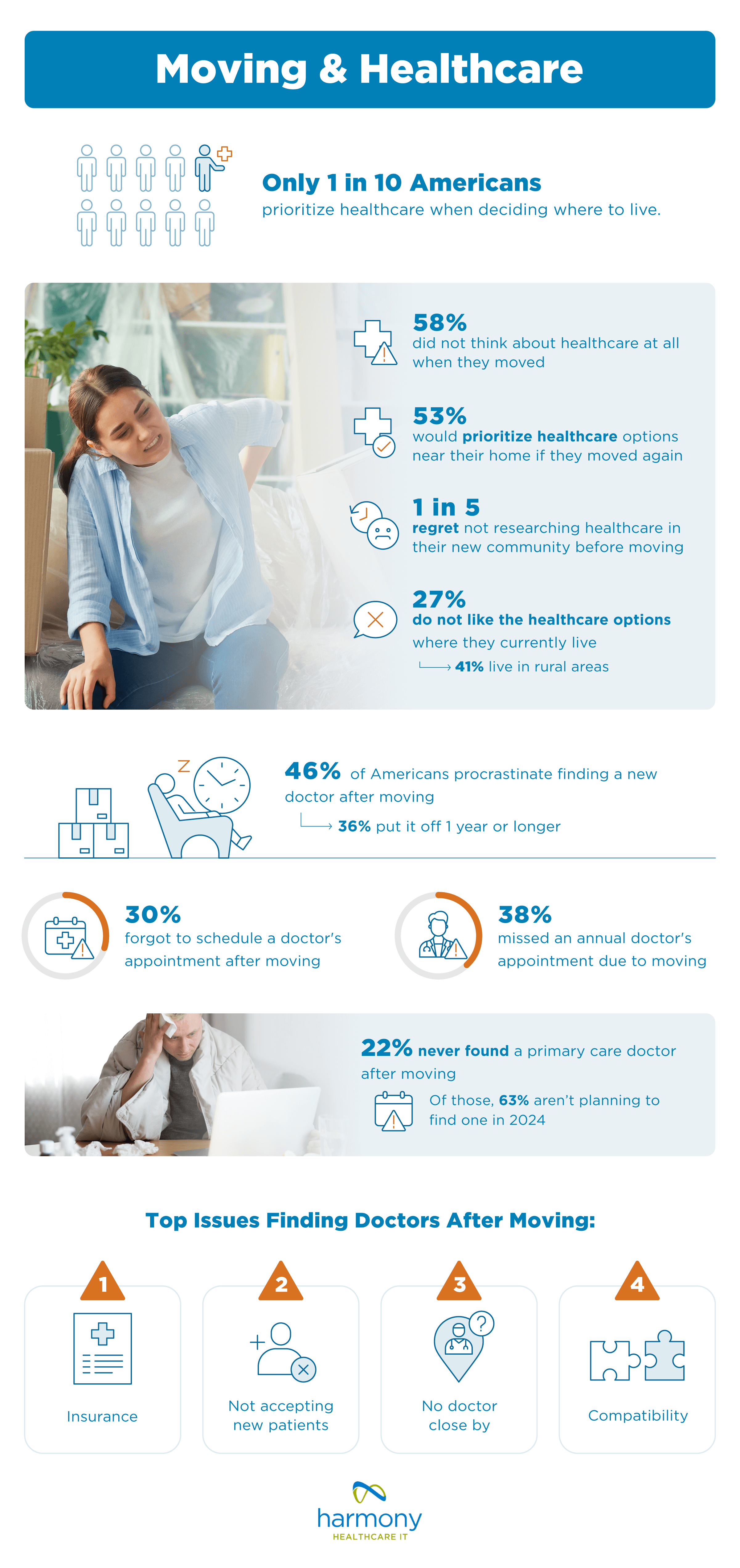
When choosing where to set down new roots, people have to make important choices: what school districts are in their area, the home value, and how long their commute will be to work. While 1 in 10 (9%) Americans prioritize healthcare when deciding where to live, the other 91% admitted it’s not one of their most important priorities.  

Of 1 in 2 Americans who moved within the last 5 years, 58% did not think about healthcare such as nearby hospitals or doctors’ offices at all when they relocated. 1 in 5 regret that, and 53% say they would prioritize healthcare options near their home if they moved again.  

The top issues Americans run into while trying to find a new doctor and establish care are:  

  1. Getting one in insurance network 
  2. Not accepting new patients 
  3. No doctor close by  
  4. Compatibility  

Some found themselves postponing doctor’s appointments after moving with nearly 1 in 2 (46%) admitting to procrastinating finding a new doctor. 36% put it off for one year or longer. About 1 in 4 (22%) never found a primary care doctor after moving, and, of those, 63% aren’t planning on finding one at all in 2024.  

Managing Your Medical Records

Issues Americans face with medical records - www.harmonyhit.com report 

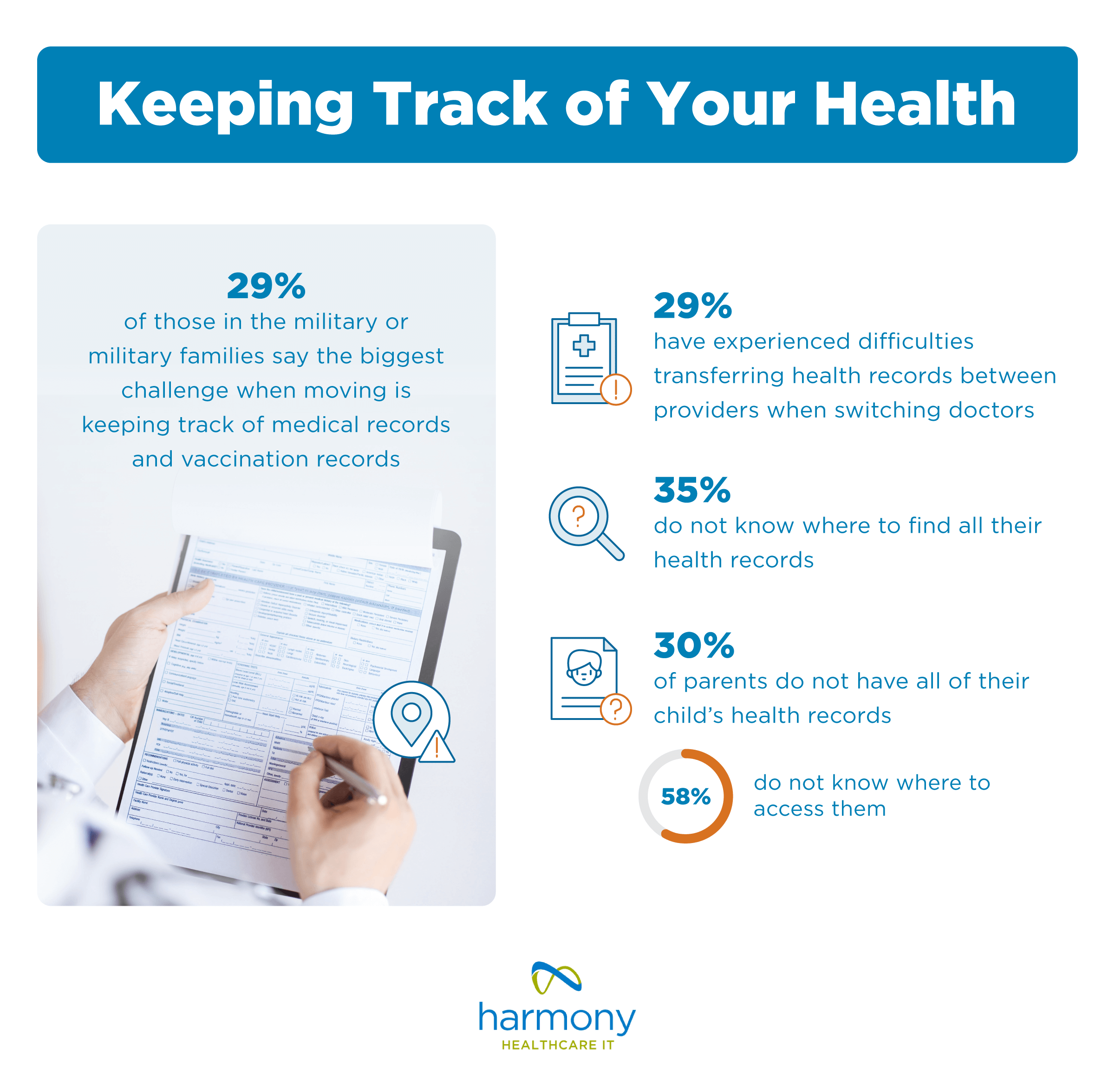
Something important to keep in mind when moving or switching doctors is your medical records. Over 1 in 4 (29%) Americans have had trouble transferring health records between providers when switching doctors. 29% of those who have served in the military or grown up in military families say keeping track of medical and vaccination records when moving was one of their biggest challenges.  

Many Americans appear to struggle when it comes to keeping track of their medical records. Google searches for “How do I find my medical records” increased by 26% from January 2021 to January 2024. Survey statistics show 35% do not know where to find all their health records. Of those who are parents, 30% do not have all of their child’s health records, and 58% do not know where to access them if they need to get them.

We know that the moving process is chaotic. It’s easy for a lot to fall through the cracks when you are in the process of relocating. If you’re overwhelmed, we recommend at least checking out the closest hospital to your new home in case of emergency (be sure to check and see which one is in your insurance network) and setting up a reminder on your phone to look for new doctors once the brunt of your move is complete.  

Methodology 

In April 2024, we surveyed 1,030 Americans to get their feedback on healthcare. 50% were men, 48% were women, 1% were non-binary, and 1% would rather not say. Ages ranged from 18 to 80 with an average age of 42. 52% had moved within the last 5 years and 48% had not.  

For media inquiries, please contact media@digitalthirdcoast.net. 

Fair Use 

When using this data and research, please attribute by linking to this study and citing www.harmonyhit.com. 

Healthcare IT tips, guides, news & more delivered to your inbox

Learn More

Summary

Increased interoperability, clinician satisfaction with functionality, and revenue cycle stability are three primary reasons healthcare providers may choose to switch their EMR or EHR system. With merger and acquisition (M&A) activity continuing, many more system replacements are expected to help standardize application portfolios at healthcare delivery organizations of all sizes. Regardless of the reasons behind switching EHR systems, there are several things to consider for a successful transition.

Join Fellow Healthcare IT Pros

Tips, Guides, News & More

Sign Me Up
10 things to consider when switching EHRs

When to transition EHR or EMR systems
With most healthcare enterprises operating 10 EHRs with 16 EHR vendors, often there is overlap, complexity, and a spider web of systems that impede workflows and patient care, add cost, create security issues and constrict the organization. With healthcare data responsible for 30% of the world’s data volume, and 21st Century Cures Act regulations adding interoperability requirements, healthcare providers are taking a hard look at their EHR and EMR solutions to be better equipped for the future.

Benefits of an EHR or EMR transition
EHRs first entered the scene in the 1960s and over time the technology has advanced from basic punch cards, magnetic tape and floppy discs to today’s cloud computing. In a study, 70 percent of healthcare executives stated that certain aspects of their EHR systems wouldn’t meet their future needs. With consumerism, data-sharing and interoperability expected to transform healthcare by 2030, it is possible that more current EHRs and EMRs may need to step aside for more robust replacement systems. An upgrade to a new EHR or EMR can bring and organization improved user workflows, security, integrations, patient portals and more.

How long does it take to transition to a new EHR?
EHR implementation can take up to one year or more from the initial research and planning to sourcing and implementation. This timeframe varies based on the complexity of the system, the size of the organization, and whether the server is cloud-based vs. on prem.

What is the most common reason for switching EHRs or EMRs?
One of the top reasons cited for an EHR or EMR switch is to achieve more meaningful use with increased functionality. This includes things like adding efficient patient engagement portals, integrated mobile services, access to cutting edge technology and the ability to access all records across an organization. With 21st Century Cures Act requirements adding more expectations for data movement, healthcare providers are looking for the optimal system to help manage the regulatory, clinical, business, and financial records within their care.
Ten things to consider when switching EHR or EMR systems
When the time comes to replace your EHR/EMR, it is important to consider the 3 Ps for success – the people, process, and plan. We have outlined ten areas to consider for a successful EHR/EMR replacement.

1. Select a new EHR/ EMR vendor and system. There are many factors to choosing the right EHR or EMR, including the specific needs and requirements of the organization, the system’s usability, interoperability with other applications, vendor support and reputation, data security and privacy measures, and cost. It is important to thoroughly evaluate multiple options, assess their features and functionalities, and consider feedback from users and peers.

Additionally, involving key stakeholders, issuing an RFP, and conducting demos and trials can help ensure that the chosen system aligns with the organization’s goals and needs, both now and longer term, ultimately enhancing patient care and operational efficiency. Read our guide, Eight Tips for Choosing Your Next EHR.

2. Choose the right target time to go live. There are several factors that impact the implementation of a new go-forward EHR/EMR. It can make sense to start with the go live target date and work backward to create a timeline that works across the project and organization. It also makes sense to consider whether there are enough resources in place to meet the overall goals or if there is a need to secure more. As the project progresses, regular check-ins on the timeline should be held so adjustments can be made as necessary.

3. Create a strategy for dealing with historic data. Taking the time to create an organizational legacy data management strategy can help reduce the risk, labor burden and cost of maintaining out-of-production software applications post transition. This is important as approximately one quarter of all hospitals in the U.S. are currently using legacy solutions, the majority of which are still being supported. The costs associated with system maintenance and support are one of the main factors driving legacy data management decisions. In a study of hospital Chief Information Officers (CIOs), 58 percent of respondents reported that decommissioning legacy applications provides significant cost savings. Further, there are six costs of running a legacy application that can be lowered or eliminated including software and hardware costs, training, legal liability, cybersecurity risk and lost opportunities.

Your EHR transition plan should include a strategy for legacy data and should:

  • Clarify project goals
  • Identify stakeholders
  • Outline the best path forward to decommission out of production software
  • Summarize organizational information (system inventory, financial forecast, etc.) for the governance team
  • Review and document decommissioning options

Part of creating the strategy involves application rationalization planning to make needed historical data available, reportable, researchable and interoperable. This key step helps coordinate the interests of the IT, HIM, Revenue Cycle, Clinical, HR and Regulatory stakeholders and helps ensure compliance with regulations such as the 21st Century Cures Act.

4. Learn the EHR or EMR data transfer process. There are lifecycle data management requirements for EHR and EMR applications that require a process to extract, migrate, convert, integrate, and sometimes destroy data based on organizational guidelines.

Generally, there are two medical data migration pathways for information when a system is being replaced:

Conversion to EHR. Often just key demographics and clinical elements, usually from the last 12-24 months, are moved from the source legacy EHR to the destination EHR due to cost and complexity.

Migration to archive. The “rest” of the data is evaluated for long-term, secure storage that complies with all state, federal and agency medical record retention requirements. It often makes economical and logistical sense to utilize an active archive like HealthData Archiver® for this data instead of trying to convert all the data to the new EHR.

With the data securely stored either in the go-forward EHR or in an active archive, it is set up to continue to serve the organization with options for release and interoperability.

5. Select an archive vendor & solution. With an EHR/EMR system replacement, there are legacy systems left behind that house clinical, financial, and employee data that must be retained for sometimes up to 20-30 years or more. It is not feasible to convert all that data to the new go-forward system, so an active archive makes a smart companion solution.

An article citing a recent industry report states that healthcare providers look for a data archiving vendor that meets their needs with the right price, sales experience, and system functionality. It also notes that it is becoming more common for a hospital to switch its archive vendor when the vendor falls short by missing data, timelines, or lacks integration points with EHRs like, Epic, Oracle and MEDITECH. Here is vendor selection advice from one healthcare executive:

We utilized a detailed matrix to evaluate numerous vendors on their solution’s usability, functionality, reporting, vendor reputation, implementation, cost and security.” Brian Davis, CHCIO, Chief Information Officer, Magnolia Regional Health Center.

It can help to utilize an RFP template to simplify the request for information or proposal solicitation. This can help ensure you’re comparing apples to apples when choosing the right partner.

6. Assist in the data transfer process. Converting data to a new EHR/EMR requires a meticulous and systematic approach. Many organizations will partner with an experienced data management vendor to assist in the data transfer process. Whether you choose this path or decide to handle it with internal resources, there are many factors to achieve a smooth transition.

The process typically starts by thoroughly understanding the requirements of the new system and the data elements that need to be transferred. Some decisions will need to be made around what data, how far back, etc. Then, the existing data is extracted, transformed, and mapped to align with the new system’s structure and formats. This involves cleaning and organizing the data and addressing any inconsistencies or errors to ensure data integrity. Additionally, appropriate measures such as encryption and adherence to HIPAA regulations must be followed to account for data security and patient privacy requirements. Throughout the process, close collaboration with stakeholders is crucial to ensure a smooth data transfer.

7. Test your new system. Validation is vital during an EHR/EMR replacement. This valuable process ensures that the new system is fully checked to ensure data tables and files are loading properly, data collected are processed and stored correctly. For the data that is going to be migrated to the active archive, there should be a multi-stage validation approach with both automated and manual procedures to ensure the accuracy of data during the transportation, transformation, load, and delivery/deployment.

8. Consider system maintenance and support. It is essential to consider system maintenance and support to ensure smooth operations and minimize disruptions when moving to a new EHR/EMR. This includes establishing a comprehensive maintenance plan that outlines regular updates, backups, and patches to keep the new system running efficiently and securely. Adequate technical support should also be in place to address any issues or concerns that may arise during and after the transition. The support plan should be clearly communicated to the users of the new system for fast resolution of issues.

9. Plan for training on the new system. A smooth EHR transition includes providing training options for the clinical and business users. This includes training on the new EMR/EHR and also should include how to access legacy data. One of the best things about the HealthData Archiver® application is that the system is designed to be user friendly, and the information is organized similarly to the original EHR. For any new system implementation, consider multiple training modalities such as recorded training videos as well as Quick Reference and User Guides available. You will need to consider the initial training for go-live of the new system, as well ongoing training as people enter the organization or new software features are released. Many organizations enlist a train-the-trainer approach which involves training a select group of individuals who will then be responsible for training others within an organization or team.

10. Carry out the new system go-live. Beginning to use the new system for day-to-day patient care can be exciting and nerve-wracking. A detailed go-live plan, which outlines specific tasks, responsibilities, and timelines, is crucial for a smooth transition. During the go-live period, there can be some challenges or issues that arise, but proper planning and support can help address them promptly. It is crucial to have a dedicated support team available to assist users during this critical phase.

Next steps

When the time comes to say goodbye to your current EHR or EMR system, it is important to evaluate the organization’s current and future needs for its lifecycle data management efforts. A key consideration to think about is the value of the data being retained. As EHR transition planning and implementation takes place, the historical clinical, financial, and administrative data should not be an afterthought. This is especially true now as 21st Century Cures Act requirements for patient access to their data could include access to their complete historical medical record. See our blog about our Secure Record Delivery solution that delivers an archived record to an EHR endpoint.

Harmony Healthcare IT helps healthcare delivery organizations move data. This includes converting key clinical data elements into the go-forward EHR system and migrating the rest of the disparate legacy data sources into a single, secure active archive with Single Sign-On capabilities from the go-forward EHR.

Our suite of data management solutions supports current and future interoperability requirements with other systems, entities or consumers via HealthData Integrator®, which provides a set of tools or APIs based on common industry standards such as USCDI, FHIR, HL7, C-CDA, XML, or Direct.

We have experience working with more than 550 clinical, financial, and administrative software brands used in healthcare delivery organizations.

Thinking through a system replacement?

We can help.


Frequently Asked Questions

How long does it take to transition to a new EHR?
EHR implementation can take up to one year or more from the initial research and planning to sourcing and implementation. This timeframe varies based on the complexity of the system, the size of the organization and if the server is cloud-based vs. on prem.

What is the most common reason for switching EHRs or EMRs?
One of the top reasons cited for an EHR or EMR switch is to achieve more meaningful use with increased functionality. This includes things like adding efficient patient engagement portals, integrated mobile services, access to cutting edge technology and the ability to access legacy records. With 21st Century Cures Act requirements adding more expectations for data movement, healthcare providers are looking for the optimal system to help manage the regulatory, clinical, business, and financial records within their care.
Healthcare IT tips, guides, news & more delivered to your inbox

Learn More

Summary

Health Information Professionals (HIP) are tasked with insuring that the best information is available for making healthcare decisions. They do this by managing healthcare data and information resources. It’s a tall order and one we are proud to support with our commitment to developing innovative data management solutions. We support and recognize the contributions of our HIP colleagues during HIP Week, and every other week, with our shared commitment to “Keeping Health Information Human.”

Join Fellow Healthcare IT Pros

Tips, Guides, News & More

Sign Me Up
HIP week 2024

Now in its 35th year, the theme for Health Information Professionals Week (HIP Week), April 15-19, 2024, is “Keeping Health Information Human.” The event recognizes the dedication and human touch HIPs bring to managing health information.

There are three goals of HIP Week 2024:

  • Raise awareness of the health information profession.
  • Recognize contributions of health information teams. This includes medical and health service managers, medical record specialists, clinical data managers, data scientists, medical transcriptionists, and more.
  • “Keep Health Information Human”. Health information professionals ensure the patients’ information is secure and that they receive high-quality care.

HIP Week underscores the importance of maintaining patient privacy and delivering accurate health information.

Our team at Harmony Healthcare IT is thankful for our partners in health information. We are pleased to do our part in supporting the HIP Week 2024 priority to keep health information human. This includes:

  1. Ensure patient information is secure. Recently, 81 percent of hospital CIOs we surveyed reported security vulnerability is a leading pain point driving legacy data management decisions. Legacy software ranks as a dangerous bad practice as outdated systems offer some of the easiest entry points for bad actors to gain access and cause mayhem within a medical environment. Decommissioning legacy data silos and archiving data to continue to meet compliance requirements is a major step forward toward an improved security posture. We also recommend employing a HIPAA Security Toolkit and adopting HITRUST, the most widely adopted security framework and certification.
  2. Maintain patient privacy. Privacy and security go hand in hand in healthcare. The HIPAA Privacy Rule has been active for more than 20 years and provides federal standards to safeguard the privacy of personal health information. There are additions to the rule, but the goal of protecting patient privacy remains at the core. A privacy benefit to archiving is that the legacy data is in one centralized location, which eases the burden of implementing and monitoring privacy controls and auditing. Further, there are several privacy features that support the Health Information Management (HIM) team built into HealthData Archiver® including audit logs, break the glass functionality, role-based access and purge functionality. And, with Secure Record Delivery and Record Release, Harmony Healthcare IT can engage with patients on behalf of customers. With Secure Record Delivery, we can send archived historical patient data to a designated EHR endpoint such as a patient portal.
  3. Deliver accurate health information. Accurate patient identity management supports the entire organization and helps ensure the right patient record is attached to the right patient, at every turn. Consolidating legacy data to a central archive is a pivotal step to support patient identity management. Our solutions supports patient identity management efforts with Single Sign-On integration and MPI Management options.

Harmony Healthcare IT’s HealthData Platform product and service offerings also support the three priorities of The American Health Information Management Association (AHIMA) 2024 Advocacy Agenda which include:

  • Improve Individuals’ Health Journey Through Access to Information, Privacy, and Equity
  • Ensure the Quality, Integrity, and Usability of Health Information
  • Advance Healthcare Transformation

Congratulations to everyone involved in HIP Week. We are inspired by our colleagues who continue to raise the bar for patient care. We will continue our part in advancing the data management solutions that HIP professionals worldwide count on.

#HIPWEEK24

Healthcare IT tips, guides, news & more delivered to your inbox

Learn More

Summary

Data that sits in a legacy system is at risk of becoming inaccessible. As applications and servers age, they become more vulnerable to cyberattacks and downtime. As the need for data agility and liquidity continues to evolve, spring is the perfect time to do some cleanup work that will pay off for years to come. We’ve outlined four action steps to help you get moving on your spring data cleaning.

Join Fellow Healthcare IT Pros

Tips, Guides, News & More

Sign Me Up
Spring cleaning your legacy data

If your organization has accumulated a collection of out-of-production software applications, it is time to cut the clutter and streamline. Think of it as spring cleaning for your patient, employee, and business data. With healthcare providers operating upwards of 30-40+ legacy systems, there is room for tidying up the legacy footprint to move forward more efficiently, securely and with greater ease to meet interoperability requirements. Deploying an active archive can help. 

Spring into action with these four legacy data management steps: 

1. Do some prework – First, gather and document information in four key areas:

    • Retention Schedules — Review and understand applicable state laws pertaining to record retention.  Read through your record retention and destruction policy, documenting any requirements that an active archive may need to meet comply.    
    • System Inventory – Identify out-of-production clinical, financial, and business systems in both ambulatory and acute care settings that are storing records that must be retained. This Legacy Inventory Template may help gather all the details necessary.  
    • Financial Forecast – Estimate maintenance costs, hardware costs, labor burden and potential compliance penalties with each system in the inventory. This step will inform your budget and return on investment for an archiving project.  
    •  System Prioritization – Consider the decommissioning schedule based on legacy application contract renewals, account receivables wind-down schedules, potential system failure or security risks, new application go-live dates, and data conversion and abstraction plans.

2. Draft (or update) your lifecycle data management strategy – Once you’ve gathered the information above, develop a strategy document that will serve as a roadmap for the legacy data management projects. Key areas to include in the document are:

    • Project Charter – Clearly state the goals of the project (i.e., to reduce risk, cut cost, streamline workflow, comply with retention mandates, etc.). 
    • Stakeholders – Identify those impacted by the secure long-term archival of legacy data (i.e., HIM, legal, IT, finance, clinicians, etc.) and their key requirements for a storage solution. 
    • Recommendations – Identify the best path forward to decommission out-of-production software as well as the consolidation, security, accessibility, and interoperability of legacy data stores. 
    • Findings – Summarize the information gathered from the retention policy, system inventory, financial forecast and system prioritization documents so the data governance team understands the scope of the problem, time sensitivity, risk, and associated costs over time. 
    • Options – Review and document common options for decommissioning legacy systems and storing the data that resided in them. Include the risk, cost, hosting options, and level-of-effort for each storage option.  

3. Assemble the right team – Gathering stakeholder consensus is a way to get started and execute on a plan to avoid postponement.  

    • Key internal stakeholders to consider recruiting to the governance team may include an Executive Sponsor, Project Manager, HIM Director, Technical Resource and data source Subject Matter Experts.  
    • Take the time to research and interview vendor partners who might help to execute your legacy data management plan. Consider these 10 qualities to look for in a legacy data archiving vendor.  

4. Plan ahead – Successful lifecycle data management takes a strong plan, the right tools and a commitment to best practices to assure the right data is secured and available for the retention period. Getting all your ducks in a row now is a smart step to make sure there is budget available in the coming fiscal year for your legacy data management projects. Speaking of budgeting, check out this blog: How to Outsmart the Six Costs of Running a Legacy Health System for Medical Record Retention.  

There are numerous benefits to lifecycle data management, including: consolidated data, decreased costs, ensuring compliance, increased security, enhanced efficiency and simplified reporting. When thinking about health data interoperability requirements, data agility and liquidity becomes even more important.  

Whatever your legacy data needs – we get it done.  

Harmony Healthcare IT provide full data lifecycle services, including consultation, migration, extraction, conversion, retention, integration, and destruction. A decommissioning and active archive program can reduce the risk, labor burden and the cost of maintaining out-of-production software applications.  

Harmony Healthcare IT works with healthcare organizations across the US and Canada to help determine what data should be converted to go-forward systems. The rest of the data is then mapped to one of two active archives:  

  •  HealthData Archiver® , which stores records of any type that require ready access by unlimited business users.  The solution leverages a user interface with intelligent workflows (i.e. release of information for HIM users or single sign-on for clinicians from leading EHRs) 
  • HealthData AR Manager® , which stores revenue cycle records requiring account receivables rundown while maintaining necessary interfaces to claims scrubbers, clearinghouses, lockboxes, general ledgers, and statement firms.  

Records are then activated for interoperability with other systems, entities or consumers via HealthData Integrator®, which provides a set of tools or APIs based on common industry standards such as USCDI, FHIR, HL7, C-CDA, XML, or Direct. 

  • Harmony Healthcare IT is ranked number one as the top Data Archiving, Data Extraction and Migration company according to Black Book Rankings, a division of Black Book Market Research. The company has earned this ranking for three years in a row, which underscores a commitment to keep patient, employee, and business records accessible, usable, interoperable, secure, and compliant. 

Ready to tackle some spring cleaning?  

Our industry-leading data storage and management solutions can help preserve vital information, strengthen healthcare delivery and streamline application portfolios.  

Let’s connect and get to work.  

Healthcare IT tips, guides, news & more delivered to your inbox

Learn More

Summary

Harmony Healthcare IT announced the appointment of Kelly Hahaj as its VP of Corporate Development. In this role, Hahaj is responsible for leading current business efforts as well as identifying and evaluating opportunities for strategic partnerships to drive continued expansion. Hahaj’s deep healthcare IT experience as a leader in health information exchange, clinical systems and...

Join Fellow Healthcare IT Pros

Tips, Guides, News & More

Sign Me Up
Kelly Hahaj joins Harmony Healthcare IT

Harmony Healthcare IT announced the appointment of Kelly Hahaj as its VP of Corporate Development. In this role, Hahaj is responsible for leading current business efforts as well as identifying and evaluating opportunities for strategic partnerships to drive continued expansion. Hahaj’s deep healthcare IT experience as a leader in health information exchange, clinical systems and data interoperability will be instrumental to these efforts.  

“As we continue to expand our offerings with innovative data agility solutions that improve interoperability, Kelly’s strategic insights and deep experience in running a health information exchange will strengthen our efforts,” said Tom Liddell, CEO of Harmony Healthcare IT. “We are thrilled to have Kelly onboard and look forward to her corporate development stewardship that will deliver long-term success for our partners.” 

Hahaj brings more than 30 years of healthcare technology management experience to this role. Through several leadership roles at the Michiana Health Information Network (MHIN), including CEO, Hahaj helped the organization grow and provide data solutions for healthcare providers. In 2020, she led MHIN through a consolidation with Indiana Health Information Exchange (IHIE) to become a unified HIE for Indiana. She served as VP Consolidation and VP Implementations and Data at IHIE. In previous roles, she held leadership positions with SMI, Medical Manager Corp (MMC) and WebMD.  

“As someone who is passionate about removing the barriers that impede medical record exchange, I have long admired the first-to-market, innovative health data solutions pioneered by the Harmony Healthcare IT team,” said Hahaj. “I am excited to join this amazing team that is committed to improving healthcare outcomes by providing seamless access to the complete, historical patient narrative.”   

Healthcare IT tips, guides, news & more delivered to your inbox

Learn More

Summary

Matching patient records to the right patient is a chronic problem in healthcare. Over the past 20+ years, efforts to develop better methods to standardize records and even implement a national patient identification system have been met with government pushback over patient privacy. The controversial Health and Human Services appropriations bill also continues to ban federal funds from being used to adopt a unique patient health standard. The new MATCH IT Act of 2024 offers new hope to increase patient matching accuracy. It has wide industry support. Is this the bill that will finally make a difference?

Join Fellow Healthcare IT Pros

Tips, Guides, News & More

Sign Me Up
2024 MATCH IT Act for Healthcare IT

There is a new bill in the works for an old problem. The Patient Matching and Transparency in Certified Health IT (MATCH IT) Act of 2024, introduced by Rep. Mike Kelly (R-PA) and Rep. Bill Foster (D-IL), would ensure consistency in the way demographic details like patient names and birthdays are recorded across all patient records within certified health IT platforms. It also would establish an industry-wide standard definition for a “patient match rate.”

The MATCH IT legislation seeks to decrease patient misidentification within the healthcare ecosystem and improve patient safety and privacy.

The goal is to increase accuracy in matching patients with their records. With 86 percent of clinicians reporting they have witnessed a medical error caused by patient misidentification, enough is enough.

But that is not all.

According to Black Book Research, the expense of repeated medical care due to duplicate records costs an average of $1,950 per patient inpatient stay and more than $1,700 per emergency department visit. Further, 35 percent of all denied claims result from inaccurate patient identification, costing the average hospital $2.5 million and the US healthcare system more than $6.7 billion annually.

The MATCH IT Act has broad industry support from the Patient ID Now Coalition (with more than 50 healthcare stakeholder members) including HIMSS, AHIMA, CHIME, and others.

There is a petition to urge members of Congress to co-sponsor the MATCH IT Act of 2024. There also is wide industry support to repeal Section 510 in the Labor HHS appropriations bill which bans federal funds from being used to adopt a unique patient health standard.

Proponents of the MATCH IT Act say that with HIPAA and advanced technology solutions, patient privacy concerns can be addressed.

Efforts to address patient identification and matching and the efforts to advance a national strategy have been stalled for the past 20 years. The initial push back was because of patient privacy concerns, but with the full implementation of HIPAA to address patient privacy, the increased use of EHRs and the push for increased interoperability, those barriers are different from how they were several decades ago.

The new patient matching effort is solution agnostic. The goal is to have the Department of Health and Human Services work with the private sector and public health on a national strategy.

The Patient ID Now coalition has outlined a Framework for a National Strategy on Patient Identity that addresses several key areas:

  • Accurate identification and match rates
  • Privacy
  • Security
  • Standardization
  • Portability and interoperability
  • Data quality
  • Integration with current systems
  • Equity and inclusion
  • Sustainability and governance

Active and legacy health records would benefit from patient matching effort.

Improving patient matching is the right thing to do for the complete lifecycle of the patient record. With record retention requirements often spanning decades, the need for a coordinated and accurate long-term patient matching strategy will benefit both active and legacy records. Consider that more than half (51.8%) of all adults in the U.S. have a diagnosed chronic condition (arthritis, cancer, heart disease, asthma, hypertension, stroke, etc.) and 27.2% of adults with multiple chronic conditions. Access to the longitudinal, complete patient history supports improved health information for clinicians which translates into improved patient outcomes.

Our team at Harmony Healthcare IT has decades of experience archiving clinical, financial, and business records for providers of all sizes. We fully support standardizing patient identification efforts throughout the entire healthcare ecosystem which will serve the complete lifecycle of the data.

To support patient matching within legacy data archiving, we have developed options for patient matching within our HealthData Archiver® cloud-hosted storage solution. Check out this two-minute video to learn more about our current patient identity management offering.

The need for standardization and accuracy in patient matching will only increase as more records continue to be added to healthcare systems nationwide.

Our focus is on the complete lifecycle availability of those healthcare records.

Our drive is to innovate technology-based solutions that serve our customers and solve problems. The MATCH IT Act can help remove obstacles.

We are here to help.

Healthcare IT tips, guides, news & more delivered to your inbox

Learn More

Summary

As the 21st Century Cures Act requires providers to share health records with consumers, it is critical that what is released is the right record for the right patient. That requires patient matching from a master patient index across disparate record storage systems. With record retention requirements often spanning decades, the need for a coordinated and accurate long-term patient matching strategy needs to include legacy records.

Join Fellow Healthcare IT Pros

Tips, Guides, News & More

Sign Me Up
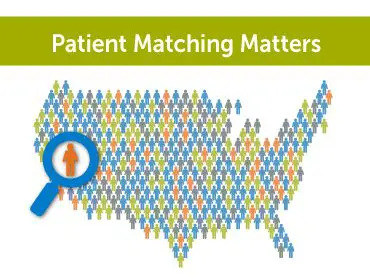
Patient Matching Matters

A patient’s medical record has zero room for error. The electronic healthcare data that is generated and linked to the patient must be properly documented, linked to the correct person and available for different users. Challenges to fulfilling this task of data agility include the ever-increasing volume of health data and regulatory requirements such as the  21st Century Cures Act. Now more than ever, It is critical that what is released is the right record for the right patient. This requires patient matching from a master patient index across disparate record storage systems.

Medical record numbers and their importance.

A medical record number (MRN) is a unique identifier assigned by the provider to reference a single patient. The MRN serves as a reference point for all the patient’s medical records and is used to access and update the patient’s health information across multiple visits and interactions with the healthcare system. With almost 9 million people in the U.S. sharing a top-five last name of Smith, Johnson, Williams, Brown, or Jones, having the right patient assigned to the right record, matters.

As healthcare data continues to skyrocket, having the foundation for accurate patient identification is vital. This growth, along with the evolving regulatory rules from the 21st Century Cures Act, requires healthcare providers to be agile and able to share health records with various consumers such as providers, payers, and patients.

In short: Records being shared must be accurate and include the right patient’s PHI.

What is patient identity management?

A patient identity management policy is the process of correctly linking patient records to the correct person and accurately and reliably communicating this information throughout the continuum of care. The best choices for patient identifiers should be unique and unchanging information. There currently is not one official patient matching technique or process in broad use in the United States. Globally, some countries use unique patient identifiers (UPIs) to assist with patient identification. The main barrier to broader use of patient identity initiatives in the U.S. are attributed to privacy concerns. However, there are indications that patients favor accurate identification and may be open to increased patient matching efforts.

Consumers support increased patient matching techniques such as fingerprint scans or unique numbers or codes.

By a roughly 2-to-1 margin, the 1,213 consumer respondents in a study reported they were comfortable with health providers scanning patient fingerprints or assigning individuals a unique medical record number or code to ensure that different electronic health record (EHR) systems correctly match records for the same person, a long-standing challenge of data exchange. Further, 74% of respondents support federal policy changes to set national standards that could improve matching rates.

The five types of patient matching that received broad support, include (in order of support):

  1. Fingerprint scan
  2. Unique number or code
  3. Smartphone or app
  4. Eye scan
  5. Facial photos

The industry has struggled for decades to adopt a standardized patient identification system, leading to data errors and redundancies as well as unnecessary costs and risks. The talk of a universal patient identifier originated in 1996 when HIPAA was first enacted; however, Congress stepped in almost from the beginning to prevent federal support, citing privacy risk concerns.

The fundamental pain points around patient matching in healthcare include:

  • Duplicate records. There are an average of 5-10% of duplicate records in most hospitals; however, health systems that have multiple facilities or have merged with other systems are seeing duplicate rates around 20%.
  • Errors and mistakes. There are a lot of errors and mistakes in patient records. In a study published in the Journal of the American Medical Association (JAMA), 20% of patients had identified their own errors, with actual errors/issues from industry sources reported closer to 30%.
  • Lost staff time. Decreases in staff productivity and satisfaction can average up to 30 minutes of lost time per shift. In fact, 45% of large hospitals reported difficulty accurately identifying patients through the EHR.
  • Increased costs. There is a growing cost in staff, legal, billing, and regulatory departments related to EHR documentation. Improper documentation within the EHR accounts for 72% of the risk management subcategory of EHRs and includes users adding updates to the wrong patient or looking at the wrong dropdown or screen. The expense of repeated medical care due to duplicate records is estimated at $1,950 per patient inpatient stay, and causes $1.5 million in denied claims each year.

As more electronic health care data is generated and needs to be shared, there must be a focus on facilitating data linkage projects.

With patients visiting numerous clinicians and staff, combined with constantly changing patient demographics (e.g., name and address changes), it is impossible for healthcare providers to obtain a complete health history of their patients without an improved technology-based solution. And, with the new requirements for interoperable health records, unless patient records are coordinated and improved, the errors could follow patients for their lifetime and the entire healthcare ecosystem will remain disconnected. With record retention requirements often spanning decades, the need for a coordinated and accurate long-term patient matching strategy needs to include legacy records.

Providers have options to improve patient matching for legacy data.

Harmony Healthcare IT has decades of experience archiving clinical, financial and business records for providers of every shape and size nationwide to its cloud-hosted storage solution called HealthData Archiver® Our team can walk your organization through the important decision points needed to determine which Patient Identity Management option would make the most sense for your organization to tie archived medical records to active records in the production EHR. A high-level overview of each option is below.

Option 1: Good – Clinician logs in and accesses a patient record in the HealthData Archiver® from the go-forward EHR. Patient matching features include a Single-Sign-On (SSO) with Fuzzy Logic, a form of patient context sharing that supports matching patient records with a combination of first name, last name, social security number and/or date of birth.  This option is available, but not recommended as a suitable solution for interoperability due to lower precision in passing patient context for SSO.

Option 2: Better – In this scenario, the archive backloads the Master Patient Index (MPI) by data source and includes a Single Sign-On with MPI. This option includes a patient synchronization feature which allows the go-forward EHR to connect and process messages with HealthData Archiver®.  This allows the same patient records, with different MRNs in the systems, to be tied with a single Enterprise ID. This option keeps the EHR and HealthData Archiver®` MPI in sync.

This scenario works for an organization with:

  • an existing and accurate MPI strategy in place
  • a desire for high precision SSO patient context matching in conjunction with its current MPI tool/vendor.
  • a focus on compliance with the 21st Century Cures Act and future interoperability integration opportunities.

Option 3: Best – In this best-case scenario, there is an addition of a Unified Identity Management Protocol, which backloads a unique Universal Patient Identifier (UPI) by data source and includes Single Sign-On with UPI and patient synchronization to keep the EHR and HealthData Archiver® in sync. This option is the most complete as it incorporates reference data, which typically outperforms traditional matching solutions, like those embedded within the most common EHRs that base matching decisions on the patient demographic data provided. These other methods can result in out-of-date, incomplete, or inaccurate data.

This option is for organizations that:

  • Do not have an existing MPI strategy in place
  • Have an MPI in place but are not satisfied with the accuracy thresholds in existing processes
  • Are focused on compliance with the 21st Century Cures Act and future interoperability integration opportunities
  • Are experiencing M&A activities that demands a robust, long-term solution

The legal ramifications of not having a patient matching solution.

Penalties could be imposed on organizations that knowingly, or even unknowingly, commit a violation for non-compliance with HIPAA Rules. Generally, the Rules include national standards to protect individuals’ medical records and other individually identifiable information. There is an expectation that providers use best practices for record guardianship which includes ensuring the correct patient is assigned to their own records.

While most of the focus on HIPAA violations currently centers around information blocking, there are cases where a provider was fined for an unsecured server which resulted in disclosure of ePHI and a failure of risk analysis and another for failure to maintain appropriate safeguards. Other cases include healthcare providers faxing medical information to the wrong number which resulted in HIPAA fines and lawsuits.

Bottom Line: Sending medical records to incorrect patients is a HIPAA violation. It is an unauthorized disclosure of protected health information (PHI), compromising patient privacy and failing to safeguard confidential medical information.

Looking to improve your patient identity management policy? Check out this two-minute video to learn more about patient identity management.

Let’s connect.

FAQs

Why is patient identification so important?

A patient’s medical record represents that person’s individual information that is crucial to their well-being. It is crucial to properly identify the right patient and match them with their own medical records. Without this trusted link, there are patient safety and quality of care concerns. Mistakes can lead to all kinds of errors in patient care, including medication dosage issues, failure to properly treat an illness or even serious issues with procedures being performed on the wrong body part or wrong patient.

What are the consequences of wrong patient identification?

There can be accidental issues where a patient record is mistakenly sent to an incorrect recipient, which generally represents a low risk for harm. On the other end of the spectrum, misidentified patient information could lead to a serious, even life threatening, treatment decision if the wrong patient receives a medication or procedure intended for another person. Further, there are HIPAA fines and sanctions for violations of the HIPAA Rules. These sanctions range from additional training to fines and other penalties.

Where is the risk of errors the greatest? Where do you most often see them?

One of the biggest problems with electronic medical records is that more than half of the text is copied and pasted. In a recent study of 100 million notes, with 33 billion words, more than half was duplicated. This begs the question: Is the medical record documenting individual information and are there mistakes in information getting passed on to records where it doesn’t belong? Unfortunately, if the errors are not caught, they can travel with a patient for their lifetime. This is problematic from a care perspective, can cause issues with insurance claims, and create redundancy in care if tests and imaging records are misplaced. According to the National Institute of Health (NIH) at least half of EHRs in an ambulatory setting may contain an error, with most related to medications, such as importing inaccurate medication lists.

Healthcare IT tips, guides, news & more delivered to your inbox

Learn More