Summary

Healthcare organizations of all sizes share a common priority of efficiently managing their clinical, financial, and administrative data. Skyrocketing data volumes do not need to include skyrocketing data management costs. With the right EHR and the right active archive in place, there are significant opportunities for cost savings.

Join Fellow Healthcare IT Pros

Tips, Guides, News & More

Sign Me Up
Cost Savings Achieved with Archiving

There is a major push in healthcare to achieve full data sharing capabilities. This includes data exchange between different health systems, specialty providers, insurers, patients, and other stakeholders. Having the right solutions to efficiently manage the massive amounts of data in play is essential. While much attention is focused on having the right EHR, having the right archive supports providers in resourcefully storing structured and unstructured data, and keeping it available while reducing costs and burdens on IT systems.

There are many benefits to this tag team approach to long haul data management. As providers are changing their go-forward EHR or engaging in mergers/acquisitions, there is a need to maintain access to the data housed within the legacy applications.

This is where an archive joins the action.

Increasing operational agility and decreasing costs are an evergreen priority, and archiving lightens the IT cost burden by removing maintenance fees and operational costs of keeping legacy systems running. It also reduces licensing fees and overall IT operational costs, while maintaining access to the data to meet compliance and legal requirements.

Decommissioning legacy EHRs puts archiving on a faster growth track than EHRs.

The global electronic health records (EHR) market size is projected to reach more than $48.82 billion by 2028. This growth is expected to occur at a compound annual growth rate (CAGR) of 6.63 percent from 2021-2028.

The global market size for health data archiving is estimated to reach $9.28 billion by 2028, registering a 14.1 percent CAGR during the forecast period. The rapid increase of health data volumes is expected to continue to create swift demand for storage solutions with archiving offering solid cost, security and compliance benefits.

CIOs report cost is a top concern driving legacy data management actions.

The goal of increasing operational efficiencies is at the top of most CIO’s to-do lists. Cost reduction is a leading concern for CIOs surveyed about the factors driving legacy data management decisions. In fact, 55 percent reported cost as a significant or very significant pain point.

On the bright side, 58 percent of those same CIOs said decommissioning legacy applications provides cost savings.

What kind of cost savings can be expected when implementing an archive solution?

Cost savings by customers moving to an active archive to decommission a variety of legacy financial, clinical, and business applications typically realize a return within 18-24 months.

There are numerous variables that impact the total savings calculation, including:

  • Volume and type of legacy systems archived
  • Number of facilities in which those legacy systems were utilized
  • Maintenance costs for those systems
  • Labor costs for the IT staff administrating those systems
  • How static the data is
  • Whether the solution is archived on-premises or to the cloud
  • Volume of release of information requests fulfilled annually and the cost of the resources to fulfill them
  • Whether Single Sign-On is available to the archive from the go-forward billing, EHR or other business (HR, payroll, general ledger, materials management, etc.) systems
  • And more…There are additional variables that play a role in calculating overall return on investment (ROI)

Our team works with customers to calculate a projected return on investment as part of the discovery process.

It starts with a review of hard and soft cost savings realized from archiving.

Hard cost savings

  • Legacy application maintenance. Keeping legacy systems running creates organizational bloat and high maintenance contract costs can be a drain on company resources. When a legacy system is decommissioned and the data is archived, the maintenance contracts can be eliminated.
  • Legacy application support. Annual support costs for legacy applications can run as high as 57 percent of the IT budget, which directly impacts the amount available for increasing innovation needed to meet current and future business objectives.
  • Server/hardware cost savings. Decommissioning servers/hardware can lower costs related to infrastructure and the power used to run the systems.

Soft cost savings

  • IT overhead and support. There are numerous costs associated with keeping legacy systems in play. For example, the number of new resources who require access to legacy system(s), the time required to compile user access reports and the access set up and removal costs.
  • IT labor to maintain legacy systems. There are costs involved with the time required for IT teams to perform system maintenance, patching, antivirus, maintenance upgrades and backups. Further costs include annual internal maintenance and technical support costs.
  • Workflow time savings for clinical users. Having to hunt for legacy patient records across multiple systems requires additional clinical staff time and can lead to productivity loss with parallel system operations. In the most recent year, clinical review time in EHRs was up 13 percent. Simplified access to the comprehensive patient record with an archive supports more efficient workflows. Single Sign-On to the legacy records from the active EHR is a simple, yet extremely helpful capability. This feature saves valuable time and is typically available for most major EHR brands (Epic, Oracle Cerner, Allscripts, Athena, etc.).
  • Release of Information workflow time savings for HIM users. Interoperability for HIM users who need an efficient Release of Information (ROI) is improved with less systems to access. For example, one healthcare system averaged 5,000 calls per week for chart requests. There can be significant time savings to fulfill ROI requests from a central archive versus having to access several disparate legacy systems.
  • Litigation time savings. As the 21st Century Cures Act and HIPAA Privacy Rule’s right of access provision are enforced, there can be exposure to litigation for those providers and payers who fail to provide timely access to requested medical records. There can be costs to configure litigation holds and produce records from legacy systems.

For more information on how to realize cost savings from including an active archive in your data management strategy:

Read a summary article about a cost savings webinar by healthsystemCIO here. You can listen to the full webinar here.

Case Study: $2+ Million in Savings from Data Consolidation During Major Merger and Acquisition Activity

Care and Cost-Saving Tools for Rural Hospital CIOs

A/R Wind Down from an Active Archive Supports Continuous Account Resolution, Cost Savings, and Compliance

Application portfolio management strategy: focus on reducing bloat, costs and improving life cycle data management.

With cost, security and interoperability issues at the forefront, our team works with healthcare providers of all sizes. We have deep experience with more than 550 clinical, financial, and administrative brands, our team gets the work done.

We help our customers realize return on investment wins.

We are ready to help you.

Healthcare IT tips, guides, news & more delivered to your inbox

Learn More

Summary

Harmony Healthcare IT, a data management firm in South Bend, has once again been named one of the “Best Places to Work in Indiana.” Now in its 19th year, the award program from the Indiana Chamber of Commerce recognizes and honors leading employers with outstanding workplace cultures. Harmony Healthcare IT is part of an elite...

Join Fellow Healthcare IT Pros

Tips, Guides, News & More

Sign Me Up
Harmony Healthcare IT wins Best Places to Work in Indiana

Harmony Healthcare IT, a data management firm in South Bend, has once again been named one of the “Best Places to Work in Indiana.” Now in its 19th year, the award program from the Indiana Chamber of Commerce recognizes and honors leading employers with outstanding workplace cultures.

Harmony Healthcare IT is part of an elite group of businesses statewide that will be recognized at a ceremony on May 8 and featured in the Indiana Chamber’s BizVoice® magazine.

“I am proud of our team and our contributions to healthcare,” said Tom Liddell, CEO of Harmony Healthcare IT. “Our “Together as One” focus reminds us that the strength of the team is each member, and the strength of each member is the team. We prioritize humility within a culture that fosters innovation, recognizes performance, and rewards hard work.”

The “Best Places to Work in Indiana” award criteria are weighted with 80 percent focused on comprehensive employee feedback about culture, benefits, perks, flexibility and the overall employee experience and the remaining 20 percent measuring the company’s workplace policies, practices, philosophy, systems and demographics. The Workforce Research Group managed the overall registration and survey process, analyzed the data, and determined the final rankings.

The Harmony Healthcare IT team continues to thrive, expanding its employee count by 28% last year. As steady growth continues, there are open onsite, hybrid and remote positions which offer a variety of unique benefits ranging from an employee options program to wellness reimbursement to paid time off for volunteering.

“The honored companies offer a blueprint for employee attraction and retention, and we are excited to celebrate their success. We hope the values and strategies on display in their workplaces can serve as models for other Indiana employers as we work together to address Indiana’s talent pipeline needs,” says Indiana Chamber President and CEO Vanessa Green Sinders.

For more information about the 2024 Best Places to Work in Indiana, visit the Workforce Research Group’s website.

Healthcare IT tips, guides, news & more delivered to your inbox

Learn More

Summary

Planning is of utmost importance prior to kicking off data extraction during a system replacement and/or archiving project. With clinical systems having a broad range of database schemas, there can be hurdles to overcome prior to extraction that will directly impact the rest of the data management project. While organizations face unique challenges, there are some universal issues and tips to help ensure a smooth data extraction process.

Join Fellow Healthcare IT Pros

Tips, Guides, News & More

Sign Me Up
Tips for tackling a successful data extraction

Data extraction is an important first step to any data management project. It involves locating, identifying relevant files, and preparing them to be moved (aka: migrated) to a new system or other location.

Sound simple? In theory, yes.

However, there are many things that must go right for successful data extraction.

What are the main challenges in healthcare data extraction?

There are several challenges that can impact the data extraction process. Three of the main hurdles include:

  1. Data lineage. It is vital to understand the data source/type within an EHR. There can be numerous data formats (images, videos, text, numeric, etc.) that are stored as structured (quantitative/easily formatted) or unstructured (narratives and summaries, images, pathology reports, etc.). While EHRs try to standardize data capture, there is a lot of inconsistency to date and 80% of health data is unstructured. Further, exploration needs to determine if the data is encrypted or compressed in a format that is not standard.
  2. Data location. Healthcare data can be spread across multiple source systems. This can create logistical challenges. Some larger health systems manage more than 10 EHRs and work with 18 disparate vendors. This can create complexity and challenging workflows.
  3. System experience. The talent pool of people with experience managing legacy systems is drying up. In some cases, custom built legacy systems or specialty systems with unique architecture can become hurdles for organizations as they attempt to increase interoperability and streamline their overall stable of applications that are in production.

All that said, there are four systematic recommendations that health care providers can follow to help kick off a data move with a smooth extraction.

Four steps to ensure a successful data extraction project:

  1. Identify clear project goals. As part of a legacy data management strategy, it is important to think through the project goals. This includes reviewing your strategy around application rationalization and aligning the extraction with both upstream and downstream expectations.
  2. Deep dive into everything about the data. This means documenting and understanding the data lineage, location, and access to inside knowledge prior to extraction and build begins. This involves really getting into the nitty gritty of understanding all the details about the data.
  3. Obtain data access from vendor. Work with vendors to procure data access when needed. This may take some time and you may choose to involve a third-party partner to alleviate the burden on your internal team.
  4. Work with an experienced data management partner. Make sure you compare apples to apples when evaluating partners. Look at ratings, ask for referrals, review the scope of your project against the partner’s experience. Ask questions about your unique data and make sure there is alignment for the project goals, timeline, and expectations as well as a good fit for a positive working relationship. This RFP Template and HR and Payroll System Archive Template can help.

Learn more about data procurement & extraction from Darryl Mais, Solutions Engineering Director at Harmony Healthcare IT in this HealthData Talks Podcast Episode

At Harmony Healthcare IT, we have extracted some of the most complicated and involved healthcare data. Our solutions engineers have a blend of architectural engineering, data engineering, and product knowledge to leverage the right solution for your organization.

At the end of the day – you are trying to preserve patient data and have it accessible.

Extracting the data should not be a roadblock.

We can help.

Healthcare IT tips, guides, news & more delivered to your inbox

Learn More

Summary

Making a move to a new electronic health record (EHR) system is a substantial undertaking. Once the order is signed, the real work of EHR implementation begins. Over the next weeks and months, there are key milestones that need to happen in cadence to ensure a smooth transition to the new EHR. In this blog, we look at those steps, and importantly, how to avoid a misstep.

Join Fellow Healthcare IT Pros

Tips, Guides, News & More

Sign Me Up
7 Steps for a Successful EHR Implementation

The reasons behind EHR replacements span from a desire for efficiency improvements and improved security to the demands for better interoperability to meet the requirements for the 21st Century Cures Act. Some studies show a 60 percent increase in providers looking at new EHR systems. As such, many organizations are on their second, third or more upgrades to EHR systems to better address their current and future needs. Finding the right EHR can be a job. Our team suggests following these Eight Tips for Choosing Your Next EHR.

A few notable EHR replacements underway include the National Institutes of Health (NIH) replacement of its 20-year-old legacy EHR system known as the Clinical Research Information System (CRIS). The Department of Veterans Affairs (VA) is restarting its EHR modernization project. Further replacements are happening across the entire healthcare ecosystem, from ambulatory clinics to large integrated delivery networks (IDNs).

Once the new EHR is selected, the “real” work begins… implementation.
Follow these seven steps for a successful EHR implementation:

  1. Create an Implementation Plan. This is an overall roadmap that will define roles, responsibilities, and timelines for the project. You will need to determine if the entire system will go live at once, or if there will be an incremental rollout. Some organizations choose a gradual rollout so they can include pilot testing in selected departments to gather feedback and adjust before more widespread use.
  2. Gather the right team. Start with a commitment from top-level leadership. This sets the tone for the entire organization and helps with highlighting how the new EHR aligns with organizational goals. Part two of gathering the team includes setting up an EHR Implementation Team that will support the overall project. It is helpful to involve people from different departments including IT (project manager, application analyst and engineer) as well as clinical (physician, nursing), health information management (HIM) and business (billing, finance, legal.)
  3. Confirm your infrastructure meets your needs. Whether you are choosing a client-based server or cloud-based, review your infrastructure and hardware to ensure compatibility with the new EHR.
  4. Technical set up. Getting ready to migrate to a new system should include a focus on mapping workflows to understand current needs and configuring the software to meet the organization’s requirements for user roles, templates, and preferences.
  5. Transfer and test data. Migrate the determined set of clinical, administrative, and business data to the new EHR. This includes data validation and testing of new data inputs, confirming there is integration with other systems (labs, pharmacies, and billing) as well as migrating legacy data to an active archive.
  6. Train staff. Plan a tiered training approach that will focus on basic functions, advanced training and specialized roles training for different departments and team members. Expect the training to take a few weeks to several months to have everyone in the organization fully up and running.
  7. Launch. There might be several soft launches versus one big launch; however, a key to the overall success of implementing a new EHR is a commitment to clear communication to keep all stakeholders aware about the project and the progress.

Are you in the midst of an EHR replacement? Now is the time to review your lifecycle data management strategy.

Our team supports healthcare delivery organizations of all sizes through full lifecycle data management services for electronic health record (EHR) or enterprise resource planning systems (ERP).

Our team is a great resource for healthcare providers who are implementing a new EHR and streamlining legacy systems in their application portfolios. We can help lower costs, reduce risk, fortify cybersecurity, and make legacy data accessible to users and patients. Our team works with IT, HIM, Rev Cycle, Clinical, HR and Regulatory stakeholders to help recommend the best options to meet regulatory compliance, research and reporting requirements defined by your compliance team.

Our suite of data management solutions supports healthcare delivery organizations of all sizes secure patient, employee, and business records during an EHR replacement of rationalization.

Implementing a new EHR offers exciting possibilities. However, there needs to be a plan for legacy systems and data to fully realize the potential of the investment in the new EHR.

A thorough plan for legacy data delivers a solid approach for long-term lifecycle data management. Reduce bloat. Decrease costs. Improve data management for the future.

Ready to connect?

We are here.

Healthcare IT tips, guides, news & more delivered to your inbox

Learn More

Summary

The Organization

Artesia General Hospital serves the rural areas of Artesia and Southeastern New Mexico, along with their associated clinics in Carlsbad. This 49-bed hospital has a mission to provide high-quality, patient-focused care that is readily accessible, cost-effective and meets the needs of their communities.  

The Situation

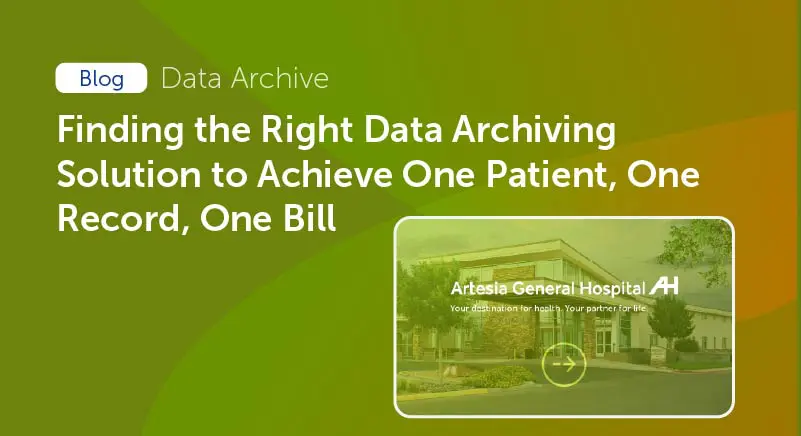
Artesia General sought to consolidate their five legacy electronic health records (EHRs) — along with billing, HR and clinical data from separate systems — to achieve “one patient, one record, one bill.” They first selected Evident EHR as their single system. Next, they searched for a data archiving solution to help them further simplify their application portfolio and reduce costs.   

The Solution

Artesia General found Harmony Healthcare IT through an RFP process and chose HealthData Archiver® to help them rationalize and archive data for record-keeping and future use. Demos with clinical teams and the medical records department ensured the streamlined system would meet their needs. 

The Challenge

The most challenging hurdle was concern amongst the user base. Internal Health Information Management (HIM) stakeholders worried they would lose data in the transition. To assure them, the team at Artesia General validated data from HealthData Archiver® and found it delivered as promised: All the data from multiple legacy systems had been consolidated seamlessly to a single source. Staff members are now using the system with confidence.  

The Results

Artesia General planned to decommission all old technologies a year after consolidating them into HealthData Archiver®. Harmony Healthcare IT met that timeline using a phased approach, archiving and sunsetting one system at a time, helping the organization in their goal to get down to one patient record. 

  • Cost savings. Artesia General reduced its annual maintenance costs from six figures to approximately $30,000 a year. 
  • IT workload reduction. The IT staff can now focus on just one application to manage all legacy data. 
  • Easy maintenance. The IT team found HealthData Archiver® easy to maintain from the start. 

 Lessons Learned

Understanding all the places where the data resides is vital for accurate mapping. After the IT team at Artesia General began project planning, they discovered data in a previously unknown system. By conducting a deep dive with the people who work in the systems every day, they produced a more accurate account of all data and technologies. 

Client Quote

“We wanted to get down to one patient, one record, one bill. The Harmony team has helped us do that. Their technology just works. It’s a set-it-and-forget-it solution. Other vendors require handholding, but they don’t.” 

Eric Jimenez, Chief Information Officer, Artesia General Hospital 

Join Fellow Healthcare IT Pros

Tips, Guides, News & More

Sign Me Up

Healthcare IT tips, guides, news & more delivered to your inbox

Learn More

Summary

The 2.8 million American Indians and Alaska Natives in the nation report serious psychological distress 2.5 times more than the general population. Programs to improve access to mental health services and a major technology upgrade to support better care coordination are in the works. The overall goal is to provide more effective patient care, ensure patient access to their health information and to track the health of tribal communities.

Join Fellow Healthcare IT Pros

Tips, Guides, News & More

Sign Me Up
Native American Behavioral Health Issues

There is new hope for improved behavioral health equity for the nearly three million American Indians and Alaska Natives spread over 37 states in 574 federally recognized tribes. This hope can’t come fast enough as behavioral health options are desperately needed to address the staggering behavioral and general health issues affecting this population, including:

  • The highest rates of suicide of any minority group in the United States.
  • The highest prevalence of methamphetamine use and a high rate of drug overdose death.
  • A disproportionate higher rate of post-traumatic stress disorder (PTSD), violence and substance use disorders.
  • A 5.5-year lower life expectancy than all races in the United States and a disproportionate number of chronic illness cases including liver disease, cirrhosis, diabetes and chronic lower respiratory diseases.

Healthcare experts, policymakers and tribal leaders are studying all the factors that impact wellness, including behavioral health services.

The Indian Health Service (IHS) is focused on improving awareness and access to behavioral health information and treatment. Numerous integrated health and wellness services are available. This is vital for overall improved health outcomes as behavioral health issues are directly linked to chronic diseases.

Rethinking behavioral health service models to improve health outcomes.

Historically, de-centralized care models have been the norm with 50 percent of mental health programs and over 90 percent of alcohol and substance abuse programs operated by the tribes. Now, there is a shift toward cooperative agreements and treatment programs which is part of a large-scale overhaul to improve integrated solutions within the local continuums of services. The Division of Behavioral Health is coordinating national efforts to share knowledge and build capacity. New or expanded programs are focused on mental health, alcohol and substance abuse, and behavioral health. A telehealth center of excellence (TBHCE) is available to further assist in reaching more people.

The promise of the first new electronic health record (EHR) in 40 years.

The need for improved behavioral health programs is coupled with the need to have better documentation and care coordination capabilities.

There is good news here.

The recent  announcement that the 40-year-old Resource and Patient Management System (RPMS) will be replaced by a modern Oracle Cerner solution is a major step forward to support healthcare for this population. The updated EHR is expected to positively impact every part of care delivery with the ability to enable patients and providers to have updated and accurate information to make the best health care decisions.

This represents a positive shift for behavioral health care as the previous method for documenting behavioral health clinical information was within a separate module within the overall EHR. Patient encounters, group services, treatment plans, case management information and community-based activities could be documented, but some integration and coordinated care options were limited. As such, the IHS notes that many behavioral health providers desire an expanded use of the EHR to include more robust care coordination opportunities.

IHS records management includes Federal agency rules and requires a long-term retention plan.

As a recognized federal agency, the IHS must follow Federal agency rules to preserve records that contain health and organizational information. See our previous blog for more information about overall record ownership, inventory and retention requirements that span 75 years.

The IHS also has specific rules for behavioral health records that are like HIPAA’s Privacy Law. Social service, mental health and substance abuse records are documented within the health record and psychotherapy notes are kept separate.

Better records management for behavioral health services offer population health options.

Beyond individual clinical recordkeeping improvements, the promise of a new EHR could bring better population health opportunities to support more positive behavioral health outcomes. The IHS Behavioral Health Analytics works on national, regional, and local evaluations and analyses to support tribes, IHS and others in better supporting psychological health development and risk avoidance. Programs that track youth substance use disorder treatment capacity, adult substance abuse and suicide prevention and domestic violence prevention require ongoing accurate information. These reports are deemed as valuable tools to define trends and make recommendations for policies, programs, and protocols. A better EHR should deliver more robust information and support information sharing.

The role of an active archive to support IHS legacy data priorities.

As IHS service providers migrate to the new EHR, there are modern options for managing the legacy data that doesn’t make financial sense or is too complex to convert into the go-forward system. The IHS priorities for continuity of care, interoperability and medical record retention can be met with an active archive, such as HealthData Archiver®, which has extra safeguards for sensitive information.

With significant cost, security and workflow advantages, healthcare providers of all sizes utilize active archives as a companion to a go-forward EHR. This keeps historical information accessible, secure, and interoperable, while not bogging down the new system.

Our team can help with strategic planning, tactical execution and day-to-day support for organizations that are upgrading or replacing their EHRs.

We are here to help RPMS users who are part of the IHS, Tribes or Urban Indian Organization (UIO) move forward.

Simply reach out to arrange a call.

Healthcare IT tips, guides, news & more delivered to your inbox

Learn More

Summary

Electronic Medical Record (EMR) system replacements at oncology clinics often happen when the business is acquired by a larger health system and the practice is integrated into the health system’s electronic health record (EHR) platform with its oncology module. Other times, standalone clinics may determine their current EMR isn’t meeting their needs (lack of features and integration abilities) and decide to move forward with another EMR. Regardless of the reason for a system replacement, record retention rules must be followed. As image studies are vital in oncology, having a long-term storage option for easily accessible image viewing is an asset. In this blog, we review how oncology practices who are changing EMRs can move forward with data archiving and also ensure image record accessibility.

Join Fellow Healthcare IT Pros

Tips, Guides, News & More

Sign Me Up
Options for replacing Oncology EMRs

Nearly 40% of the population will be diagnosed with cancer in their lifetime. Currently, cancer diagnoses are rising – from 1.6 million new cases reported in 2020 to 1.9 million in 2022. The upswing is explained in part because of more sensitive screening tests. As the medical community continues to battle this disease that leads to one in every five deaths in the nation, technology tools play an important role in early detection as well as recording images and other clinical information.

Electronic medical record (EMR) consolidation in the oncology space is happening as some of the almost 7,000 oncology practices and cancer centers are acquired by larger health systems. As these large health enterprises already have investments in large EHRs like Epic and Oracle Cerner, there is a trend to integrate the cancer/oncology practices into the EHR leveraging their specialty modules.

Industry report ranks customer satisfaction with oncology EMRs.

In a recent KLAS report, 158 organizations noted their overall satisfaction with the large EHRs (Epic and Oracle) to accommodate oncology functionality. While some issues did require workarounds, the benefits of IT consolidation were highlighted as positives.

Elekta didn’t do as well, with survey respondents reporting a lack of new features and difficulty integrating with non-Elektra solutions. KLAS validated one live cloud deployment of Elekta’s MOSAIQ®, and several organizations are considering moving to the cloud. However, respondents not using or considering using the cloud report that Elekta has fallen behind in delivering new features, causing nearly one-third of interviewed customers to plan to leave. Nearly one-third of the group surveyed has plans to move on from MOSAIQ.

Oncology EMR system replacements call for plan for legacy records and image studies.

Whether an EMR change is due to an acquisition or to find a more suitable solution, there will be a continued focus on what to do with the important image studies and clinical records that are needed to support ongoing treatment over a long time period and meet record retention requirements. This is where an active archive like HealthData Archiver® supports seamless options to harmonize legacy data to keep historical records accessible, secure, interoperable and available for analytics.

Our team at Harmony Healthcare IT has experience with more than 550 unique clinical, financial, and administrative software brands used in healthcare delivery organizations – including Elekta MOSAIQ. If your oncology practice/clinic is acquired or you are changing your EMR, we can help preserve the legacy records including imaging studies.

DICOM Viewer for active archive supports long-term oncology needs.

Our Digital Imaging and Communications in Medicine (DICOM) Viewer is an available option with HealthData Archiver®that is integrated to ensure studies can be accessed in patient context. Single Sign-On from within Epic, Oracle, MEDITECH or others allows clinicians immediate access to review legacy studies from the go-forward EHR. The DICOM Viewer is especially helpful for oncology clinicians.

There are many benefits to HealthData Archiver®’s DICOM Viewer that include:

  • Improved workflows
  • Multiple image display options
  • Links to DICOM studies
  • Cost savings

For more information, check out these resources:

Technological advancements are vital to continue the fight against cancer. As providers look at all available resources to gain an edge against the second leading cause of death in the nation, access to longitudinal records and images can support treatment options.

Looking ahead: Data management and interoperability will play an important role in cancer-related initiatives.

As those in health data management are focused on innovation, there are lofty nationwide goals on the horizon such as the Cancer Moonshot program that is facilitated by the White House.

Cancer Moonshot is a national initiative to end cancer as we know it. The programs goals are:

  • Reduce the death rate from cancer by over 50% in the next 25 years.
  • Improve the experience of patients and families living with and surviving cancer.

The Moonshot task force of leading experts in medicine – biology, immunology, genomics, diagnostics, cancer advocacy groups, pharmaceuticals, etc., outlined 10 recommendations aimed at accelerating progress in technology, encouraging collaboration and improving information sharing of key data. Technology advancements are noted as key contributors to three Moonshot goals and include:

  • Create a network with direct patient engagement, where patients can share their information that leads to more precise knowledge about what treatment works, in whom, and in which types of cancer. This will also help triage some patients toward clinical trials that weren’t on the radar previously.
  • Build a cancer data system that connects large datasets for researchers, clinicians, and patients.
  • Build 3D tumor maps to help researchers understand how cells interact and tumors evolve from lesions to malignancy.

Cancer centers that are acquired or making EMR changes need a partner and a plan for legacy data, images and DICOM studies.

Standalone cancer and oncology clinics as well as those that are acquired by health systems will continue to need EHR options that suit their needs, which include being able to share information (interoperability) with other specialists and networks. A key part of moving forward is a plan for legacy records that must be retained and shared.

Our team is onboard to help you navigate these important EMR/EHR system moves.

We’re ready for your call.

Healthcare IT tips, guides, news & more delivered to your inbox

Learn More

Summary

The 200 Academic Medical Centers (AMCs) in the U.S. have a reputation for pioneering research, education and clinical care using advanced technologies. With access to clinical trials, academic affiliations and other resources, AMCs report some of the strongest patient outcomes. New information sharing guidance for AMC researchers from the National Institute of Health (NIH) and other data management demands are driving AMCs to update their data management tools to keep pace with medical advancements.

Join Fellow Healthcare IT Pros

Tips, Guides, News & More

Sign Me Up
Three reasons for health data management from academic medical centers

Academic Medical Centers (AMCs) offer some of the most sophisticated and state-of-the-art medical treatment options in the country. With a focus on treating and teaching, AMCs provide patient care as well as education for the next generation of healthcare providers in partnership with at least one medical school. Some of the 200 AMCs nationwide also conduct academic, medical and other research.

Generally, AMCs tend to have better patient outcomes compared to non-teaching hospitals. This is attributed to their advantage of academic affiliation and resources, allowing them to become hubs for clinical trials and physician training.

While most AMCs also are teaching hospitals, not all teaching hospitals are AMCs. The difference is:

  • AMCs are affiliated with medical schools and confer medical degrees.
  • Teaching hospitals have medical students, residents and other healthcare professionals in attendance who are finishing or continuing medical education. Teaching hospitals do not issue medical degrees. There are about 1300 teaching hospitals in the U.S.

The largest AMCs ranked by number of residents and interns include:

  1. New York Presbyterian Weill Cornell Medical Center
  2. Tisch Hospital (New York)
  3. University Hospital (Ann Arbor, MI)
  4. Yale New Haven Hospital (New Haven, CT)
  5. The Johns Hopkins Hospital (Baltimore, MD)
  6. Cleveland Clinic Main Campus (Cleveland, OH)

Something new for AMCs is there are some AMCs that are opening stand-alone clinics in retail locations. UCLA Health now is in three malls across Los Angeles County. The goal is to reach more new patients and link them to the entire spectrum of care offered by the health system.

AMCs have a responsibility to share information and expertise to inform treatment options and improve patient outcomes.

Information sharing is vital to expanding the benefits that AMCs offer. As interoperability efforts continue to expand across the healthcare continuum, the National Institute of Health (NIH) released a Data Management and Sharing (DMS) policy for Intramural Investigators (tenure-track scientists) at AMCs to encourage more robust sharing of scientific data. This information sharing initiative aims to further promote the development of new treatments and medical products.

AMCs can stay ahead of the curve on ethics and data governance. The three primary ethical considerations in healthcare involve clinical ethics, research ethics and healthcare disparities. AMCs have a responsibility to adhere and teach the highest ethical principles. In research, there continues to be an increase in the complexity of information and issues, which has led some academic medical centers to offer formal research ethics consultation services to assist clinical investigators with tasks related to research design and implementation. Looking at Data Governance Leadership opportunities, AMCs need to maintain oversight of faculty practice plans to ensure alignment with the organization’s mission and support physician leadership to strengthen the academic mission within large health systems. A strong AMC governance program supports the goal of having a leading-edge teaching and research program that provides high-value patient care.

AMCs can prepare students/individuals for more real-world scenarios involving technology and data literacy. AMCs can equip students with leading edge abilities that help them utilize technology solutions. This helps the student learn how to use, interpret and analyze data. This approach can empower students to thrive and continue to advance their critical thinking alongside the use of leading technology solutions. AMCs have a distinct role in bridging the gap between theoretical knowledge and actual application.

Improved clinical outcomes can extend beyond AMC facilities. AMCs are noted to have spillover effects on better patient outcomes for patients treated at non-AMCs, in the same market. A study on spillover outcomes of 22 million hospitalizations of older Medicare beneficiaries at U.S.-based acute care hospitals found that those who received care in a market with a high AMC presence had lower mortality and more healthy days than those treated at non-AMCs. Some of the spillover benefits are attributed to:

  • Sharing clinical staff among AMCs and other nearby medical facilities
  • More nurses and physicians per capita since physicians tend to practice near where they trained.
  • Disseminating best practice/latest protocols
  • Newly trained physicians with the latest training
  • Timely transfer of seriously ill patients

As AMCs lead the way in pioneering medical advancements and training the next generation of providers, they need data management tools that serve their evolving needs. This matters because information sharing is becoming more of a focus for AMCs, both with the NIH guidance and industry interoperability requirements. In the examples below, we’ll examine how three AMCs are making strides forward with their data management efforts.

Three legacy data management lessons from Academic Medical Centers.

Lesson 1: Improve workflows with a one-stop-shop for comprehensive access to all health data.

Consolidating data silos and utilizing one EHR (such as Epic, Oracle, MEDITECH, etc.) across an organization offers the opportunity to decommission legacy servers and migrate the clinical, financial and business records to an active archive like HealthData Archiver® to continue to meet record retention requirements. In many cases, the go-forward EHR would only include a year or two of recent data and the remaining records stored in an active archive with a Single Sign-On integration from the EHR for streamlined access.

Lesson 2: Conduct annual reviews of all IT systems/software and consolidate data silos, including accounts receivable (A/R), by following a legacy data management strategy.

An accurate and updated inventory of IT servers and applications is important. The system inventory gathers details like product and vendor name, product version, database size, image store, server location, maintenance cost, contract dates and more. It’s vital to know what data you have to inform a thorough legacy data management strategy.

Accounts receivable applications kept up and running to collect outstanding patient billing and insurance payer claims is unnecessary with the addition of HealthData AR Manager®. This industry-leading active archive solution offers A/R wind down capabilities including transaction posting, automated collection agency management and complete collections functionality.

Lesson 3: Develop a standardized process that positions the organization for future legacy data archiving and decommissioning projects.

For one academic medical center in the northeast, the move to Epic left nine legacy EMRs that housed 3,000 legacy clinical, financial, and business software applications spread across 13 data centers that needed a data management strategy. The AMC turned to Harmony Healthcare IT to help with this long-term project.

The multi-year data management program includes a standardized process that positions the organization for future legacy data archiving and decommissioning projects. Working with an experienced vendor that offers an active archive, HealthData Archiver®, integrated with Epic supports the goal of harmonizing legacy data while keeping active and historical patient records in sync and available.

How can AMCs and other healthcare providers create legacy data harmonization with a new go-forward EHR?

Information access and sharing is vital to every area of healthcare. Patients, providers, payers and other participants need proven solutions to support information sharing requirements. While EHRs continue to evolve with better capabilities, those that are no longer needed can be decommissioned with the data migrated to a secure active archive.

There are many benefits to including an active archive, including:

Care quality that improves clinicians’ workflows with Single Sign-On to the active EHR.

Time savings for HIM, Clinical and Revenue Cycle users who need access to legacy records.

Cost savings from maintenance contracts, hardware, and reduced staff time.

Decreased risk for technical vulnerabilities by decommissioning outdated systems.

Are you part of an Academic Medical Center or other healthcare organization focused on a better approach to lifecycle health data management?

We can help you learn from other organizations and benefit from our experience with more than 550 unique clinical, financial, and administrative software brands.

We stand behind our ranking as the number one data extraction, migration and archival company for four years running.

Contact us.

Healthcare IT tips, guides, news & more delivered to your inbox

Learn More