Summary

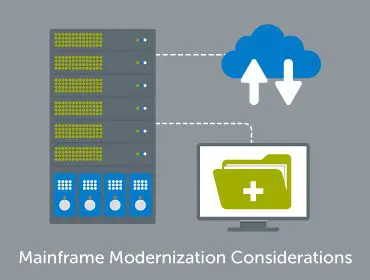
The first mainframe dates back to the 1930s, weighed five tons, and took another 13 years to be ready for use. In healthcare today, mainframes and virtualization solutions each play a critical role. As mainframe systems are modernized and organizations further evaluate the mix of technology tools, there can be decisions that necessitate system replacements. What are the five things to consider in a database modernization project? What are the options for legacy data when there is a system replacement?

Join Fellow Healthcare IT Pros

Tips, Guides, News & More

Sign Me Up
Mainframes management calls for a legacy data plan

One of the biggest challenges in healthcare IT is to evaluate and deploy the right balance of systems and applications for the organization. In healthcare and other industries, mainframe systems have historically carried a heavy workload to store, manage and process data. However, their place in the current and future IT environment is being evaluated.

Over the past twenty years there have been shifts toward virtualization solutions like VMware and Hyper-V that allow multiple operating systems on the same hardware. According to IBM, virtualization allows more efficient utilization of physical computer hardware and is the foundation of cloud computing. There can be cost savings, increased efficiency, improved security, and other benefits of using virtualization software. The Virtualization Software Market size is expected to grow from 86.39 billion in 2023 to 135.82 billion in 2028, at a Compound Annual Growth Rate (CAGR) of 9.47 percent.

That said, there still is some demand for mainframe systems with a current market size valued at 71.9 million USD in 2022 with an expected growth to 116.6 million by 2032, a CAGR of 4.7 percent.

Instead of replacing mainframe systems, some businesses are looking at database modernization to extend the functionality by linking mainframes to emerging technologies.

What is a Mainframe?

A mainframe is a large, powerful computer system that businesses and governments use to store, manage and process data. They are known to be stable and secure workhorses.

The first mainframe was developed in the 1930s, with IBM unveiling its commercial computer called the Univac 1 in 1964. Today, mainframes are used by 71 percent of Fortune 500 companies and 9 of the top 10 global life and health insurance companies.

Across all industries, 75 percent of business and IT executives say mainframes have long-term viability. However, some of these mainframe systems may not be fit without adapting for the future.

What are the issues with modernizing mainframes in healthcare?

In a recent Deloitte Consulting LLP report a CIO for a health insurance and care provider commented on mainframes: The things they do are good, just not good enough. But with layers, web services and applications, we can enlarge and bring new data and insights to our medical staff.

Some organizations are looking at upleveling their mainframes to better serve their current and future needs. However, this option can be met with high costs, project risks and internal resource limitations.

Five issues to consider in a database modernization project include:

  1. Shrinking pool of mainframe talent.

    About 60 percent of mainframe technology specialists are over the age of 50 and they are not being replaced with a new wave of technologists with the skill set to carry on.

  2. Protection and recovery.

    Historically, mainframes are known for their security features; however, cybersecurity attacks today focus on any and all areas to cripple healthcare organizations. In preparation, some mainframe-based organizations are retiring older tape-based backup systems in favor of cloud-based storage. This could reduce the recovery time after an attack or even a technical failure as the organization can recover only those datasets that were affected.

  3. Technical obsolescence.

    With the evolving demands on health IT solutions, mainframes do have some limitations with some applications that cannot be moved to the cloud due to cost or system dependencies. Mainframes are known for tasks like payroll processing, transaction recording and insurance underwriting.

  4. Web and mobile access.

    With Cures Act requirements to provide patient access to their data through a patient portal. Integration of healthcare mainframe modernization systems with cloud-based technologies could be the best option.

  5. Data locations.

    In healthcare, patient, insurance, and payment data resides in different locations and on different platforms. This presents challenges to users who need this information and the IT organization tasked with delivering it.

Challenges noted, mainframes can be a platform for innovation and modernization efforts.

Mainframes are at the core of technology strategy in many healthcare organizations, primarily insurers. Mainframe modernization in healthcare offers control over sensitive data, which can help organizations move faster, collaborate effectively and maintain compliance. One of the biggest benefits of healthcare mainframe modernization is cost reduction. Upgrading and modernizing a legacy mainframe by using a more modern application platform, can result in a 40 percent reduction in operating expenses.

When to Streamline With an Active Archive.

As healthcare teams continue to make forward-looking decisions about which hardware and applications they will utilize in the near and long-term, an archive is a valuable solution to keep in the mix. As organizations think through how to best use mainframes, cloud-based virtualization solutions, etc., there may be decisions to sideline applications and decommission data silos. When that happens, an active archive like HealthData Archiver® can be included to ensure ongoing, simple access to legacy patient, employee or business records that must be retained to meet compliance regulations.

There are many cost, security and workflow efficiencies that can be realized with including an archive solution in a legacy data management plan. Another benefit is that archived records are activated for interoperability with other systems, entities or patients via HealthData Integrator®, which provides a set of tools or APIs based on common industry standards such as USCDI, FHIR, HL7, C-CDA, XML, or Direct.

Are you modernizing your hardware and application portfolio? Are there servers and applications that could be decommissioned, and the patient, employee and business records must be retained?

Our team can help you work through roadblocks and support the secure long-term management of protected health information.
Let’s talk.

Healthcare IT tips, guides, news & more delivered to your inbox

Learn More

Summary

The Organization Munising Memorial Hospital (MMH), a small hospital in the Upper Peninsula of Michigan, offers primary and hospital care for Alger County, Michigan residents. Their mission: be the provider of choice for the community while offering unsurpassed personal and professional integrity.  The Situation MMH staff received notice that their eMD host would shut off...

Join Fellow Healthcare IT Pros

Tips, Guides, News & More

Sign Me Up

The Organization

Munising Memorial Hospital (MMH), a small hospital in the Upper Peninsula of Michigan, offers primary and hospital care for Alger County, Michigan residents. Their mission: be the provider of choice for the community while offering unsurpassed personal and professional integrity. 

The Situation

MMH staff received notice that their eMD host would shut off server access in a month. Along with this emergency deadline, MMH’s Healthland server was outdated and posed a potential security risk. With a one-person IT department, the 11-bed hospital required a flexible, cost-effective data archiving solution.

The Solution

Harmony Healthcare IT demonstrated HealthData Archiver® technology at the Michigan HIMSS conference and later for a larger MMH team. MMH selected this HIPAA-compliant active archive solution for its easy-to-use interface, role-based access and rapid implementation plan. Harmony Healthcare IT also offered SaaS pricing to help MMH with the unexpected budget expense during the middle of the fiscal year. 

Developing a Close Partnership to Meet Data Archiving Goals

As a small community hospital, MMH staff assume multiple cross-disciplinary responsibilities. Harmony Healthcare IT and MMH developed a plan that allowed for flexible validation procedures while meeting urgent deadlines. Harmony Healthcare IT also worked closely with MMH team members in non-technology-based roles to train them in processes and procedures. 

The Results

Harmony Healthcare IT quickly aligned resources to complete the work and validate test data to deploy the archive. The teams implemented HealthData Archiver® before the Healthland server died and the eMD server access was revoked. After upfront implementation expenses, MMH will save about 50 percent in monthly costs with the new data archive. 

Lessons Learned

It is important to have a strong relationship with an expert vendor. With the short timeframe, milestone deadlines needed to be met and have results that worked for multiple team members. Input from all necessary internal team members at the beginning of a project is crucial for success. 

Implement the five Harmony Healthcare IT core values into all project phases: 

  • Do the right thing. Follow through on each step of the plan and communicate clearly. 
  • Be easy to work with. Help team members with varying levels of technological expertise. 
  • Exceed expectations. Recognize project hurdles and offer effective solutions.  
  • Serve humbly. Make adjustments throughout the process to meet needs.  
  • Never stop improving. Approach project from a different angle to fulfill unique needs.  

Client Quote

Robert Greenhoe 

Technology Director, Munising Memorial Hospital  

“The Harmony Healthcare IT team met us where we were at. They recognized our issues, provided a great technology solution and implemented a flexible plan to achieve our goal. During an incredibly stressful time, they were here for us.” 

 Implementing Our Core Values

At Harmony Healthcare IT, we implement our five core values for every project for every client. While these values may seem simple, they work in harmony to achieve long-lasting success for our partners. 


Healthcare IT tips, guides, news & more delivered to your inbox

Learn More

Summary

The ability to exchange health records has become a major business factor for home health care providers. In a study, 99 percent of hospitals and physicians who refer patients for home-based care report they would change which care providers they send patients to if they have an opportunity to achieve better interoperability. With post-COVID-19 healthcare models shifting to a mix of in-facility, hybrid and home-based care, electronic health record (EHR) applications for home health care providers need to be equipped to share records upstream and downstream, including with patients. About two-thirds of home health care providers say their current EHR isn’t equipped to do the job.

Join Fellow Healthcare IT Pros

Tips, Guides, News & More

Sign Me Up
Home Health will benefit from interoperability

The rise in home health care is driven by three things: Post-COVID-19 care models, the increasing number of older people in the country, and the ability to achieve cost reductions over providing services in skilled nursing facilities or hospitals. With the shifts in where services are being conducted, home health care providers need electronic health record (EHR) solutions and other technology tools that meet their needs for long-term health record compliance and information sharing.

What started as an effort to keep non-COVID patients out of hospitals, propelled home-based and virtual services into a popular and growing care model. About 58% of consumers have used virtual care in the last 12 months. And, a report found that since 2020, home health care services is the number one supplemental benefit offered by Medicare Advantage.

This market is expected to continue to grow, specifically with the volume of aging Baby Boomers. Growth from mergers and acquisitions (M&A) is dominated by a few payers and large-cap healthcare companies looking to broaden their range of services and banking on the continued growth in the home health care space.

Home health care offers convenient and cost-effective services outside of a hospital or physician’s office.

Home health care represents a wide range of health care services that can be given in the home for an illness or injury. Benefits include lower cost, convenience, and as effective care as would be received in a hospital or skilled nursing facility.

Home healthcare can be used for:

  • Skilled nursing
  • Home Health Aides
  • Physical Therapy
  • Occupational Therapy
  • Speech Language Pathology
  • Social Work

Home Health Care Evolves to Support an Aging Population.

Home-based care can help reduce hospitalizations by keeping non-RSV and flu patients out of emergency rooms. With 36.5% of ER visits ending in hospitalizations for seniors, obtaining medical care outside of the hospital can prevent unnecessary hospitalizations.

It makes sense that home-based primary care with physician house calls is also making a comeback and demonstrating better outcomes and cost reductions. An analysis of a Veteran Affairs’ home-based primary care program found that it resulted in 25.5% lower hospitalizations than expected. And, Medicare’s Independence at Home (IAH) program for evaluating home-based primary care, generated over $100 million in savings over a five-year period.

As the number of Baby Boomers continues to age, home health care is expected to grow as well. About 1 in 6 Americans was 65 or older in 2020, which represents about 55.7 million people. This is 38 percent growth since 2010, compared to just 2 percent growth in the under-65 population. Plus, projections note that 80.8 million residents 65+ are expected by 2040.

Medical care for the aging population will need to keep pace and home care services could support many of the chronic conditions that affect this demographic: almost half have arthritis, 25 percent have some type of cancer, and 20 percent have diabetes.

Rise in hybrid care models blends in-facility care with home-based services.

Hybrid care models – where in-home healthcare meets remote complements (virtual check-ins with home caregivers, wearable tech, remote patient monitoring, health apps, etc.) also is picking up. This model of care offers patients convenience and a way for them to more easily engage in care which leads to better patient outcomes.

Hybrid care, like home-based programs, will have patients and their families looking for easy access to their health record and seamless communication with other healthcare providers and privacy.

What are the record retention requirements for a home health care agency?

Record retention laws and guidance can vary state to state and are governed by federal, state and local laws; however, a home health care agency must maintain a complete and accurate record for each patient regardless of where they are seen. There also are numerous and ever-changing Medicare and insurance regulations that need to be monitored and documentation must be detailed to be compliant.

For example, the federal Center for Medicare Services requires reporting of outcome and assessment quality data by home health agencies every 60 days. This includes:

  • Evaluation. A complete intake evaluation of the patient that reviews the patient’s entire functioning and health status. This sets the groundwork for tracking treatment progress over the 60-day period.
  • Plan of Care. An overall plan that may include multiple clinicians such as occupational therapy, physical therapy, etc. Each area must include the treatment goals and measurements.
  • Treatment notes must show that the intervention or treatment is supporting the plan of care and progress toward the overall goals.
  • Specificity. The notes must be clear and precise for the clinicians and for Medicare and insurance reviews.

The National Association for Home Care & Hospice recommends agencies maintain patient records for at least 10 years to accommodate the requirements in the regulations and the statute of limitations in the Federal False Claims Act. This includes skilled nursing, physical therapy, occupational therapy, aide services or medical social work. Specific guidelines may differ in various regions of the country, so it is important to consult local authorities and professional associations for distinct record retention requirements. It also can be helpful to utilize customized EHR solutions specifically designed for home health organizations.

Home health agencies utilize many different Home Health EMRs, including: AxisCare, Alora, EpicCare Dorothy, Homecare Homebase, MatrixCare, MEDITECH, Home Health EHR, PointClickCare, WellSky and others.

 Interoperability’s Effect on Home Health Care

As record retention is a necessity, so now is the ability to share records. Recently, 99% of referral sources (physicians and hospitals) said they would switch which care providers they send patients to if they have an opportunity to achieve better interoperability in home healthcare. Equally as interesting is that 96% of survey respondents said they would send more referrals to post-acute care providers with strong patient engagement capabilities.

Post-acute care (PAC) home health care and hospice providers report:

  • 97% of PAC providers said they believe it is important to be able to exchange data electronically with their referral sources.
  • 65% of PAC providers said they’re not fully satisfied with their EHR vendor’s ability to meet their most important interoperability needs.

Home health and hospice providers may need to switch EHRs to compete. When that happens, an active archive supports access and interoperability for legacy records.

When EHRs are replaced with newer technology, often cost and complexity prohibit migrating all the older records into the new system. These records are still needed to comply with record retention requirements and sometimes for clinical care.

Implementing an active archive, like HealthData Archiver®, provides a cost-effective and interoperable for storing and accessing historical data. Our award-winning team of experts extracts data from your legacy system and migrates it to a relational database. It’s then made accessible in an easy-to-use, efficient browser-based platform for years to come.

Harmony Healthcare IT’s suite of data management solutions under its HealthData Platform provide secure options to enable stored data for home healthcare interoperability utilizing its HealthData Integrator® solution.

Is your home health care agency facing interoperability challenges and/or upgrading your EHR?

We can help.

Ready to connect?

Contact us today to learn more about our healthcare data management solutions.

Healthcare IT tips, guides, news & more delivered to your inbox

Learn More

Summary

Harmony Healthcare IT is positioned to accelerate innovation and growth with significant investment from Novacap, one of North America’s premier private equity firms.


Join Fellow Healthcare IT Pros

Tips, Guides, News & More

Sign Me Up

South Bend, IN and Montreal, QC— November 28th, 2023 — Harmony Healthcare IT (HHIT), a leading health data management and platform solution provider, today announced a significant investment from Novacap, one of North America’s premier private equity firms. This strategic partnership will accelerate HHIT’s technological contribution and expansion in health information technology.

Renowned for its pioneering offerings and industry expertise, HHIT develops HealthData Platform, an enterprise-wide, cloud-hosted infrastructure that secures patient, employee, and business records for healthcare delivery organizations in the United States and Canada. This HITRUST CSF®-certified solution empowers healthcare providers to reduce cost and risk in legacy system management through secure storage, release, and interoperability of records.

“This partnership strengthens our ability to preserve vital information and improve lives,” says Tom Liddell, Chief Executive Officer at HHIT. “With Novacap, we will invest in technologies that will improve the patient experience.  We’ll do that by infusing artificial intelligence into our data handling and modeling and expanding the use cases of legacy data for research and analytics.”

HealthData Platform enables a higher quality of coordinated care and information access for healthcare organizations and its patients by integrating with leading inpatient and outpatient electronic health record (EHR) systems. The company also provides services such as data extraction, migration, retention, matching, and integration as well as records release.

“Harmony Healthcare IT is a standout in the healthcare IT sector,” remarks David Brassard, Partner at Novacap. “The company is differentiated by its deep technical and health data expertise as well as its ability to get the job done with high customer satisfaction.  Under CEO Tom Liddell’s seasoned leadership, Harmony will continue to meet the dynamic data demands of healthcare, powered by its people and by next-generation technology.”

In partnership, HHIT and Novacap are exploring new data handling and data use innovations aimed at accelerating the company’s growth and expanding its impact on healthcare globally. HHIT currently services a large customer base that includes top-tier health systems, independent hospitals, and ambulatory networks, making them proficient in working with a wide array of clinical, financial, and administrative legacy systems.

Triple Tree, Inc. served as HHIT’s exclusive financial advisor.

Healthcare IT tips, guides, news & more delivered to your inbox

Learn More

Summary

The Situation With the acquisition of five hospitals, this organization has grown to become an integrated delivery network serving four counties. This growth, paired with a strategic move to Epic®, left 303 legacy data silos that demanded a data management strategy. The healthcare organization decided to maintain two years of data within Epic and archive...

Join Fellow Healthcare IT Pros

Tips, Guides, News & More

Sign Me Up

The Situation

With the acquisition of five hospitals, this organization has grown to become an integrated delivery network serving four counties. This growth, paired with a strategic move to Epic®, left 303 legacy data silos that demanded a data management strategy.

The healthcare organization decided to maintain two years of data within Epic and archive the remaining records from legacy systems like Allscripts, Cerner Millennium, GE Centricity, NextGen, Restorix Wound Docs, Kronos and others.

When it Becomes Necessary to Archive an Archive

The health system began working with an archiving vendor on these legacy data projects, but that vendor was unable to meet the organization’s needs and deadlines. This stalled the overall legacy data management effort and created workflow problems and other disappointments.

Due to the acquisition of one hospital in particular, the clock was ticking against a hard date to migrate data from a large Cerner Millennium EHR instance to the archive. The health system faced $1.4 million in monthly charges if the data was not moved on time. Lacking confidence in their vendor’s ability to handle the project, they began to search for an alternative archiving partner.

To accomplish their goals, the healthcare organization needed to pivot and choose a new vendor partner not only with Cerner experience but the discipline to deliver on time as well, ensuring the legacy health data in our care would be viable, accessible and secure.

The healthcare organization reached out to Harmony Healthcare IT because of its strong reputation and broad experience with more than 550 unique clinical, financial, and administrative software brands – including Cerner Millennium. The health system soon learned, in addition to being a well-equipped team to get the job done on time and correctly, Harmony also had experience archiving the soon-to-be replaced archiving vendor’s product. That was a plus.

The Solution

Harmony Healthcare IT tackled the large Cerner Millennium archive and met the deadline. Harmony also completed several other high-priority projects. Two active archive products were utilized: HealthData Archiver® to store clinical and business records and HealthData AR Manager® to allow for accounts receivable wind down.

Key results from the Cerner Millennium archive project include:

  • An on-schedule deployment of HealthData Archiver® to meet the short, hard deadline
  • A significant return on investment in the mid six figures over five years – which does not calculate additional savings on equipment, staffing and other expenses

The health system is now working with Harmony Healthcare IT to archive its previous vendor’s archive into HealthData Archiver® so there is a single central repository for all legacy data that meets the needs of the organization.

Key Active Archive Benefits

Easy record access – Through Single Sign-On, clinicians report a seamless, in-context connection to a patient’s historical medical record in HealthData Archiver® from within the same patient’s current medical record in Epic. The health information management (HIM) department also cites favorable experiences in the ease of use of locating legacy records and releasing information.

A/R wind down – Provides comprehensive re-billing and collections for account receivables wind down and, ultimately, record storage. By keeping necessary billing interfaces intact, HealthData AR Manager® equips the collector to refile 837 claims, view the full transaction history, produce statements/on-demand letters, post payments, adjustments, memos and refund requests; produce standard reports, comply with government agency requirements, and more.

FairWarning® integration – Monitors potential threats to the long-term security of historical patient and employee
record storage by extending the audit capabilities of FairWarning into HealthData Archiver®.

Five Tips for Legacy Data Management Projects

  1. Prioritize the project – Treat your archive like any other application implementation. Legacy data is a critical piece of the overall data landscape within the healthcare system.
  2. Do your homework – Take the time to document a complete inventory of legacy systems. This includes details about the system such as costs, risks, contract terms, etc.
  3. Establish governance – Involve a Data Governance team at every step along the way. Meet routinely and involve this team in securing the budget needed to archive securely and on-time.
  4. Pick the right vendor – Evaluate the archiving vendor on all criteria that will make the project and relationship run smoothly. If, at any point, a vendor does not meet your expectations, pivot and choose a new vendor.
  5. Dedicate a resource – Appoint a project manager to serve as the main contact for all archiving projects. Ideally this person has a strong combination of analytical and project management skills.

Healthcare IT tips, guides, news & more delivered to your inbox

Learn More

Summary

The good news for the 67 million Americans in rural communities is that nearly all rural and small hospitals have adopted electronic health record (EHR) systems. This move has helped enable about half of these providers to have information from outside sources available at the point of care. However, rural healthcare still lags larger and more urban providers where more than 70 percent have these same, or better, options. As health IT continues to play an ever-increasing role in all healthcare delivery and patient outcomes, rural healthcare providers face three primary IT hurdles: Lack of broadband access, telehealth availability and overall system cost constraints.

Join Fellow Healthcare IT Pros

Tips, Guides, News & More

Sign Me Up
Rural Health organizations can benefit from data archiving

The state of rural healthcare

In the U.S., 97 percent of the country’s land mass is rural, with about 20 percent of the population living in the small, frontier towns. Conversely, urban areas make up only 3 percent of the entire land area but are home to more than 80 percent of the population.

In 2023, a report that surveyed more than 100 rural healthcare organizations across 25 states found that there is a cautious optimism among many. While financial pressures continue to drive decisions and there is pressure to cope with regulatory challenges, 23 percent report their level of financial stability is much higher compared to five years ago.

That said, many surveyed also report there is a long road ahead.

With financial pressures at the forefront, 69% stated they are most interested in considering the Rural Emergency Hospital (REH) Model. The REH designation is given to eligible rural hospitals by the Centers for Medicare & Medicaid Services (CMS) and is in response to the loss of essential healthcare services in rural areas due to hospital closures. There are 140 rural hospital closures reported between Jan 2010 – Sept. 2022, with an additional 453 that are financially vulnerable.

Rural Emergency Hospital (REH) designation provides new options to struggling hospitals. The Department of Health and Human Services (HHS) has grants to provide direct health services and expand infrastructure, another $16 million to provide technical assistance to rural hospitals facing financial distress and $161 million in awards for Emergency Rural Health Care grants.

What does this say about the state of rural healthcare that makes up 35% of the nation’s hospitals?

Perhaps it is that rural healthcare is not out of the woods.

 How does health IT impact rural healthcare delivery?

As of 2021, more than 6 in 10 hospitals nationwide engaged in key aspects of interoperability (send, receive, query) and integrating summary of care records into electronic health record (EHR) systems. For rural and small hospitals progress has been made, with 48% having bedside information available as of 2021. On a positive note, usage of information received electronically from outside sources by rural and small hospitals increased twice the rate of hospitals nationally (over 40% vs. over 20%). Yet, these less resourced hospitals are still not on par with their counterparts, indicating the need to continue addressing challenges in having full access to electronic information from external sources.

For all healthcare providers a key goal is to improve in the four domains of interoperability: send, receive, query, and integrate. For rural healthcare, these goals can seem mountainous.

What are the steps forward for rural healthcare to improve their health IT posture?

Overcoming the three information technology hurdles for rural hospitals

  1. Broadband access. There is a digital divide in the United States with about 24 percent of Americans in rural areas that lack high-speed internet service. This includes 8.5 million unserved and 3.6 million underserved according to the Federal Communications Commission data.Moving forward. There are some grant and funding programs from the FCC, USDA and Universal Service Administration Company (USAC) rural healthcare facilities may be able to use to expand broadband access in their areas.
  2. Telehealth availability. Lack of access to healthcare is a serious disparity for people who live and work in rural and frontier areas. Rural residents are more likely to die from chronic conditions (heart disease, cancer, chronic respiratory disease, and stroke) due to lack of available/ongoing care. Further, the lack of technological infrastructure has also limited the rollout of telehealth services to rural populations. Without this service model, rural patients have less access to virtual consultations, remote monitoring and other digital solutions that support improved healthcare delivery.Moving forward. The Rural Telehealth Toolkit includes seven modules to support organizations in implementing telehealth programs. There is a large focus on telehealth visits within rural healthcare. Of those surveyed in the report listed above, 77 percent say they’ve developed/implemented some form of telehealth offering.
  3. Cost constraints. While not limited to rural healthcare, there are numerous cost pressures that weigh heavily on rural health providers. This impacts their ability to make IT investments. As such, rural health providers may not have the resources to upgrade the EHR on their own.Moving forward. Some rural and smaller health providers are taking advantage of the programs offered by industry leaders Oracle and Epic. Oracle Health CommunityWorks and Epic’s Community Connect allows rural healthcare providers to continue to provide local care with state-of-the-art technology. The cloud-based EHR systems enable clinicians to share and access an integrated digital record across the care continuum. The smaller partner can access the EHR but isn’t burdened by the cost of a complete installation and all the associated costs for the overall system.

There is an effort at the federal level to support healthcare improvements for rural Americans. The Department of Health and Human Services (HHS) has extended several grant opportunities to support rural communities, including $28 million to provide direct health services and expand infrastructure, $16 million to provide technical assistance to rural hospitals facing financial distress, and $161 million in awards for Emergency Rural Health Care grants – to help maintain access to health care services within rural communities. Further efforts include the Rural Development Broadband ReConnect Program that includes $274 million to expand access to high-speed internet for more than 300,000 people living in eight states, primarily in the southwest U.S.

As the landscape for rural health care delivery continues to be rocky and filled with uncertainty, the focus on improving broadband access and interoperability is critical for the one in five Americans who call rural communities their home.

Case Study: Technology is key for rural healthcare success at Singing River Health System in Mississippi

Our team at Harmony Healthcare IT supports our rural healthcare clients with a range of cost-saving, interoperability-focused health IT solutions. We are proud of the work we’ve done with Singing River Health System, which spans the Mississippi Gulf Coast. Together, we consolidated, stored, and protected health information and business records to reduce paper records by 90 percent and achieve more than $2 million in savings.

See our blog for the complete story.

We can help your rural hospital or acute center create a systemized plan to ensure the long-term access, secure storage, and interoperability of your clinical, financial, and business records. Our Midwest team has the core values and the depth of experience to serve rural health providers with a commitment of the highest customer service and innovative solutions that will strengthen care delivery.

Please reach out to schedule a call.

Healthcare IT tips, guides, news & more delivered to your inbox

Learn More

Summary

HITRUST Risk-based, 2-year (r2) Certification validates Harmony Healthcare IT is committed to strong cybersecurity and meeting key regulations to protect sensitive data.

Join Fellow Healthcare IT Pros

Tips, Guides, News & More

Sign Me Up

Harmony Healthcare IT, a leading data management firm, today announced its ETL Environment, HealthData Platform, Data Center, and Workstations have earned certified status by HITRUST for information security. This is the fourth certification for Harmony Healthcare IT and includes expanded security and privacy control specifications. The company first achieved certification in 2017.

HITRUST Risk-based, 2-year (r2) Certified status demonstrates that the organization’s ETL Environment, HealthData Platform, Data Center, and Workstations have met demanding regulatory compliance and industry-defined requirements and is appropriately managing risk. This achievement places Harmony Healthcare IT in an elite group of organizations worldwide that have earned this certification. By including federal and state regulations, standards, and frameworks, and incorporating a risk-based approach, the HITRUST Assurance Program helps organizations address security and data protection challenges through a comprehensive and flexible framework of prescriptive and scalable security controls.

“Every organization involved in healthcare is under pressure to meet complex security, compliance, information protection and privacy requirements,” said Tom Liddell, CEO at Harmony Healthcare IT. “With this fourth certification and expanded controls, we continue to demonstrate our commitment to the highest standards for data protection and information security.”

“The HITRUST Assurance Program is rigorous and reliable because of the comprehensiveness of control requirements, depth of review, and consistency of oversight” said Bimal Sheth, Executive Vice President, Standards Development & Assurance Operations, HITRUST. “HITRUST Risk-based, 2-year (r2) Certification demonstrates Harmony Healthcare IT is taking the most proactive approach to cybersecurity, data protection, and risk management.”

For more information about Harmony Healthcare IT, visit: https://www.harmonyhit.com.

Healthcare IT tips, guides, news & more delivered to your inbox

Learn More

Summary

Jake Carmola, University of Dayton graduate, interned at Harmony Healthcare IT, became an Associate Business Development Director, and gained valuable experience in the Healthcare IT industry.

Join Fellow Healthcare IT Pros

Tips, Guides, News & More

Sign Me Up

Interning at Harmony Healthcare IT is an exciting and educational experience for many young professionals. Jake Carmola interned with Harmony Healthcare IT from June 2020 ­– May 2021 in a hybrid role.

“The culture at Harmony is great and very welcoming,” says Jake. “It’s a small but rapidly growing company, so you feel like you have access and help at all times, while also having the ability to meet new people and connect with coworkers either in the office or remotely.” Being in an environment where teams can collaborate meant Jake could learn and work at an accelerated rate.

Harmony Healthcare IT offers interns the opportunity to learn new skills and gain experience in an area they’re interested in. Jake’s interest in Sales correlated well with his role at Harmony Healthcare IT. In his day-to-day, Jake performed outbound outreach to prospects via email and phone to determine if they have a need for legacy data management. Jake focused on researching the market and articles that would mention acquisitions, closings, and openings of hospitals.

During his internship, Jake learned a lot about the industry and enhanced his communication skills. Jake is just one example of how Harmony provided the opportunity for someone to grow in their professional career.

“It’s great to have capable students who are willing to dig in and learn,” said Colleen Dalton, Sales & Marketing Operations Manager.  “By starting on the phones to resurrect cold leads, Jake quickly immersed himself into a new industry.  He quickly picked up on the language of our prospects and gained a solid understanding of the skills needed to support our sales efforts. Today, he’s working alongside a seasoned sales team member, continuing to soak in all the knowledge he can to best serve our prospects and clients in his full-time role as Associate Business Development Representative.”

Jake returned to Harmony Healthcare IT as a full-time employee with 10 months of internship experience under his belt. Jake’s story isn’t something that’s uncommon here at Harmony, as several interns have become full-time employees.

When asked what his favorite thing about working at Harmony Healthcare IT is, he stated, “My favorite thing about working at Harmony is the people. No matter if the conversation is in person or over a video call, each employee is so easy to work with, which is even one of our core values. It makes the whole working environment feel comfortable and we all know that we are working together on each project for one another, and the customer(s), not just for ourselves.”

Are you looking for an internship or full-time position in healthcare IT?  Let’s get the conversation started. Contact us and we’ll be in touch.

Healthcare IT tips, guides, news & more delivered to your inbox

Learn More

Summary

Research reports that by 2030 there may be an entirely new healthcare ecosystem. To succeed, the health insurance companies of today are advised to become highly patient-centric and continue to invest in technology and innovation. The push toward full transparency for preauthorization and costs of medical procedures can only happen with the expanded use of electronic tools and advanced applications. This push, along with new regulations on the horizon, may require payers to rethink their technical strategy and the solutions they need now and in the future.

Join Fellow Healthcare IT Pros

Tips, Guides, News & More

Sign Me Up
Payers Face FHIR, API Adoption and Next Steps for Interoperability

The 900 U.S. health insurance companies known as “payers” are a key link in keeping the wheels of healthcare turning. Payers are tasked with providing efficient preauthorization and cost transparency information for patients, among other things outlined in the 21st Century Cures Act.

Acceptable information flow between payers and providers is overdue as some organizations continue to use fax or even snail mail for medical information between stakeholders which adds $25 billion a year to the bottom line.

A lack of transparent cost information also continues to plague the industry with only 24.5 percent of 2,000 hospitals surveyed ranked as compliant with posting procedure prices online in an easy to access, searchable format. With costs high and sometimes unclear, 40% of consumers declined care in the past year. Others opted out of needed care because they feared a surprise bill. When consumers forgo procedures to save money or because they don’t trust the system, preventative care suffers which then affects long-term health outcomes.

Payers’ use of technology solutions for data management, medical billing and claims processing are continually stretched to meet evolving needs.

Payers have broad responsibilities to acquire and deliver all the benefits and coverage they represent. Having efficient and accurate exchange of electronic preauthorization and cost information is a top priority that may require technology, application, and infrastructure investments. As payers continue to adapt to regulatory requirements, they also need to keep an eye on what is next and ensure they have the technology tools needed to get the job done.

New rule on deck aims to use FHIR and API to better connect patients, payers, and providers.

There are new rules on the horizon that will leverage available Fast Healthcare Interoperability Resources (FHIR) standards for better online data sharing between patients, providers, and payers.

The CMS rule (0057-P) for Advancing Interoperability and Improving Prior Authorization Processes is expected to be in effect by Jan. 1, 2026, and has a goal of ensuring that health information is readily available at the point of care by leveraging FHIR standards. It focuses on using application programming interfaces (API) to enable different electronic applications to communicate with each other. This data sharing advancement will add guidance for several areas in the payer’s realm, including:

  • Patient Access API
  • Provider Access API
  • Payer-to-Payer Data Exchange API
  • Prior Authorization Requirements, Documentation & Decision API
  • Improving Prior Authorization Processes
  • New measures for Electronic Prior Authorization for the Merit-based Incentive Payment System (MIPS) Promoting Interoperability Performance Category and the Medicare Promoting Interoperability Program

The rule also includes several proposals intended to reduce payer, provider, and patient burden by streamlining prior authorization processes to move the industry toward a fully electronic prior authorization process.

To be ready for future rules, payers have many items on their to-do lists.

A few things under current consideration for future rules include:

  • One-day patient communication. Communicating with patients within one business day via the Patient Access API about prior authorization requests and decisions.
  • Annual use reporting. Preparing annual reports for CMS with de-identified data to show how patients are using the Patient Access API.
  • Better connecting payers and providers. Building and maintaining a FHIR API for sharing claims and encounter data to facilitate the exchange of patient data between payers and providers.
  • Enhanced data exchange between payers. Being ready to supply new payers with patient data within one week and supporting patients with concurrent coverage with quarterly updates.

Payers focused on the future need to be sure of their data integration capabilities to help support a seamless flow of information to benefit patients, providers, and their own organizations. CMS has proposed specific technical standards with which each API would need to comply.

Future rules may also include improving the data sharing of social risk and behavioral health information using APIs.

Payers may feel the stress of rapid implementation of FHIR servers.

With all the new and anticipated future requirements for payers, there may be some shifting and new solutions needed. Some payers, forced to comply with federal requirements of FHIR server implementation, had little time to strategize about data feeds and server utilization which can create other challenges. To address this, there needs to be a thoughtful forward-looking technical strategy.

Payers can adapt for the future with an updated technical strategy.

The new and anticipated future rules for the speed and access for data sharing between patients, providers and other payers might require an updated technical strategy.

Research shows that by 2030 the health industry will move into a new health ecosystem. The report suggests that to succeed, health service companies (the providers and payers of today) should be highly patient-centric and continue to invest in technology and innovation.

Our team is agile, experienced, and ready to help ensure health, billing, employee, and other records managed by HMOs, group health plans, Medicare and Medicaid are secure and interoperable.

Our HealthData Platform is a scalable solution that offers storage, workflows, transactions, and the interoperability needed today, and tomorrow.

Our team has in-depth experience in every step of lifecycle data management for clinical, financial and operational records, including: rationalization, extraction, migration, conversion, retention, integration and destruction.

Ready to move forward at the speed of FHIR?

Let’s talk.

Ready to connect?

Contact us today to learn more about our healthcare data management solutions.

Healthcare IT tips, guides, news & more delivered to your inbox

Learn More

Summary

With a new EHR or EMR implementation, trying to convert and move the clinical, business, and financial records stored in the legacy systems can present costly and complex challenges. There are five steps to a successful healthcare data conversion, as well as best practices for managing  the legacy data that does not move to the new EHR.

Join Fellow Healthcare IT Pros

Tips, Guides, News & More

Sign Me Up
Data Conversion Process steps blog

Moving data. It sounds simple, but those in healthcare IT who understand the behind-the-scenes planning needed for implementation know it can be complex and costly. Healthcare data conversion is the process of migrating (moving) data from one electronic health record (EHR) or electronic medical record (EMR) to a new one, along with converting the data to meet the new system’s requirements.

There are two key factors driving the need for healthcare data conversions.

With 78 percent of office-based physicians and 96 percent of all non-federal acute care hospitals using a certified EHR, healthcare delivery organizations are changing EHRs primarily to:

  • Achieve better functionality with a new go-forward EHR.
  • Consolidate applications after a merger or acquisition (M&A) that resulted in multiple legacy systems.

When the time comes to move forward with an EHR or EMR data conversion project, there are best practices to determine what to do with current and historical data to ensure patient, business and financial records are secure and accessible.

First, Prepare for Your Health Data Conversion

Develop an inventory of current applications and data. It is important to know what you have in order to make the best decision about which data to convert to the new system.

Create a legacy data management strategy that will serve as a data roadmap, and also identify areas to provide cost savings and mitigate risks.

Decide which data to convert. Usually, only one to two years’ of key clinical data is converted to the new system.  Selection of this subset of data is primarily because of the cost and complexity involved in a full data conversion. It is important for an organization to have a strategic discussion about legacy system data conversion in healthcare to determine the best option forward.

Activate an archive. Utilize an archive solution that can manage the “rest of the data” and enable the decommissioning of one to numerous legacy applications.

What are the five steps involved in data conversion?

Once the decision is made about which data to convert into the new EHR system, there are five legacy data conversion steps to ensure a smooth transition.

  1. Conversion preparation.

Determine go-live timing, set the scope, define deliverable specifications, budget, and resource allocation.

  1. Data extraction.

Gain access to the source system and extract it to a common structure for analysis and modeling.

  1. Data analysis and modeling.

Check accuracy of source system data and analyze it to understand relationships and usage. Utilize client feedback to scrub, map, transform and load into the destination system.

  1. Data testing and validation.

Perform initial tests and address any formatting changes and/or modifications requested during user testing until all elements pass for production loads.

  1. Data Delivery.

Determine the file format in which discrete data will be delivered to the target system.  Example formats include CDA/CCDA/CCD/CCR, CSV, XML, HL7, and Flat File. FHIR is also an option.

Check out Healthcare Data EMR Conversion Services to learn more about these steps.

What if the data has unique or challenging parameters?

There are hundreds of software brands with distinct types of data that require specific care to ensure their ongoing accuracy and usability after an EHR or EMR data extraction and conversion project. Unique data sets may include:

  • Demographics. It is a common approach to filter demographics based on options like last visit date, deceased status, etc. It helps to analyze the patient data set to determine cleanliness of data for clean-up efforts. Sometimes this information has different coding from one system to the next.
  • Billing data. Data integrity around billing data is just as important as all other data elements. Customers gain from the ability to leverage aging trial balance reports as source of truth to balance transactions, ensuring no funds are missed.
  • Clinical data. Clinical data elements can range from discrete PAMI data to document-based visit/encounter notes. On the discrete side, it is important to ensure the source clinical data contains proper codifications to fit the specification of the destination system. If gaps are found, a specialized AI solution can assist in mapping certain clinical data elements. On the document side, there are proprietary tools to convert source document types to formats required by destination systems (i.e. converting XML-based encounter notes to Base64 to embed in HL7 messages).
  • Blood bank. When converting blood bank records, there are options to manage the data as patient centric and/or unit centric with migration to destination system.

AI tools can assist with smarter data conversions and migrations.

Technology advancements like artificial intelligence (AI) can assist with the data conversion process and create a smooth go-live experience. Plus, AI and machine learning take textual data from legacy EHRs and turn it into codified data which then requires less manual entry work from clinicians and can reduce future problems with the new system.

What are the considerations for legacy EHR or EMR data conversion?

At the highest level, when there is a new EHR or EMR, the legacy data is either converted to the new application or migrated to storage. When there is a determination to consolidate systems and utilize an active archive like HealthData Archiver®, this enables ongoing secure access to records to meet the 21st Century Cures Act as well as other federal and state record retention laws.

Having a solid legacy data management plan can help ensure the right data is converted into the new system and the rest has a secure and accessible long-term home. The benefits of the archive include reducing the risk, labor burden and cost of maintaining out of production software applications.

Our team moves and stores patient, employee, and business records for healthcare organizations of all sizes. We have deep and broad experience with more than 550 unique software brands. We are Black Book’s number one data extraction, migration and archival company for four years running (2019-2022).

We can help your team walk through your data lifecycle management strategy and do the heavy lifting required for complex application conversion projects.

When you are ready, we’re here to talk.

Healthcare IT tips, guides, news & more delivered to your inbox

Learn More