Healthcare organizations, particularly rural and independent hospitals, are navigating significant financial pressure. Rising operating costs, historic Medicaid cuts, and an anticipated increase in uninsured patients are making it difficult to invest in leading EHRs, such as Epic, while maintaining long‑term sustainability.
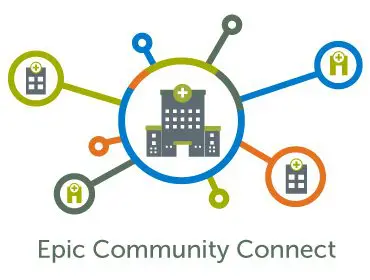
The Epic Community Connect program helps address these challenges by providing access to Epic without the cost and resource burden of a standalone Epic implementation. By enabling organizations to access Epic through a host organization, the program supports interoperability and expanded patient access.
Epic Community Connect implementations also create an opportunity to decommission costly legacy systems. Migrating historical data into an archive, such as HealthData Archiver®, allows organizations to maintain access to critical records while reducing cost, security risk, and operational complexity.
How does Epic Community Connect Work?
Epic continues to lead the acute care EHR market, with a 42.3% market share. The 2025 U.S. Acute Care EHR Market Share report from KLAS notes that beyond technology alone, Epic’s reputation for customer partnership has positioned it at the center of many EHR decisions across the industry.
While Epic may be financially out of reach for many smaller or rural hospitals, the Epic Community Connect program provides an alternative path. Through the program, these organizations partner with a larger Epic‑using “host” hospital to leverage Epic’s capabilities without assuming the full cost, infrastructure, or administrative burden. The host organization manages Epic and extends access to Community Connect participants.
Benefits of Epic Community Connect
Organizations participating in Epic Community Connect can realize several key advantages:
- Access to advanced EHR technology without the cost and staffing requirements of an independent Epic implementation.
- Improved interoperability and care coordination across a regional or community‑based network.
- Technical and regulatory confidence, supported by Epic’s HIPAA‑compliant communication framework.
- Cost containment, particularly for financially constrained rural and independent providers.
- Progress toward a unified patient record, improving information flow between providers and patients.
Supporting Epic Community Connect Transitions: Legacy Data Matters
As Epic becomes the go‑forward EHR, organizations must determine how to manage the legacy systems it replaces. Maintaining those systems long term can introduce unnecessary cost, cybersecurity exposure, and operational complexity.
Harmony Healthcare IT supports organizations moving to Epic Community Connect by helping plan and execute legacy system decommissioning through data migration and data archiving. When archived historical records are integrated with Epic via secure Single Sign‑On, clinicians can access legacy information at the point of care—supporting continuity, compliance, and quality without maintaining obsolete systems.
Legacy Data Planning Considerations
Conversion vs. Archival
Not all patient, business, or employee data from replaced systems is converted to Epic due to cost and complexity. However, much of this data must still be retained to meet record‑retention requirements and legal needs. Archiving offers a cost‑effective, compliant alternative. Looking for more information on Epic conversions? Read the “Epic Conversion Covert vs. Archive Decision Guide.”
Continuity and Quality of Care
Access to historical patient data, including legacy EHR records, can be critical for informed clinical decision‑making. Providing clinician access through Epic ensures historical context is preserved.
System Consolidation and Risk Reduction
Archiving enables organizations to decommission legacy systems entirely, reducing infrastructure costs, minimizing cybersecurity risk, and simplifying the IT environment.
Example: Supporting Epic Community Connect with Parkview Health
Parkview Health, a community‑based health system serving Northeast Indiana, Northwest Ohio, and Southern Michigan, participates in Epic’s Community Connect initiative. The program includes nine hospitals, dozens of hospital‑owned clinics, 23 independent clinics, and multiple federally qualified health centers (FQHCs).
Harmony Healthcare IT has supported several hospitals within Parkview’s Community Connect network by helping retire legacy EHRs and establish secure access to historical data through an active archive — enabling them to move forward on Epic without maintaining outdated systems.
Learn more about Parkview Health’s Epic Community Connect program and legacy EHR archiving strategy.
Supporting Community Connect Hosts and Participants
Organizations serving as Epic Community Connect hosts and participants must have a clear legacy data strategy. HealthData Archiver®, available in Connection Hub in the Epic Showroom, is a cloud‑based active archive designed to support legacy data management in Epic environments. With secure Single Sign‑On integration, it enables access to historical patient, employee, and business records while supporting release‑of‑information workflows and revenue cycle activities.
Whether your organization is preparing to transition to Epic Community Connect or serving as a host system supporting community providers, managing legacy data effectively is critical to long‑term success. Harmony Healthcare IT brings deep experience supporting Epic environments and Community Connect participants, helping organizations retire legacy EHRs, reduce risk, and maintain access to the data that still matters.
Contact us to learn more about how we can support your initiatives.
FAQs
What is Epic Community Connect, and how does it help rural and independent hospitals?
Epic Community Connect is a program that allows rural and independent healthcare organizations to access Epic through a larger host health system, avoiding the cost and complexity of a full Epic implementation. The program helps address financial pressure by reducing infrastructure, staffing, and hosting expenses while improving interoperability, patient access, and information sharing across connected care networks.
What happens to legacy EHR data that is not converted to Epic?
Not all historical data from legacy EHR systems is converted to Epic due to cost, complexity, and clinical relevance. This data can be securely archived using an active archive, such as HealthData Archiver®, ensuring ongoing access for clinical care, compliance, audits, and legal needs without maintaining the original legacy system.
Can clinicians access archived legacy data directly from Epic?
Yes. When legacy data is archived using a solution that integrates with Epic, clinicians can access historical records through secure Single Sign‑On directly from Epic. This approach preserves clinical workflows, supports continuity of care, and avoids performance impacts on the Epic production environment.
Why is legacy data management important during an Epic Community Connect transition?
Legacy data management is a critical part of a successful Epic Community Connect transition. Maintaining outdated EHR systems increases cost, cybersecurity risk, and operational complexity—especially for financially constrained hospitals. Archiving legacy data allows organizations to decommission obsolete systems while maintaining compliant, long‑term access to historical records.
How does Harmony Healthcare IT support Epic Community Connect hosts and participants?
Harmony Healthcare IT helps both Epic Community Connect hosts and participant organizations establish scalable legacy data strategies. This includes retiring legacy EHRs, centralizing access to historical records, and supporting secure data access across multiple hospitals and clinics. The result is reduced risk, lower long‑term cost, and a more sustainable Community Connect ecosystem.