Summary

 HITRUST r2 Certification affirms Harmony Healthcare IT’s dedication to maintaining robust cybersecurity protocols and safeguarding sensitive information

Join Fellow Healthcare IT Pros

Tips, Guides, News & More

Sign Me Up
Harmony Healthcare IT is HITRUST Certified

Harmony Healthcare IT (HHIT), a leading provider of health data management and archiving solutions, today announced that it has earned its fifth HITRUST r2 Certification for its ETL Environment, HealthData Platform, Data Center, and Workstations. This certification demonstrates the organization’s continued excellence in safeguarding protected health information and maintaining the industry’s highest standards for information protection and risk management. The certification was first achieved in 2017.

HITRUST r2 Certification demonstrates that the organization’s systems, products and infrastructure have met demanding regulatory compliance and industry-defined requirements and is appropriately managing risk. This achievement places Harmony Healthcare IT in an elite group of organizations worldwide that have earned this certification.

By including federal and state regulations, standards, and frameworks and incorporating a risk-based approach, the HITRUST Assurance Program helps organizations address security and data protection challenges through a comprehensive and flexible framework of prescriptive and scalable security controls.

“Achieving our fifth HITRUST r2 Certification underscores our unwavering commitment to protecting sensitive healthcare data,” said Brian Liddell, President and CFO at Harmony Healthcare IT. “Our clients trust us to safeguard their most critical information, and this achievement reaffirms that we consistently meet the industry’s most demanding benchmarks for security, compliance, and privacy.” “The HITRUST Assurance Program is rigorous and reliable because of the comprehensiveness of control requirements, depth of review, and consistency of oversight,” said Bimal Sheth, Executive Vice President, Standards Development & Assurance Operations at HITRUST. “HITRUST r2 Certification demonstrates Harmony Healthcare IT is taking the most proactive approach to cybersecurity, data protection, and risk management.”
Healthcare IT tips, guides, news & more delivered to your inbox

Learn More

Summary

Harmony Healthcare IT has been named a 2025 KLAS Consistent High Performer. This recognition highlights three consecutive years of exceptional customer satisfaction for our HealthData Archiver® solution.

Join Fellow Healthcare IT Pros

Tips, Guides, News & More

Sign Me Up
Harmony Healthcare IT Named as KLAS High Performer

Harmony Healthcare IT is proud to be named a 2025 Consistent High Performer by KLAS Research for our archiving solution HealthData Archiver®. This prestigious recognition highlights our unwavering commitment to delivering exceptional client satisfaction year after year.

What Does This Recognition Mean?

Being recognized as a Consistent High Performer isn’t a short-term achievement—it’s a testament to sustained excellence in customer satisfaction. To earn this distinction, KLAS requires that a solution maintains an overall performance score of 90 or above on a 100-point scale for three consecutive years (December 2021–December 2024). This means our clients have consistently rated their experience with HealthData Archiver at the highest levels across multiple dimensions of customer satisfaction.

By earning this recognition, Harmony Healthcare IT joins an elite group of just 26 software solutions and services firms recognized in the inaugural KLAS Consistent High Performers report. While these organizations help healthcare professionals improve various aspects of healthcare, they’re all united by one common thread: a relentless focus on customer success.

Among this select group, customer loyalty speaks volumes. An impressive 98% of software customers said they would buy their solution again, with relationship strength emerging as a top driver of satisfaction.

The Foundation of Our Success: Customer-Centric Practices

The KLAS report reveals that all consistent high performers cite customer-centric practices as the cornerstone of their sustained success. At Harmony Healthcare IT, this philosophy is embedded in everything we do.

As one of our clients reported to KLAS, “Harmony Healthcare IT has been the easiest vendor to work with. We have a long way to go to have everything archived, but the vendor is amazing.”

Our success is built on a foundation of trust—safeguarding sensitive patient data, delivering reliable technology, and standing beside our clients as long-term partners. This three-year recognition by KLAS validates that commitment and reflects the team’s unwavering focus on customer service, performance, and innovation designed to meet healthcare’s evolving needs.

Measuring What Matters: ROI and Outcomes

In today’s healthcare environment, demonstrating return on investment is critical. That’s why we help clients measure return on investment by defining success metrics early in the engagement, aligning our solution to your strategic goals, and tracking measurable results such as efficiency gains and cost savings.

According to the KLAS research, money’s worth and the ability to drive tangible outcomes are the metrics most correlated with overall customer satisfaction—areas where we’re proud to excel.

With HealthData Archiver®, healthcare organizations can securely archive legacy clinical, financial, and administrative data in a single platform that supports compliance, interoperability, and efficient access. The solution enables providers to reduce costs associated with maintaining legacy systems while ensuring clinicians and staff can retrieve historical data when and where they need it.

Performance Built on Trust, Reliability, and Partnership

The Consistent High Performer designation represents more than a single moment of excellence—it recognizes organizations that continually delight customers year after year. Companies achieving this level of recognition pair reliable results with proactive partnership, transparent communication, and continual improvement. That consistency builds the trust providers depend on to deliver better care.

This recognition from KLAS validates what we’ve always believed: when you put customers first, invest in strong relationships, and relentlessly focus on driving value, success follows.

As healthcare continues to face unprecedented challenges around data management, legacy system migrations, and regulatory compliance, we remain committed to being your trusted partner—not just for today, but for years to come.

Healthcare IT tips, guides, news & more delivered to your inbox

Learn More

Summary

Recognition highlights three consecutive years of exceptional customer satisfaction for HealthData Archiver® solution. 

Join Fellow Healthcare IT Pros

Tips, Guides, News & More

Sign Me Up
Harmony Healthcare IT Named as KLAS High Performer

Harmony Healthcare IT, a leading provider of health data management, today announced that its flagship product, HealthData Archiver®, has been recognized in the KLAS 2025 Consistent High Performers Report.

The distinction is awarded to healthcare software and services companies that have demonstrated sustained excellence in customer satisfaction over a three-year period. Harmony Healthcare IT achieved an overall performance score above 90 out of 100 each year from December 2021 through December 2024, meeting the rigorous criteria set by KLAS for consistent performance and customer loyalty.

KLAS Research created the Consistent High Performers list to recognize vendors whose customers repeatedly report superior experiences across categories such as culture, relationship, operations, product, and value. According to KLAS, 98% of respondents for recognized vendors said they would buy the same solution again, underscoring the strength of vendor partnerships and customer confidence.

“At Harmony Healthcare IT, our success is built on trust: we safeguard sensitive patient data, deliver reliable technology, and stand beside our clients as long-term partners,” said Brian Liddell, President/CFO of Harmony Healthcare IT. “Being recognized by KLAS for consistent excellence over three years validates that commitment. It reflects our team’s unwavering focus on customer service, performance, and innovation to meet healthcare’s evolving needs.”

Harmony Healthcare IT’s HealthData Archiver® helps healthcare organizations securely archive legacy clinical, financial, and administrative data in a single platform that supports compliance, interoperability, and efficient access. The solution enables providers to reduce costs associated with maintaining legacy systems while ensuring clinicians and staff can retrieve historical data when and where they need it.

“Being named a KLAS Consistent High Performer means you don’t just delight customers once, but you keep doing it year after year,” said Adam Gale, CEO of KLAS Research. “Companies at this level pair reliable results with proactive partnership, transparent communication, and continual improvement. That consistency builds the trust providers depend on to deliver better care.”

To learn more about the 2025 Consistent High Performers and read the full report, visit https://klasresearch.com.

Healthcare IT tips, guides, news & more delivered to your inbox

Learn More

Summary

An in-depth conversation with Scott Smiser, a health system IT leader who has supported many EHR migration and archiving projects.  


Join Fellow Healthcare IT Pros

Tips, Guides, News & More

Sign Me Up
EHR Migration Strategies Answered from a CIO

Scott Smiser, FACHE, FHIMSS, CHCIO, is a healthcare IT consultant who has held numerous roles at healthcare systems across the country, including as chief innovation and technology officer, chief information officer, and corporate IT director. With decades of experience supporting healthcare organizations through major technology transitions, Smiser has a nuanced understanding of what makes EHR migration projects successful.

Recently, he was part of the senior leadership team for one of the industry’s largest and most complex EHR migration projects — transitioning 11 hospitals, 300 clinics, and multiple products from Cerner Millennium to Epic. The migration was particularly challenging given its scale: a database containing millions of patient records spanning more than two decades.

“It was very important to find a partner that could deliver not only on the conversion, but on the timeline,” Smiser explains, noting that the organization, like many hospitals and health systems, faced strict deadlines tied to legacy vendor contract expirations. “We needed to time everything right and we needed a strong partner to support us through the process.”

Smiser says collaborating with Harmony transformed what could have been a stressful process into a manageable initiative. “Once we got started, there weren’t any major hiccups. We were just touching base to make sure things were moving at the right pace — and they always were.”

Harmony recently sat down with Smiser to learn more about his approach to EHR migration projects and gather his advice for hospitals and health systems tackling similar initiatives. The conversation covered everything from early planning considerations to partner selection criteria.

Q: Many IT leaders understandably focus heavily on conversion and migration when preparing for new EHR implementations. Yet you’ve emphasized that legacy data archiving should receive equal attention from the outset. Why is this critical? 

Smiser: Archiving and decommissioning legacy systems needs to be at the forefront of the discussion — and that’s where many hospitals and health systems get sideways with these projects. They don’t focus on archiving and decommissioning early enough.

The problem is that when archiving is an afterthought, organizations can miss critical archiving milestones that hinder their ability to decommission their legacy system in a timely manner. For example, they may not begin the archiving process until six months before their legacy system contract expires, however, the archiving process may take up to 12 months. As a result, they are stuck paying the maintenance and support fees for the legacy system — sometimes months or years longer than necessary. Prioritizing legacy data archiving at the beginning of projects significantly reduces that risk.

“When any hospital makes the decision to move forward with a new EHR, the discussion around what data will be converted versus what needs to be archived must be at the forefront of decision-making.”

Q: You’ve mentioned the importance of having a strong data governance team in place during migrations. What role does this team play and who should be involved? 

Smiser: The data governance team should include representation from risk management, legal, compliance, and IT. This group can help ensure proper data policies and procedures are followed throughout the project — including helping determine which data should be migrated and which should be archived.

These decisions can be extremely tricky and service line leaders should also be involved, as they can provide important context during this process. However, service line leaders often want to migrate all patient data to the go-forward system. While that is understandable, it increases the cost and complexity associated with migration projects.

A data governance team can come in and say, “Here are our guiding principles and here’s how we comply with federal and state requirements. Based on what service line leaders told us is most important, here is what we recommend migrating versus archiving.”

One other essential consideration is ensuring that the data retention policies within the organization are compliant with state and federal guidelines. I’ve found that they don’t always match up. That’s a serious problem that needs to be addressed before you’re in the middle of a migration.

Q: You’ve seen migration projects where inadequate data mapping and testing created significant problems. What goes wrong when organizations don’t properly vet their data conversions, and how can they avoid these pitfalls? 

Smiser: It’s critical to have the right folks involved with data mapping and testing. In fact, I can think of two major migration projects in which conversions were completed but not vetted and tested properly.

When this occurs, it leads to two possible scenarios: (1) the team needs to run the complete migration scripts again to pick up missing data elements, or (2) the team needs to determine what wasn’t extracted and pull those items in separately. Both scenarios result in timeline delays and resource strains.

To avoid this, I recommend ensuring you have the right mapping and testing team in place (it should include your technical team, your go-forward EHR analysts, your business analysts, and even your clinical informaticists) and being very specific regarding their roles and responsibilities.

“Never assume that because the script ran and the data made it over that your organization is ready to move forward with a full conversion. You absolutely need to vet that data thoroughly and spot-check it to ensure it converted correctly.”

Q: What are your top pieces of advice for organizations evaluating migration partners? 

Smiser: There are several things that come to mind. First, ensure that you find a consultative and strategic partner — not just another vendor. When I select vendors, a lot comes down to who I feel most comfortable with. Many players have capability, but for me as a decision maker, it’s always been about trust and partnership.

Also, when evaluating vendors, ask how they will tailor their approach to meet your unique needs. Your situation will not be the same as their previous 20 customers, and they should be able to readily answer that question.

Finally, consider selecting a migration partner that also specializes in data archiving. Many hospitals treat these as two separate functions with two separate vendors. If you’re thinking ahead about your data extraction and archival needs, finding a partner with deep expertise across both areas can save time and resources.

“Vendor reputation matters, KLAS ratings matter, strong references matter, and finding a relationship-focused partner matters.”

Ready to discuss your EHR migration or archiving strategy? Connect with Harmony Healthcare IT’s migration specialists to learn how we can support your organization’s success. Contact us today.

Healthcare IT tips, guides, news & more delivered to your inbox

Learn More

Summary

Veteran healthcare technology leader to drive revenue strategy and client growth.

Join Fellow Healthcare IT Pros

Tips, Guides, News & More

Sign Me Up
Sharon Cook is elected as CRO at Harmony Healthcare IT

Harmony Healthcare IT, a leading provider of health data management and archiving solutions, today announced the appointment of Sharon Cook as Chief Revenue Officer (CRO).

Cook brings to Harmony Healthcare IT more than two decades of experience in healthcare technology sales, business development and team leadership, including senior roles at Inovalon and Salesforce. In her new role, she will lead revenue generation and oversee strategic sales operations with a focus on client success.

“Sharon is a proven, people-first leader who knows how to build high-performing teams and forge lasting customer relationships,” said Brian Liddell, President, Harmony Healthcare IT. “Her combination of strategic vision and disciplined execution will help us scale responsibly while delivering measurable value to the healthcare organizations we serve.”

Known for shaping go-to-market strategies that align product innovation with customer needs, Cook will focus on growth, team development and expanding partnerships that improve outcomes across provider and payer organizations.

“I’m excited to build on Harmony Healthcare IT’s strong foundation and accelerate growth by aligning our solutions even more tightly to client priorities,” Cook said. “Our goal is to deliver innovative, results-driven technology that’s easy to adopt and clearly moves the needle for our customers and to ultimately have a positive impact on patients.”

Healthcare IT tips, guides, news & more delivered to your inbox

Learn More

Summary

Improving patient experience begins with fostering an environment where open, honest communication feels safe and natural. Yet, while honesty is critical to quality care, it isn’t always easy to achieve. To learn more about why patients lie, why they break rules, and how to improve communications, we surveyed 1,000 Americans on their interactions with doctors

Join Fellow Healthcare IT Pros

Tips, Guides, News & More

Sign Me Up
The Importance of Patient Honest in Healthcare

When doctors and patients communicate openly and honestly, it leads to more accurate diagnoses and improved health outcomes. A clear understanding of a patient’s medical history, including sensitive details such as substance use, can enhance safety and lower the risk of harmful drug interactions. Moreover, patients who feel safe being honest report higher satisfaction with their healthcare providers.

But the responsibility of being transparent is not only on the patients, our study found that there are also ways doctors can create safe environments that encourage honest communication.

The Honesty Gap: Why 37% of Patients Lie to Their Doctor

Statistics about patients lying to doctors - report by harmonyhit.com

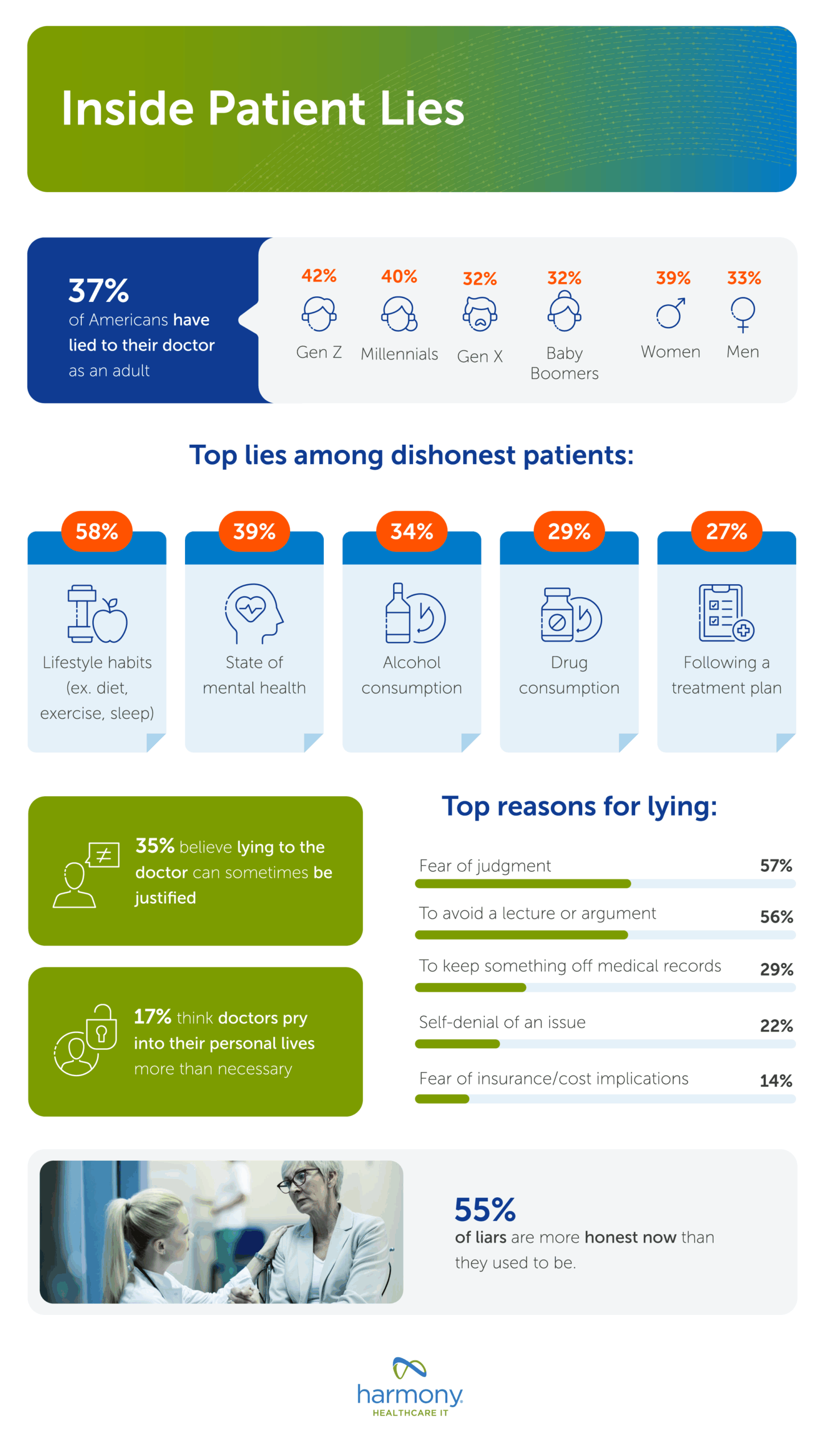
Our report found that 37% of Americans admit to lying to their doctors, especially younger generations. Nearly a third (32%) of Baby Boomers and Gen X are dishonest, while 40% of Millennials and 42% of Gen Z lie. When it comes to gender, 39% of women lie and 33% of men.

Patients are most likely to conceal aspects of their daily lifestyle, perhaps because they underestimate the impact on their health or because they view details like relationship status as too personal to share. Over a third (35%) believe lying to the doctors can be justified at times, and 17% think doctors pry into their personal lives more than necessary.

Top lies patients tell their doctors:

  1. Lifestyle habits (ex. diet, exercise, sleep) – 58%
  2. State of mental health – 39%
  3. Alcohol consumption – 34%
  4. Drug consumption – 29%
  5. Following a treatment plan – 27%

Patients value positive interactions with their doctors and often want to avoid conflict or embarrassment. The most common reasons for lying include fear of judgment or trying to sidestep a lecture or argument. Financial concerns also play a role—29% have hidden information to keep it out of their medical record, and 14% worry about potential insurance consequences.

Top reasons why patients lie:

  1. Fear of judgment – 57%
  2. To avoid a lecture or argument – 56%
  3. To keep something off medical records – 29%
  4. Self-denial of an issue – 22%
  5. Fear of insurance/cost implications – 14%

The good news is that over half (55%) of liars say they are more honest today than they were in the past, even though 86% did not experience negative consequences from lying.

Why So Many Patients Ignore Medical Advice

Statistics about patients ignoring doctor’s medical advice - report by harmonyhit.com

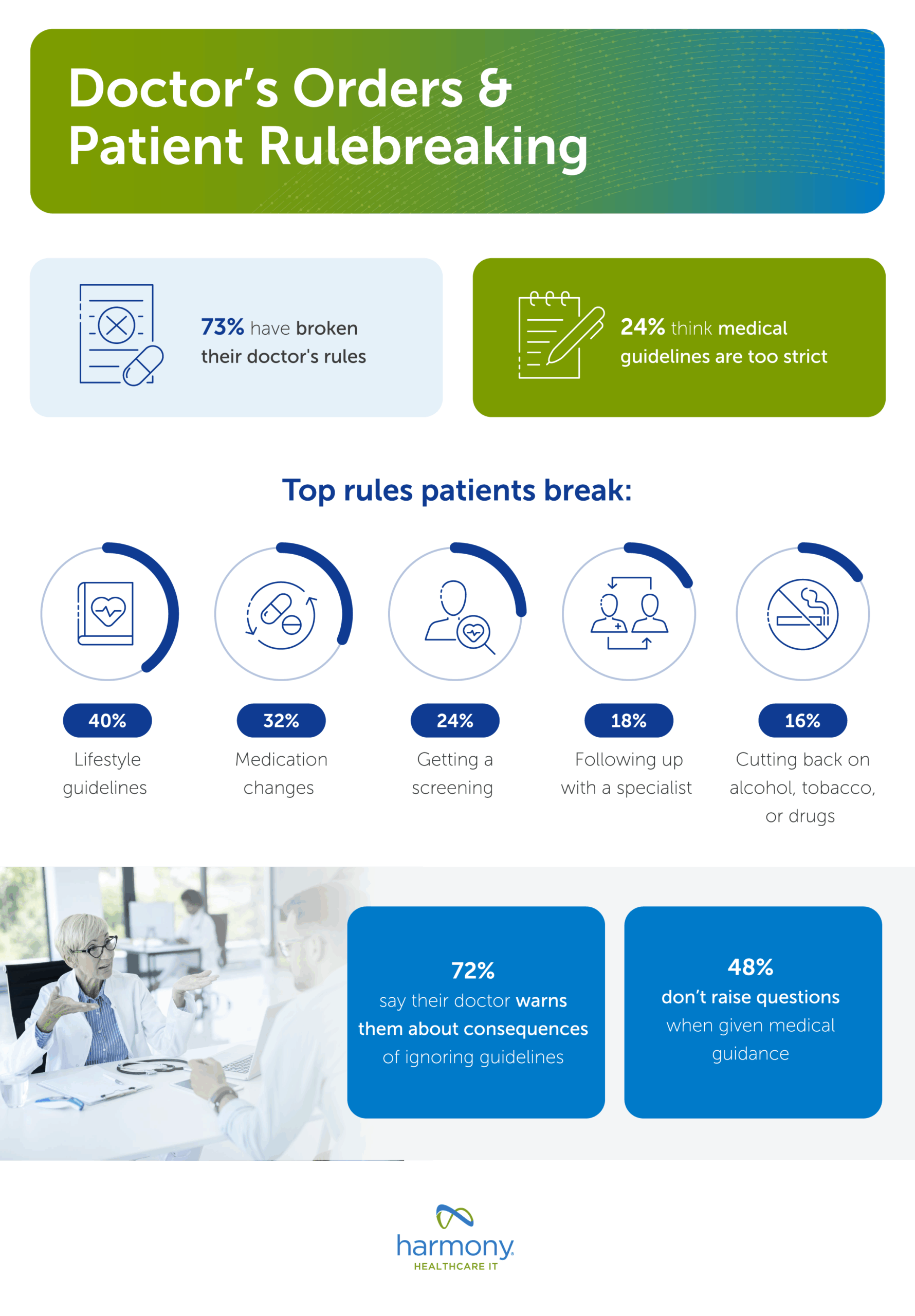
Another harmful patient behavior is ignoring guidelines and recommendations. Our study found that 73% of patients admitted to breaking their doctor’s rules, even though their doctors warn them of consequences 72% of the time.

Many of them think that doctors are being too cautious of consequences, with nearly a quarter (24%) reporting that medical guidelines are too strict. Another reason they could sidestep recommendations is to avoid discussion or hurry up. Nearly half (48%) fail to raise questions when given medical guidance.

The top rule that patients break is their doctor’s lifestyle recommendations, like not getting enough sleep or exercising. Next in line were medication changes, including behaviors like taking larger doses than prescribed or not finishing a round of antibiotics.

Top rules patients break:

  1. Lifestyle guidelines – 40%
  2. Medication changes – 32%
  3. Getting a screening – 24%
  4. Following up with a specialist – 18%
  5. Cutting back on alcohol, tobacco, or drugs – 16%

Empathy & Warmth is the Top Motivator for Patient Honesty

Statistics about doctor and patient communications - report by harmonyhit.com

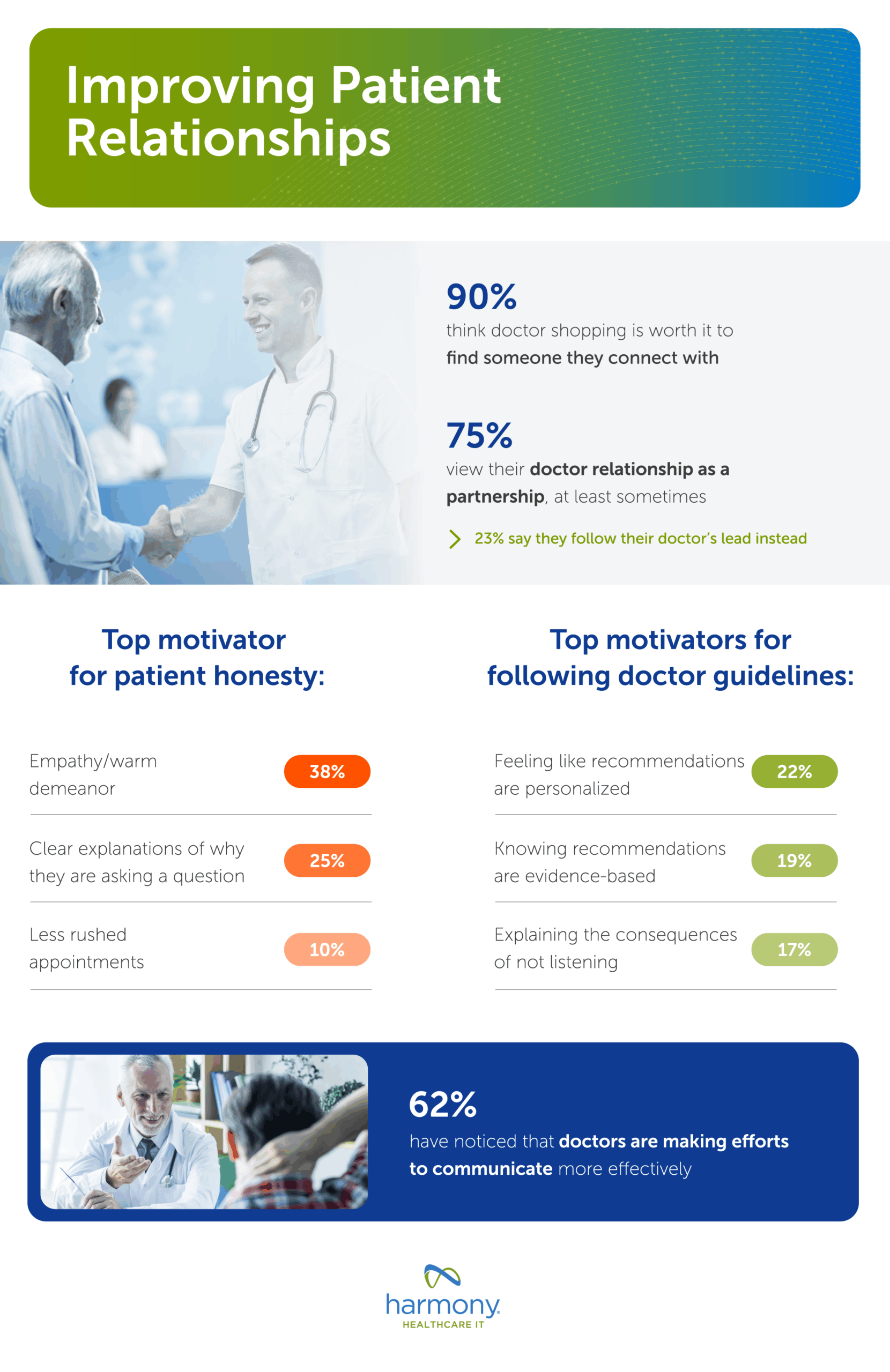
In the age of healthcare AI, telehealth, and rushed appointments, patients are seeking a personal touch and connection. Almost all (90%) think doctor shopping is worth it to find someone they connect with.

The data shows that kindness is the key to building connection and laying the foundation for open doctor and patient communication. When asked about their top motivators for honesty, 38% of patients responded with empathy and warm demeanor. Patients also want to know why a doctor is asking for private information. Without that context, they may hesitate to share details or feel as though the questions are unnecessarily intrusive.

Top motivators for patient honesty:

  1. Empathy/warm demeanor – 38%
  2. Clear explanations of why they are asking a question – 25%
  3. Less rushed appointments – 10%

Patients describe a range of relationships with their doctors. Most (75%) feel they work in partnership (at least some of the time) collaborating on medical decisions, while 23% say they primarily follow their doctor’s lead.

When it comes to listening to their doctor’s rules, the top motivator for compliance is feeling like recommendations are tailored to them. Patients would also be motivated by knowing recommendations are evidence-based and understanding the consequences of not listening.

Top motivators for following doctor guidelines:

  1. Feeling like recommendations are personalized – 22%
  2. Knowing recommendations are evidence-based – 19%
  3. Explaining the consequences of not listening – 17%

Although many patients admit to lying or breaking their doctor’s rules, most still recognize efforts to create a better experience. In fact, 62% said they’ve noticed doctors making strides to improve communication.

Building stronger communication and trust between doctors and patients is only part of the equation in growing a healthcare organization. They also need reliable systems that support accurate, accessible data.

Harmony Healthcare IT partners with healthcare organizations to ensure that legacy data is managed with security and precision. Through a consultative approach, we help determine which records should be migrated into new systems and securely archive the rest. Our solutions, including HealthData Archiver®, AR Manager®, and HealthData Locker, provide organizations with streamlined access, compliance support, and long-term data protection.

Methodology

In September 2025, we surveyed 1,000 Americans about their interactions with doctors. Among respondents, 49% were men, 49% were women, and 2% were nonbinary or preferred not to say. Ages ranged from 19 to 75 with an average age of 45.

Fair use

When using this data and research, please attribute by linking to this study and citing www.www.harmonyhit.com.

Healthcare IT tips, guides, news & more delivered to your inbox

Learn More

Summary

An in-depth conversation with David Winn, who has guided dozens of organizations through successful data transitions.

Join Fellow Healthcare IT Pros

Tips, Guides, News & More

Sign Me Up
Three steps for health IT leaders to consider when archiving

David Winn, MBA, CHCIO, RHIA, is Vice President of Information Services at Parkview Health, a community-based system serving Northeast Indiana, Northwest Ohio, and Southern Michigan. Beyond overseeing Parkview’s HIM practices, Winn heads up the Parkview Connect program, which is led by UpVia Health and hosted through Parkview Health. The program provides independent clinics, FQHC facilities, and rural hospitals in Indiana and Ohio with access to Parkview’s full Epic EHR capabilities at dramatically reduced prices.

Parkview Connect addresses one of healthcare’s most pressing challenges: the significant financial pressures facing rural and independent facilities. As part of Epic’s broader Community Connect initiative, the program provides financially constrained organizations with access to cutting-edge technology while building a more integrated network that enhances patient access, interoperability, and information sharing across the region. Currently, nine hospitals, dozens of hospital-owned clinics, 23 independent clinics (including specialty clinics and free clinics), and FQHCs are part of the program.

Over the course of his extensive tenure leading Parkview Connect, Winn has helped dozens of participants navigate complex decision-making regarding how to convert their existing data and systems into Epic. This includes determining which legacy data should be migrated, which should be archived, and how to execute these processes without disrupting operations and patient care.

Harmony Healthcare IT recently sat down with Winn to explore his approach to healthcare data archiving and gather his advice for hospitals and health systems embarking on similar initiatives.

“When most people think of an archive, they think of data being locked in a vault somewhere that is difficult to access. Maybe it’s time to coin a new word for archiving. The data in today’s archives has value, and effective archiving partners are making it easily accessible.”

Q: What are some of the first things you discuss with Parkview Connect participants as they begin planning their legacy data archiving approach?

Winn: I focus on four key areas: cost, efficiency, accessibility, and billing/financials — especially critical factors for rural organizations and FQHCs operating on tight budgets.

Cost is always a primary concern. While expensive archiving solutions exist, we’ve found that Harmony delivers both economical pricing and advanced capabilities that meet our participants’ needs.

For efficiency, I strongly recommend solutions with single sign-on capabilities that integrate with the EHR. This is extremely beneficial for patient care, as providers can instantly retrieve legacy data that informs clinical decisions without leaving their workflow.

The archive must also be user-friendly for HIM teams handling records requests. Easy access and intuitive navigation are essential for regulatory compliance and operational efficiency.

“With modernized legacy data archiving solutions, physicians, data analysts, and Health Information Management (HIM) professionals now have immediate real-time access to the patient clinical information directly through the EMR. The deep level of clinical data holds historical value that not only completes the patient story but contributes to the data needs of population health metrics, predictive analytics and modeling, and opens greater opportunities in the areas of genomics, precision medicine, and research.”

Q: You mentioned billing/financials as another key consideration. How does this factor into archiving decisions?

Winn: Financials, particularly accounts receivable, is a crucial consideration during system transitions. Beyond clinical records, organizations have active billing processes underway that don’t simply stop when switching systems. For the next nine to 12 months, new payments will still be coming in for services documented in the old system.

Harmony Healthcare IT’s solution has a dynamic A/R component, so the legacy billing system can be brought into Harmony’s system and gradually run down — rather than having to keep the A/R component separate (in a potentially costly system) until everything is run down and can be transitioned to Harmony.

Staff members can receive payments in the new system and easily apply them to the appropriate patient. Without this capability, organizations face a manual nightmare of cross-referencing between systems and potentially higher costs due to a slower transition from the legacy A/R system. Not having the insurance payment detail creates significant gaps in patient payment plans, reconciling insurance payments against contractual agreements, and negatively impacts the hospital’s payment denial management processes.

“Without the right tools, you’re dealing with checks coming in that you can deposit, but then how do you figure out which patients to apply those payments to? It’s a nightmare if you don’t have that capability, but Harmony allows us to manage this seamlessly.”

Q: What are your top pieces of advice for organizations that are evaluating archiving partners?

Winn: I have several key recommendations, but I’ll share the first three that came to mind.

First, find a partner that takes a consultative approach. The best vendors ask probing questions upfront, many you haven’t considered, which leads to better project planning and can reduce project costs. I often see organizations planning to archive far more data than necessary. A good partner will challenge this and help you focus on what really needs to be archived.

Second, lead with your pain points in vendor discussions. Share more detail than you think necessary. Strong archiving partners often provide unexpected solutions and may identify opportunities to decommission other legacy systems, consolidating that data into your archive for long-term ROI.

Finally, look under the hood when evaluating partners. Some overpromise on capabilities and timelines, while others present quotes with hidden fees that surprise you later. It’s a good sign when a potential partner is asking you lots of questions during initial meetings —that means they’re considering all factors to give you a comprehensive project estimate.

“Find a partner who can say, ‘Here’s what’s smart to migrate, here’s what we need to consider from a regulatory perspective, and here’s the most effective way to bring it over and store it.’ That level of strategic guidance is important.”

Is your organization embarking on a legacy data archiving project? Contact Harmony Healthcare IT today to learn how we can support your unique needs and goals.

Healthcare IT tips, guides, news & more delivered to your inbox

Learn More

Summary

Healthcare organizations are reevaluating their clinical documentation practices to harness the full potential of integrated technology solutions. The key objectives behind enhancing document management operations include maximizing reimbursement accuracy, strengthening patient safety protocols, and maintaining compliance with regulatory standards. What strategies can your organization adopt to elevate its document management approach? Harmony Healthcare IT can help extract and migrate documents to a new solution.

Join Fellow Healthcare IT Pros

Tips, Guides, News & More

Sign Me Up
Clinical Document Management Strategy

The role of clinical documentation in healthcare.

Over the years, advancements have been introduced, with technology solutions significantly improving the accuracy of healthcare documentation. There are many reasons to continue to improve documentation systems and processes, including that 20 percent of all medical malpractice cases involve at least one documentation failure.

The challenges of clinical document management.

When not managed properly, clinical document management can present significant challenges for healthcare organizations, such as:

  • Ensuring security and regulatory compliance.
  • Fragmented medical information located in different places.
  • A lack of interoperability between different platforms and incompatible systems.
  • Integrating a new document management system (DMS) with existing legacy systems within a healthcare organization can be complex and require significant effort.
  • Systems that face scalability challenges when dealing with the increasing volume of data.
  • Operational, workflow and cost issues.

Recent efforts in the evolution of medical record documentation focus on technology and integration. This includes:

  • Converting paper forms, scans, and other unstructured content into digital formats.
  • Connecting with EHR/EMR systems so clinicians can access external documents and embedding analytics directly into the EHRs.
  • Centralizing all content related to a patient case or financial/administrative process to improve cross department collaboration.
  • Using technology tools to monitor regulatory requirements for retention and overall compliance.
  • Adopting generative AI (GenAI) to continue to transform documentation efforts.

The growing importance of EHR-integrated clinical documentation.

The initial phase of an effective documentation strategy involves identifying the essential elements that must be recorded. There are resources from regulatory bodies to help providers develop, or update, a medical record documentation standard that works for the organization.

The biggest step forward for an updated documentation strategy is to include EHR optimization. High performing teams are considering shifts from task-based individual software solutions to integrated systems (or EHR modules) that provide comprehensive access to information and outcome-oriented impacts. Integrating documentation into the EHR is important to enhance record efficiency and integrity.

There are stand-alone solutions like Hyland OnBase, Nuance, AGS Health, Scribe Create and others. These platforms sometimes integrate with EHRs which has become a must-have for modern health data management. Software systems also can present challenges related to usability, integration, and vendor support, which can prompt providers to consider alternative solutions.

Some EHRs offer built-in documentation management options, such as Epic’s Gallery, to integrate with existing workflows to support faster access to critical information.  For clinicians, this means faster access to critical information. For administrators, it means fewer silos and better alignment with enterprise systems.

Other EHRs that offer documentation modules include Oracle Health Document Imaging, Veridigm Sunrise Clinical Manager, athenaOne Document Management and NextGen Document Management.

The primary benefits of effective documentation management in healthcare:

  1. Faster reimbursement rates with fewer denials and reduced audit risk.
  2. Improved clinical quality and safety to support better decision-making and patient outcomes.
  3. Mitigated risk as strong documentation protects against liability and supports regulatory standards.
  4. Reduced complexity and improved workflows with integrated documentation modules that work within the EHR.

Transitioning from one document management system to another goes beyond the technical lift to a strategic opportunity.

As healthcare providers continue to streamline their data management footprints there may be changes needed in the clinical documentation solutions to execute on the strategy. If your organization is exploring alternatives to its document management or other software applications and decides to make a change, we can help.

Harmony Healthcare IT specializes in helping healthcare organizations:

  • Extract clinical documents from legacy document management application (like Hyland OnBase or other).
  • Migrate relevant documents into a new system (like Epic Gallery or other).
  • Archive older or redundant documents to reduce storage costs while maintaining access and compliance. This allows the decommissioning of outdated applications and servers.

Are you ready for a conversation about up-leveling your document management strategy with an eye on maintaining access to legacy data?

Healthcare IT tips, guides, news & more delivered to your inbox

Learn More

Summary

Michael Edmisten emphasizes that in today’s data-driven healthcare landscape, the success of health data archiving depends not just on technology, but on the strength of technical support behind it. He outlines three key areas where support teams make a critical impact: protecting sensitive patient data through rigorous security and compliance (like HIPAA and HITRUST), minimizing system downtime to ensure uninterrupted patient care, and enhancing user experience by offering responsive, human-centered service.

Join Fellow Healthcare IT Pros

Tips, Guides, News & More

Sign Me Up
Support blog on archiving

By: Michael Edmisten, Director of Client Experience and Support at Harmony Healthcare IT

The healthcare industry is increasingly reliant on data to drive decision-making, improve patient care, and streamline operations. Health data archiving has become a cornerstone of modern healthcare systems. However, an archive’s effectiveness can hinge on the technology itself and the quality and responsiveness of the daily technical support that underpins them.

One of the primary reasons a high-quality technical support team is essential in health data archiving is the need to ensure data integrity and protection.

Healthcare data is highly sensitive — containing personal and medical information that must be protected from unauthorized access and breaches. Responsive technical support teams are crucial in maintaining robust security protocols, promptly addressing vulnerabilities, and ensuring compliance with regulations such as HIPAA (Health Insurance Portability and Accountability Act).

For many organizations security has become the top priority for support staff, who adhere to industry-leading standards when handling sensitive data. Teams must employ multiple security and privacy layers that are integrated into support processes to ensure robust protections at every step. Organizations must also commit to maintaining HITRUST compliance, which underscores dedication to safeguarding health information.

This rigorous approach not only protects patient data but also instills confidence in clients, knowing that their information is managed with the highest level of security and integrity.

Minimizing Downtime and Disruptions

In the healthcare sector, even minor disruptions can have significant consequences. Downtime in data archiving systems can delay access to critical patient information, potentially impacting patient care.

High-quality technical support ensures that any issues are resolved swiftly, minimizing downtime, and maintaining the continuity of care. This responsiveness is vital in an environment where every second counts.

When planning for scheduled maintenance or downtime, it is critical to ensure seamless coordination through both vendor and internal Change Advisory Board (CAB) processes. The commitment to transparency helps organizations prepare and minimizes any potential disruptions. To avoid unplanned downtime, organizations should also consider advanced system monitoring tools that enable detection and address issues before they escalate.

This proactive approach allows organizations to maintain continuous communication and swiftly react if corrective action is needed, ensuring the highest level of service reliability and client satisfaction.

Enhancing the User Experience

Healthcare professionals rely on data archiving systems to perform their duties efficiently. When these systems are user-friendly and well-supported, it enhances the overall user experience.

Responsive technical support teams play a key role in this by providing timely assistance, addressing user concerns, and ensuring that the systems are intuitive and easy to navigate. A positive user experience translates to higher productivity and better patient care.

The user experience extends far beyond the technical user interface (UI) though. It encompasses the personal interactions and relationships between hospitals, clinics and other operations and support teams. Every touchpoint matters, from the initial contact to ongoing support.

Clients need to feel heard, valued, and supported. This human element is integral to the approach by partners as they strive to provide not only effective technical solutions but also a positive, collaborative experience that fosters long-term partnerships and client satisfaction.

Let’s connect.

Healthcare IT tips, guides, news & more delivered to your inbox

Learn More

Summary

Many healthcare provider IT teams have a track record and process to manage their organization’s applications and data. Everything is in place… until it is not. Acquisitions can add hundreds more applications, sometimes the go-forward EHR is upgraded, or there are other reasons to revisit the data lifecycle management effort. Learn about the six steps you can take immediately to improve your approach to managing data through all the twists and turns from creation through destruction.

Join Fellow Healthcare IT Pros

Tips, Guides, News & More

Sign Me Up
Six steps for data lifecycle management

EHR replacements, new applications added from multiple mergers or acquisitions, increasing interoperability demands, security issues, cost containment pressures and regulatory compliance. Healthcare IT teams now face a complex environment and a digital transformation that has been decades in the making.

Data lifecycle management is not a one and done activity.

Consider that mergers and acquisitions (M&A) can double or triple the number of applications within a healthcare enterprise environment. This leaves hospitals with hundreds (or even thousands) of current and legacy software systems that store patient information, billing, administrative records and for the hospital business itself.  With 6,093 hospitals in the U.S., that means there are millions of legacy software systems in play just at hospitals with data that needs a secure path forward. With data volumes tripling every three years and record retention rules spanning decades, a sustainable and evolving data lifecycle management plan is vital.

Data lifecycle management (DLM) refers to the comprehensive approach to managing data from creation to deletion.

The primary goal of DLM is to maximize the value of the data while ensuring the data is handled efficiently, securely and in compliance with regulations.

Healthcare DLM has five phases:

  1. Data Generation – Includes organizing data from inside and outside the organization as well as new data entry from clinicians and other staff members within the organization.
  2. Data Storage – As soon as there is new data, there needs to be a place for it to be securely stored, along with a backup and recovery plan.
  3. Data Sharing and Usage – Following organizational compliance plans, the data should be equipped for use and sharing (interoperability) inside and outside the organization and with patients.
  4. Data Archival – Any time there is a need to convert data from one system to another, there is the question of what to do with the data that is left behind and must be kept for years to come to meet retention requirements. Data that is not stored in the production applications but is needed for clinical care and compliance with record retention rules should be stored in an archive. With an integrated active archive, the data can be retrieved with a Single Sign-On from the active EHR.
  5. Data Deletion – When data is no longer needed, it can be destroyed following the organization’s data destruction policies in accordance with HIPAA regulations.

Why is data lifecycle management important?

There are many reasons to get a handle on data lifecycle management. Managing costs, improving security posture, streamlining the number of applications in operation and creating more efficient workflows are some of the most pressing concerns.

Cost containment is an ongoing pressure point for healthcare providers of all sizes. Annual support costs for legacy applications alone can run as high as 57 percent of the IT budget. The other major concern is security. Legacy software ranks as a leading entry point for cyberattacks.

What steps can providers take to establish (or uplevel) a sustainable data lifecycle management program?

We have identified six steps to help guide your next steps in creating or refreshing your data lifecycle management approach.

  1. Involve the Governance Team – Ensure you have a cross-functional group that works together regularly to develop (and update) a solid strategy, policies and plans to serve the organization. Governance teams should represent compliance, legal, business operations and technical teams. There also should be C-suite and senior management included as part of a Data Governance Council to help set overall direction and policies. Check out our guidance for the seven steps to implement strong data governance for legacy data.
  2. Update the Inventory – It is imperative to know what applications exist including details about their database size, server location, maintenance cost, date of retirement, etc. This tool can help. There also may be expanded inventory requirements from the newly proposed updates to the HIPAA Security Rule.
  3. Revisit the Legacy Data Management Strategy – This involves application rationalization and prioritizing the decommissioning of outdated legacy applications. It may also involve making changes to the type of long-term storage option for certain data types.
  4. Review Storage Options – More than 7 out of 10 CIOs from the College of Healthcare Information Management Executives (CHIME) reported their organizations have a data archive in place. That same number reported they have data archiving projects on their to-do lists. About 76 percent of hospitals and health systems have legacy software footprints that make up one-fifth (20 percent) of their technology assets. There are options for long-term data storage that primarily are based on how often and why the legacy data will need to be accessed. This includes:
    1. Active Archiving is for data that the organization needs on a regular basis. The active archive offers numerous features and equips users with an easy-to-use interface, workflows, view/print/fax capabilities and Single Sign-On from the go-forward EHR, along with interoperability options. Active archiving is available for clinical, financial and operational records.
    2. Warm Storage is ideal for securely storing business-critical data that needs occasional access, with a limited interface for basic actions like file upload, download, and delete, with metadata tagging and retention rules for organization.
    3. Cold Data Storage works best for the compliant, long-term storage of raw source data that is not expected to be accessed and doesn’t require a user interface. It minimizes storage costs while allowing a technical resource to receive access to data if needed.
  5. Prepare for Future Access and Release of Information. Health IT solutions need to continually evolve to gather, store and share more information. Streamlining the application portfolio is an ongoing process that will help organizations stay nimble and equipped to securely store and release the data while employing the most efficient solutions.
  6. Integrate for Interoperability. Setting up the organization’s health IT for interoperability success involves a commitment to working with solutions that can integrate and deliver. The ONC defines four areas of EMR technology that play a vital role in creating an interoperable health IT environment.

Special Consideration: Include A/R and business applications in data lifecycle management planning.

While clinical EHR data may be the headline for a strong long-term data management program, it is not the whole story. It is important to take stock of the entire IT portfolio and look beyond the clinical EHRs within your organization. There can be financial, business and other operational data housed in a variety of applications that need a secure, long-term plan.

For example, data archiving is a strong solution to manage legacy accounts receivable applications. HealthData AR Manager® provides comprehensive management of collections for legacy A/R Records Wind Down. This helps reduce the cost of legacy system support, ensures record retention and compliance, enables account resolution during system transition and helps fortify the organization’s defense against cybersecurity threats as legacy applications can be decommissioned.

The six benefits of a solid data lifecycle management program

Implementing best practices for sustainable and forward-thinking, long-term data management offers business value in many areas of the operation. This includes:

  1. Consolidated data. A primary benefit of a robust data management program is efficient data organization that contributes to improved patient care.
  2. Improved security posture. Legacy and unsupported software ranks a bad practice according to the Cybersecurity and Infrastructure Security Agency (CISA). A streamlined application portfolio and consolidated data storage reduces risk to ePHI and the organization. Here are a few security questions to ask any future archiving partner.
  3. Cost savings. In a survey of CIOs, 58 percent reported decommissioning legacy applications provides cost savings. In most cases ROI from moving legacy financial, clinical and business applications is achieved within 18-24 months.
  4. Having a solid legacy data management program in place supports compliance with HIPAA, the 21st Century Cures Act and other compliance requirements.
  5. Improved workflows. With HealthData Archiver® accessible with Single Sign-On from the active EHR, workflows are improved. A new Legacy Record Indicator signals if there are historical records within the archive to further improve efficiency.
  6. Better data quality and utilization. Industry studies show that organizations with strong data governance frameworks report 20-40 percent higher data quality and 30-50 percent better data utilization.

Harmony Healthcare IT supports healthcare providers of all shapes and sizes with solid, sustainable data lifecycle management solutions.

Our HealthData Platform offers secure solutions for the management of protected health information with storage, workflows, transactions and interoperability capabilities. Our team offers deep and broad experience with more than 700 unique software applications.

Wherever you are on your lifecycle data management journey, we can help.

Let’s connect.

Healthcare IT tips, guides, news & more delivered to your inbox

Learn More