Summary

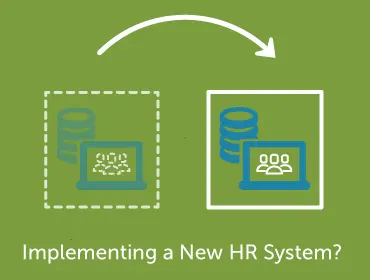
Human resource software today – such as Workday or Oracle’s PeopleSoft – continues to expand capabilities to streamline functions like payroll, benefits administration, training, performance management, and analytics. When implementing a new HR system, healthcare delivery organizations should consider what to do with legacy data that doesn’t convert. An active archive is a smart companion to a new human capital management (HCM) system to ensure ongoing seamless access for employee and business records that must be retained for compliance.

Join Fellow Healthcare IT Pros

Tips, Guides, News & More

Sign Me Up

Human capital management (HCM) software has evolved considerably in recent years. Early tools focused on basic human resource management (HRM) functions and administrative support while today’s technology utilizes more sophisticated programs that assist in overall corporate strategy and maximizing employees’ economic value to an organization. Workday and Oracle PeopleSoft are two commonly used HCM solutions. While David Duffield invented both, they are two separate companies, each battling for their piece of the healthcare HR management solutions market.

PeopleSoft, founded in 1987, was the first client-server HR system. It was acquired by Oracle in 2005 to become part of the world’s second largest application software company. Duffield went on to start Workday Human Capital Management (HCM) that same year with its cloud-based (through IBM) HR management solutions that include compensation, payroll, shift scheduling, time tracking and more.

Workday and PeopleSoft market share and deployment options

PeopleSoft and Workday control 37% of the HRM market. Currently, Workday has 22.3% market share, while Oracle PeopleSoft has 14.5%.

Choosing which application to utilize, or switch to, is often based on cost and functionality. One of the key differences between these two applications is their deployment options.

  • Workday is on the cloud, which may mean a lower total cost of ownership over other applications since on-prem hardware nor infrastructure is required.
  • PeopleSoft can be deployed to the cloud or on-premises. It is marketed for its intuitive user experience, customizable configurations, and ability to deliver actionable insights.

To determine which tool is the best fit, healthcare organizations must assess many factors including their own availability of IT and specialized support staff who may be needed to create and maintain a customized solution.

Replacing HR software tips-off a need for legacy data management.

After determining which solution works best with your ERP or HR strategy, it is time to determine how much data to convert into the new system when replacing PeopleSoft or Workday, and what to do with the legacy records.

That’s where data archiving comes in. Think of data archiving like the side car to your go-forward application after replacing an HR system, providing access to legacy HR/HCM data with secure, Single Sign-On from the active new system.

Cost savings and ongoing access to employee and business records are leading benefits of archiving.

An archive supports compliance with record retention requirements from the IRS, Fair Labor Standards Act (FLSA) and the U.S. Equal Employment Opportunity Commission (EEOC) and other state level organizations. There are HCM requirements to retain records such as:

  • Payroll (time and attendance)
  • Personnel files
  • Medical records
  • FMLA documentation
  • Tax records
  • Hiring records
  • Performance appraisals
  • Overtime hours
  • Job applications
  • I-9s

An archive helps ensure ongoing access to records and provides cost savings from removing legacy vendor licensing fees and maintenance contracts.  There are also soft costs to consider such as the time and effort it takes to maintain multiple applications in the portfolio.

Ready to have a conversation about your HCM data migration project?

Our team is equipped and ready.

We specialize in legacy record storage and release and have migrated and archived data from PeopleSoft, Workday and more than 700 other software brands for providers nationwide. Harmony Healthcare IT consistently ranks as a standout for archiving the largest and most complex clinical and financial software systems. We also received all A’s in the six customer experience pillars of culture, loyalty, operations, product, relationship, and value. These achievements underscore our steadfast commitment to keeping patient, employee, and business records accessible, usable, interoperable, secure and compliant for decades to come.

Let’s connect.

This blog has been updated from the previous version published June 21, 2023.
Healthcare IT tips, guides, news & more delivered to your inbox

Learn More

Summary

Promotes Brian Liddell to President and CFO, strengthens operational focus and positions company for continued growth.

Join Fellow Healthcare IT Pros

Tips, Guides, News & More

Sign Me Up
Harmony Healthcare IT announces Brian Liddell to President

Harmony Healthcare IT, a leading provider of health data management and archiving solutions, today announced the promotion of Brian Liddell to president and chief financial officer.

In his expanded role, Brian will oversee the day-to-day operations of the business while providing strategic direction. He will also lead innovation in technology to enhance the customer experience and enable greater operational efficiency across the organization.

“Brian’s leadership and strategic insight have been instrumental to Harmony’s sustained growth and fiscal discipline,” said Tom Liddell, CEO of Harmony Healthcare IT. “His expanded role reflects the confidence our team and board have in his ability to lead us into the next chapter of scale, innovation, and customer impact.”

Liddell has served in senior leadership roles at Harmony Healthcare IT for more than a decade, where he has consistently demonstrated a strong commitment to financial stewardship and value creation.

“I’m honored to take on this new role and help lead Harmony’s efforts to deliver smarter, more scalable solutions to our healthcare partners,” said Brian Liddell. “As our industry continues to evolve, we remain focused on driving outcomes that matter, through technology, service, and an unwavering commitment to data integrity.”

Healthcare IT tips, guides, news & more delivered to your inbox

Learn More

Summary

Refresh will focus on enhancing user experience and improving access to information. 

Join Fellow Healthcare IT Pros

Tips, Guides, News & More

Sign Me Up
Harmony Healthcare IT Launches New Brand

Harmony Healthcare IT, a leading provider of health data management, today announced a new digital launch. Refreshing, color, brand and affirming purpose with enhanced user experience through a redesigned website and updated messaging.

The digital refresh will enhance the overall user experience with improved navigation, deeper product education, and access to content that reflects the company’s growing portfolio of health data platform solutions.

At the heart of the refresh is a renewed focus on the company’s guiding principle – “Transforming Data. Elevating Care.” This message appears prominently across all brand touchpoints and reinforces Harmony’s belief that health data management is not just a technical function but a clinical imperative.

“This digital launch represents far more than a visual change. It reflects who we are today and where the industry is going,” said Tom Liddell, CEO of Harmony Healthcare IT. “We have become a trusted partner not only for migrating and preserving legacy data, but for making it usable in real time – in workflows that support clinicians, patients, and operations. That is the future of healthcare IT.”

“Harmony has always stood for stability and trust, and we are excited to communicate that value through our updated branding,” said Erik Johnson, Vice President of Marketing at Harmony Healthcare IT. “This comes at a time when we have been expanding our platform to meet the needs of health systems with innovative software tools and services. It is an exciting next chapter.”

To learn more about the company’s rebrand and solutions, visit harmonyhit.com.

Healthcare IT tips, guides, news & more delivered to your inbox

Learn More

Summary

Harmony Healthcare IT, a firm that works with health data management, surveyed over 1,000 Americans about their preferences about AI in healthcare. The data shows that while many are embracing technological advances, human oversight is crucial to maximize comfort with AI innovations.

Join Fellow Healthcare IT Pros

Tips, Guides, News & More

Sign Me Up
AI in healthcare infographic

AI is rapidly making its way into doctor’s offices, therapy apps, and even operating rooms—and most Americans are welcoming the shift. Whether it’s helping physicians reclaim time with patients or enabling faster diagnoses through data analysis, AI is increasingly seen as a value-add to traditional care.

Yet the evolution isn’t seamless. Therapists, in particular, are already contending with competition from tools like ChatGPT, as patients experiment with AI for journaling, mindfulness, and even crisis support. At the same time, deep anxieties remain about privacy, oversight, and the loss of human connection.

To better understand public sentiment, we surveyed Americans nationwide on how they view AI’s role across different corners of healthcare.

Patients See AI as a Tool for Better Access and Smarter Care

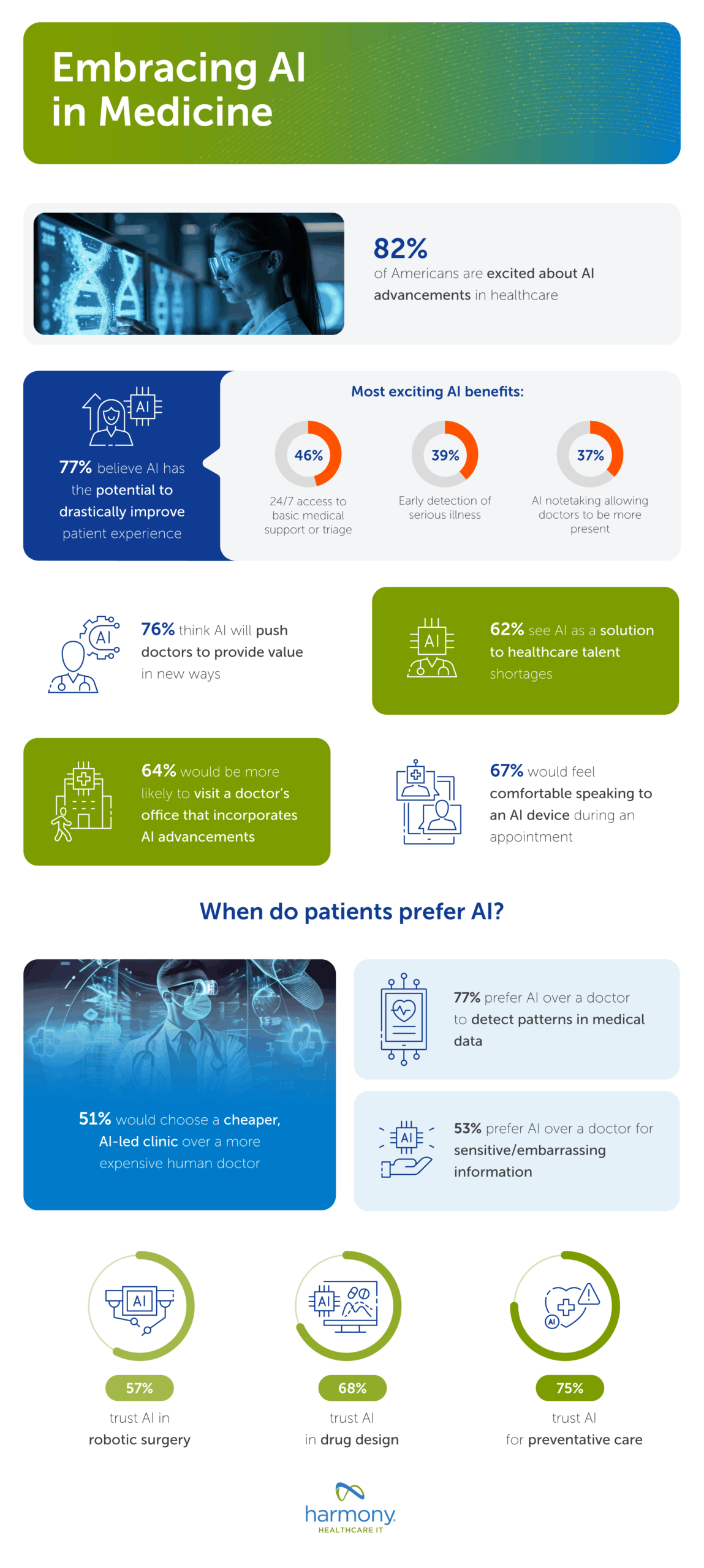
Americans are leaning into the AI revolution in healthcare, with 82% expressing excitement about how artificial intelligence could reshape medicine. Another 77% believe AI could significantly enhance the patient experience—a notable shift from Pew Research’s 2022 findings, which showed widespread skepticism toward healthcare AI.

The strongest perceived benefits include 24/7 access to basic medical support (46%), early detection of serious illnesses (39%), and AI-assisted note taking that frees doctors to engage more deeply with patients (37%).

What Patients Want: 24/7 Access, Faster Diagnoses, and More Face Time with Doctors

This shift is not just about convenience—it’s about transformation. More than three-quarters (76%) believe AI will push doctors to provide value in new, more human ways. And with 62% citing AI as a fix for ongoing healthcare talent shortages, the technology is increasingly viewed as essential infrastructure.

Tech-Savvy Patients Want AI at the Center of Care

AI isn’t just tolerated—it’s becoming a selling point: 64% percent of Americans say they’d be more likely to visit a clinic that incorporates AI advancements, and 67% would feel comfortable interacting with an AI device during their visit.

When cost is a factor, over half (51%) would choose a cheaper, AI-led clinic over a traditional one. And in specific scenarios, AI is the clear preference: 77% would rather rely on AI than a doctor to detect complex patterns in medical data, while 53% feel more comfortable disclosing sensitive or embarrassing issues to AI than to a human provider.

Other scenarios where patients trust AI include robotic surgery (57%), drug development (68%), and preventative care (75%).

Nearly 1 in 3 Americans Have Used AI as a Form of Therapy

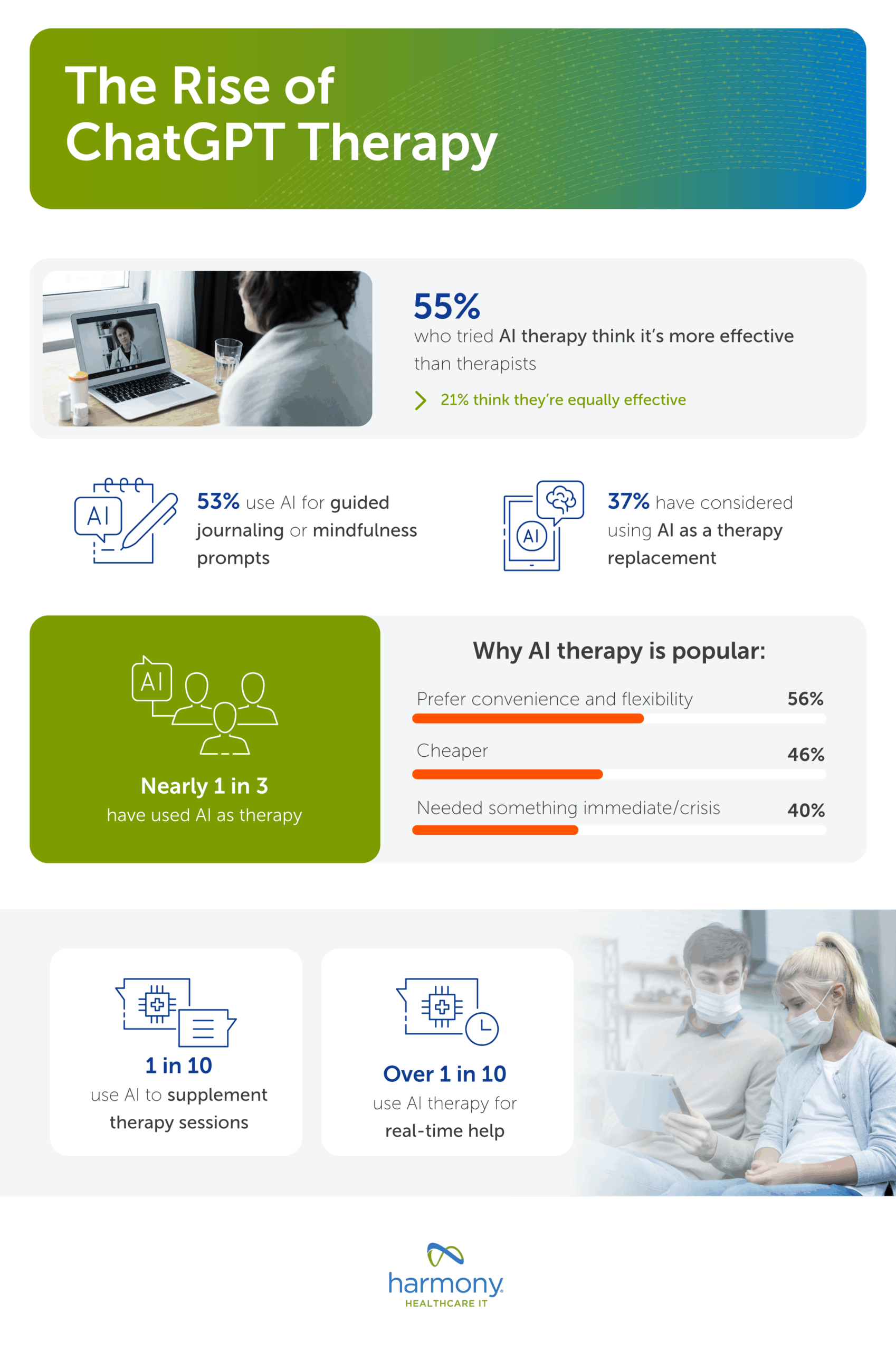
As AI tools become more sophisticated and accessible, a growing number of Americans are turning to them for mental health support—and finding surprising value. In fact, clinical studies suggest AI chatbots can offer therapeutic benefits for conditions like anxiety and depression. Our survey shows that more than half (55%) of those who’ve tried AI therapy say it’s more effective than traditional therapy. Another 21% see the two as equally effective.

From guided journaling to crisis support, nearly 1 in 3 Americans have used AI as a form of therapy. Their motivations reveal deeper systemic gaps: 56% cite convenience and flexibility, 46% say it’s cheaper, and 40% turned to AI during an immediate mental health crisis. While telehealth Zoom calls have helped bridge some of these gaps—especially when it comes to access and convenience—many patients still find AI tools more immediate and less intimidating. An app or chatbot is easier to reach than a human therapist, especially in moments of urgency or emotional discomfort.

Rather than replacing therapists outright, sometimes AI acts as a supplement or stepping-stone: 10% use AI to support ongoing therapy sessions, and over 1 in 10 (11%) rely on AI tools for real-time emotional assistance. Additionally, over half (53%) say they use AI for structured mindfulness prompts or guided journaling.

Patients Still Value a Human, Personal Touch

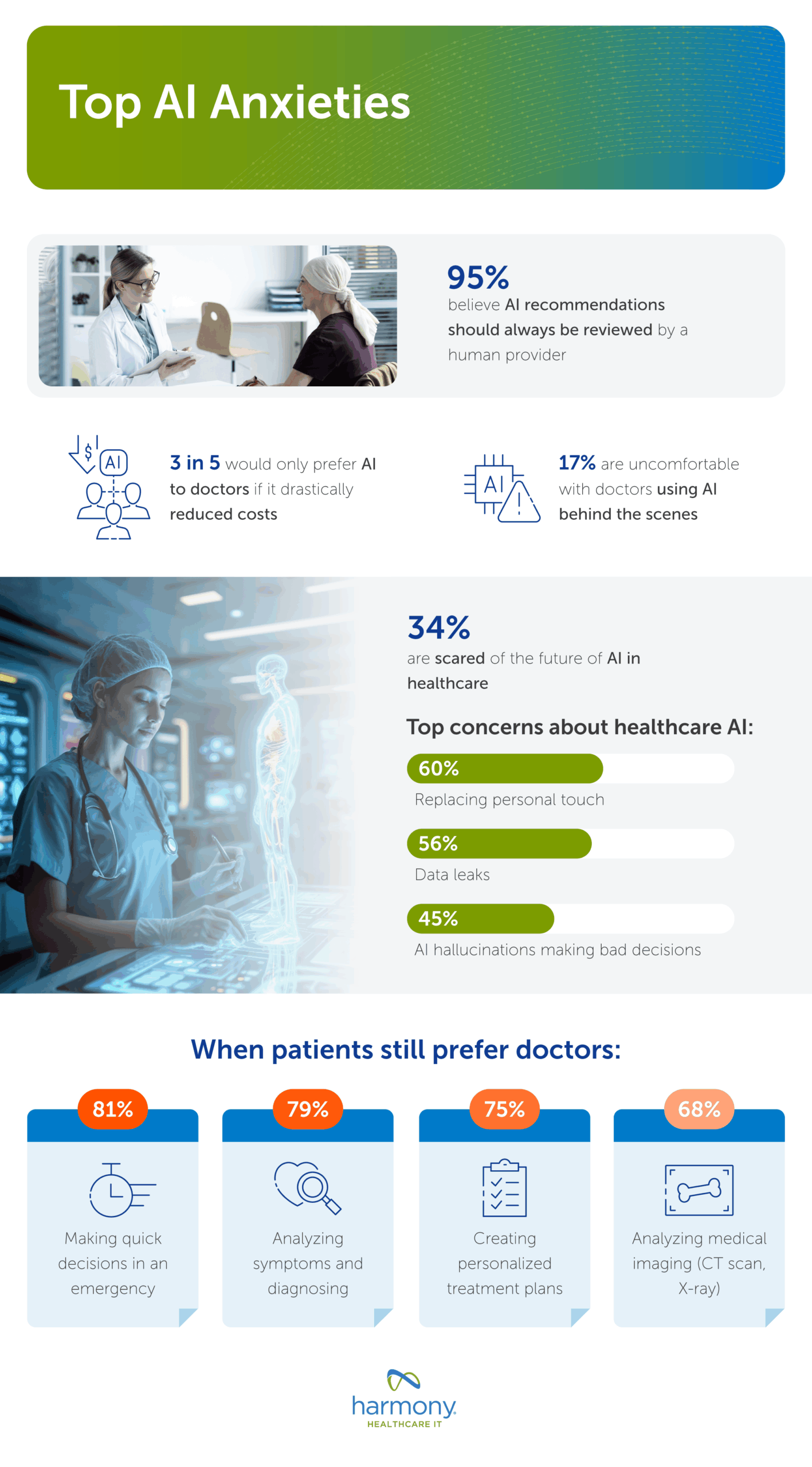
While interest in healthcare AI is growing fast, Americans aren’t ready to fully hand over the reins just yet. A striking 95% believe any AI-generated recommendation should be reviewed by a human provider—underscoring an expectation for oversight and accountability. Additionally, 17% are uneasy with doctors using AI tools behind the scenes without their knowledge.

Even among those intrigued by AI’s potential, cost remains a key qualifier: 3 in 5 say they’d only prefer AI-led care if it came with significant savings.

Despite excitement for AI implementation, an undercurrent of consumer anxiety remains. More than one-third (34%) say they’re scared of AI’s role in healthcare, with top concerns including data management and lack of human interaction:

  • Losing the personal touch (60%)
  • Data privacy breaches (56%)
  • AI hallucinations leading to dangerous decisions (45%)

When it comes to critical medical moments, trust still tilts heavily toward human doctors. Patients strongly prefer human expertise for:

  • Emergency decision-making (81%)
  • Symptom analysis and diagnosis (79%)
  • Creating personalized treatment plans (75%)
  • Interpreting medical imaging like CT scans or X-rays (68%)

Balancing Technical Advances with Doctor Care

AI is no longer a distant concept in healthcare—it’s here, and patients are actively reshaping their expectations around it. While enthusiasm is high and use cases are expanding, Americans are drawing a firm line: they want AI to make care more responsive, affordable, and intelligent—but not impersonal. Trust still rests with human providers, especially when stakes are high. The future of healthcare, according to patients, is not AI versus doctors—it’s AI with doctors, working together to deliver smarter, comprehensive care.

Methodology:

In May 2025, Harmony Healthcare IT surveyed 1,002 Americans about their AI in healthcare opinions. Ages ranged from 18 to 75, with an average age of 42. 49% were women, 49% were men, 1% were non-binary, and 1% declined to identify.

For media inquiries, please contact media@digitalthirdcoast.net.

Fair Use

When using this data and research, please attribute by linking to this study and citing www.harmonyhit.com.

Healthcare IT tips, guides, news & more delivered to your inbox

Learn More

Summary

Harmony Healthcare IT, a healthcare data management firm, surveyed more than 1,000 Gen Z (ages 18 to 28) about their mental health and concerns about their generation’s future. Results show that while nearly half have a mental health diagnosis, their mental wellness is improving.

Join Fellow Healthcare IT Pros

Tips, Guides, News & More

Sign Me Up
Gen Z Mental Health

New Research on Gen Z Mental Health & Workplace Impact

Shaped by a global pandemic, economic instability, and relentless digital comparison, Gen Z is confronting unprecedented mental health challenges. While many grapple with anxiety and other conditions, they are also actively seeking solutions—turning to therapy, prioritizing well-being, and redefining what career success means.

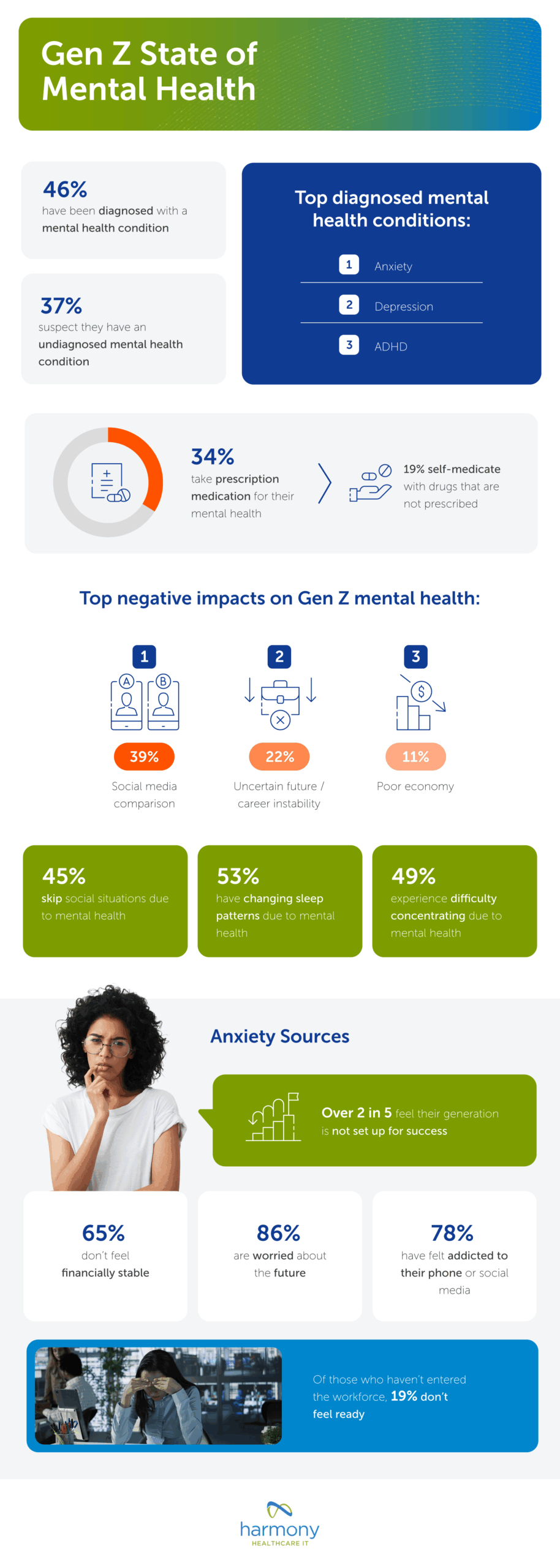
46% of Gen Z Has Been Diagnosed with a Mental Health Condition

Statistics about Gen Z mental health - report by harmonyhit.com

Mental health challenges are widespread among Gen Z, with nearly half (46%) having already received a formal diagnosis and more than a third (37%) believing they have an undiagnosed condition. Anxiety leads as the most common diagnosis, followed by depression and ADHD.

In response to these challenges, many Gen Zers are seeking pharmaceutical solutions. Over a third (34%) are currently taking prescription medication for their mental health, while an additional 19% report turning to non-prescribed drugs (such as cannabis) to manage their symptoms. The growing popularity of telemedicine may be a factor—our study on telehealth usage found that 60% of Gen Z prefers virtual care over in-person visits.

Why are they facing mental health struggles? When we asked Gen Z about the biggest negative impacts on their generation’s mental health, they reported:

  1. Social media comparison – 39%
  2. Uncertain future / career instability – 22%
  3. Poor economy – 11%

Mental Health’s Impact on Daily Life

Anxiety, depression, and other conditions can be exhausting, taking a toll on daily life and productivity. Over half of Gen Z (53%) report changing sleep patterns tied to their mental health, while 49% struggle to concentrate and 45% even skip social events.

Gen Z Anxiety Sources

It’s no surprise that anxiety is a top diagnosis for Gen Z – many of them are concerned about how they will function in adult society. More than 2 in 5 believe their generation isn’t set up for success, and 19% of those without jobs feel unprepared to join the workforce. Furthermore, 65% don’t feel financially stable.

While fear of the future is a primary source of anxiety, social media also plays a role. Nearly 4 in 5 (78%) admit they’ve felt addicted to their phone or social media. Our study on phone use found that Gen Z spends an average of 6 hours 27 minutes per day on their phones (the most of any generation).

Despite Diagnoses, Gen Z’s Mental Wellness is on the Rise

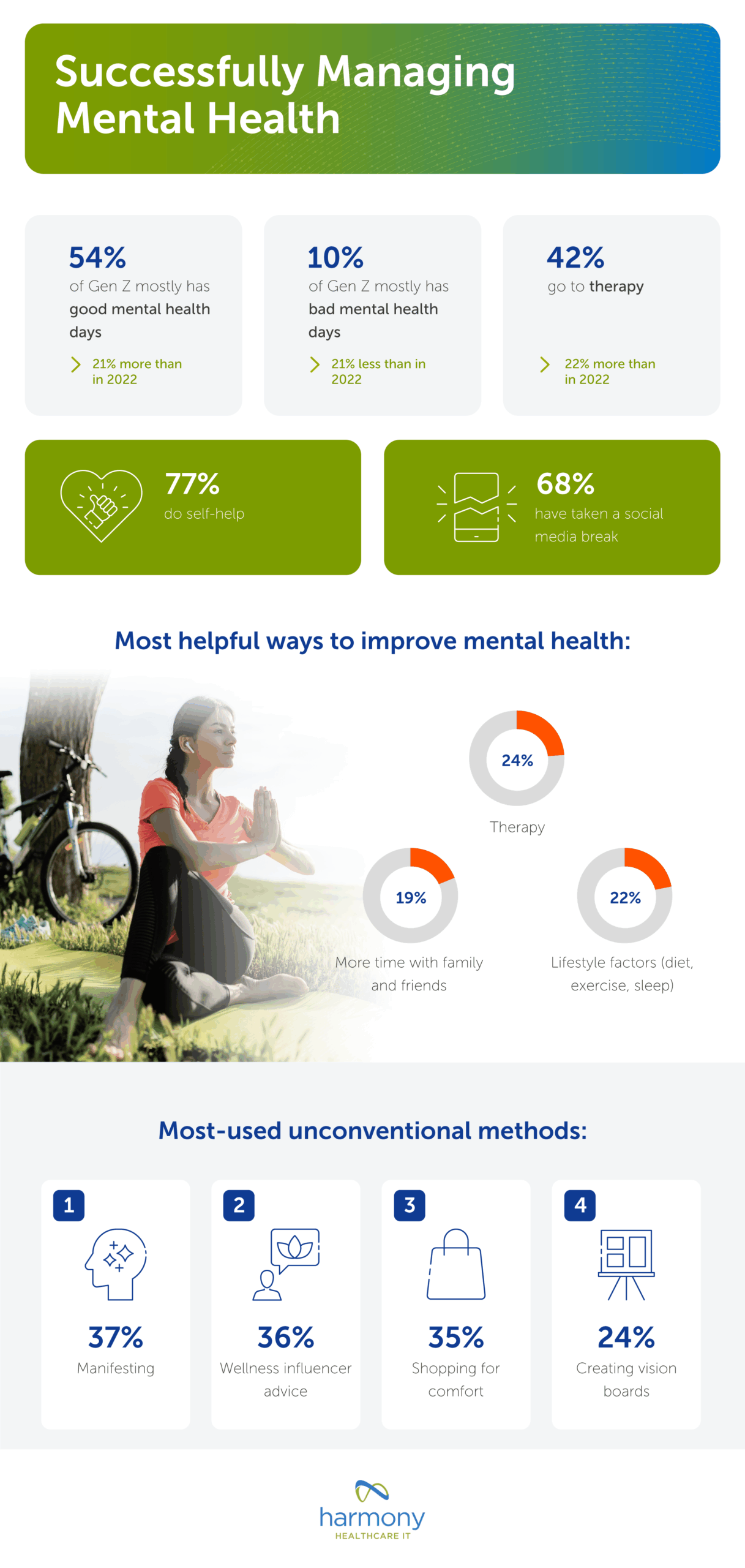
While much of Gen Z being diagnosed with mental health conditions, the outlook is positive – data finds that they are successfully managing their mental health struggles. Over half (54%) report having mostly good mental health days  – a 21% increase since our post-Covid survey in 2022. Additionally, only 10% report having mostly bad mental health days – a 21% decrease from 2022 research.

Statistics about Gen Z managing mental health - report by harmonyhit.com

Coping Through Therapy and Self Help

The improvement in happiness could be largely due to therapy. Over 2 in 5 (42%) of Gen Z reports going to therapy, which is a 22% increase from 2022. Additionally, 77% report doing self-help, which includes books, journaling, and podcasts.

Gen Z reported the following methods as the most helpful for their mental health:

  1. Therapy – 24%
  2. Lifestyle factors (diet, exercise, sleep) – 22%
  3. More time with family and friends – 19%

Many have turned to new age coping mechanisms in addition to (or replacement of) traditional practices. Nearly 7 in 10 (68%) have taken a social media break for their mental health. Others tried unconventional methods such as manifesting (37%), wellness influencer advice (36%), shopping for comfort (35%), and creating vision boards (24%).

57% of Gen Z Disapproves of the 40-Hour Work Week for Mental Health

Statistics about Gen Z in the workplace - report by harmonyhit.com

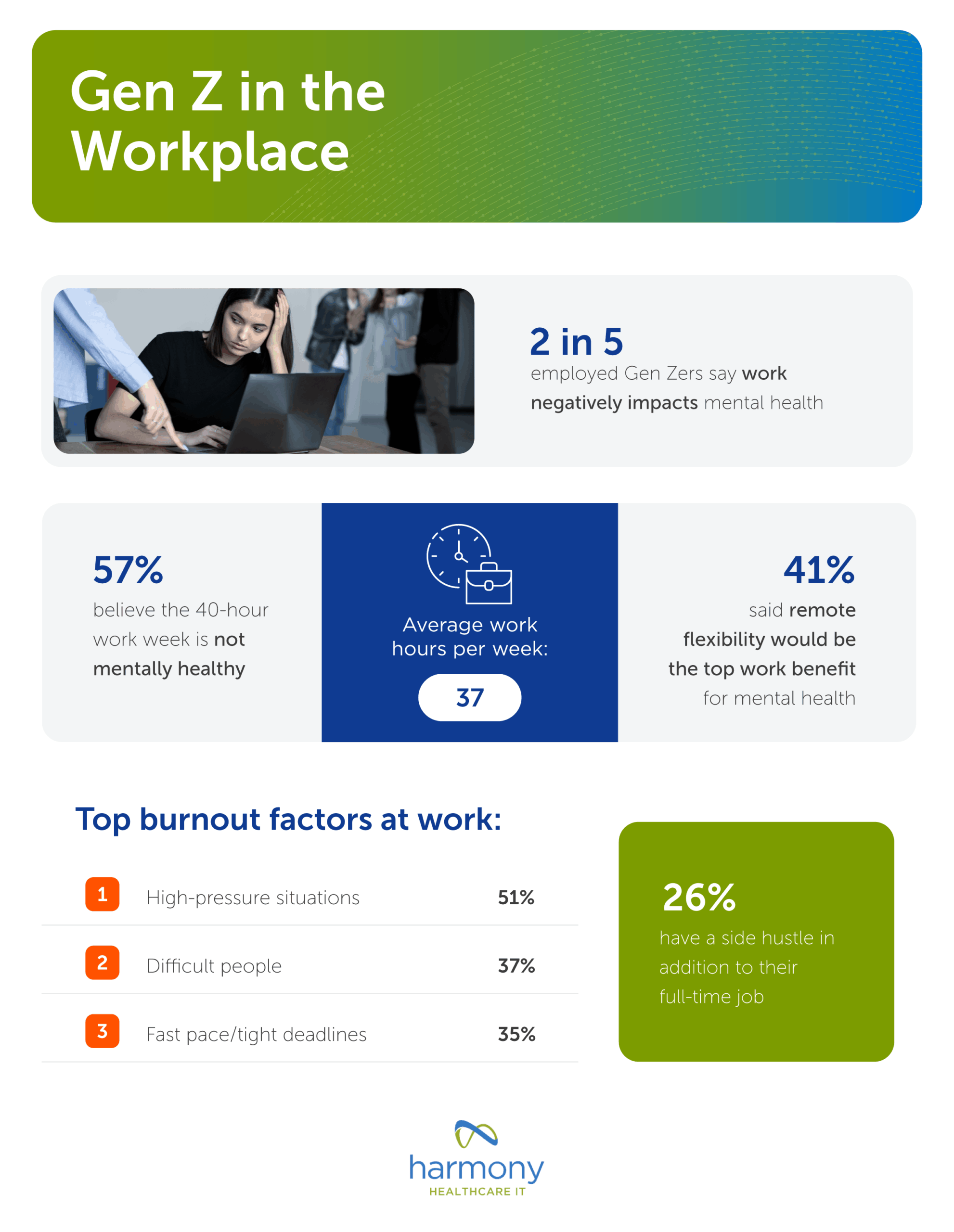
Gen Z has a unique outlook on the workday, prioritizing rest and flexibility over the 9 to 5 grind. They may, at times, feel like a fish out of water in rigid work cultures. Of employed Gen Zers, 2 in 5 say that work negatively impacts their mental health. Over half (57%) believe the 40-hour work week is not mentally healthy. On average, they work 37 hours per week.

Why is Gen Z Burnt Out at Work?

The vast majority of Gen Z (86%) reports being burnt out at work. While they are seemingly unhappy with the traditional work week structure, the top burnout factors include other aspects: high-pressure situations (51%), difficult people (37%), and fast pace/tight deadlines (35%).

When asked about the top benefit that would improve mental health, 41% responded with remote flexibility as their preferred perk.

Career Goals and Future Plans

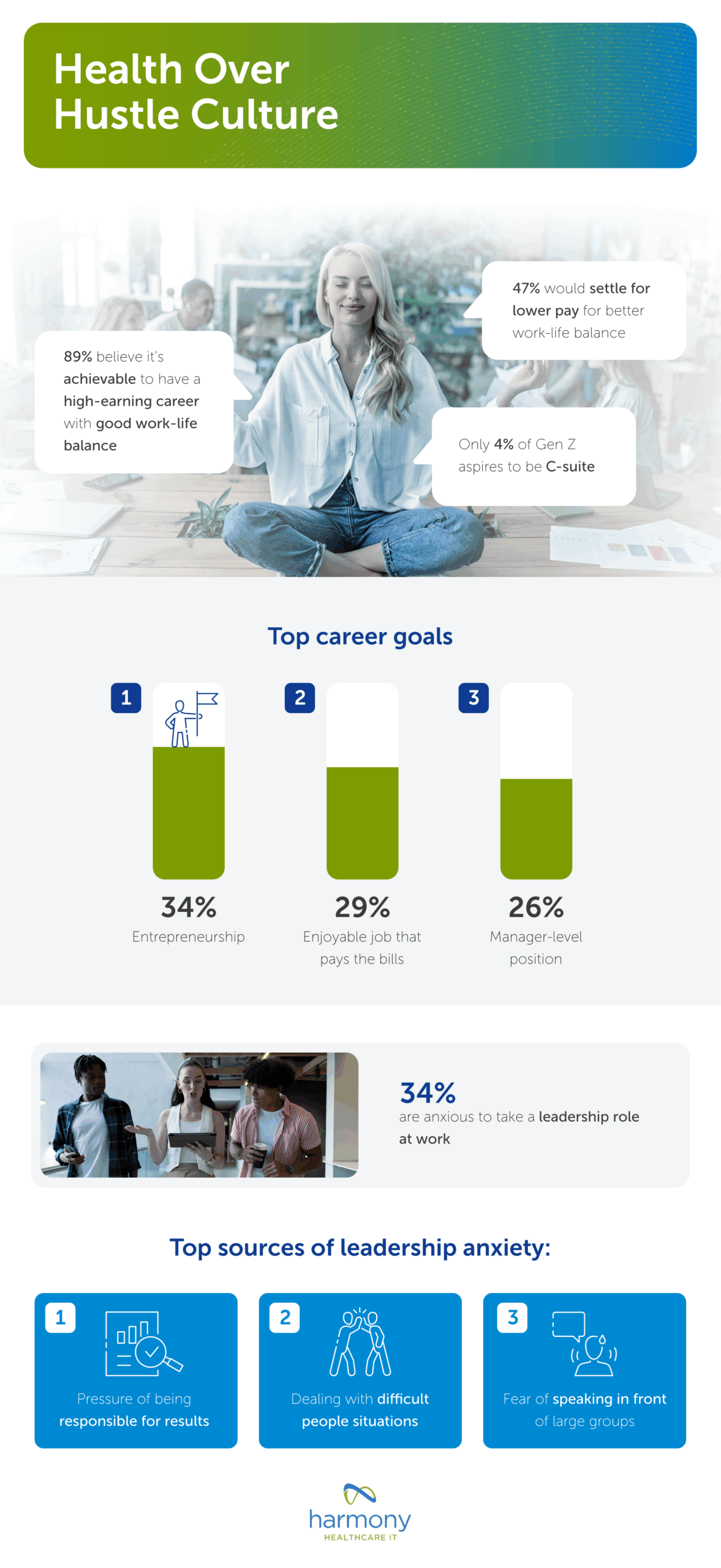
The corporate dream is changing: only 4% of Gen Z aspires to reach the C-suite. Instead, they are reshaping the career ladder, prioritizing mental well-being and sustainable success over status and salary.

A striking 89% believe it’s possible to have both a high-earning career and a healthy work-life balance, and nearly half (47%) say they’d accept lower pay if it meant better balance.

Top career goals for Gen Z include:

  1. Entrepreneurship – 34%
  2. Holding an enjoyable job that pays the bills – 29%
  3. Holding a manager-level role – 26%

Is Gen Z shying away from leadership roles out of fear? Over a third (34%) report feeling anxious about taking on leadership roles due to pressure to deliver results, navigating difficult interpersonal dynamics, and speaking in front of large groups of people.

Gen Z is facing serious mental health challenges—but they’re also taking proactive steps to manage them. From therapy and lifestyle changes to rethinking traditional career paths, this generation is prioritizing well-being in ways that could reshape the future of work and wellness.

Harmony Healthcare IT partners with healthcare organizations to manage legacy data through a consultative approach. We identify what data to migrate into new systems and securely archive the rest using HealthData Archiver®, AR Manager®, or our cold storage solution, HealthData Locker.

Methodology

In May 2025, we surveyed 1,010 Gen Z Americans to ask them about their mental health. 40% were men, 57% were women, and 3% were nonbinary. Respondents ranged in age from 18 to 28 with an average age of 24.

For media inquiries, please contact media@digitalthirdcoast.net.

Fair Use

When using this data and research, please attribute by linking to this study and citing https://www.harmonyhit.com/.

Healthcare IT tips, guides, news & more delivered to your inbox

Learn More

Summary

The outlook for healthcare mergers and acquisitions (M&A) is gaining momentum that experts suggest is driven by consolidation, technological advancements, and an anticipated relaxed regulatory environment. With 98 percent of CEOs planning to pursue M&A in the next 12 months, this blog provides some important data management steps to support success throughout each phase of M&A. 

Join Fellow Healthcare IT Pros

Tips, Guides, News & More

Sign Me Up
Clipboard

Mergers and acquisitions (M&A) continue to play a significant role for healthcare organizations focused on controlling costs and delivering high quality patient care. The expected compound annual growth rate (CAGR) for healthcare mergers and acquisitions from 2023 – 2028 is around eight percent. Industry experts report a shift from aggressive expansion to strategic consolidation. In part, this is because dealmaking obstacles like interest rates seem to be falling and US antitrust regulators may adopt a more relaxed stance.

With 98 percent of healthcare CEOs expecting to pursue M&A, divestures or strategic alliances in the next 12 months, the need to restructure the application portfolio will continue to be important.

The actual merger may be the first step but making it work can be another story. M&As can be complex with cultural, financial, and technological issues either blending well… or not. One of the most important (and sometimes overlooked) part of a successful merger is a strong data strategy.

In a study, 80 percent of healthcare CIOs and IT leaders reported that integrating disparate IT systems complicates their roles. Further, 84 percent believe that clinicians could allocate more time to patient care if healthcare operations were consolidated into a single platform.

Data Management Steps for a Successful Merger

Managing data during M&A involves several key steps to navigate a smooth transition and to maintain data integrity. The overall goal to find efficiencies and savings by centralizing operations is paramount; however, this effort is a large undertaking.

The health of an organization’s IT infrastructure can be an important part of its value. And, having a solid plan for merging the data of the organizations is vital to the overall success of the merger. In a study of health system leaders who have experienced M&As, 87 percent said the M&A impacted how their facility or health system manages its clinical data.

We have identified ten best practices for M&A data management that include:

  1. Involve the Data Governance team – Determine the organization’s overall IT goals for the M&A. Identify the scope of IT management, procedures, and policies. Create a clear strategic vision that outlines guiding principles and a strategy.
  2. Review data sources/systems – Take a thorough look at all the data sources and systems involved. Take a look at both organizations’ inventories which should include a solid document of what data sources exist, where the data sources are stored and more.
  3. Plan for data integration – One of the biggest challenges in an M&A scenario is integrating different IT systems. The complexity is compounded when the merging organizations have different EHR platforms. It is vital to develop a plan that includes an IT integration timeline with time built in to review and test any data that is migrated to a new system. Keep an eye on the master patient index as that often presents the most challenges. Expect this step to be time-consuming and have the potential for data quality issues.
  4. Review cybersecurity and compliance – Different IT infrastructures can have varying security measures. It is important to take the time to assess the risks and create a security plan that considers the best practices for encryption, access and other security protocols. Consider penetration testing for mergers and acquisitions which can uncover vulnerabilities.
  5. Include archiving in M&A planning – It is helpful to include legacy data planning upfront during M&A discussions instead of after the fact. There likely will be several legacy applications that can be decommissioned with the data stored in the archive to maintain compliance with regulatory and organizational requirements.
  6. Consider an Archive Steering Committee. This is an internal team charged with keeping the archive project implementation moving smoothly. This group could be a subset of the Data Governance team and should include representatives from across the enterprise such as legal, finance, IT, clinical, etc.
  7. Have a dedicated internal project manager – Another key role to assign is a project manager to help get the archive project up and running. It is important to have an internal resource focused on tracking the application inventory. This person can help eliminate roadblocks to keep project plans on track.
  8. Plan for application rationalization – Mergers and acquisitions often come with redundant applications that require application rationalization and standardization. This step involves eliminating outdated or duplicate systems as they create inefficiencies, patient safety concerns, increase costs and lack interoperability. There are large and small decisions to be made about which applications need to be kept and which can be decommissioned. Aside from the go-forward EHR, 94 percent of CIOs at healthcare provider organizations report they still are operating with legacy applications. In fact, the average hospital uses 10 EHRs and health systems use as many as 18 different EHRs.
  9. Engage an active archive solution – With the application rationalization strategy as a guide, the next step is a legacy data management strategy that includes a plan for the complete lifecycle for clinical, financial and administrative data from both organizations that can be decommissioned. The data that needs to be retained for legal and compliance purposes can be stored in a secure solution such as HealthData Platform
  10. Plan for the future – Think ahead with a goal of developing a repeatable, scalable lifecycle data management process that will serve the organization for long-term success. About 60 percent of healthcare providers currently have scalable processes for data management. This signals that there is work ahead to be better positioned with a sustainable plan that accommodates long-term growth.

Challenges to expect during mergers and acquisitions and what to do to limit frustration.

Planning ahead will help prepare the organization for a merger. That said, there are challenges that may arise. The three areas below are areas we have seen as possible rough spots that organizations sometimes experience during M&A.

  • Operational disruptions. The thought of disrupting patient care due to IT system issues can be daunting. The best offense is to develop a comprehensive plan that involves research, design, and scope with special attention to minimizing business impacts.
  • Cultural challenges. Resistance to change can be a challenge throughout both organizations during M&A. From an IT and applications perspective, it can be helpful to communicate (with support from the Governance Team and C-suite) to help inform the clinical, HIM and business team members about the goals, strategy, and timelines. Keep an option open for questions and plan on training staff in new applications or processes.
  • Workflow changes. It is likely that the clinical workflows of each organization are very different. This can include different ways of charting, different note templates, etc. It is helpful to get clinician buy-in as early as possible to support minimal frustration.

Benefits of a strong data management plan before, during and after a merger

The primary benefit of a strong data management plan during a merger or acquisition is that done right it can be a major pillar of the ultimate success of the M&A itself. With most mergers driven by a need for operational efficiencies and improved patient care, the flow of data is key to realizing these goals.

Before the merger: A strong data management plan can assist with due diligence to help with fair valuation. It also supports the strategic planning needed to help identify synergies and align goals.

During the merger: A robust data management process creates the foundation for integration and boosts security and compliance efforts.

After the merger: Done well, the data management plan delivers on the goals of the merger. This includes improved operational efficiency and patient care with the interoperability of data across all continuums and access to historical data through an active archive. A streamlined application portfolio and a gameplan for the future are major benefits as well.

Check out this case study to learn more about how an integrated health system in the northeast saved $2+ million by implementing a legacy data management strategy after acquiring four hospitals and 83 physician practices.

Is your organization in the planning stages of a M or A? We can help.

Harmony Healthcare IT is a trusted partner for healthcare organizations who need to consolidate data stores and meet regulatory and patient care requirements to ensure secure access to historical data. Ideally, we are involved early in the process of a merger or acquisition to support the planning and then the implementation of the data management program.

We are a recognized leader for success with large and complex legacy data projects. We answer the call as your first archive vendor, and sometimes we pick up where other organizations stalled and couldn’t deliver. Our broad and deep experience with more than 550 unique software applications used specifically in healthcare helps ensure smooth project delivery and improved customer satisfaction. Plus, our HealthData Platform is an industry leading solution with advanced integrations and superior product functionality.

We are ready to help your organization plan and implement a solid lifecycle data management program that will deliver on the promise of a merger or acquisition.

Let’s connect.

Healthcare IT tips, guides, news & more delivered to your inbox

Learn More

Summary

Chronic illness affects 129 million people in the U.S. and is expected to rise to more than 170 million by 2030. Care management, including data management, comes with unique challenges as data volumes and sources continue to rise and there are multiple providers involved who need access to the comprehensive medical record. Learn more about how providers can prepare to better meet the health data requirements for those with chronic conditions.

Join Fellow Healthcare IT Pros

Tips, Guides, News & More

Sign Me Up

Nearly four of every ten adults (129 million people) in the U.S. currently battle a chronic illness that requires long-term and ongoing medical attention for ailments like cardiovascular disease, diabetes, stroke, Alzheimer’s, cancer, depression or anxiety. Care for patients in this segment, which makes up 90 percent of the nation’s $4.5 trillion dollar healthcare expenditures, can come with medical records management challenges.

There are many reasons to tackle the data management challenges associated with chronic conditions sooner rather than later. A few include:

The number of people with chronic conditions is growing. Projections indicate that by 2030, the number of Americans with chronic conditions could reach over 170 million.

Many people have multiple conditions. Currently, 42 percent of those affected have two or more chronic conditions, and often seek care across multiple providers and clinics.

More sources for data from newer technologies and integrated devices. Blood glucose meters, digital dementia assessment tools and at-home COPD devices – that are gathering real-time health data from patients with chronic illnesses and reporting it to the EHR.

Patient data volumes are growing. Current estimates suggest that by 2030 a single patient will generate close to one terabyte of health-related data each year in imaging, electronic medical record (EMR), wearable devices and other health monitoring devices.

Providers need to seek chronic disease management (CDM) programs aimed at preventing hospitalization and adverse events.

Between the number of patients and additional conditions, there is a higher complexity to the care of those with chronic illnesses. To support CDM programs, electronic health records (EHRs) with chronic care management tools are integrated into laboratory and pharmacy information systems. All of these patient care components create a large volume of health information from many authors.

The future will continue to bring more patient data from more sources.

And because chronic illness, by its nature, lasts for one year or more, layer in the movement of the patient record. As patients move from one provider to another, and as provider organizations get acquired and merged, that comprehensive medical record needs to remain accessible. Clinical data needs to keep up with the patient and be readily available at the point of care, every time. As a result, access to both current and historical medical records to decrease medical errors and improve outcomes can become a challenge.

Lifecycle Data Management supports chronic disease best practices.

As EHR systems are upgraded and legacy systems are sidelined, it is imperative to have a legacy data management plan in place to maintain simplified access to the ever-growing volumes of health data that must be kept accessible for up to 25 years or more.

At Harmony Healthcare IT, we take pride in our contribution to advancing heath IT through the work we do to preserve access to historical chronic care medical records. HealthData Archiver®, our long-term data storage solution, can be key to ensuring access to the full clinical narrative.

If you’re looking for easy access to critical legacy data for patients with chronic illness so medical errors can be reduced and outcomes improved, let’s talk.

This blog is updated from a previous version published Jan 07, 2020.

Healthcare IT tips, guides, news & more delivered to your inbox

Learn More

Summary

Health IT integration between primary care and behavioral health should be the gold standard for care, according to two new papers issued by the Substance Abuse and Mental Health Services Administration (SAMHSA). With up to 75 percent of primary care visits including mental or behavioral health components for issues related to chronic health management, substance use and lifestyle factors, the thought is that there should be a broader integration of records available to link the complete medical picture. In this blog, we look at the implications, concerns and considerations for health IT professionals regarding behavioral health record interoperability and the evolving regulatory landscape.

Join Fellow Healthcare IT Pros

Tips, Guides, News & More

Sign Me Up
Folders

About half of all Americans will meet the criteria for a diagnosable behavioral health condition sometime in their life. For most, there is an delay between symptom onset and treatment that averages about 11 years. One way to shrink that timeframe is to better equip primary care settings to identify and collaborate on treatment for conditions such as anxiety, stress from chronic health management, depression, substance use and others. Unfortunately, more than half of those with a mental illness are not getting any treatment and 27 percent report they don’t know where to go for help.

National health IT experts say there are several immediate action steps that providers can take to help improve earlier diagnosis and treatment. With 80 percent of people with a behavioral health disorder visiting a primary care provider at least once a year, healthcare technology has the potential to better integrate electronic records between behavioral health and primary care.

The Role of Primary Care and the EHR as First Responders to Behavioral Health Issues

The conditions most often reported first during these general office visits, include:

  • Mental health problems (anxiety, depression, etc.)
  • Substance use problems
  • Behaviors that contribute to chronic health conditions (e.g., asthma, diabetes, high blood pressure) ― stressful life situations or crises
  • Stress-related physical symptoms
  • Opportunity to communicate to the patient the benefits of regular use of primary healthcare while avoiding unnecessary emergency department or urgent care visits or hospital use

There are five technology-based action steps healthcare organizations could take to integrate behavioral health into primary electronic health EHR systems, and include:

  1. Make sure behavioral health screening tools are integrated and accessible in the EHR.
  2. Put triggers in place that can set off medical support that integrates behavioral health and primary care. This action may require additional best practices such as “break-the-glass” audit feature that could allow clinicians emergency access to certain behavioral/mental health information.
  3. Make documentation better to help link behavioral health and primary care.
  4. Ensure secure and collaborative information sharing.
  5. Set up EHRs so that patient information sharing is consistent with regulations, policies and patient requests. This means enabling EHRs to segment patient information for exchange that meets all regulations and requirements.

The 21st Century Cures Act’s Impact on Behavioral Record Sharing

There are very specific regulatory guidelines in place that govern the documentation and sharing of behavioral health information. Generally, HIPAA does not include psychotherapy notes as part of its designated record set. HIPAA dictates that psychotherapy notes are kept separate and does not allow the provider to make disclosures about psychotherapy notes without the patient’s authorization and does not allow for automatic patient access to the notes.

However, the Cures Act mandates a standard record set called the United States Core Data for Interoperability (USCDI) for inclusion in electronic record transfer between providers and between providers and patients. The USCDI includes “progress notes” and doesn’t make a distinction between progress notes and psychotherapy notes. Some providers are making patient progress notes a deliverable, arguing that the progress notes support medical transparency and increase trust between providers and patients. They claim this also allows the patient an opportunity for reflection and oversight of their care, reduces errors and promotes person-centered communication. Others are keeping psychotherapy notes excluded from the Open Notes Rule as long as they are stored separately. However, if the psychotherapy notes reference content that is considered medical record notes, they cannot be blocked. Examples of mental health-oriented, medical record notes include:

  • Diagnosis
  • Symptoms
  • Functional status
  • Treatment plans
  • Prognosis
  • Progress to date
  • Session start and stop times
  • Test results
  • The modalities and frequencies of treatment furnished
  • Medication prescription and monitoring

While more clarity may be forthcoming on what information should be shared from behavioral health records, one thing is clear: Health IT solutions can support behavioral and medical records to help improve outcomes.

Whether a provider utilizes a stand-alone behavioral health EHR – such as Anasazi, CareLogicEHR, Netsmart, myAvatar, Credible, Accumedic, DrChrono, InSync Healthcare Solutions, Mindlinc, NextGen, SimplePractice, TherapyNotes, or Valant – or a mental health platform from another EHR like Cerner or Epic, access to the complete patient record is vital. A longitudinal view can provide critical information to support overall patient care and help deliver better outcomes.

As EHRs get replaced and retention laws can span decades, an active archive solution may be required to maintain access to legacy records. HealthData Archiver® is a secure record-storage solution that seamlessly integrates legacy records into a searchable and easy-to-use format so that important records are at your fingertips anytime you need them – including behavioral health notes secured with role-based access controls. With Single Sign-On capability from the active EMR to HealthData Archiver®, clinicians can have access to the complete patient record at the point of care, whether that be bedside, in an office, or through a telehealth visit.

As guidance continues to evolve around best practices and regulations for behavioral health records, healthcare providers need to be prepared with data management practices and solutions that are agile and secure for long-term record management. That includes active archiving as a strategy.

Whether you are implementing or replacing a new behavioral health EMR, we can help.

Let’s talk.

Note: This blog is updated from a previous version published May 1, 2023

Healthcare IT tips, guides, news & more delivered to your inbox

Learn More

Summary

As telehealth offers patients a fast, convenient alternative to in-person appointments, many are opting out of visiting doctors’ offices. Harmony Healthcare IT, a firm that works with health data management, surveyed ~1,000 Americans about their telehealth preferences and concerns. The data shows that while many value comprehensive in-person care, the convenience of appointments often outweighs in-person benefits.

Join Fellow Healthcare IT Pros

Tips, Guides, News & More

Sign Me Up
Teleheath

Healthcare delivery is currently experiencing a major transformation, and new statistics show that telehealth is playing a key role in this shift. What started as a temporary solution during the pandemic has now become the preferred method of care for many Americans, fundamentally changing patient expectations and the future of medical practice. To gain deeper insights into this trend, we surveyed Americans across the country to gather their perspectives on remote care.

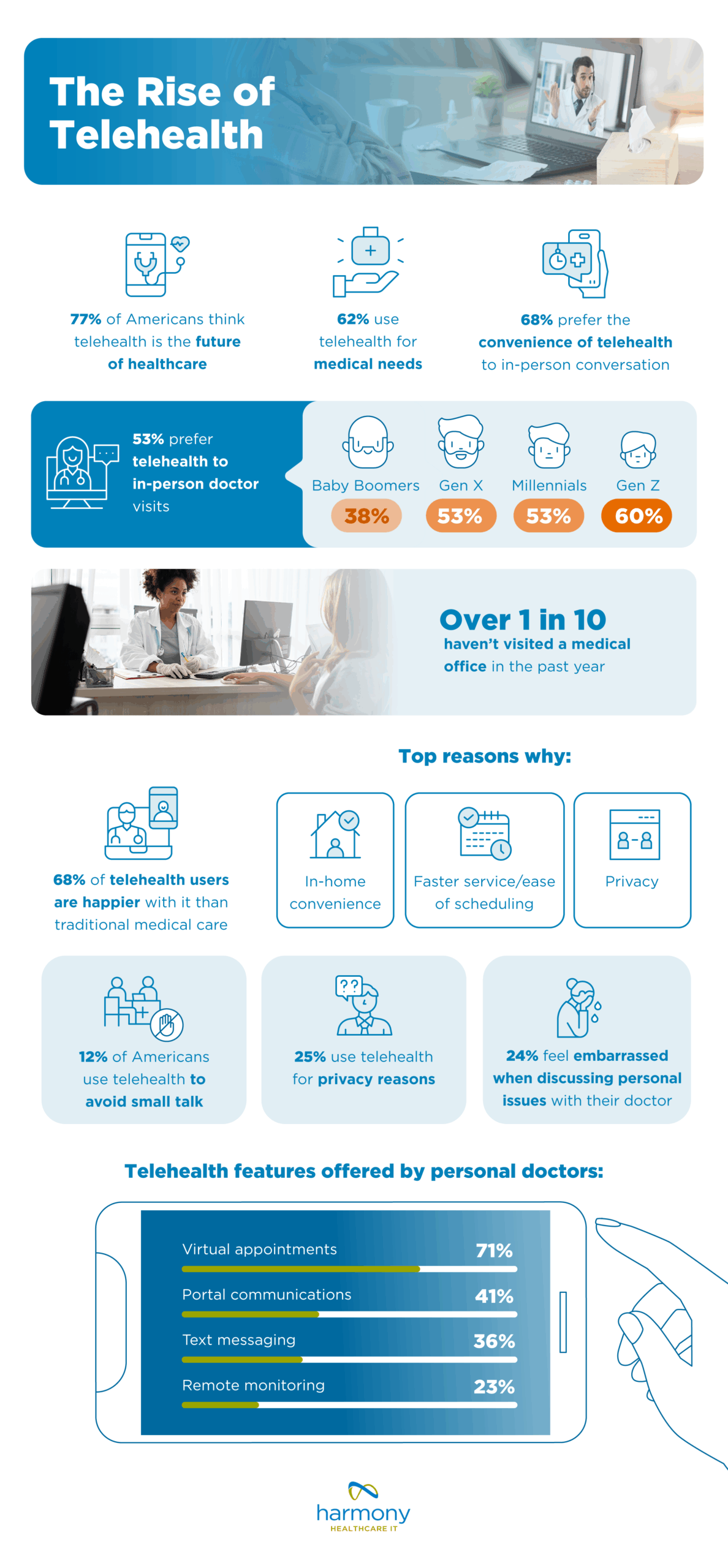
77% Say Telehealth is the Future of Healthcare

Statistics about the popularity of telehealth - report by harmonyhit.com

An impressive 62% of Americans now utilize telehealth services for their medical needs, while more than three-quarters (77%) view it as the future of healthcare. Our study also showed that 53% of Americans now favor telehealth over conventional doctor visits, with a clear generational divide in adoption rates. Gen Z leads the telehealth charge at 60% preference, followed closely by Millennials and Gen X at 53%. Baby Boomers show more hesitation, with only 38% preferring virtual care – possibly reflecting discomfort with technology or stronger desires for face-to-face interaction.

Telehealth Offered by Brick and Mortar Medical Offices

One of the most telling signs of this shift is that more than one in ten Americans (11%) haven’t visited a medical practice in person over the past year. This move away from traditional healthcare facilities aligns with the growing adoption of telehealth services by providers across the country. Today, patients have the ability to access medical records, chat with their doctors, and have full-scale appointments from the comfort of their homes.

Data shows that respondents’ personal doctors offer:

  • Virtual appointments: 71%
  • Portal communications: 41%
  • Text messaging: 36%
  • Remote monitoring: 23%

Convenience is a Top Driver of Telehealth

The convenience factor is clear, with 68% of patients preferring the flexibility of telehealth over traditional in-person appointments. But it’s more than a necessity in busy schedules – 68% of telehealth users are happier with it than traditional medical care. Their top-reported benefits include:

  1. In-home convenience
  2. Faster service/ease of scheduling
  3. Privacy

Avoiding Face-to-Face Embarrassment

While convenience is the primary benefit, there are also factors surrounding social interactions. Many simply prefer tech over talking, with 12% of Americans using telehealth to avoid small talk. Privacy is another concern – many feel awkward speaking to their doctors face-to-face. Nearly a quarter (24%) feel embarrassed when discussing personal issues with their doctor, and 1 in 4 use telehealth for privacy reasons.

Do Telehealth Doctors Over-Prescribe to Patients?

Statistics about subscription telehealth and prescriptions - report by harmonyhit.com

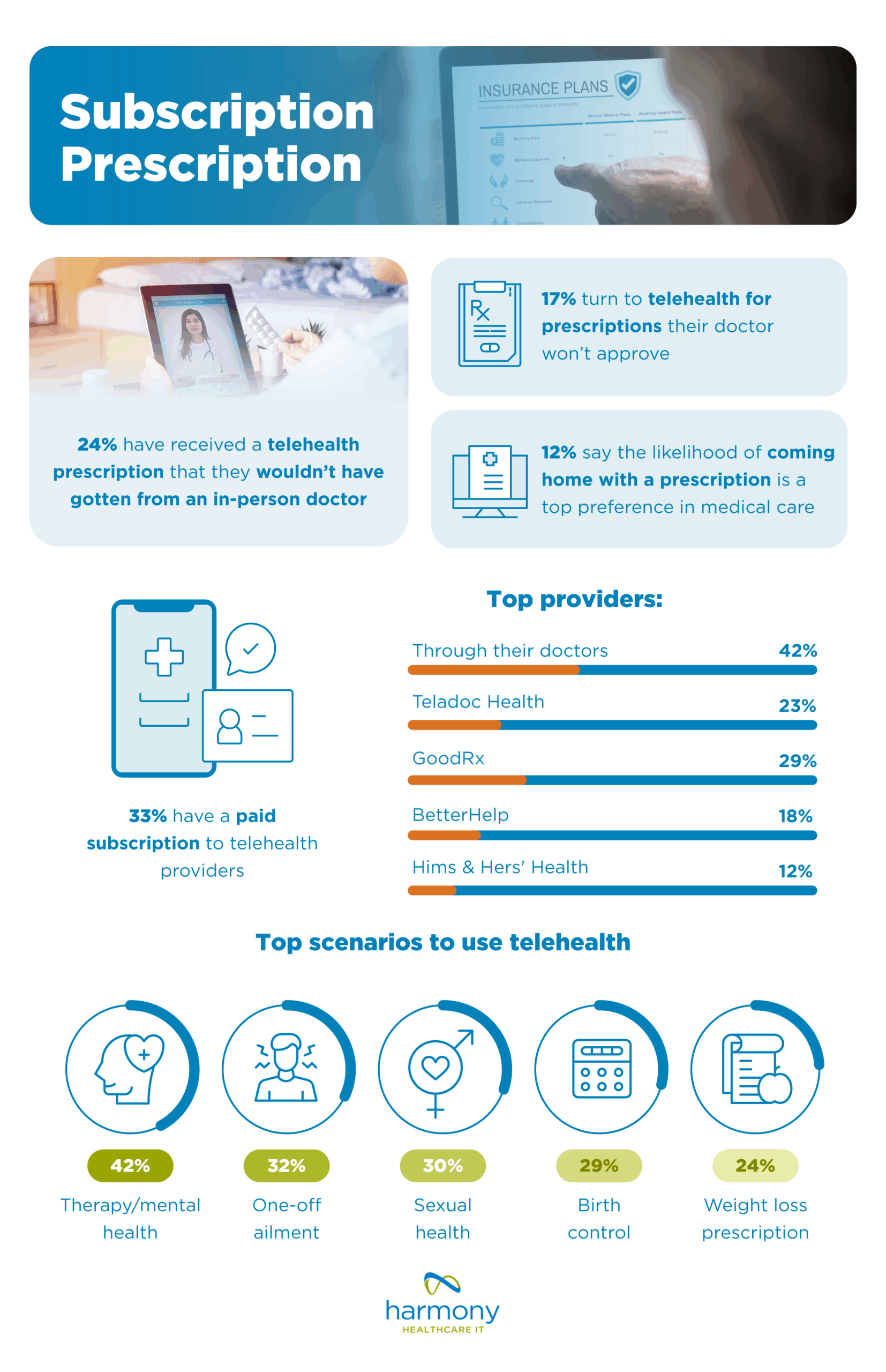
Another prominent factor in the rise of telehealth is prescription accessibility. Nearly 1 in 4 Americans (24%) have received a telehealth prescription that they wouldn’t have gotten from an in-person doctor, and 17% admit to turning to telehealth for prescriptions their doctor wouldn’t approve. Furthermore, over 1 in 10 (12%) say the likelihood of coming home with a prescription is a top preference in medical care.

When surveying telehealth patients – the use cases are largely prescription based, including:

  1. Therapy/mental health (42%)
  2. One-off ailment (32%)
  3. Sexual health (30%)
  4. Birth control (29%)
  5. Weight loss prescription (24%)

Subscription telehealth providers are capitalizing on the trend. In fact, some market themselves as providers of specific medications: the 2025 Super Bowl even featured a commercial for Hims & Hers’ providing semaglutide prescriptions for weight loss. Additionally, providers like Wisp and Ro advertise fast access to Zofran, UTI antibiotics, and hair growth medications.

While a third of Americans (33%) have a paid subscription to telehealth providers, most still access telehealth through their personal doctors. Of those who use telehealth, the most popular providers include:

  1. Through their doctors (42%)
  2. Teladoc Health (23%)
  3. GoodRx (29%)
  4. BetterHelp (18%)
  5. Hims & Hers’ Health (12%)

54% Only Feel Comfortable with Their Own Doctor’s Telehealth Care

Statistics about the telehealth preferences and usage - report by harmonyhit.com

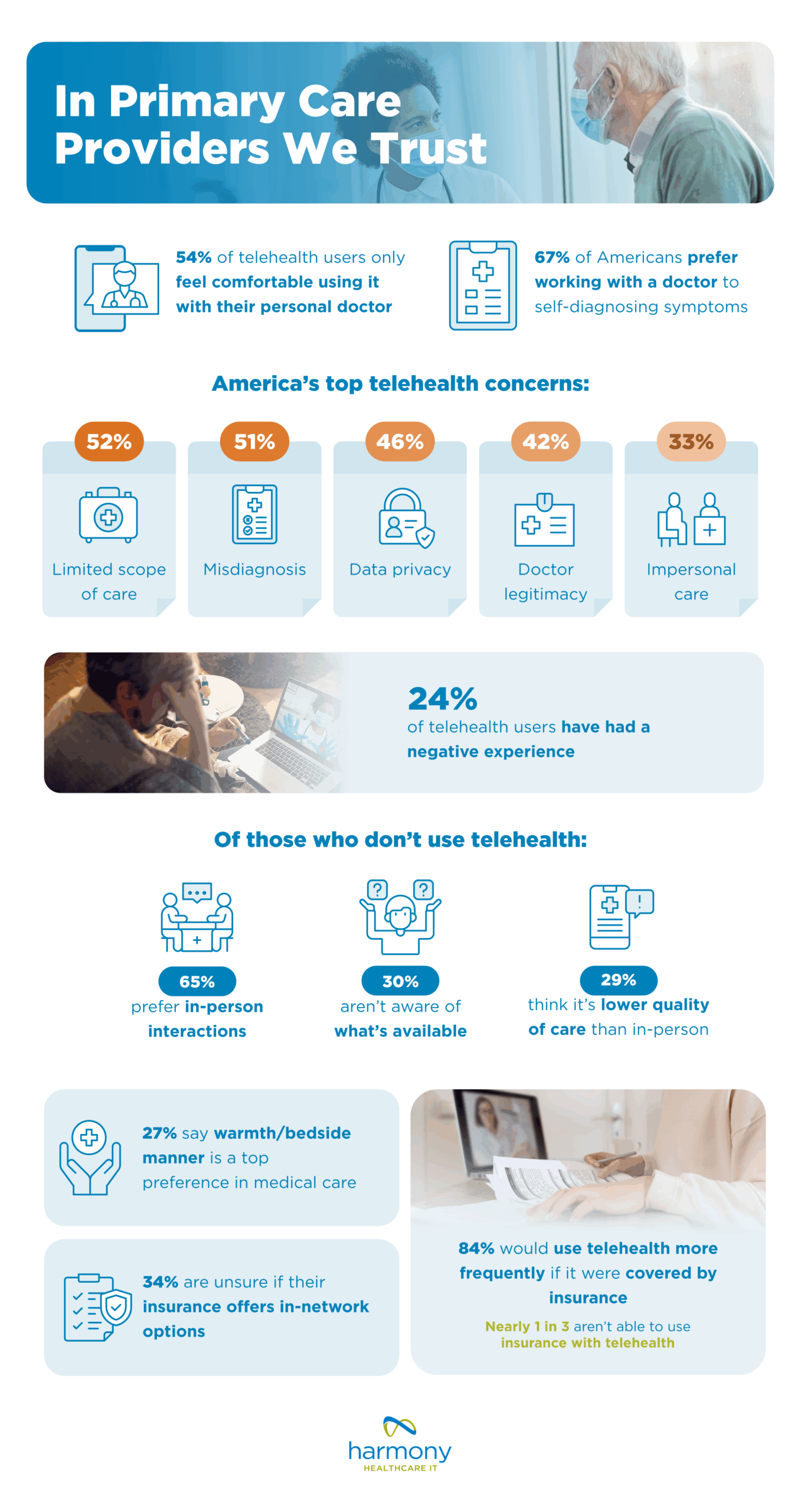
While the convenience of telehealth is appealing, many are still concerned with the quality of care. A whopping 67% of Americans prefer working with a doctor to self-diagnosing symptoms, and 27% say warmth and bedside manner is a top preference in medical situations. Additionally, over half of telehealth patients (54%) only feel comfortable receiving remote care from their personal doctors and 24% have had a negative experience with telehealth in general.

Top Telehealth Concerns

Likely due to a lack of physical examinations, America’s top telehealth concern is a limited scope of care (52%). Next are misdiagnosis (51%), data privacy (46%), doctor legitimacy (42%), and impersonal care (33%).

When it comes to those who have never used telehealth, their top reason is a preference for in-person interactions (65%). Additionally, nearly a third (30%) are simply unsure of what features are available to them, and 29% think it’s lower quality care than in-person appointments.

Telehealth and Insurance

Cost – and understanding of what’s covered – is another factor in choosing medical care. A resounding 84% would use telehealth more frequently if it were covered by insurance. Nearly 1 in 3 telehealth patients (32%) report they aren’t able to use insurance, and 34% of Americans are unsure if their insurance offers in-network telehealth options.

Does the Convenience of Telehealth Outweigh Quality Concerns?

For those who value human connection and thorough physical examinations, traditional in-person care remains essential. However, most Americans now prioritize convenience, making telehealth an increasingly popular choice. When comparing options, primary care physicians offering telehealth services are gaining an edge over subscription-based providers by delivering both convenience and personalized care from practitioners who know their medical history.

While subscription telehealth services may struggle to compete with this hybrid model in general practice, they excel in specific scenarios—particularly when patients need quick, straightforward access to certain medications without the need for ongoing relationship-based care.

Methodology

In March 2025, we surveyed 997 Americans to learn about their telehealth usage and preferences. Ages ranged from 18 to 80 with an average age of 42. 50% were women, 49% were men, and 1% were non-binary or preferred not to say.

For media inquiries, please contact media@digitalthirdcoast.net.

Fair Use

When using this data and research, please attribute by linking to this study and citing www.www.harmonyhit.com.

Healthcare IT tips, guides, news & more delivered to your inbox

Learn More

Summary

The 21st Century Cures Act, first introduced in 2016, is broadly focused on advancing innovative medical products while removing barriers for development and bringing the advancements to patients more quickly. The focus of this blog will be on the rules around information blocking, interoperability and data access and how providers can continue to adapt and deliver medical information wherever and whenever it is needed with respect to the Cures Act and overall best practices for health data management.

Join Fellow Healthcare IT Pros

Tips, Guides, News & More

Sign Me Up
21st-Century-Cures-Act

Three main tenants of the Cures Act – Patient Access, Protection and Choice:

  1. Ease of access to their records – The Cures Act supports a patient’s control of their health care and their medical record through smartphones and modern software apps.
  2. Protecting patient privacy and security – The rule supports secure patient access to their electronic medical record data. Patients will be able to use applications they authorize to receive data from their medical records. OAuth2 is used to authorize applications – the same highly secure protocol used on travel and banking apps.
  3. Promoting the ability to shop for care and manage costs – The final rule expands patient and payer choice by increasing data availability that supports insights about care quality and costs. This is similar in how apps have increased transparency in other industries such as online shopping, travel and banking to deliver information to patients and payers to assist in decision making.

Ease of Access and Information Blocking

The Information Blocking Rule was first introduced as part of the 21st Century Cures Act in 2016 to eliminate industry-wide information blocking practices. The problem centered around a patient’s inability to access their entire health record history caused by developers of health IT  deliberately preventing access to PHI in an effort to maximize short-term revenue or to compete for new clients.

The implementation of the finalized rules around information blocking provides a comprehensive response to concerns about this anti-competitive behavior while supporting the overall goal of increased transparency for patients as well as access, exchange and usability of electronic health information.

There are many key dates related to the Information Blocking Rules

June 24, 2024. The Department of Health and Human Services (HHS) released its final rule that establishes disincentives for health care providers that have committed information blocking. There are disincentives outlined for Hospitals and Critical Access Hospitals (CAH), Clinician and Group Practices and Accountable Care Organizations. The disincentives include financial penalties as well as loss of Meaningful Use status and a loss of eligibility to participate in the Shared Savings Program for ACOs.

June 27, 2023. The Office of the Inspector General (OIG) released a final rule that established penalties for information blocking for actors other than health care providers, such as health IT developers, health information exchanges and health information networks. If the OIG determines if any of these individuals/groups committed information blocking, they may be subject to a civil monetary penalty of up to $1 million per violation.

Oct. 6, 2022 was the date that the definition of electronic health information changed from the specific elements listed in the USCDI to ALL electronic health information (ePHI) in the designated record set (DRS).

How to determine if information is ePHI: 

EPHI is defined as electronic protected health information (ePHI) to the extent that it would be included in a designated record set (DRS), regardless of whether the group of records are used or maintained by or for a covered entity. The expanded definition of EHI (as defined in 45 CFR 171.102) includes a broad set of records. To determine whether the information is EHI, consider if the information:

  1. Is individually identifiable health information that is maintained in electronic media or transmitted by electronic media
  2. And would be included in one of the following groups of records:
    a. medical records and billing records of a provider about individuals;
    b. enrollment, payment, claims adjudication, and case or medical management record systems maintained by or for a health plan;
    c. records used in whole or in part, to make decisions about individuals
  3.  And is not excluded from the EHI definition

If the answer to the three questions above is “yes,” then it is EHI.

What is not EHI?

  • Psychotherapy notes as defined in 45 CFR 164.501
  • Information compiled in reasonable anticipation of, or for use in, a civil, criminal, or administrative action or proceeding
  • Individually identifiable health information in education records covered by the Family Educational Rights and Privacy Act, as amended, 20 U.S.C. 1232g
  • Individually identifiable health information in records described at 20 U.S.C. 1232g(a)(4)(B)(iv)
  • Individually identifiable health information in employment records held by a covered entity in its role as employer
  • Individually identifiable health information regarding a person who has been deceased for more than 50 years
  • De-identified protected health information as defined under 45 CFR 164.514

There also are eight exceptions to the information blocking ban that have been established to allow clinicians and hospitals common sense operational flexibility. These exceptions are grounded in protecting patient privacy, security, and handling situations where moving data isn’t a technically viable solution. These exceptions are divided into two categories:

  1. Exceptions that involve not fulfilling requests to access, exchange or use EHI, and
  2. Exceptions that involve procedures for fulfilling requests to access, exchange, or use EHI.

To review the most current updates related to interoperability, information blocking and the ONC Health IT Certification Program, visit the ONC’s Cures Act Final Rule website.

Switching EHRs shouldn’t mean a disruption in a provider’s access to their data.

EHR vendors are required to enable a usable export of all patient records when a healthcare provider is switching health IT systems, as opposed to only providing the summary of care records, which was the prior requirement. Not only will this allow providers to switch EHRs more easily and completely, but it will also ensure that a complete patient narrative is being transferred for better patient care. As the ONC states, “Providers should be able to choose the IT tools that allow them to provide the best care for patients, without excessive costs or technical barriers.”

Determining how healthcare IT delivers on these finalized rules is somewhere on every healthcare organization’s to-do list. Moving it toward the top could make business sense. Industry experts suggest healthcare organizations look at meeting the finalized rules sooner rather than later and as an opportunity for business success, citing that adopting the rules as soon as possible represents a huge business opportunity.

Those physician practices and health systems that can step up, navigate the obstacles, and deliver robust patient access to health information through apps and next-generation digital tools, may find themselves at a competitive advantage.

Speaking of competitive advantages, let’s talk about the long game.

One big step forward in the health data management race is to consolidate records from legacy EHR, ERP and HR systems into an active archive.  This approach avoids the user having to log in to multiple legacy systems to fulfill a single Release of Information request.   Advanced authentication services such as  Single Sign-On allows a seamless connection from the current EHR (i.e., Single Sign-On from Epic) in context to the patient’s historical medical record.

As healthcare providers continue to adapt and evolve with how they need health and business data to flow through technology systems and now more fluidly to patients on new apps, it will be even more important to have a solid lifecycle data management plan that consolidates disparate data sets. With some multi-hospital organizations managing 30 to 40 read-only legacy EHRs with varying states of usability, it is even more important to streamline and have a lean and forward-thinking data management strategy for the long haul.

As your team continues to adapt to rules, follow retention guidelines and safely guide the data within your care wherever it needs to go, it’s a good time to make sure your inventory of applications is consolidated, secured, accessible and usable.

An active archive such as HealthData Archiver® is a long-term medical data storage strategy that reduces or eliminates legacy system management costs, provides role-based security and is a vendor-neutral long-term home for legacy records. Secure, compliant, long-term PHI storage in an electronic health data archive solution helps manage the legacy application portfolio which saves on maintenance contracts, mitigates technical risk, and reduces labor burden. With an active archive, outdated legacy applications can be decommissioned and ROI is often seen in 18-24 months.

What to do if a vendor organization is keeping you from your health data:

Clinicians and hospitals continue to consider their options in choosing the EHR that best fits the organization, gaining access to protected health information (PHI) from the outgoing EHR vendor may remain a challenge.

Even before the newest information blocking law was handed down, EHR vendors were required by law to return PHI to the covered entity in a reasonable and usable format upon termination of a contract. If your healthcare organization is or continues to have PHI held hostage by an EHR vendor, there are currently measures that can be taken to gain rightful access to data.

The final rule also includes provisions for the HHS Office of Inspector General (OIG) to investigate allegations of information blocking and to coordinate the involvement of other government agencies, as well as provides anonymous reporting options and a certificate of compliance that organizations can sign to show they meet the guidelines.

Beyond filing a complaint with the U.S. Department of Health and Human Services, you can also start with these steps to help with the process:

  1. Familiarize yourself with the HIPAA Covered Entity portion of the gov website for additional information on how the vendor may be in violation of the HIPAA Privacy Rule.
  2. Formally communicate to the vendor that they are legally required to provide access to your ePHI in a reasonable and usable format.

If you’ve already considered the above and still feel like you need additional guidance and tools to help facilitate dialogue to gain access to your PHI,

We’re ready to talk about the best approach that will lead to your PHI residing where we’ve always believed it should be – with you and your organization.

Note: This blog is updated from a previous version published on Nov. 30, 2022.

Healthcare IT tips, guides, news & more delivered to your inbox

Learn More