
AI is rapidly making its way into doctor’s offices, therapy apps, and even operating rooms—and most Americans are welcoming the shift. Whether it’s helping physicians reclaim time with patients or enabling faster diagnoses through data analysis, AI is increasingly seen as a value-add to traditional care.
Yet the evolution isn’t seamless. Therapists, in particular, are already contending with competition from tools like ChatGPT, as patients experiment with AI for journaling, mindfulness, and even crisis support. At the same time, deep anxieties remain about privacy, oversight, and the loss of human connection.
To better understand public sentiment, we surveyed Americans nationwide on how they view AI’s role across different corners of healthcare.
Statistics Show Patients See AI in Healthcare as a Helpful Tool
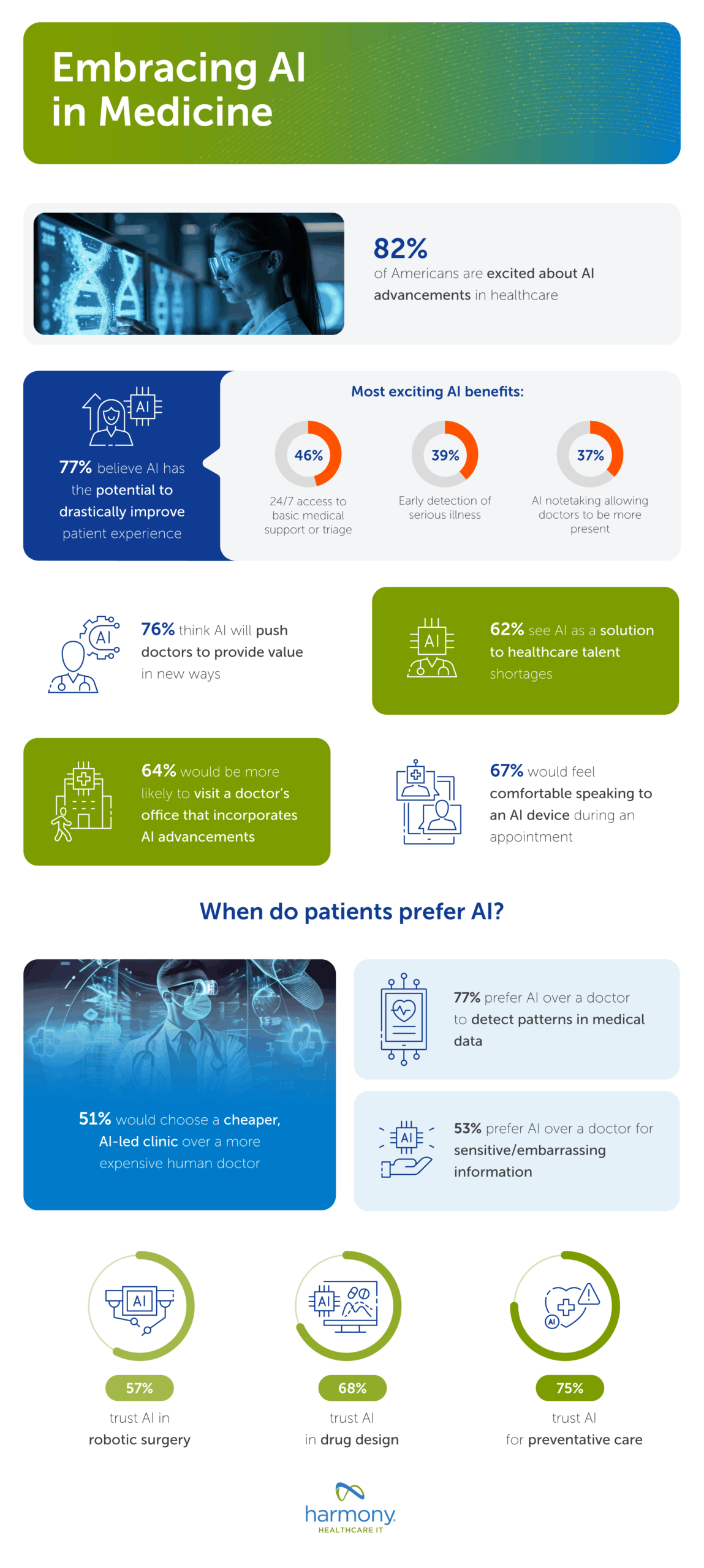
Americans are leaning into the AI revolution in healthcare, with 82% expressing excitement about how artificial intelligence could reshape medicine. Another 77% believe AI could significantly enhance the patient experience.
The strongest perceived benefits include 24/7 access to basic medical support (46%), early detection of serious illnesses (39%), and AI-assisted note taking that frees doctors to engage more deeply with patients (37%).
What Patients want from AI in Medicine: 24/7 Access & Faster Diagnoses
Patients are welcoming AI advances for reasons beyond convenience. More than three-quarters (76%) believe AI will push doctors to provide value in new, more human ways. And with 62% citing AI as a fix for ongoing healthcare talent shortages, the technology is increasingly viewed as essential infrastructure.
Tech-Savvy Patients Want AI at the Center of Care
In some instances, AI is becoming a selling point: 64% percent of Americans say they’d be more likely to visit a clinic that incorporates AI advancements, and 67% would feel comfortable interacting with an AI device during their visit.
When cost is a factor, over half (51%) would choose a cheaper, AI-led clinic over a traditional one. And in specific scenarios, AI is the clear preference: 77% would rather rely on AI than a doctor to detect complex patterns in medical data, while 53% feel more comfortable disclosing sensitive or embarrassing issues to AI than to a human provider.
Other scenarios where patients trust AI include robotic surgery (57%), drug development (68%), and preventative care (75%)
Nearly 1 in 3 Americans Have Used AI as a Form of Therapy
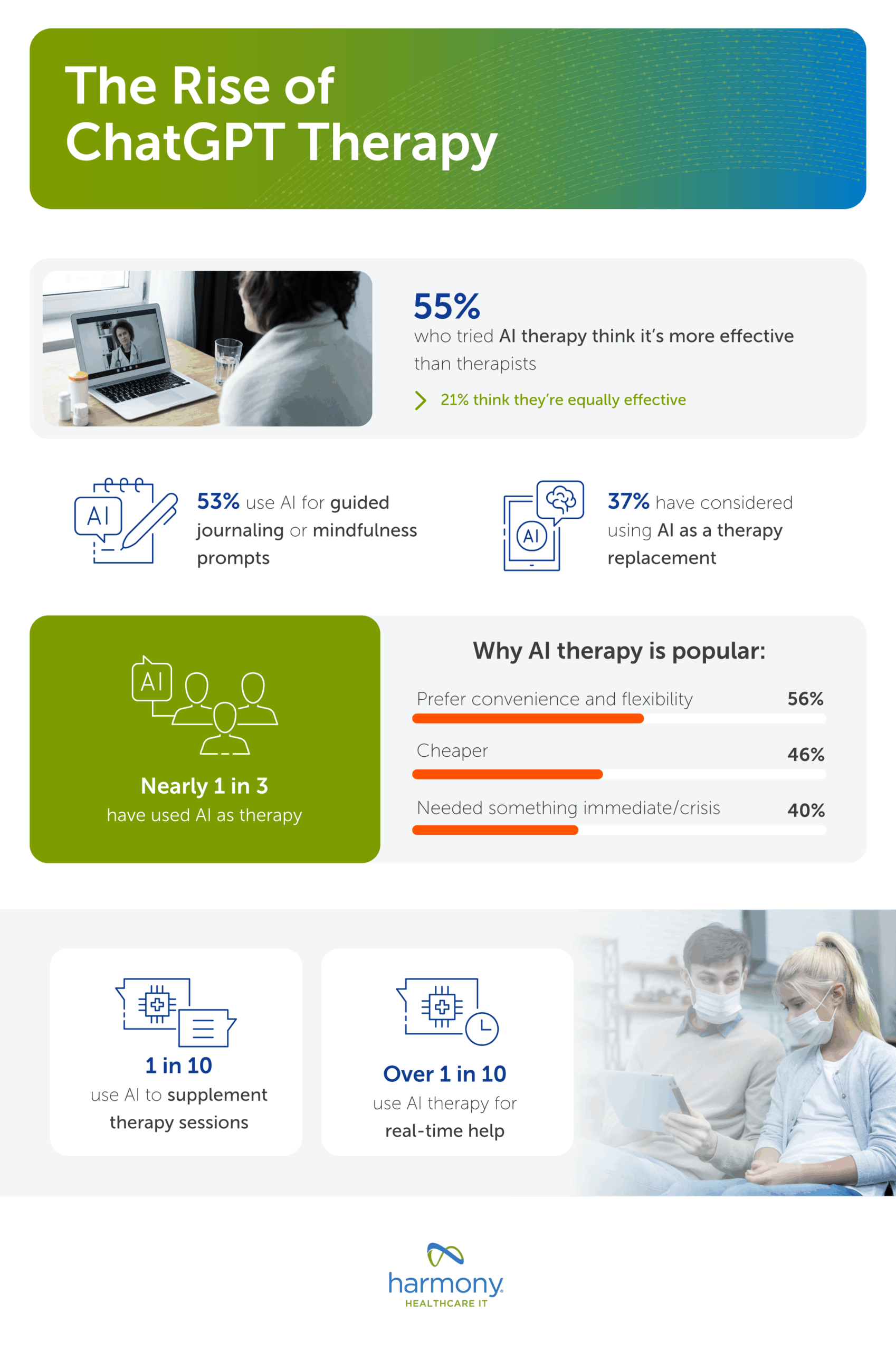
As AI tools become more sophisticated and accessible, a growing number of Americans are turning to them for mental health support. In fact, clinical studies suggest AI chatbots can offer therapeutic benefits for conditions like anxiety and depression. Our survey shows that more than half (55%) of those who’ve tried AI therapy say it’s more effective than traditional therapy. Another 21% see the two as equally effective.
From guided journaling to crisis support, nearly 1 in 3 Americans have used AI as a form of therapy. Their motivations reveal deeper systemic gaps: 56% cite convenience and flexibility, 46% say it’s cheaper, and 40% turned to AI during an immediate mental health crisis. While telehealth Zoom calls have helped bridge some of these gaps—especially when it comes to access and convenience—many patients still find AI tools more immediate and less
intimidating. An app or chatbot is easier to reach than a human therapist, especially in moments of urgency or emotional discomfort.
Rather than replacing therapists outright, sometimes AI acts as a supplement or stepping-stone: 10% use AI to support ongoing therapy sessions, and over 1 in 10 (11%) rely on AI tools for real-time emotional assistance. Additionally, over half (53%) say they use AI for structured mindfulness prompts or guided journaling.
Patients Still Value a Human, Personal Touch
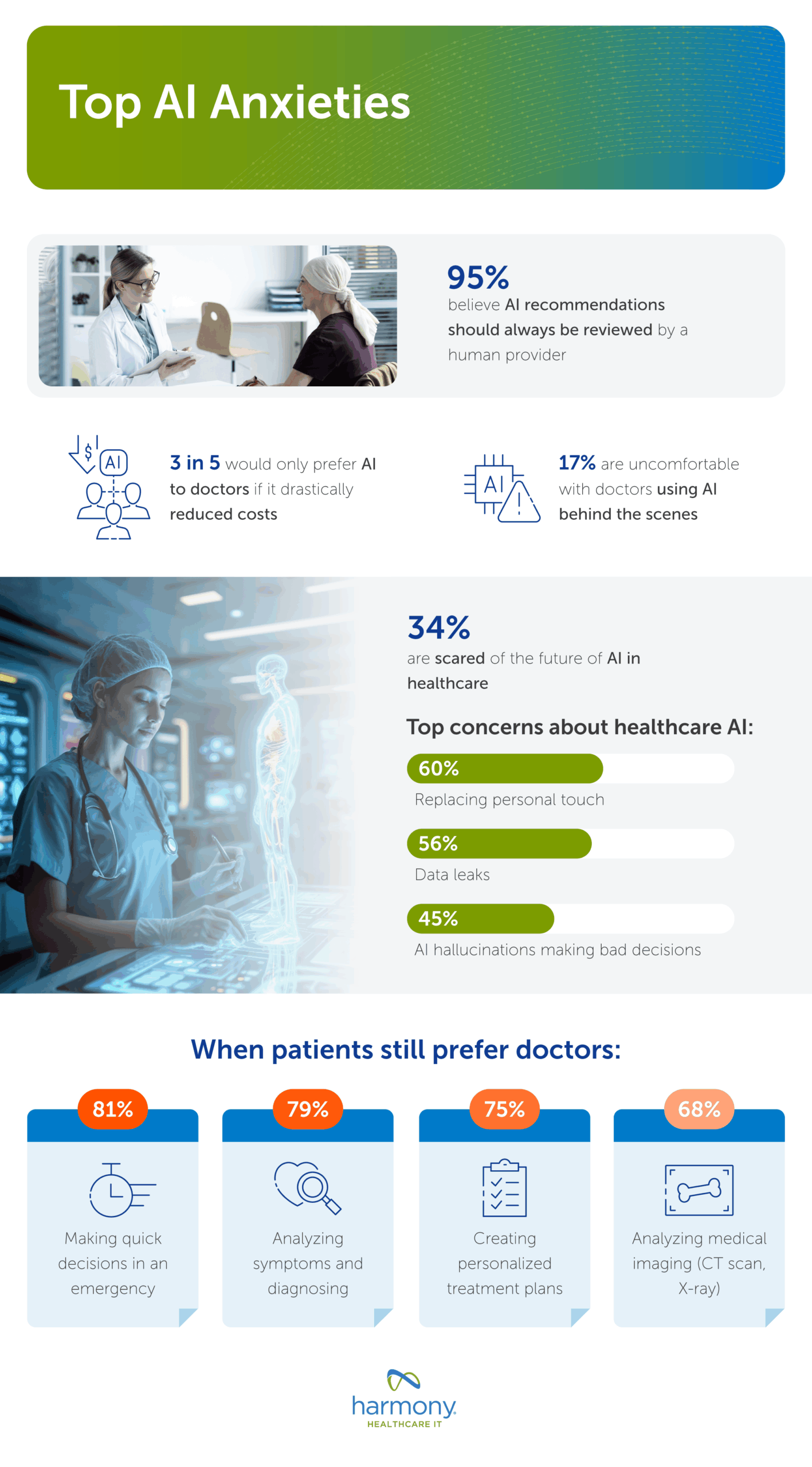
While interest in healthcare AI is growing fast, Americans aren’t ready to fully hand over the reins just yet. A striking 95% believe any AI-generated recommendation should be reviewed by a human provider. Additionally, 17% are uneasy with doctors using AI tools behind the scenes without their knowledge.
Even among those intrigued by AI’s potential, cost remains a key qualifier: 3 in 5 say they’d only prefer AI-led care if it came with significant savings.
More than one-third (34%) say they’re scared of AI’s role in healthcare, with top concerns including data management and lack of human interaction:
- Losing the personal touch (60%)
- Data privacy breaches (56%)
- AI hallucinations leading to dangerous decisions (45%)
When it comes to critical medical moments, trust still tilts heavily toward human doctors. Patients strongly prefer human expertise for:
- Emergency decision-making (81%)
- Symptom analysis and diagnosis (79%)
- Creating personalized treatment plans (75%)
- Interpreting medical imaging like CT scans or X-rays (68%)
Statistics Highlight Use Cases and Challenges in the Medical Field
While AI is gaining traction in healthcare and patients express their enthusiasm, its adoption varies widely depending on the use case, trust levels, and real-world performance.
How Healthcare Organizations are Incorporating AI
According to the National Library of Medicine, a 2025 study surveying 43 nonprofit healthcare organizations found 53% experienced a high degree of success with using AI for Clinical Documentation. However, the widest use case was imaging and radiology, adopted by 90% of respondents. Only 38% report success with clinical risk stratification.
Respondents said the biggest barriers to adoption of AI in healthcare are immature tools (77%), financial concerns (47%), and regulatory uncertainty (40%).
How Physicians are Incorporating AI
What would doctors like to see to increase trust in AI? An American Medical Association (AMA) survey of 1,081 physicians found that 78% want to see clear information and references, demonstrated efficacy, and information about how it’s monitored.
When asked about how AI would be most useful to them, most said the most helpful instances would be diagnostic ability (72%), work efficiency (69%), and clinical outcomes (61%).
Balancing Technical Advances with Doctor Care
AI is no longer a distant concept in healthcare—it’s here, and patients are actively reshaping their expectations around it. While enthusiasm is high and use cases are expanding, Americans are drawing a firm line: they want AI to make care more responsive, affordable, and intelligent—but not impersonal. Trust still rests with human providers, especially when stakes are high.
As AI transforms patient expectations and healthcare delivery models, the need for secure, intelligent data management becomes even more critical. Harmony Healthcare IT partners with healthcare organizations to ensure that legacy data is managed with security and precision. Our solutions, including HealthData Archiver®, HealthData AR Manager®, and HealthData Locker™, provide organizations with streamlined access, compliance support, and long-term data protection.
Methodology:
In May 2025, Harmony Healthcare IT surveyed 1,002 Americans about their AI in healthcare opinions. Ages ranged from 18 to 75, with an average age of 42. 49% were women, 49% were men, 1% were non-binary, and 1% declined to identify.
For media inquiries, please contact media@digitalthirdcoast.net.
Fair Use
When using this data and research, please attribute by linking to this study and citing www.harmonyhit.com.