Summary

Accounts receivable (A/R) plays an important role in the financial success of a healthcare delivery organization. Implementing a new billing system begs the question of how best to wind down A/R: from the legacy system itself, from a comprehensive billing and collections active archive solution, or from a data conversion to the new billing system. A/R wind down from an active archive, like HealthData AR Manager®, supports continuous account resolution, a savings in legacy vendor cost, and compliant long-term record retention.

Join Fellow Healthcare IT Pros

Tips, Guides, News & More

Sign Me Up
AR Wind down Logo

Consider the irony in keeping a legacy financial system up and running with the goal of collecting on outstanding patient billing and insurance payer claims, when the actual costs and risks of maintaining that old system are keeping the meter rapidly adding up more fees.

Collecting from patients and payers can be a timely process

73% of providers report that it takes one month or longer to collect from patients. Further, in 2020, 32% of American workers had medical debt and over half have defaulted on it. Insurers generally pay out claims to providers within 30 days, but there can be delays with coverage denials and numerous other issues with the claim.

Meanwhile, a legacy billing system can keep costs adding up from:

  • Hardware and software costs
  • Vendor support fees
  • Staff training costs to ensure there are employees equipped to work in the legacy system
  • Risk of cybersecurity breaches as older systems age and potentially become less secure

Across the IT landscape of numerous industries, 90% of IT professionals say legacy systems are preventing them from taking advantage of the digital technologies they require to be more efficient. However, simply switching billing or other financial systems isn’t a total solution as cash collections in the month following an EHR conversion can dip more than 20%, with one study reporting that by the end of a conversion, the total cash shortfall averaged $168M among US hospitals.

Senior IT decision makers report that modernizing billing systems can boost revenue up to 14 percent annually – over and above the saved operating costs.

However, it’s not as simple as plugging in a new system; an A/R Wind-Down Strategy is Vital

Few billing teams can afford the cost and complexity of completing a financial line-item data conversion to the new billing system.  Further, few want to navigate a swivel-chair strategy, working in two concurrent, full-production financial systems at once to wind down A/R – systems with high monthly vendor maintenance fees no less.  As an alternative, healthcare providers can decommission the legacy billing system and build their legacy data management strategy around an archiving solution that allows staff to continue collection efforts with complete billing functionality.

This A/R wind down approach:

  • Helps maintain continuous account resolution during the system transition
  • Reduces costs of legacy system support and maintenance
  • Ensures HIPAA-compliant record retention and compliance
  • Fortifies defenses against cybersecurity threats to an aging legacy system

Active Archive HealthData AR Manager® supports improved financial performance

HealthData AR Manager®, a comprehensive billing and collections A/R wind down and record storage solution, equips collector to:

  • Refile 837 claims
  • Receive 835 remittance advice
  • View full transaction history
  • Post/edit transactions
  • Manage collector/agency workflows
  • Produce statements/on-demand letters
  • Access audit logs
  • Monitor predefined interfaces
  • Post payments, adjustments, memos, and refund requests
  • Produce standard reports and extracts
  • Comply with government agency requirements

Important to note, HealthData AR Manager® can optionally integrate with HealthData Archiver® via single sign-on for easy access to legacy clinical records when necessary.

The benefits of an active archive add up to real bottom-line savings

According to a KLAS Research report, 85% of provider organizations maintaining a legacy system that moved to a legacy data archive realized a financial benefit, among other benefits such as consolidating data and improving workflows.

For more detailed information about how A/R wind down with an active archive improves financial performance, visit our website. Or download this AR Management Fact Sheet.

Better yet, reach out and connect with our team.

Healthcare IT tips, guides, news & more delivered to your inbox

Learn More

Summary

Healthcare has been at the top of mind for Americans during the COVID-19 pandemic, but how seriously have millennials been about their personal health throughout the last year? As a health data management firm interested in the health habits of millennials, we recently surveyed millennials on the topic of healthcare, primary care physicians and annual...

Join Fellow Healthcare IT Pros

Tips, Guides, News & More

Sign Me Up
Milennial on laptop

Healthcare has been at the top of mind for Americans during the COVID-19 pandemic, but how seriously have millennials been about their personal health throughout the last year?

As a health data management firm interested in the health habits of millennials, we recently surveyed millennials on the topic of healthcare, primary care physicians and annual physical examinations during the pandemic.

COVID-19 and Millennial Health

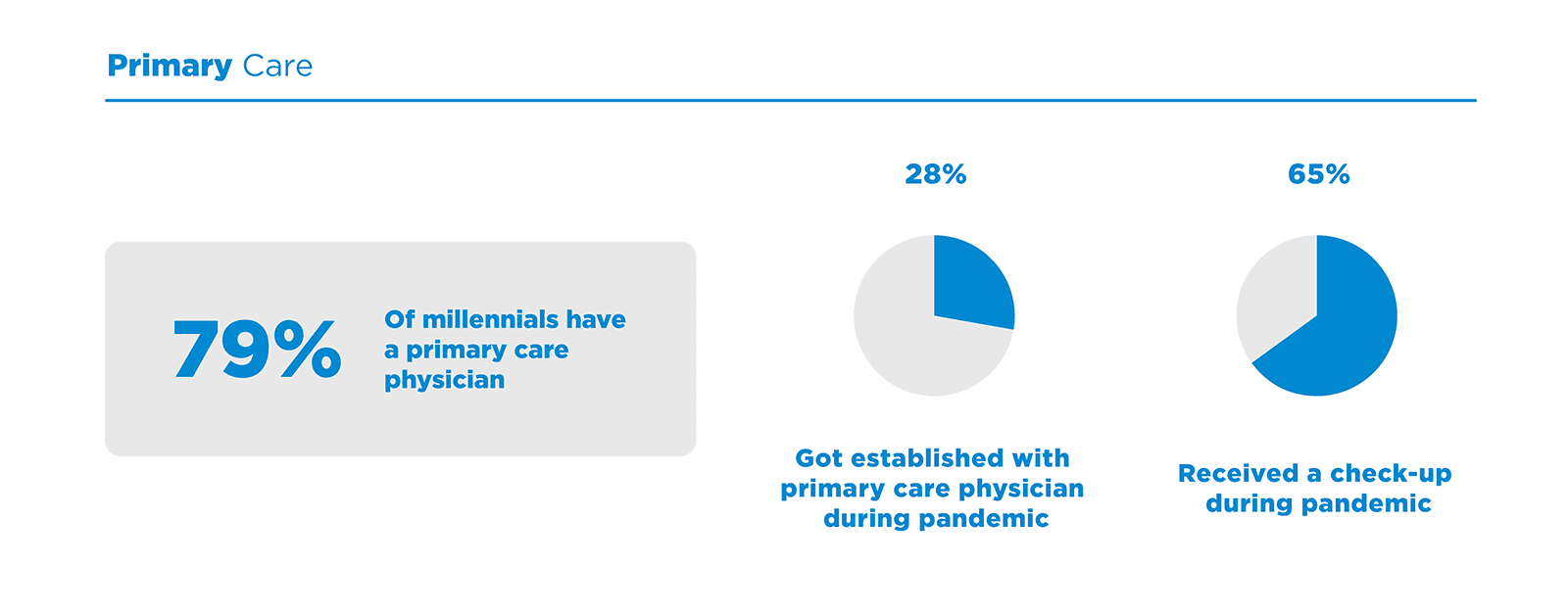
According to self-reporting respondents, 79% of millennials say they have a primary care physician. A similar survey conducted by Harmony Healthcare IT in 2019 revealed that 76% of millennials had a primary care physician.

Millennial Primary Care

A majority of millennials (65%) also say they made sure to receive a check-up or annual physical during the pandemic and 28% say they became established with their primary care physician during the pandemic. Compared to our survey in 2019, the percent of millennials who received a physical within the last year remained unchanged at 65%.

Millennials Ignoring Health Issues

Millennials Avoiding Doctor

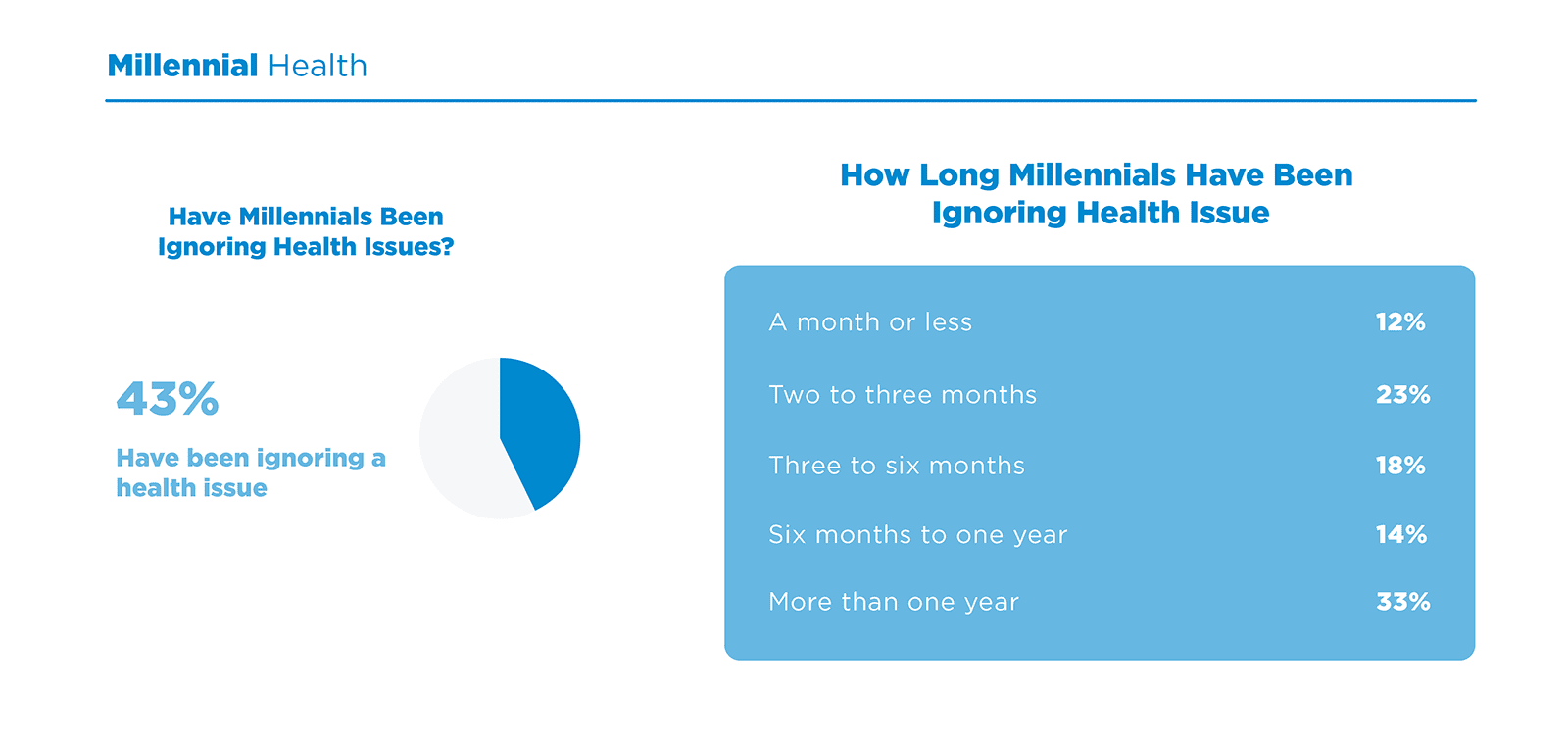
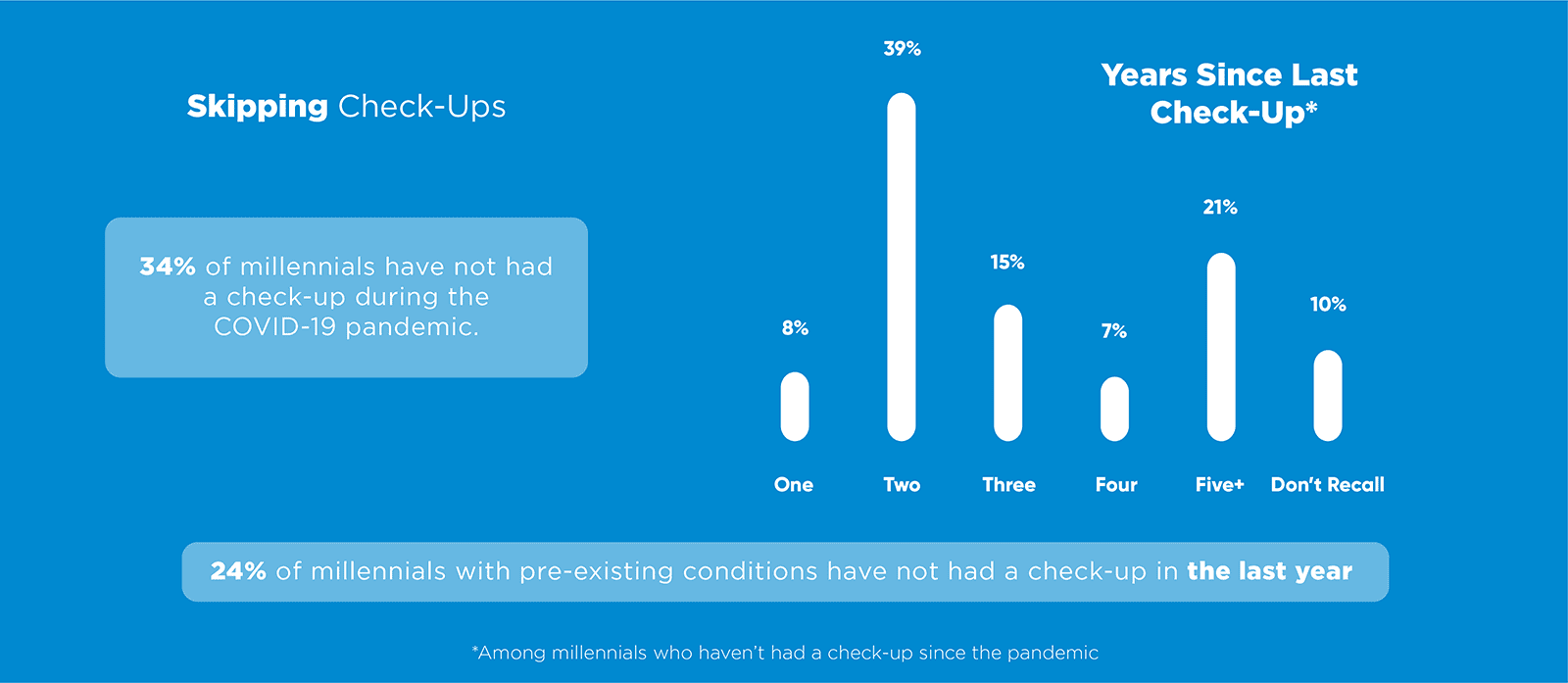
Many millennials are still putting off going to the doctor and ignoring health issues altogether. According to respondents, 43% have been putting off addressing a health issue and 34% have not received a check-up since the pandemic. These numbers have remained relatively unchanged since our 2019 survey, which showed that 45% of millennials had been ignoring a health issue and one-third had not received a check-up within the last year.

Millennial Check-ups

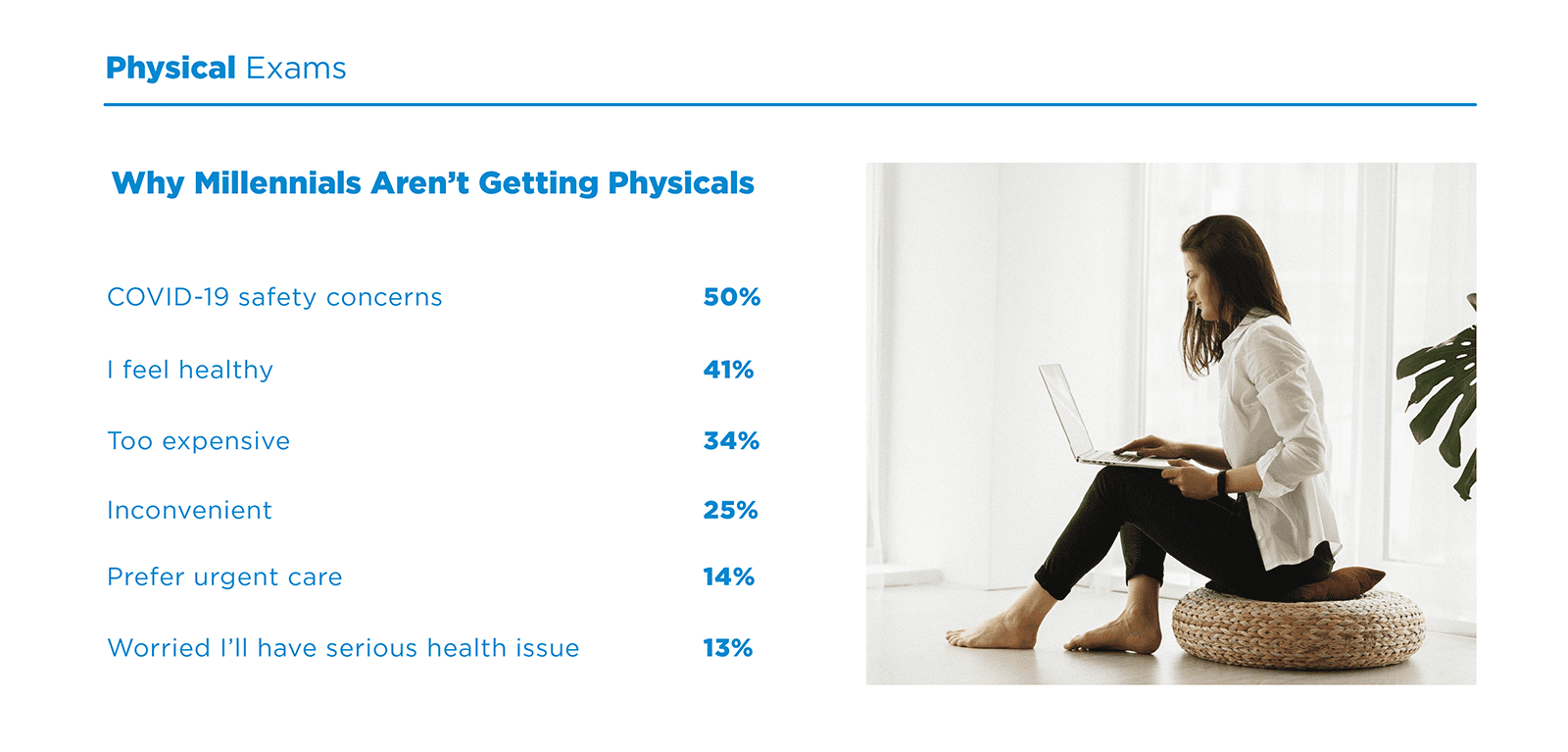
The most common reasons why millennials are putting off check-ups include safety concerns due to the pandemic (50%); they feel healthy (41%); and visits to the doctor are too expensive (34%) or too inconvenient (25%).

Millennials Skipping Physicals

Millennials Turn to Google for Medical Advice

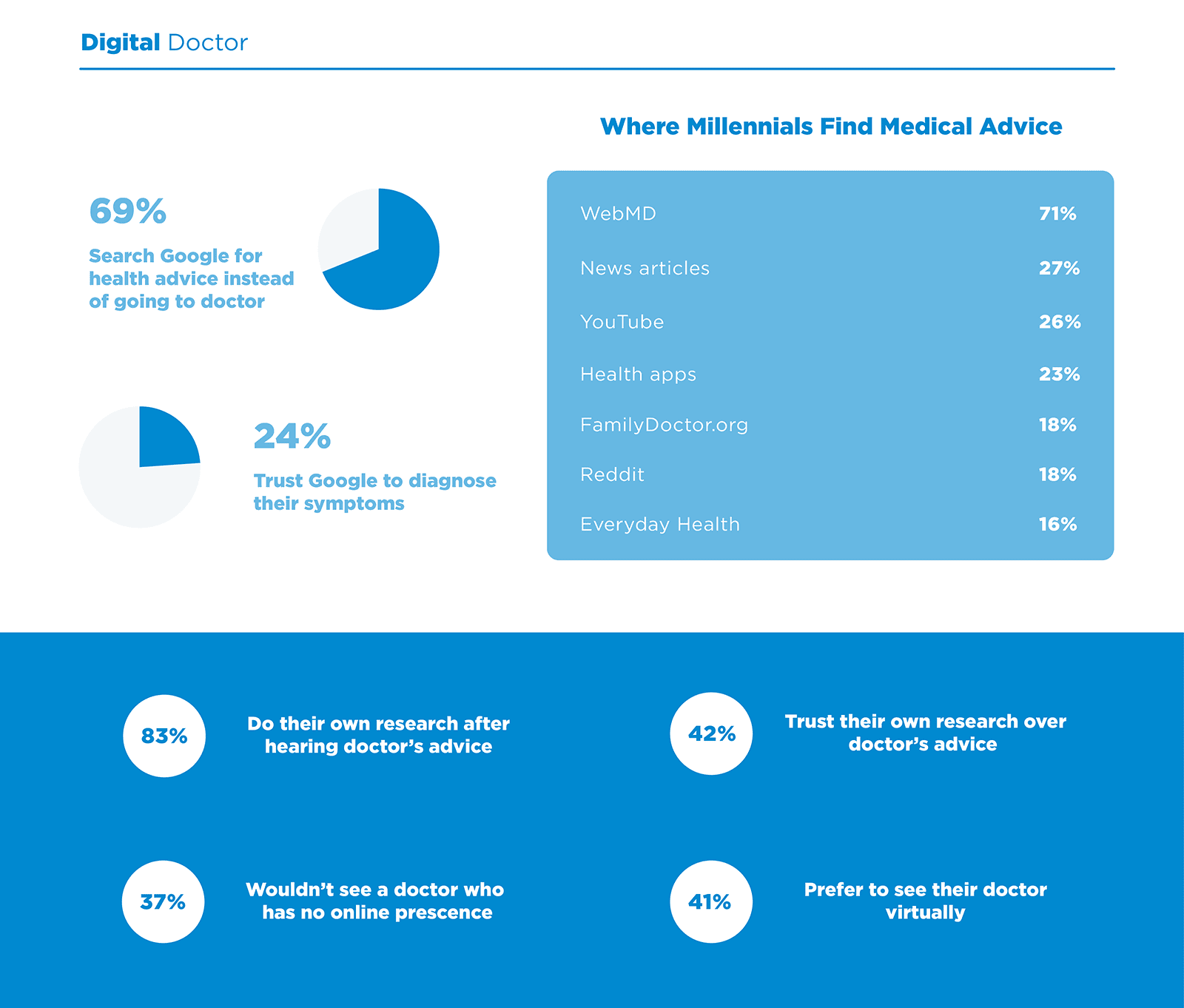
Considering they are the generation who grew up with technology at their fingertips, it might not be a surprise that millennials turn to Google for medical advice. Overall, 69% of respondents say they search Google for health or medical advice instead of going to the doctor and 24% trust Google to accurately diagnose their symptoms.

Millennials Google Doctor

Along with online health publications and news articles, more than a quarter of millennials (26%) say they find their medical advice on YouTube and 18% turn to the popular social platform Reddit.

Not only are millennials searching online for medical answers, but a majority (83%) are also conducting their own research – even after hearing a doctor’s advice.

Millennial Medical Debt

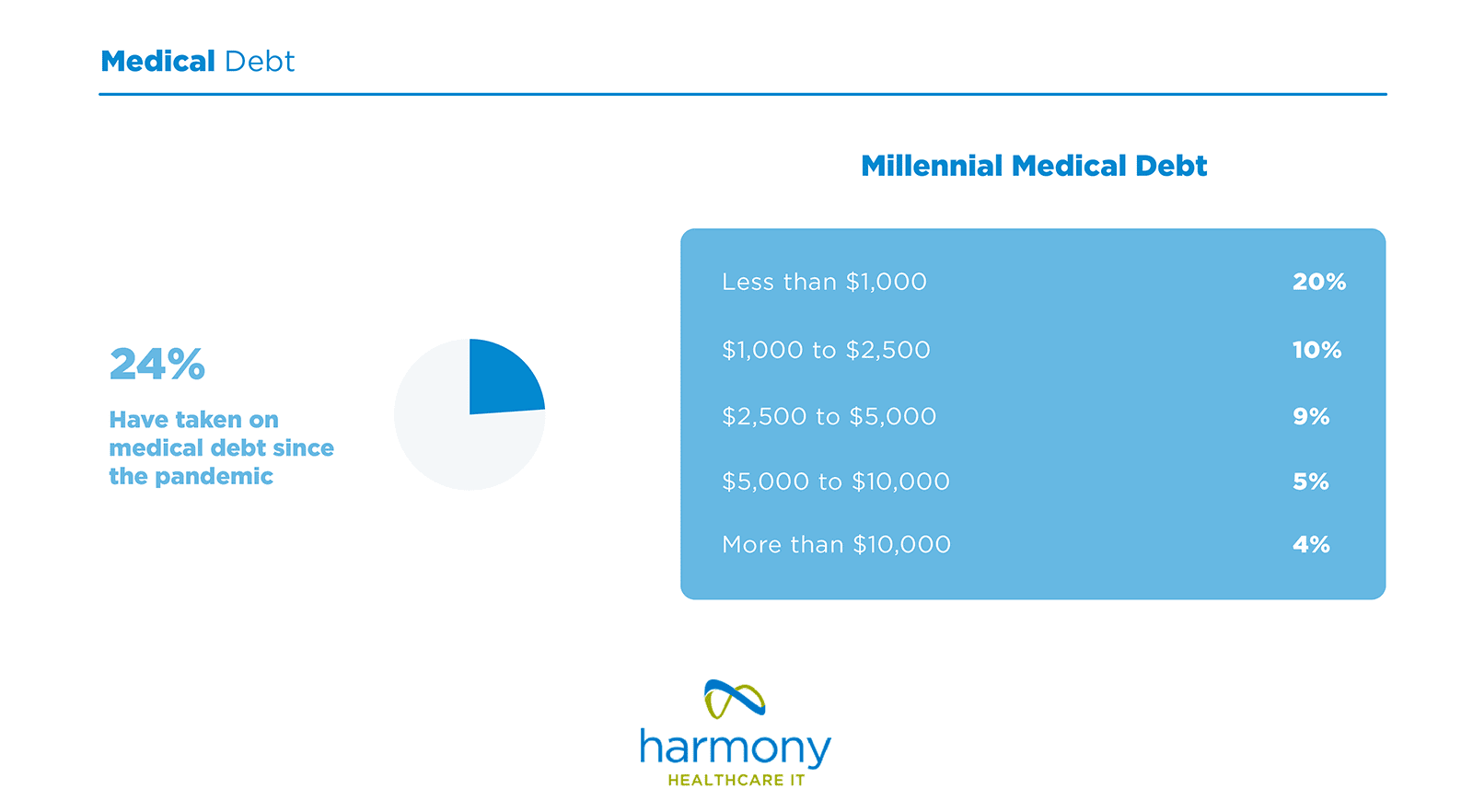
COVID-19 has brought on financial hardship for many Americans and millennials have also been financially stressed, especially when it comes to medical debt. Nearly a quarter (24%) of millennial respondents say they’ve taken on medical debt since the pandemic. Overall, 28% say they have $1,000 or more in medical debt.

Millennials Medical Debt

How Many Millennials Will Get COVID-19 Vaccine?

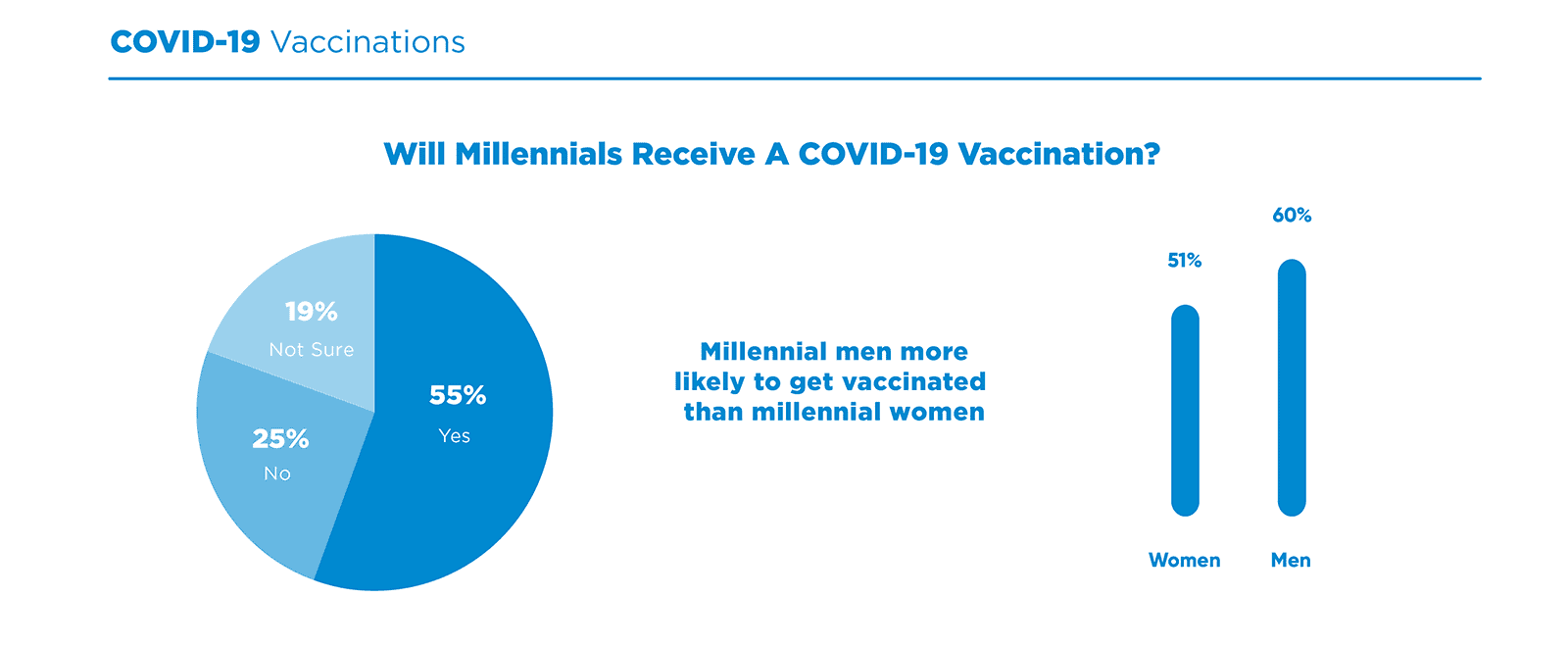
Attitudes toward the COVID-19 vaccine have changed since late last year, but 25% of millennials say they will not get vaccinated for COVID-19 while 55% say they will get vaccinated. Millennial men were slightly more likely to say they will get a COVID-19 vaccination (60%) compared to 51% of millennial women.

Millennials Covid 19 Vaccine

As the world enters a new phase and new year of the global COVID-19 pandemic, it will be interesting to see how millennials’ relationship with their health and primary care physician continues to evolve and adapt to a changing health care landscape.

Methodology

From Feb. 8 to Feb. 23, 2021, we surveyed 2,040 millennials between the age of 23 and 39 on the topic of healthcare and primary care physicians. Of those respondents, 48% were female and 52% were male and the median age was 31. Income: Under $20K: 19%; $20-40K: 25%; $40-60K: 25%; $60-80K: 15%; $80-100K: 8%; Over $100K: 8%.

Employment status: Employed for wages: 67%; self-employed: 12%; unemployed due to COVID-19: 6%; unemployed not due to COVID-19: 3%; homemaker: 6%; student: 4%; other: 2%.

For media inquiries, contact media@digitalthirdcoast.net.

Healthcare IT tips, guides, news & more delivered to your inbox

Learn More

Summary

Harmony Healthcare IT is proud to be recognized and honored as a leading employer in Indiana. Workplace culture is a long-standing top priority for the Harmony Healthcare IT team. Therefore, being named to the “Best Places to Work in Indiana” list for 2021, by the Indiana Chamber of Commerce and Best Companies Group, is a meaningful achievement for the company.

Join Fellow Healthcare IT Pros

Tips, Guides, News & More

Sign Me Up
Best Places to Work in Indiana 2021

Being named to the “Best Places to Work in Indiana” list for 2021 is a meaningful achievement for Harmony Healthcare IT. The award program created by the Indiana Chamber of Commerce and Best Companies Group recognizes and honors leading employers in Indiana with outstanding workplace cultures.

The health data management company is the only award winner from the greater South Bend area, and part of an elite group of 125 businesses statewide that will be officially recognized at a celebration on May 6 and featured in the Indiana Chamber’s BizVoice® magazine and on the Inside INdiana Business with Gerry Dick statewide television program.

The “Best Places to Work in Indiana“ award criteria is weighted with 75 percent focused on comprehensive employee feedback about culture, benefits, perks, flexibility and the overall employee experience and the remaining 25 percent measuring the company’s workplace policies, practices, philosophy, systems and demographics.

Tom Liddell – CEO

“Our role as a first-to-market innovator of health data management solutions is an important one. Handling vital patient information with accuracy and security can be intense, so, we try to balance that with a culture that recognizes excellence and celebrates wins. I’m proud of the products and services this team delivers for hospitals, group practices, labs and blood banks nationwide.” – Tom Liddell, CEO, Harmony Healthcare IT

“We have many tremendous employers in the state, so it’s great to see more and more companies take part in this effort to evaluate their workplace cultures and gain the recognition they deserve. These companies consistently demonstrate to their employees how much they value their contributions.” – Kevin Brinegar, Indiana Chamber President

Workplace culture is a long-standing top priority for the Harmony Healthcare IT team. The company uses #InHarmony as a mantra that encourages each team member to connect and share in a united approach to balancing work and life. Prior to the pandemic, Harmony Healthcare IT team members would borrow the company’s #InHarmony flags and take them all over the world where they would snap selfies on mountain tops and ocean floors.

Recently, the company added several socially-distant ways to stay connected, including the #JustPaws photo-op. To participate, team members adorn their family pet with a branded bandana and snap and share a photo as a fun way to remind team members to take a breather and share some joy with their dog, cat, or other pet.

The Harmony Healthcare team is in growth mode and looking to add a number of new positions in 2021. While many team members are currently working remotely, the company is renovating a larger office space with a move planned later this year. For information on available positions, visit the Careers section of the company’s website.

For the complete list of companies named to the 2021 Best Places to Work in Indiana, visit the Indiana Chamber’s website.

Healthcare IT tips, guides, news & more delivered to your inbox

Learn More

Summary

Harmony Healthcare IT has received a high ranking in the 2021 Best in KLAS Software & Services Report. For the second year in a row Harmony Healthcare IT has earned all A’s in each of the six customer experience pillars: culture, loyalty, operations, product, relationship, and value.

Join Fellow Healthcare IT Pros

Tips, Guides, News & More

Sign Me Up
KLAS Ranking 2021

Harmony Healthcare IT, a first-to-market innovator in health data management solutions and the maker of HealthData Archiver®, a long-term record storage software application; announced it has received a high ranking in the 2021 Best in KLAS Software & Services Report. This is the second year that the category of data archiving is included in the report that recognizes software and services companies within healthcare.

Important stand out results for two years in a row include, first, that 100% of its customers interviewed by KLAS Research consider Harmony Healthcare IT a part of their organization’s long-term plans. Second, Harmony Healthcare IT earned all A’s for the second year in a row in each of the six customer experience pillars of culture, loyalty, operations, product, relationship, and value. These grades are particularly significant considering Harmony Healthcare IT handles some of the largest and most complicated health data management projects in the nation. In fact, more than 60% of Harmony Healthcare IT clients interviewed were classified by KLAS Research as integrated delivery networks versus standalone facilities.  This underscores Harmony Healthcare IT’s ability to deliver complex, multi-faceted projects to large enterprises.

Tom Liddell – CEO

“Consistently earning high marks from all of our customers is important to us. But, we take pride in earning All A’s from our larger integrated delivery network clients as their more complex inventory of legacy clinical and financial systems – coupled with the speed and quality at which they demand we decommission them – is infinitely more challenging.  It is also particularly rewarding to pick up where a competitor wasn’t able to deliver and finish out the project.” – Tom Liddell, CEO, Harmony Healthcare IT

Customer insights about Harmony Healthcare IT cited in the report include:

“We want to stop having to maintain the servers. We will be so glad to be off of our current system and have everything in one server. Harmony Healthcare IT helps get us where we need to go. They worked with us really well to figure out what we had in the system that we would want to get out. They have the technology. And they know our files and where things are stored. So we didn’t have to go through files one by one. Harmony Healthcare IT demonstrated their system, and now when we see it, it is what they showed us at the beginning. It has everything we need. Our project manager has been great, but someone else actually made the plan details about what was in each file.”

– Analyst/Coordinator, May 2020

“Our prior vendor to Harmony Healthcare IT failed on the delivery. We had to regroup quickly, so Harmony Healthcare IT worked with a tight window to deliver. They did a really nice job of doing what we needed them to do. One of the failures of the prior vendor was they were not able to reproduce the doctors’ charts, and that is key. We had a couple of bumps with Harmony Healthcare IT, but overall, they successfully delivered all the historical data in a short time frame. We had minimal defects post-implementation. Cases of missing data and other data errors or omissions were minimal and almost nonexistent. So Harmony Healthcare IT did a very nice job.”

– Director, June 2020

“There are a couple of things with the vendor’s approach that I have really liked. They have all the data. Instead of constantly calling us or sending us screenshots or asking us whether something was right, they had remote access to the system we were archiving, and they could validate the system themselves before turning it back to us. They were able to look at the majority of things and say whether they think the labs are flowing in right. I really like that approach versus always having someone on our team having to look things up.”

– CIO, May 2020

Ranked #1 in the 2020 Best in KLAS Software & Services Report as a Category Leader in Data Archiving, Harmony Healthcare IT thanks its customers for participating in the KLAS Research interviews and continues its commitment to continual improvement of its delivery of products and services to the healthcare vertical.

About KLAS Research
KLAS is a research and insights firm on a global mission to improve healthcare delivery by amplifying the provider’s voice. Working with thousands of healthcare professionals and clinicians, KLAS gathers data and insights on software, services, and medical equipment to deliver timely reports, trends and statistical overviews. The research directly represents the provider voice and acts as a catalyst for improving vendor performance. Follow KLAS on Twitter and LinkedIn. Learn more at klasresearch.com

Healthcare IT tips, guides, news & more delivered to your inbox

Learn More

Summary

To a hacker, dental records represent an opportunity to gain access to patient and payment information – which both hold high value on the dark web. Why? Because this data, when combined with passports, drivers’ licenses, and social security and credit cards, can be converted into complete identity packages. The news here: Dental practices are...

Join Fellow Healthcare IT Pros

Tips, Guides, News & More

Sign Me Up
Hacked System Explolit

To a hacker, dental records represent an opportunity to gain access to patient and payment information – which both hold high value on the dark web. Why? Because this data, when combined with passports, drivers’ licenses, and social security and credit cards, can be converted into complete identity packages.

The news here: Dental practices are not immune to cyberattacks.

In September 2020, dental support organization Dental Care Alliance, LLC, was hacked. The breach went undetected for weeks and compromised the protected health information of more than one million patients.

This is only one example within the dental field, and the numbers keep rising, year after year. From 2009 to 2019, there has been a 95% increase in the number of health data breaches. And according to Crowdstrike’s 2021 Global Threat Report, 2020 saw another significant jump in cyberattacks focused on the healthcare industry.

If you’re involved in any part of the health care industry, especially small and mid-sized clinics or dental practices located in the United States, it’s time to take important steps forward to secure your data.

You might be wondering – what kind of impact can a cyberattack really have on a dental practice?

In the first hours or days, it could mean:

  • Encrypted patient files so you’re blocked from your treatment notes and patient x-rays
  • Locked appointment files
  • Inaccessible billing records
  • The inability to process payroll
  • Downtime for the entire office

In the days and weeks to come after an attack, dental practices could be plagued with other issues, including:

  • Recovery or ransom efforts to try to restore the records and get back to business
  • Patient records being sold on the dark web
  • Reporting the breach to customers, likely including entire families whose health and other identifying information may have been compromised
  • Complying with HIPAA reporting, with the possible need to report the breach within multiple states depending on the scope of the business

With a target clearly on the backs of all health care providers, including dental practices, there are preventative measures that should be incorporated into daily data management to ensure the safety of patient and business data.

Properly Preserving Legacy Data is Key to Security

One of the most important steps in protecting your organization’s ePHI is to identify risk factors, especially in the case of legacy systems which can be an open door for attacks.

Our team at Harmony Healthcare IT develops and supports HealthData Archiver®, a data management platform providing a single point of access to historical patient, employee or business data for dental and healthcare practices.

The web-based solution, with its release of information workflows, Single Sign-On integrated clinical views, revenue cycle features and eDiscovery capabilities, provides a significant return on investment for dental practices that are switching to a new system and decommissioning legacy systems. The solution consolidates data stores, reduces out-of-production system maintenance costs, mitigates technical risk, and complies with record retention mandates.

Bottom line: Active Archiving is the one big defensive move your healthcare organization can take immediately to protect its EHR, ERP, and HR systems to keep cyber criminals locked out.

Looking for some guidance on how to protect your legacy dental data from becoming a part of a cyberattack statistic?

Let’s connect.

Note: This blog was updated from a previous version published on Oct. 3, 2020.

Healthcare IT tips, guides, news & more delivered to your inbox

Learn More

Summary

In many ways, the healthcare industry and consumers are finding there are gaps in medical information accessibility. In a recent nationwide survey of 2,517 healthcare consumers, 67% said they will consider changing their doctor or hospital providers in the coming year after learning how their health record was not shareable, available or was blocked in...

Join Fellow Healthcare IT Pros

Tips, Guides, News & More

Sign Me Up
21st century cures act competitive advantage

In many ways, the healthcare industry and consumers are finding there are gaps in medical information accessibility. In a recent nationwide survey of 2,517 healthcare consumers, 67% said they will consider changing their doctor or hospital providers in the coming year after learning how their health record was not shareable, available or was blocked in the past year.

This survey comes on the heels of the finalized rules from the 21st Century Cures Act (first released in 2016, with finalized rules released on March 9, 2020) which promotes expanded patient access to their electronic information, supports provider needs, advances innovation and addresses industry-wide information blocking practices.

The finalized rules require more extensive patient access to their electronic medical records without charge by their healthcare provider and in the format that they choose. This is updated from the requirements from the Meaningful Use guidelines from 2018 and now includes consultation notes, discharge summary notes, history & physical, imaging narratives, lab report narratives, pathology report narratives, procedure and progress notes.

It is important to note that the finalized rule around interoperability, information blocking and ONC Health IT Certification was going to start being enforced on Nov. 2, 2020. However, in light of COVID-19, the ONC announced it will exercise discretion in enforcing all new requirements. For current updates from the ONC, visit their website.

How healthcare IT delivers on these finalized rules is somewhere on every healthcare organization’s to-do list. Moving it toward the top could make could business sense. Industry experts suggest healthcare organizations look at meeting the finalized rules sooner rather than later and as an opportunity for business success, citing that adopting the rules as soon as possible represents a huge business opportunity.

Those physician practices and health systems that can step up, navigate the obstacles and deliver robust patient access to health information through apps and next-gen digital tools, may find themselves at a competitive advantage.

Speaking of competitive advantages, let’s talk about the long game.

One big step forward in the health data management race is to consolidate legacy EHR, ERP and HR systems that require logging in to multiple systems to fulfill a single release of information request into an active archive. Further, single sign-on allows a seamless connection from the current EHR (i.e., Single Sign-On from Epic) in context, to the patient’s historical medical record.

As healthcare providers continue to adapt and evolve with how they need health and business data to flow through technology systems and now more fluidly to patients on new apps, it will be even more important to have a solid lifecycle data management plan that consolidates disparate data sets. With some multi-hospital organizations managing 30-40 read-only legacy EHR systems with varying states of usability, it is even more important to get the weight off and have a lean and forward-thinking data management strategy for the long haul.

As your team continues to adapt to rules, follow retention guidelines and safely guide the data within your care wherever it needs to go, it’s a good time to make sure your inventory of applications is consolidated, secured, accessible and usable.

An active archive such as HealthData Archiver® is a long-term medical data storage strategy that reduces or eliminates legacy system management costs, provides role-based security and is a vendor-neutral long-term home for legacy records. Secure, compliant, long-term PHI storage in an electronic health data archive solution helps manage the legacy application portfolio which saves on maintenance contracts, mitigates technical risk, and reduces labor burden. With an active archive, outdated legacy systems can be decommissioned and ROI is often seen in 18-24 months.

Ranked #1 in the 2020 Best in KLAS Report for Data Archiving, the Harmony Healthcare IT team has worked with hundreds of EMR/ERP software brands, archiving billions of records and storing petabytes of data. We migrate and archive records across the care continuum – for hospitals, health systems, pharmacies, clinics, labs, blood banks, home health care, long-term care, and more.

We move data where it is needed. We break barriers that stump other data management companies.

The data race in healthcare is speeding up.

We’re ready.

Contact us.

Note: This blog was updated from a previous version published on Sept. 16, 2020.

Healthcare IT tips, guides, news & more delivered to your inbox

Learn More

Summary

Are you looking to decommission your out-of-production EMR or ERP system in your healthcare organization? The first step is compiling a list of legacy applications. This system inventory gathers details to help vendors like us to scope the project(s) and prioritize the decommissioning schedule. We can then propose HIPAA-compliant storage solutions for patient or employee data.

Join Fellow Healthcare IT Pros

Tips, Guides, News & More

Sign Me Up

Ready to decommission out-of-production EMR, billing, or ERP systems in your healthcare organization and put a legacy data management strategy in place?  The first step is to compile a complete list of legacy applications.  This system inventory, which gathers details like product and vendor name, product version, database size, image store, server location, maintenance cost, date of retirement, etc. helps archiving vendors like Harmony Healthcare IT to scope the project(s), prioritize the decommissioning schedule and propose HIPAA-compliant storage solutions, like HealthData Archiver®.

Large health systems often have 20-40, or even hundreds of legacy EMR, billing, lab, home health, pathology, bloodbank, practice management, payroll, accounting, materials management, and human resources systems to manage and maintain. Having a large stable of current and legacy systems creates unique data access, release-of-information, and collection issues for providers, HIM, revenue cycle and other users.  We recommend a complete inventory as a first and very necessary step to managing historical patient and employee data.

Download the Inventory Tool below to get started.

Legacy Inventory Template

Why Create a HIPAA-Compliant Legacy Data Management Strategy?

Besides supporting best business practices for information technology, HIPAA requirements specify that healthcare organizations must identify and implement the most effective and appropriate administrative, physical, and technical safeguards to secure electronic protected health information (ePHI).  Plus, with security concerns rising at healthcare organizations globally, it is more vital than ever to have a handle on everything involved in managing your organization’s systems and data. True legacy data management means more than just compiling a list of systems.  As the HIPAA Security Crosswalk to NIST states, managing assets enables “the organization to achieve business purposes that are identified and managed consistent with their relative importance to business objectives and the organization’s risk strategy.”

Do you have an accurate inventory of your systems along with all of the pertinent information needed to continue to make informed business decisions?

Once your inventory of legacy systems is complete, submit it to us and then we can work on the five things to expect when you archive data.  If you have questions about creating your inventory, call us at (800) 781-1044, Ext. 109.  We look forward to reviewing your inventory and making recommendations to help you manage your legacy systems in the most timely and cost-effective manner.

Take the first step.  Get your legacy systems identified and listed with the pertinent details.

Note: This blog was updated from a previous version on Aug. 11, 2017.

Healthcare IT tips, guides, news & more delivered to your inbox

Learn More

Summary

Harmony Healthcare IT is now a partner of the College of Healthcare Information Management Executives (CHIME) Foundation, a professional organization that connects healthcare executives, from around the world, who are focused on optimizing technology. With this partnership, Harmony Healthcare IT is committed to supporting practices for healthcare lifecycle data management.

Join Fellow Healthcare IT Pros

Tips, Guides, News & More

Sign Me Up
Advancing Health IT Globally

Harmony Healthcare IT is pleased to announce it has joined the College of Healthcare Information Management Executives (CHIME) Foundation, a professional organization that supports CHIME and facilitates the exchange of information and ideas between CHIME members and industry partners.

With its participation in the CHIME Foundation, Harmony Healthcare IT furthers its commitment to support the best practices for healthcare lifecycle data management around the globe with its flagship product, HealthData Archiver®, and a host of other offerings.

Tom Liddell – CEO

“CHIME connects healthcare Chief Information Officers (CIOs) around the world who are focused on optimizing technology,” said Tom Liddell, CEO of Harmony Healthcare IT. “As this aligns with our mission to improve lives, we are proud to contribute, educating members on our award-winning data management products and services that address the movement, storage, accessibility, and interoperability of clinical records.”

As healthcare providers are called upon, as a part of the 21st Century Cures Act, to share historical medical records with patients electronically in a timely fashion, it is even more important that the best technologies and systems are brought forward to be shared and adopted as a standard. Harmony Healthcare IT, with its standards-based integration solutions, is equipped to be an integral part of that interoperability solution with hospital CIOs.

“We will listen to the voice of CIOs in CHIME Focus Groups to further inform our product roadmap,” says Liddell.  “And, we will leverage CHIME’s curriculum and networking events to professionally develop our team, remain on the forefront of public policy, and build meaningful relationships to advance health information technology.”

About CHIME

The College of Healthcare Information Management Executives (CHIME) is an executive organization dedicated to serving chief information officers (CIOs), chief medical information officers (CMIOs), chief nursing information officers (CNIOs), chief innovation officers (CIOs), chief digital officers (CDOs) and other senior healthcare IT leaders. With more than 5,000 members in 56 countries plus two U.S. territories and over 150 healthcare IT business partners and professional services firms, CHIME and its three associations provide a highly interactive, trusted environment enabling senior professional and industry leaders to collaborate, exchange best practices, address professional development needs and advocate the effective use of information management to improve the health and care in the communities they serve. For more information, please visit chimecentral.org.

About Harmony Healthcare IT

Harmony Healthcare IT is a data management firm that migrates and archives patient, employee and business records for healthcare organizations. To strengthen care delivery and improve lives, we move and preserve vital information in a way that keeps it accessible, usable, secure and compliant. Since 2006, our team of experts has extracted, converted, migrated and retained records from over 500 different clinical, financial and administrative software brands. That information is secured on our cloud-based platform, HealthData Archiver®, which is live in production on Epic’s App Orchard. Harmony Healthcare IT has been ranked #1 in the 2020 Best in KLAS Software & Services Report as a Category Leader in Data Archiving, and as the top data extraction and migration healthcare IT company according to Black Book Market Research in 2019 and 2020. We were also selected by Modern Healthcare as one of the 2019 Best Places to Work in Healthcare.

Healthcare IT tips, guides, news & more delivered to your inbox

Learn More

Summary

Health data often needs to outlive its EHR. As EHR applications are retired or replaced, the legacy data may be needed for years to come to support clinical care decisions and meet record retention guidelines. As Governance Teams continue to systematically address the data lifecycle and healthcare software retirement plan within their organization, there are several items to consider to avoid unnecessary risks and contain costs while ensuring high standards for record retention compliance for the long haul.

Join Fellow Healthcare IT Pros

Tips, Guides, News & More

Sign Me Up
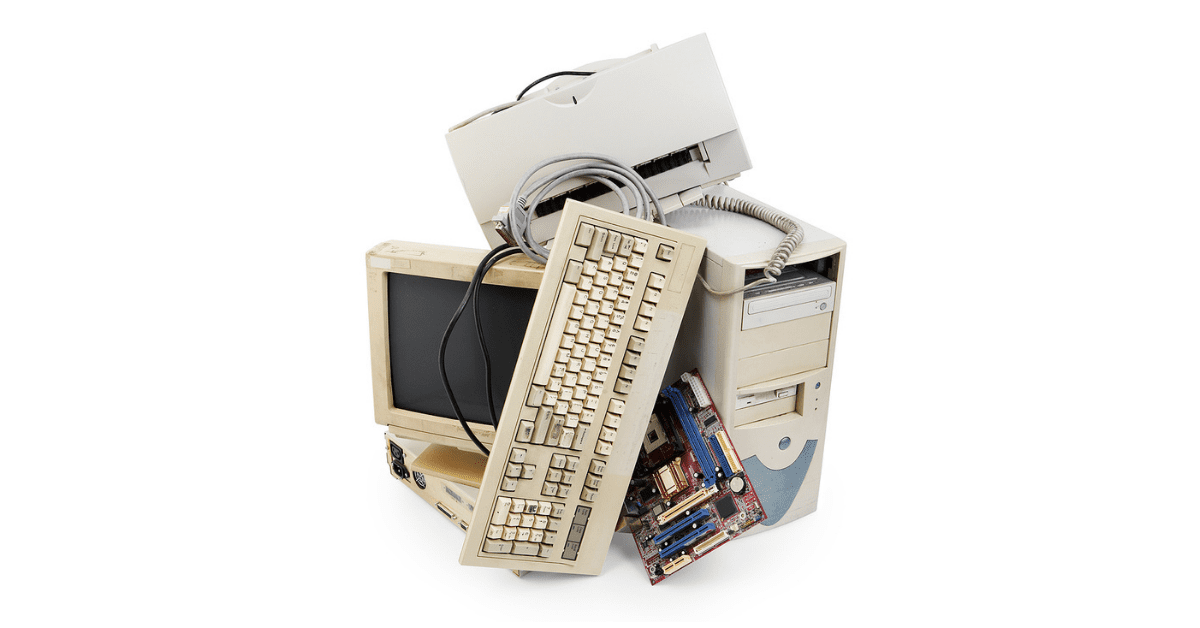
stack of old and obsolete computer equipment

Every piece of hardware, software and data set has a lifecycle.  And often, the lifecycles don’t line up.

Hardware, software and data management can be an IT Department’s trifecta balancing act, with unique circumstances to try and keep everything moving forward. As servers age and applications are retired or replaced, there are considerations that need to be made to safeguard the legacy data and keep it accessible.

Everything agessometimes not gracefully.

System and application retirement or replacement can impact the long-term options and security for the ePHI that likely needs to be kept for decades (or longer) to maintain compliance with record retention guidelines.

The state of legacy hardware and software (EHR systems) in healthcare is filled with aging equipment and applications.  

In a HIMSS survey, 80% of respondents report their organizations are using unsupported legacy servers (sometimes multiple systems within an organization) including:

  • 50% with Windows Server 2008
  • 49% with Windows 7
  • 35% with Windows XP
  • 30% with Windows Server 2003 and 2003 R2

Keeping these outdated servers up and running brings about security concerns of all kinds. These unsupported servers are left ripe for cyberattacks as they are still running EHR applications and housing health data that needs to be maintained.

Most hospitals and many post-acute facilities have a multitude of EHRs up and running on multiple platforms.  

Most hospitals have 10 EHRs in place and only two percent are down to just a pair of platforms according to data from HIMSS. The average health system has 18 different EMR vendors when looking at inpatient and outpatient settings. And, the EHR market is expected to grow at a compound annual growth rate of 6% through 2025, with chronic diseases, government funding, and patient engagement as factors in the expansion. With that growth  comes an opportunity for stepping up on strategy as Black Book Research found that 6 in 10 hospitals under 150 beds doubt their current health information technologies really deliver business value, while more than 25% are assessing cloud-based replacement systems.

Some EHR vendors may sunset applications that can’t compete with the increased requirements for interoperability or as the market continues to become more sophisticated and shifts toward more fully-functional EHRs.

Other providers are replacing their EHRs because of system dissatisfaction. In a survey of 1,000 physicians, 63% reported they would not purchase their same EHR again and 67% would switch their EHR. Researchers who analyzed all available documents and reports found the two largest deciding factors for an EHR replacement are system functionality and cost.

The IT ‘Circle of Life’Servers age. Software systems are retired or replaced. Data needs to live on.

EMR data lifecycle management makes sure data is accessible and where it needs to be.

Lifecycle data management is important. From the creation, storage, usage, archiving and destruction, there are essential questions and strategies that need to be well thought out.

Enter a legacy data management plan.

While data management isn’t new, including the complete EMR data lifecycle in long-term plans is a growing trend among healthcare governance teams. Governance teams are taking a more systematic approach to application rationalization and portfolio management to avoid unnecessary risks and to contain costs. As acquisitions continue to merge multiple EHR systems, a solid plan for overall legacy system and data management with buy-in from a cross functional governance team becomes valuable on many levels.

While legacy data may be historical, its relevance in daily patient care is undeniable.

Aside from the legal and regulatory compliance requirements to maintain patient data for at least seven years, a provider’s ability to effectively treat a patient, depends on a complete and total picture of that patient’s health record.

The challenges of legacy data management require sophisticated software tools that can protect, read, interpret, and mine data in near real time. Even more crucial is to do so through a simple, user-friendly interface.

That’s where a smart, active archive and a trusted health IT partner can support your long-term plans for legacy health data and healthcare system retirement.

Ready to talk about system replacements/retirements and your EMR data lifecycle management plan?

We’re here.

Healthcare IT tips, guides, news & more delivered to your inbox

Learn More

Summary

More and more medical care is happening outside the walls of our nation’s hospitals and physician offices. While the shift to more home-based care initially was sparked by the need to clear hospital beds for COVID-19 patients, other benefits emerged, and now new Medicare waivers cover a multitude of treatments and services. To ensure quality care is delivered at home, it is important that nurses, occupational therapists, respiratory therapists and others who deliver the care have secure and reliable access to the comprehensive patient record that also must be retained for at least seven to 10 years from the date of service. An active archive is an important solution to keep the flow of information moving at the point of care, wherever that may be.

Join Fellow Healthcare IT Pros

Tips, Guides, News & More

Sign Me Up
Home health care worker and an elderly couple

While we saw many shifts in healthcare over the past year, the growth in home health care is expected to continue over the years to come. In one report, 97% of 76 health plan executives surveyed in Nov. 2020 said they believe more care at home is better for both their organizations and their members. And, about the same high percentage said they believe treating members at home is more cost effective than facility-based care.

Beyond shifting care delivery due to COVID-19, growth in the home health segment is fueled by an aging population (the number of people 65 and older is projected to double to 1.5 billion by 2050), the rising incidence of chronic disease and increased patient preferences. The home health market size was valued at $281.8 billion in 2019 and is expected to grow at a compound annual growth rate (CAGR) of 7.9% through 2027.

Prior to the pandemic, typical types of home health care included:

  • Therapeutic – home respiratory, insulin delivery devices, home dialysis equipment
  • Diagnostic – Diabetic care unit, BP monitors, heart rate meters
  • Mobility Assist – wheelchair, home medical furniture, walking assist devices
  • Services – skilled homecare, PT, OT, speech therapy, nutritional support, hospice and palliative care

However, after realizing the success of more home-based services, new Medicare and Medicaid waivers granted in late 2020 offer a much greater level of flexibility for patient care taking place in a home setting. These waivers are similar to the agency’s recent telehealth allowances that also are expected to continue. The expanded services now cover a wider list of acute care, such as asthma, pneumonia, and chronic obstructive pulmonary disease (COPD) that can be treated through home-based services. And, new protocols are being established to assist with shifting care delivery to a home setting. This move is significant as Medicare is the largest single payer for home healthcare services representing about 40% of all home health services.

Keeping up with Home Health Care Medical Record Requirements

There are numerous regulatory compliance requirements for home health agencies including meeting the rules for the state health department as well as the federal Center for Medicare Services, which requires reporting of outcome and assessment quality data by home health agencies every 60 days.

In general, CMS documentation requirements include:

Evaluation – Includes overall exam and also a thorough evaluation of the patient’s entire health status. The evaluation serves as the benchmark for tracking treatment progress over the 60 day reporting period.

Plan of Care – Each clinician is required to develop a thorough plan of care with goals, treatment and measurement.

Progress – Nurses and therapists must document the care and how it relates to the patient’s overall treatment goals. All charting has to be specific, for example: the patient will regain 75% leg strength and be able to stand without assistance for 2 minutes.

The Role of Interoperability in Home Health Care Success

Interoperability is key to home health records that often need to be shared among multiple clinicians including physical and occupational therapists, visiting nurses and the primary care physician. Recently, CMS developed clinical templates to assist providers and EHR developers with data collection and medical record documentation to support coverage of selected items and services for home health care. The information gathered and recorded in the templates would become part of the patient’s overall medical record.

Medical Record Retention Guidelines for Home Health

Record retention laws and guidance can vary state to state, but in general CMS regulations require that home health patient records are kept for a minimum of seven years of the date of service. However, the National Association for Home Care & Hospice recommends that agencies maintain patient records for at least 10 years to accommodate the requirements in the regulations and the statute of limitations in the Federal False Claims Act.

There are numerous Home Health EMRs, including: AxisCare, Alora, EpicCare Dorothy, Homecare Homebase, MatrixCare, Meditech Home Health EHR, PointClickCare, WellSky and others.

Active Archives Deliver Access to the Complete Medical Record at the Point of Care

As the push for data consolidation continues, and mergers and acquisitions proceed, electronic health record (EHR) systems will be replaced. Often, cost and technology constraints mean it doesn’t make business sense to migrate all the older records into the new system. However, the need to comply with record retention, and to maintain easy access to what could be imperative legacy data still exists.

Our team has award-winning experience in extracting, migrating and archiving data and images from over 500 software brands. Ranked #1 in the 2020 Best in KLAS Software & Services Report as a Category Leader in Data Archiving, we can help your team retain your home health records, and all records, in a discrete and secure active archive. The complete medical record becomes available with just a few clicks and a single sign-on from the active EMR.

Thinking about how to manage the patient and business data within your organization?

Contact us. We can help.

Healthcare IT tips, guides, news & more delivered to your inbox

Learn More