Summary

For the five million U.S. patients admitted to intensive care units (ICUs) annually, access to the complete medical record by their care team is critical. And, considering that more than half the counties in America lack intensive care beds, patients are often further from home and their primary care physician, making record sharing even more challenging.

Join Fellow Healthcare IT Pros

Tips, Guides, News & More

Sign Me Up
Intensive-care-unit-graphic

Short story: In the ICU, the electronic health record (EHR) has an opportunity to be a hero.

EHRs in the intensive care unit now shoulder a lot of responsibility for providing A/V technology, predictive analysis, data visualization, and advanced reporting capabilities. In many health systems, this technology-driven optimization allows an intensivist to be at the wheel to remotely monitor sometimes hundreds of ICU beds to further support the onsite medical team.

As the ICU monitoring systems age and providers roll out new go-forward EHRs, there are important decisions to be made about how to maintain compliance with record retention guidelines from federal, state and even condition-specific rules.

When there’s a monitoring system or other EHR system replacement, data conversion and active archiving should be considerations with regard to legacy data management.

HealthData Archiver®, a cloud-based clinical data storage solution, delivers on clinical record retention and compliance in a secure and searchable format. Taking a step forward with a new EHR should include a strategy for the legacy ICU monitoring data that legally must be retained. With an active archive onboard, clinicians literally can access historical patient records with a single sign-on from their active EHR and see options for contextual search as well as sort and filter features to quickly scan multiple data points.

This is important because – in an ICU – minutes matter.

The mission at Harmony Healthcare IT is to preserve vital information that improves lives with its products: and HealthData Locker – all which deliver PHI protection, cost-savings, and information access. They also fortify defenses against cyberattack by providing a secure storage place for otherwise disparate silos of legacy data. Ranked #1 in the 2020 Best in KLAS Report for Data Archiving, the Harmony Healthcare IT team has worked with more than 500 software brands utilized in hospitals and clinics, archiving billions of records and storing petabytes of data. Harmony Healthcare IT migrates and archives records across the care continuum – for hospitals, health systems, pharmacies, clinics, labs, blood banks, home health care, long-term care, and more.

Ready for a demo on how an active archive can support your lifecycle data management goals?

Let’s connect.

Healthcare IT tips, guides, news & more delivered to your inbox

Learn More

Summary

Thinking of replacing your billing and collections system? Read the summary below or listen to the full podcast with Harmony Healthcare IT’s own Jeremy Henry, VP of Business Development, to learn how to efficiently wind down legacy AR and set your organization up for success.

Join Fellow Healthcare IT Pros

Tips, Guides, News & More

Sign Me Up
Revenue Integrity Podcast with Jeremy Henry

Before replacing your billing and collections systems, there are many questions to consider. How will the legacy data be handled? How will you wind down account receivables (AR) records?

If your organization plans to transition to a new AR system, it’s important to think about these and other decision in advance.

On a recent episode of The Revenue Integrity Show: A NAHRI Podcast, Director of The National Association of Healthcare Revenue Integrity (NAHRI), Jaclyn Fitzgerald, CHRI, and Jeremy Henry, VP of Business Development at Harmony Healthcare IT, discuss active archiving as an option for managing financial legacy data.

Henry remarks that there is inherent security risk in leaving data in a legacy system as the system ages. Henry suggests an alternative of migrating the data into an active archive, such as HealthData AR Manager® and winding it down from there within a far more secure environment.

In a review of the benefits and disadvantages of archiving, Henry describes how users experience a “good, clean break” from the legacy software and can benefit from a clear delineation of working AR down to zero within the active archive environment where the resolved records can then be stored long-term.

Henry ran through some of the features of an active archive indicating that “You can run all the reports and do everything you did in the old legacy system…so, at the end of the day, it enables really good management and accountability for the organization.”  Other features possible in an active archive,  according to Henry, including the following:

  • Refiling 837s
  • Receiving 835s
  • Sending statements
  • Posting payments, adjustments, memos and refund requests
  • Standard reports and extracts

For more information on winding down legacy A/R systems, check out the March 25 podcast or visit the Harmony Healthcare IT website.

Healthcare IT tips, guides, news & more delivered to your inbox

Learn More

Summary

Health IT tools like EHRs and data archives play an important and necessary role in helping correctional facilities improve care delivery and meet record requirements.

Join Fellow Healthcare IT Pros

Tips, Guides, News & More

Sign Me Up
Medical Corrections

The 7,147 federal, state and local correctional facilities across the nation are beyond ready for a pivot with their medical record systems. For the federal prison system, which has used a basic EHR since 2006, it’s an electronic records upgrade, while state correctional facilities are only about halfway to adopting an electronic system from a paper recordkeeping practice. As health IT advancements and the 21st Century Cures Act ramp up interoperability efforts throughout the entire healthcare industry, there is a lot of room for growth in the correctional health space.

Better integrating health IT recordkeeping systems can make a difference across many areas of correctional health, including care delivery, meeting record retention requirements and in easing the burden on clinicians and HIM teams who must manage the lifecycle of the health records which can span decades. For example, to comply with federal laws, most correctional health facilities medical records need to be retained for seven years; however, in some cases records must be retained 10 years after the inmate is released, and even up to 20 years for clinic procedures and protocol records. This is a big job for an electronic health record system, and for those still trying to find square footage to store paper.

Health IT lags in U.S. Correctional Settings.

As of 2018, less than five percent of State Dept. of Corrections could exchange structured medical data through their EHR. Most Department of Corrections offered copies of medical records by mail (42/44, 95.5%) or fax (31/44, 70.5%). Fewer states had the capacity to send records through email (14/44, 31.8%) or via an electronic record system (2/44, 4.5%).

The Role of Medical Records within the Correctional Setting is Important

For the nearly 1.4 million people in the United States who are in federal prisons, state prisons and local jails, about 40% suffer from a chronic medical condition. In general, incarcerated men and women are in worse physical and mental shape than the general population. This population is growing and so are their medical needs. In fact, since the 1980’s, the prison population in the United States has increased more than 500 percent and for some inmates, the care they receive within the correctional system is the only regular access to healthcare they may have.

Correctional Health Data Management is a Big Job that is Getting Bigger

Record retention requirements are not new for correctional facilities. From as far back as 2001, the Department of Corrections has required a medical retention policy be on record, describe how long legacy medical records should be stored and how the record could be reactivated if the inmate returns. Health records also are expected to accompany inmates when they are transferred between facilities.

With Interoperability Requirements Ramping up Throughout the Healthcare Industry, Does this Impact Correctional Facilities?

It likely will.

First, it is important to recognize that while the HITECH Act of 2009 did not directly apply to correctional institutions, corrections officials must adapt to changing services by providing “services at a level reasonably commensurate with modern medical science and of a quality acceptable within prudent professional standard.” (U.S. v. DeCologero, 821 F.2d 39, 43 (1st Cir. 1987)

Several states currently require traditional healthcare providers to connect to a health information exchange (HIE). In every state, federal regulations and prevailing medical care have accelerated the exchange of medical information into a regular standard practice. This trend likely will have a downstream effect on regulatory requirements for transitions of care and medical record sharing within jails and prisons.

It is possible that state governments will increase legislative pressure on correctional institutions to participate in HIE connections. This also may include a data-sharing mandate that would promote transparency and cooperation between correctional and non-correctional medical providers.

According to the National Commission on Correctional Healthcare, a nonprofit that provides accreditation services to correctional facilities, medical reports must be exchanged freely between federal and non-federal health care professionals and other organizations to contribute to a fuller understanding of the inmate’s physical and mental status.

It is possible that in the future, mandates and an expanded rule could be added to the Cures Act. However, even without a regulatory requirement it makes operational sense to incorporate and maintain electronic data management into the correctional healthcare setting.

Like many traditional healthcare providers, sometimes there are multiple EHR, ERP and other systems running in various states of use. As correctional organizations continue to move forward, there will be legacy systems that are left behind and, due to cost and technology constraints, it won’t make business sense to migrate all the older records into the new system.

To avoid accessibility challenges and exposing medical records to increased vulnerabilities, akin to the days of paper records, consolidation of legacy data in a single active archive should be considered. Not only does it ensure compliance with record retention laws, but it also provides easy access and release of information workflows to vital legacy data.

If your correctional facility currently has legacy systems or is considering adopting a new EHR, Harmony Healthcare IT and HealthData Archiver® can help put your legacy data management plan in motion, reducing maintenance cost on legacy EHRs

Connect with our team, we’re ready to help.
Healthcare IT tips, guides, news & more delivered to your inbox

Learn More

Summary

Harmony Healthcare IT successfully archived 27 terabytes of dental records, achieving cost savings and data consolidation in Southern California.

Join Fellow Healthcare IT Pros

Tips, Guides, News & More

Sign Me Up
Life-raft-case-study-rescue

When 27 terabytes of complex dental records halted an archiving project for another vendor at a health system in Southern California, the experienced team at Harmony Healthcare IT stepped in to get the project back on track and completed within an aggressive timeframe.

Known for delivering complex projects for large enterprises, Harmony Healthcare IT dug into handling the odontogram records that were presenting a roadblock to the originally-selected vendor, customized a solution, and delivered a seamless integration between the archived records and the go-forward production system. Additional key deliverables featured cost savings, legacy application decommissioning, and  data consolidation into one HITRUST-secured platform.  With a positive response from their end-users, the client’s advice for others: There is complexity any time one is extracting or migrating data to and from EHRsMake sure any archiving vendor has the right experience to handle the data.

Altamed-Case-Study-Callout

We’re here to help you navigate your lifecycle data management strategy.

Healthcare IT tips, guides, news & more delivered to your inbox

Learn More

Summary

Jim Hammer discusses best practices for managing legacy systems, data security, and compliance with the 21st Century Cures Act, addressing cost, risk, and record management.

Join Fellow Healthcare IT Pros

Tips, Guides, News & More

Sign Me Up
HIMSSTV

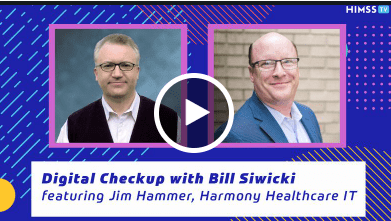
Sharing expert advice to healthcare provider organizations seeking to consolidate systems and data and comply with the Cures Act, Jim Hammer, VP of Operations and Product Development at Harmony Healthcare IT, recently sat down with Bill Siwicki, Features Editor of Healthcare IT News, on HIMSS TV.

To watch the video, click here. Here is a brief synopsis of the interview:

What are key legacy system challenges in hospitals and health systems?

When health systems and practices transition to new clinical, financial or business software, they are often left with the cost and risk of legacy applications and need to retire them. When decommissioning displaced systems, record retention and accounts receivable wind down are top of mind along with eliminating the cost of legacy vendor maintenance renewals.


What are some best practices for effectively decommissioning legacy systems?

The first step in rationalizing an inventory of legacy applications is creating an inventory of the systems holding the legacy data. With that inventory in-hand, which includes details of the systems to decommission, a prioritization can occur. Using drivers such as the cost, risk, or urgency each system is presenting to the enterprise, a high to low priority is identified.
Once an inventory and priority order for decommissioning is in place, it’s time to assemble or gather a strong governance team. This team includes those who will ultimately sign off on shutting down each system and determining which records stored within each system should be retained and how. 

Lastly, an archive playbook should be created. This playbook will take into account what application data might be migrated or converted to the new go-forward system as well as what information can be decommissioned and archived.

Should data from multiple legacy systems be consolidated and, if so, what are the options?

Absolutely. Oftentimes, large integrated delivery networks have 30 to 50 legacy application silos that need to be sunset after they implement a new system like Cerner or Epic. Those legacy systems can be both acute and ambulatory. If you think about an HIM team trying to release information from multiple systems before the data is consolidated, you can only imagine how long it might take. However, if that data is consolidated to a single archive, the release of information fulfillment workflow becomes infinitely more efficient. 

Once patient records from multiple legacy systems are consolidated and readily available in an archive, they can also be accessed by clinicians at the point of care. At Harmony Healthcare IT, single sign-on from leading go-forward EHR systems like Epic or Cerner is available. That means that, when a caregiver needs to access historical records, they are available in-context with the click of a button. This is especially helpful for large organizations consolidating many legacy systems that they’ve inherited through merger and acquisition.

 Is legacy data ready for Cures Act compliance? Is it easily accessible, is it secure?

Yes. Through the 21st Century Cures Act, the ability to obtain data either from health providers or from vendors can no longer be blocked. There is a provision around API or data liquidity, providing the ability to transfer data from a source application all the way to the patient. –Harmony Healthcare IT is working on that and will have available, through API, the ability to obtain relevant clinical data at a moment’s notice.

Data in a legacy system may already be compliant and accessible and available for Cures Act. In most cases, however, legacy applications contain historical data that isn’t compliant.  The Cures Act requires that vendors like Harmony Healthcare IT match to the USCDI specification. So, as it pertains to legacy data, Harmony Healthcare IT can perform an uplift during a transformation of data to an archive to ready that data for Cures Act interoperability compliance.

HIMSS TV button

Healthcare IT tips, guides, news & more delivered to your inbox

Learn More

Summary

As HIPAA turns 25, it has proposed but not yet finalized updates to further address the privacy and security guidance that supports patients’ rights and provides relevant guidance for providers. As digital health leader John Nosta explains: “The paradigm of digitalism is forged out of necessity. Technological adoption is emerging as an imperative that will transform medicine…” To that end, what are some considerations for the health data and those who manage it?

Join Fellow Healthcare IT Pros

Tips, Guides, News & More

Sign Me Up
HIPAA 25th Anniversary

As the Health Insurance Portability and Accountability Act (HIPAA) celebrates its 25th birthday in 2021, it is receiving a proposed but not yet finalized a series of updates currently in review with the U.S. Dept. of Health and Human Services (HHS). The well-known national standards were created in 1996 to protect the privacy and security of individuals’ health information long before the digital health explosion. While there were significant updates in 2013, it’s time once again to refresh.

Earlier HIPAA updates focused on basic privacy and security measures which also gave way to the Health Information Technology for Economic and Clinical Health (HITECH) Act which encouraged healthcare providers to adopt electronic healthcare records and further introduced the Breach Notification Rule in 2009. While HHS issued guidance on interpretation and application of HIPAA and the HITECH act over the past 10 years or so, new laws currently under review focus on decreasing the administrative burden on HIPAA covered entities – with most rules and regulations following along and expanding from the 2013 updates.

The goal as stated by the HHS is to: “Address the regulations that impede care coordination and are part of a much broader regulatory reform effort.”

Updated Cybersecurity Safe Harbor Law Leads the Way for updated HIPAA Rules

In January, 2021, the HIPAA Safe Harbor bill HR7898 was signed into law. This law provides a potential safe harbor from penalties and extended investigation periods for covered entities and business associates that have adopted a common security framework and are utilizing best practices, but still experienced a data breach. As healthcare continues to be the most cyberattacked industry, the rule offers some protection from financial penalties and sanctions for those who have security best practices in place for the 12-months prior to a data breach.

A Brief Look at the HIPAA Privacy Updates in Review

The right of individuals to access their PHI was written into the Privacy Rule in 2000. Current privacy law changes are expected to be minor and focused on further aiding patient access to their PHI, as well as to support data sharing and to alleviate some administrative burdens. There are numerous HIPAA Privacy Rules updates under review,including:

  • Patients can inspect their PHI in person and take notes or photographs of their records.
  • The time to provide access to PHI shift from 30 to 15 days.
  • Covered health care providers and health plans may be required to respond to record requests from other covered providers when individuals direct those entities to do so by exercising their HIPAA right of access.

The 21st Century Cures Act isn’t directly included in the proposed HIPAA revisions, but the provisions were influenced by The Cures Act which is focused on the exchange of health information and prohibiting information blocking. As such, The Cures Act Rules goes hand-in-hand with proposed HIPPA updates, such as the provision that certified health IT developers make secure standards-based APIs available so patients can electronically access and share their health information with their chosen mobile application which directly supports the overall goals of the HIPAA revisions.

Relaxed Guidelines and Discretion about Penalties during COVID may Continue

There also are a variety of proposed updates based on recent healthcare issues related to COVID-19 challenges. A few include the flexibility offered to providers who engage in relaxed Telehealth platform options (like FaceTime and Google Hangout video), participated in organizing community-based COVID testing sites with good faith practices, and those who shared PHI for public health and health oversight activities with the CDC, CMS, state and local health departments for purposes of fighting COVID and saving lives.

Updates to HIPAA fines in Review

There may be adjustments to the penalties for HIPAA violations that were changed in 2019 to provide more clarity around the annual limits for fines. This would include a four-tiered approach with new guidance for annual maximums:

  • Tier 1 – Unaware of the HIPAA violation and used reasonable due diligence – $100 – $50,000 per violation with a maximum of $25,000 per year.
  • Tier 2 – Reasonable cause that the covered entity knew or should have known about the violation. $1,000 – $50,000 violation with a maximum of $100,000 per year.
  • Tier 3 – Willful neglect of HIPAA Rules with the violation corrected within 30 days of discovery. Fines are $10,000 – $50,000 per violation. Maximum is $250,000 per year.
  • Tier 4 – Willful neglect of HIPAA Rules with no effort made to correct the violation within 30 days of discovery. Fines are $50,000 per violation with a maximum of $1.5 million per year.

What Action Should Providers Take to Prepare for the Updated HIPAA Rules?

There’s never been a better time to take stock of the health data within your organization. As health data volumes continue to skyrocket, and the expectations for what has to happen with that data continue to expand, it’s critical to have a lean and nimble operation that can run the healthcare marathon. And, it’s equally as important to not be dragged down and left vulnerable by continuing to rely on outdated servers that are lugging around legacy health and business records.

Simply put, it’s not a best practice to run legacy applications that are leaving your organization vulnerable to system failures and security breaches.

As a leading innovator of proven data management solutions, the Harmony Healthcare IT  team of data experts has extracted, migrated, and retained billions of patient, employee or business records from over 500 different clinical, financial, and administrative EHR and ERP software brands. That includes the major leading EHR brands you would expect like Allscripts, Cerner, CPSI/Evident, eClinicalWorks, Epic, GE, Greenway, Healthland, McKesson, MEDHOST, MEDITECH, NextGen and Practice Partner as well as many smaller or custom-designed applications.

However, no matter which EHR platform you are using, our award-winning team is ready to talk about instituting a HIPAA-compliant, long-term record storage solution like HealthData Archiver® that can cut costs, fortify defenses, and streamline workflows for increased efficiency..

The momentum around the updated HIPAA guidelines, the upcoming enforcement of The Cures Act rules and public expectations require more than a data management strategy. It’s time for action to ensure the protection of our nation’s PHI.

We’re ready to help.

Healthcare IT tips, guides, news & more delivered to your inbox

Learn More

Summary

Health Information Professionals (HIP) are recognized in the 32nd year of HIP Week. This year’s theme is: Keeping Health Information Human. This integral team in healthcare has a current focus on three top priorities including Social Determinants of Health, Patient Identification and Matching, and preventing Information Blocking. Our team appreciates HIP teams and aligns its efforts to keep health information available when and where it is needed. #HIPWEEK21

Join Fellow Healthcare IT Pros

Tips, Guides, News & More

Sign Me Up
Health Information Professionals Week

Health Information Professionals (HIP) Week, April 18 – 24, 2021 is an opportunity to celebrate the impact that HIP teams have on the quality of patient care globally. The HIP approach is that the person is connected to the data, ensuring information stays human and relevant.

Harmony Healthcare IT (HHIT) values the work and mission of colleagues involved in health information management, working as a trusted partner toward the big picture of improving healthcare outcomes. Aligned 100% with HIP priorities, HHIT focuses on advancing technology solutions to support the top three HIP priorities of Social Determinants of Health (SDoH), Patient Identification and Matching, and the elimination of Information Blocking.

Active Archiving Supports HIP’s Top Priorities:

    1. Social Determinants of Health (SDoH) is the growing practice of telling the whole patient story which requires clinical data as well as socioeconomic factors that influence overall health. These factors such as economic stability, social connections, access to healthcare and behavioral health, supports improved patient outcomes and a patient-centered experience. There already are social determinant ICD-10-CM codes that can be included in the patient record to help track potential health hazards and provide key influencers in health outcomes. There is research to support this practice and a growing movement to develop system-wide strategies for wider care practices. The overall goal is whole-person healthcare.
      Active Archiving Supports SDoH
      by providing a single sign-on for the clinician to access the complete (archived) patient record from within the current EHR. Active archiving of legacy health data supports the comprehensive patient record and is adaptable, searchable and accessible to meet current and future information queries at the point of care which enables the provider to have the whole story to help treat the whole person.
    1. Patient Identification and Matching (PIM) – Errors in patient identification and matching are one of healthcare’s more troubling problems. Finding solutions to PIM errors is essential to achieve healthcare’s primary goals – enhanced patient safety, advanced interoperability and improved patient outcomes.
      Active Archiving Supports Patient Identification and Matching – Experts state that most, if not all, wrong-patient errors are preventable. As migrators of legacy data, we take patient matching very seriously, using tools at hand to ensure that patient information is as accurate as possible. There has been talk, for decades, of creating a National Patient ID, which could support patient matching in the future, but until then, there are many master patient indexing processes taking place within different health systems and with EHR and archiving vendors that Harmony Healthcare IT navigates and utilizes to tie archived records to the right patient in the go-forward EHR.
  1. Information Blocking – One of the most unique and innovative rules from the 21st Century Cures Act relates to information blocking. The rule was designed to give patients greater control over their personal health data and make it easier to share patient records between organizations and with patients. There also are provisions to ensure that EHR vendors do not block or impede the export of usable patient records when a provider is switching health IT systems to ensure the complete patient narrative is being transferred, and not just a summary of care record.
    Active Archiving Supports Improved Interoperability
    – To accurately fulfill requests for information with the full patient narrative (including records from the active EHR as well as from archived records), it will be important to have a data management plan that consolidates and stores disparate, legacy, clinical data sets and enables them for sharing (e.g., FHIR transactions). Industry experts suggest healthcare organizations look at meeting the finalized rules sooner rather than later and as an opportunity for business success, citing that adopting the rules as soon as possible represents a huge business opportunity.

Recognizing that HealthData Archiver® is a respected solution counted on by HIM professionals nationwide, Harmony Healthcare IT is committed to strengthening its platform and delivering capabilities necessary for HIM professionals to more easily, efficiently and securely do their job.

Since 2006, the Harmony Healthcare IT team of data experts has extracted, migrated, and retained billions of patient, employee or business records and petabytes of data from over 500 different clinical, financial, and administrative EHR and ERP software brands. That includes the major leading EHR brands such as Allscripts, Cerner, CPSI/Evident, eClinicalWorks, Epic, GE, Greenway, Healthland, McKesson, MEDHOST, MEDITECH, NextGen, Practice Partner and many more.

No matter the EHR platform, the award-winning Harmony team is ready to talk about how instituting a HIPAA-compliant, long-term record storage solution like HealthData Archiver® can cut costs, fortify cybersecurity defenses, and streamline clinical and HIM workflows for increased efficiency enterprise-wide.

Congratulations to everyone involved in HIP Week – Harmony Healthcare IT couldn’t do data archiving without you. #HIPWeek21

For more information about HIP Week, visit the hipweek.org website to explore first-hand accounts of how health information professionals impact the healthcare ecosystem and patient care. The website also features thought leadership pieces on advancing patient care and it recognizes the professionals and the organizations who support our goal of keeping health information human.

Healthcare IT tips, guides, news & more delivered to your inbox

Learn More

Summary

Sometimes having more of something doesn’t ensure you have what you need. A perfect example of this is when multiple legacy systems are left up-and-running to comply with record retention requirements but run the risk of not delivering when necessary. Read about seven ways to “go lean,” shedding the waste, cost, risk, and burden of too many legacy systems in your hospital’s application inventory.

Join Fellow Healthcare IT Pros

Tips, Guides, News & More

Sign Me Up
Go Lean - 7 Wastes

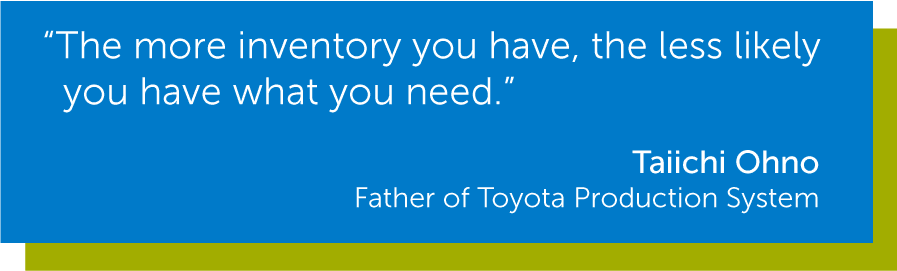
Taiichi Ohno, the father of the Toyota Production System which inspired Lean Manufacturing in the United States said: “The more inventory you have, the less likely you have what you need.”  When it comes to legacy healthcare systems, he couldn’t be more accurate.

Of the wastes Ohno includes in his explanation, excessive inventory is called out for wasting resources through costs of storage and maintenance.

Healthcare providers tend to have excessive legacy system inventory

Most hospitals have 10 EHRs in place with only two percent of hospitals down to just a pair of platforms, according to data from HIMSS. In fact, the average health system has 18 different EMR vendors across its inpatient and outpatient settings.

And those EHRs often are housed on outdated servers. In a HIMSS survey, 80% of respondents report their organizations are using unsupported legacy servers (sometimes multiple systems within an organization) including:

  • 50% with Windows Server 2008
  • 49% with Windows 7
  • 35% with Windows XP
  • 30% with Windows Server 2003 and 2003 R2

Seven tips to Go Lean and overcome legacy system waste

  1. Create an Inventory – The first step in getting lean is to compile a list of legacy applications across the enterprise. This system inventory gathers details like product and vendor name, product version, database size, image store, server location, maintenance cost, date of retirement, etc. To help, download our inventory template to document your out-of-production software applications that should be targeted for decommissioning.
  2. Broaden the Scope of your Data Governance Team – While data management isn’t new, considering the complete data lifecycle in long-term plans is a good idea for your healthcare governance team. Governance teams are taking a more systematic approach to application rationalization and portfolio management to avoid unnecessary risks and to contain costs. As acquisitions continue to merge multiple EHR systems, a plan for overall legacy system and data management with buy-in from a cross-functional governance team becomes valuable on many levels.
  3. Create and Implement a Data Management Strategy – While each organization has unique needs, this graphical prompt can help guide your planning and inform your decommissioning initiative. Categorize your clinical systems from those that are financial or business-oriented. Consider, for financial system decommissioning, whether accounts receivable wind down is required in an active archive.
  4. Consolidate Data Stores – Large health systems often have 20-40, sometimes even hundreds, of legacy EMR, lab, home health, blood bank, payroll, accounting and other systems to manage. Focus on consolidating the data that needs to be retained from these systems into an active archive and incorporate a decommissioning schedule as part of your overall optimization plan.
  5. Focus on Security – As healthcare continues to face tough security challenges, these 10 questions can help guide your vendor selection to make sure you are investing in a partner who will protect you and your data. It’s well known in the industry that multiple silos of data stored in outdated systems offer some of the easiest entry points for hackers. Decommissioning aging, out-of-production systems to a HIPAA-compliant and HITRUST CSF®-certified platform is a smart step forward in your organization’s long-range security plan.
  6. Contain Costs – One area that is ripe for cost savings is to consolidate the IT portfolio and archive legacy data according to retention guidelines. To help, we’ve developed a resource: Five Ways to Find Cost Savings with Legacy Data Management and also suggestions on how to lower or eliminate costs from software, hardware, training, legal liability, cybersecurity risk and lost opportunities. According to KLAS Research, 85% of healthcare providers report positive financial impacts when they retired legacy IT systems and opted for health data archiving.
  7. Improve WorkflowsAt a time when physicians report spending more time with the EHR than with their patients, having access to the complete medical record with a single sign-on is a key advantage that an active archive solution like HealthData Archiver® delivers in an efficient, secure manner. Instant accessibility to the historical record is a game-changer and available for most EMR brands, including Epic, Cerner, Allscripts, Athena, NextGen and other major brands. It also supports numerous formats including: OAuth/OpenID, Advanced Encryption Standard (AES), Security Assertion Markup Language (SAML 2.0) and others.

A smart, active archive and a trusted health IT partner can support your long-term plans to be better positioned for the future.

Ready to conquer the bulk out-of-production systems that are simply taking up space in your IT landscape? Let’s talk about system replacements/retirements and your EMR data lifecycle management plan.

We’re here.

Healthcare IT tips, guides, news & more delivered to your inbox

Learn More

Summary

When the time comes to part ways with a legacy system in your healthcare delivery organization, keep in mind the four best practices shared below to maintain secure access to the patient, employee, and business records that often need to be retained for years after a system is replaced or decommissioned.

Join Fellow Healthcare IT Pros

Tips, Guides, News & More

Sign Me Up
4 Tools to Part Ways with your Legacy EHR

Relationships either lift us up or bring us down. The same holds true with software. Some systems we engage with daily are equipped to go the distance while others are not. The key is to know when to part ways with your electronic health record (EHR), enterprise resource planning (ERP) software, revenue cycle/billing system or other ancillary department platforms.

A recent Gartner Research report suggests that by 2023, digital transformation and aggressive cost optimization initiatives are expected to increase healthcare provider legacy system decommissioning activity by 20%. Here are four scenarios that often cause a software break-up:

  1. Outdated Functionality – The system can’t deliver what is needed and has outdated functionality. It may perform sluggishly or simply not offer the high-quality capabilities that newer software offers so your team can get the job done.
  2. System Replacement – It’s not that the software wasn’t meeting your needs, but, for various reasons, the organization has switched EHRs to a new platform. In the case of an electronic health record (EHR) replacement, it is often also necessary to replace ancillary solutions such as lab, radiology and pharmacy to provide integration with other applications.
  3. Corporate Consolidation – Consolidation in the market through merger and acquisition (M&A) requires the rationalization and standardization of the application portfolio for an enterprise.
  4. End of Life – Legacy solutions are sunsetted and/or not supported by the vendor as a part of product planning.

The good news is that there are options and best practices to move on.

Start with these four EHR change management steps to securing patient, employee and business records to ensure legal and regulatory compliance with retention requirements while also limiting technical and security risks:

  1. Create a Legacy Data Management Strategy – While each organization has unique needs, this tool can help guide your EHR change management planning and inform system decommissioning and data archiving initiatives. Consider questions like: what data should be migrated versus archived?  How will we wind-down accounts receivable?  What sort of interoperability will we expect from our archived records?
  2. Document a System Inventory – It’s vital to know the details of the source systems you are targeting for retirement when switching EHRs. This inventory tool will help log your legacy system details to help scope the required levels of effort for the data extraction, migration and retention process. You can also identify contract renewal dates, system static dates and AR wind-down plans to prioritize the order in which systems will be targeted for their decommission dates.
  3. Bid the Project out to RFI/RFP – This RFP template can help simplify your request for information or proposal solicitation for a data retention vendor to secure your records long-term. This will help ensure you’re comparing apples to apples when choosing an active archive vendor partner.
  4. Ask the Right Security Questions – As healthcare continues to face tough security challenges, these 10 security questions to ask your archive vendor can help guide your selection process, ensuring investment with a partner that will protect you and your data. It’s well known in the industry that multiple silos of data stored in outdated systems offer some of the easiest entry points for hackers. Decommissioning aging, out-of-production systems is a smart step forward in your organization’s long-range security plan.

Cost savings is a well-earned bonus for decommissioning legacy systems.

Making the choice to part ways with a legacy system can result in savings in terms of hardware, licensing, maintenance, operations, support, infrastructure, training and more.

As cost containment continues to be a top priority for providers of all sizes, application portfolio management provides options to reduce costs and risk by following a data consolidation and legacy system wind down plan. For more on best practices for health data management, check out this webinar we presented with HealthSystemsCIO.

When your team is focused on meeting data retention requirements, cutting costs and fortifying cybersecurity defenses, you need a data archiving and storage solution designed to provide secure, easy to access employee and business records.

You need HealthData Archiver®®.

Active archiving is a steady solution in a turbulent EMR market.

With successful experience with more than 500 different EHR systems, our team delivers high-quality data management services that have 100% of our clients reporting we are in their long-term business plans.

We’re 100% ready to help you too.

Let’s connect.

Healthcare IT tips, guides, news & more delivered to your inbox

Learn More

Summary

CHIME21 attendees are invited to visit the Harmony Healthcare IT conference suite to learn, share and connect around all things health data management. Stop by to prepare for your upcoming data migration or to create a plan to clean up the legacy systems that are burdening your IT team, draining your budget and posing a security risk.

Join Fellow Healthcare IT Pros

Tips, Guides, News & More

Sign Me Up
CHIME21 Spring Forum-02

Calling all CHIME members… Do you have out-of-production software still up-and-running? Are you ready for some spring cleaning to de-clutter and organize your health data landscape? Plan a (virtual) visit to our conference suite at the CHIME21 Spring Forum, April 13-15, to formulate a strategy to clean up the legacy systems that are burdening your IT team, draining your budget and posing a security risk.

CHIME21, is a virtual conference focused on digital innovation in healthcare hosted by The College of Healthcare Information Management Executives (CHIME). The online event brings together industry leaders from EHR powerhouses, to big tech companies, healthcare providers and technology innovators.

CHIME21 attendees are invited to visit the Harmony Healthcare IT conference suite to learn, share and connect (almost) like we all enjoyed back in the day when events were in person. Our suite will feature live 1:1 text or video chats, multi-media resources and some fun giveaways.

Our health data management team will be on-hand to answer your specific questions and discuss timely topics, including:

  • Best practices for extraction, migration and retention of EMR, ERP, and A/R records to reduce costs and remove risks
  • Practical guidance for health data retention during system replacements, mergers and acquisitions, facility closures and provider retirements
  • Streamlining the IT application landscape in growing segments such as telemedicine and post-acute care
  • Getting ready to meet the finalized 21st Century Cures Act rules
  • Defending critical data against increased cybersecurity attacks

Stop by our conference suite at to create a plan to clean up the legacy systems that are burdening your IT team, draining your budget and posing a security risk.

CHIME21 Conference Suites are open:

  • Tuesday, April 13 from 5:00 – 6:00 pm EST
  • Weds, April 14 from 12:30 – 1:30 pm and from 3:00 – 4:00 pm EST
  • Thurs, April 15 from 10:00 – 11:00 am, 12:30 – 1:30 pm and 3:00 – 4:00 pm EST
  • To schedule a video chat, send an email to: cdalton@harmonyhit.kinsta.cloud

To view the full agenda and register for the CHIME21 Spring Forum, click here.

For more information about CHIME, visit: https://chimecentral.org.

Healthcare IT tips, guides, news & more delivered to your inbox

Learn More