Summary

Subscribe Don’t forget to subscribe to the HealthData Talks Podcast on Spotify, Amazon Music, Apple Podcasts, and more. Key Moments (0:39) Larkin starts the conversation by asking where iMethods comes into play when a healthcare organization is facing a system move. (1:00) Whiting dives in, mentioning the role iMethods plays in helping health systems with...

Join Fellow Healthcare IT Pros

Tips, Guides, News & More

Sign Me Up
HDT-episode-5-Systems-Transition

Subscribe
Don’t forget to subscribe to the HealthData Talks Podcast on Spotify, Amazon Music, Apple Podcasts, and more.

Key Moments

(0:39) Larkin starts the conversation by asking where iMethods comes into play when a healthcare organization is facing a system move.

(1:00) Whiting dives in, mentioning the role iMethods plays in helping health systems with their transition by providing quality ground support in terms of experts to facilitate. They come in and help organizations augment their internal teams with the purpose of maintenance, troubleshooting, ensuring patient safety and to keep operations running smoothly during the change.

(2:24) Larkin asks if iMethods plays a role in implementing EMRs in addition to assisting with the legacy product. Whiting responds that they do and have supported in both capacities for many clients and then describes the care that goes into selecting individuals who fit both the organization’s culture and their specific technical requirements.

(3:40) Next, they take a closer look at the specific work iMethods has done during a system migration and what kinds of clinical applications – like Epic, Cerner, and Allscripts – they have expertise in and how they can fill holes on the team, making a monumental undertaking as painless as possible for the health system.

(5:46) Larkin closes out the conversation on who iMethods is and who they serve.

Speakers
Host:
Shannon Larkin, VP of Marketing and Business Development, utilizes her 25+ years of health IT experience to connect healthcare organizations with a team of experts that consolidate and modernize data storage to reduce cost and risk.

Guest:
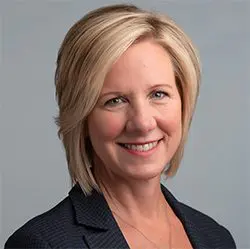
Steffany Whiting, VP of Marketing at iMethods, a leading healthcare IT staffing and consulting firm. Steffany has more than 20 years of healthcare IT marketing and product management experience and is passionate about leveraging technology to improve patient care and health outcomes. She believes the rapid pace of technology advancements will make a real difference in the quality and efficiency of healthcare delivery. Steffany leads iMethods in their strategic marketing efforts, working to expand brand awareness, enhance relationships with clients and consultants, and identify new lines of business that drive growth.

Related Resource Links

Explore legacy data migration

Learn more about HealthData Archiver®

Learn more about iMethods Educational Events

Follow us

LinkedIn: @Harmony Healthcare IT, the Makers of HealthData Archiver®

Twitter: @HarmonyHit
Healthcare IT tips, guides, news & more delivered to your inbox

Learn More

Summary

Subscribe You can subscribe to the HealthData Talks Podcast on Spotify, Amazon Music, Apple Podcasts and more.   Key Moments (0:35) The conversation begins with a quick look at how COVID-19 has made managing legacy data even more challenging for healthcare organizations and how it has impacted information governance. Ponder points out that with so...

Join Fellow Healthcare IT Pros

Tips, Guides, News & More

Sign Me Up
Resource_HealthDataTalks_InformationGovernance_ep4

Subscribe
You can subscribe to the HealthData Talks Podcast on Spotify, Amazon Music, Apple Podcasts and more.

Key Moments

(0:35) The conversation begins with a quick look at how COVID-19 has made managing legacy data even more challenging for healthcare organizations and how it has impacted information governance. Ponder points out that with so many people working remotely, it has created the vital question of how to securely handle and properly govern PHI from home offices.

(2:08) Larkin asks what other changes have made governing clinical data more difficult recently. Ponder explains that the next biggest impact is clinical cloud adoption and the shift within healthcare to move to clinical cloud platforms. He adds that there are many critical decisions that must be made when data is transitioned and needs to be governed through its life cycle.

(3:11) Ponder explains that having a plan before you begin the data migration is essential. If there is data left behind, how do you plan to govern it? For example, what data will you migrate to the new system?. He adds that the entire information lifecycle ecosystem needs to be considered because disaster recovery requirements remain relevant even with a cloud-based application.

(4:25) Larkin asks what information lifecycle management means and Joe breaks it down into five different phases. These include data creation, management, security, utilization and, lastly, disposal.

(6:16) Next, Larkin and Ponder dig deeper into each phase; how they work together and how healthcare delivery organizations should consider each one.

(7:35) Information governance has a lot of moving pieces. To get started, Ponder recommends organizations focus first on collaborating with the necessary teams, including compliance, legal, business operations, and technical teams to name a few. This way, he says, everyone understands the goal.

(8:38) Second, Ponder says, is to build your foundation with policies and proper training. And lastly, he advises organizations to look at the entire ecosystem of information and then narrow it down by focusing on the most critical pieces that support care delivery. From there, he says, slowly grow over time.

(10:31) Finally, Ponder describes the three different benchmarks he likes to use to measure a project’s success.

Speakers

Host:
Shannon Larkin, VP of Marketing and Business Development at Harmony Healthcare IT, utilizes her 25+ years of health IT experience to connect healthcare organizations with a team of experts that consolidate and modernize data storage to reduce cost and risk.

Guest:
Joe Ponder, Co-Founder and Senior Partner at InfoCycle. He has spent most of his career working with healthcare and financial services firms implementing information security and information governance programs. Joe was an early adopter of the HITRUST security framework and holds numerous certifications including CISSP, HITRUST Certified Practitioner, Six Sigma, ACEDS, ITIL & PMP.


Related Resource Links

Explore Legacy data management and compliance: Read the Article or Listen Now

Learn more about HealthData Archiver®

Read the White Paper: “System Replacement Impact on Legacy Data Retention”

Read the White Paper: “Legal Focus eDiscovery & Healthcare Record Retention”

Follow us

LinkedIn: @Harmony Healthcare IT, the Makers of HealthData Archiver®

Twitter: @HarmonyHit
Healthcare IT tips, guides, news & more delivered to your inbox

Learn More
Bridget-Group-SCCE-Podcast

Healthcare IT tips, guides, news & more delivered to your inbox

Learn More

Summary

Subscribe You can subscribe to the HealthData Talks Podcast on Spotify, Amazon Music, Apple Podcasts and more. Key Moments (0:21) The conversation begins with a high-level overview from Grenier of what cold data is and how it often needs to be retained for business and compliance reasons. Grenier also explains that cold data storage is...

Join Fellow Healthcare IT Pros

Tips, Guides, News & More

Sign Me Up
HealthDataTalks_LockerColdStorage

Subscribe
You can subscribe to the HealthData Talks Podcast on Spotify, Amazon Music, Apple Podcasts and more.

Key Moments

(0:21) The conversation begins with a high-level overview from Grenier of what cold data is and how it often needs to be retained for business and compliance reasons. Grenier also explains that cold data storage is frequently an economic decision.

(1:45) Larkin digs deeper, wondering what use cases there could be for cold data storage. Grenier elaborates, explaining that it offloads inactive data thereby freeing up space and reducing maintenance costs. This allows for server decommissioning and optimized storage resources, to name a couple.

(2:26) They take a closer look at how compliance and release of information workflows tie into inactive or cold data storage. Grenier mentions that if release of information is needed for that specific data set, then cold data storage would not be the right solution. Instead, he says, an active archive such as HealthData Archiver® would be the best approach.

(3:21) With this in mind, Larkin asks about the key benefits an organization could get from cold storage and infrequent access. Grenier describes each instance from cloud hosting to increased security and reliability to preventing an overloaded active archive with all the cold data that’s no longer needed. He adds that compliance and security are major factors in an industry with HIPAA regulations and that the key benefits of cold data storage help with those and other things as well.

(4:43) Next, Grenier shares details of HealthData Locker, the cold storage solution that recently launched at Harmony Healthcare IT. He mentions the increased demand for the solution from clients and the differences in tiers available within the product. He adds that it was modeled it based on the demand and use cases that were presented from customers directly.

(7:09) Larkin asks about separate cases where a customer may need to access data more frequently than the current tiers allow. Grenier teases an upcoming third tier option based on customer feedback that would be a dedicated reporting database where you can dictate the times you could access the data.

(8:14) For organizations who need to retain data for long periods and needs more access than cold data storage allows, Grenier says there are plenty of options still available that are built for accessing data daily, from HealthData Planner, HealthData Archiver®, or even HealthData AR Manager®.

Speakers

Host:
Shannon Larkin, VP of Marketing and Business Development at Harmony Healthcare IT, utilizes her 25+ years of health IT experience to connect healthcare organizations with a team of experts that consolidate and modernize data storage to reduce cost and risk.

Guest:
Jon Grenier, MPA, Director of Product Strategy at Harmony Healthcare IT. He has over 14 years of healthcare experience, focusing on improving patient and end-user experience and building high quality, scalable solutions to solve market problems. Jon strategically partnered with the nation’s largest health systems to develop, implement, and track targeted patient experience improvement plans. He delivered ongoing virtual and onsite advisory support to all levels of the client’s organization to improve the delivery of patient care, and was also instrumental in the design, development, and implementation of a new, consolidated digital platform working cross-functionally with stakeholders and clients to launch a best-in-class solution to the market. Today, he is responsible for the overall strategy, design and delivery of Harmony Healthcare IT products and solutions leading to quality implementation.

Related Resource Links

Explore HealthData Locker

Learn more about HealthData Archiver®

Learn more about HealthData Planner

Follow us

LinkedIn: @Harmony Healthcare IT, the Makers of HealthData Archiver®

Twitter: @HarmonyHit
Healthcare IT tips, guides, news & more delivered to your inbox

Learn More

Summary

Subscribe Don’t forget to subscribe to the HealthData Talks Podcast on Spotify, Amazon Music, Apple Podcasts, and more.   Key Moments (0:36) Skordahl starts us off by defining legacy data that needs retained and mentioning its primary source applications including electronic health records, Revenue Cycle management systems and even Human Resources data. (1:36) With healthcare...

Join Fellow Healthcare IT Pros

Tips, Guides, News & More

Sign Me Up
HealthData-Talks-Legacy-Data-Archive

Subscribe
Don’t forget to subscribe to the HealthData Talks Podcast on Spotify, Amazon Music, Apple Podcasts, and more.

Key Moments

(0:36) Skordahl starts us off by defining legacy data that needs retained and mentioning its primary source applications including electronic health records, Revenue Cycle management systems and even Human Resources data.

(1:36) With healthcare seeing an immense increase in data growth, the ability to accommodate more than just EHR data is an important conversation to have with a vendor. The experts here, Skordahl says, can work with many data types and help organizations achieve the goal of consolidating data from a variety of applications into a single platform.

(2:21) Larkin asks if mergers and acquisition are a key driver for archiving. Skordahl says yes, elaborating that there’s been a major transformation in the healthcare industry with more consolidation happening—leaving disparate data silos to combine and secure. This, he says, is driving a great deal of interest in archive solutions.

(3:06) Larkin digs deeper, asking about the specific benefits archiving can provide. Skordahl says leaving data in old systems can present various challenges, the biggest being keeping and maintaining all the various servers where the data is stored. Archiving, he says, can consolidate data from all those applications into one place and provide peace of mind as it increases security and decreases costs.

(4:33) Skordahl says this is especially true with vendors like Harmony Healthcare IT and its solution, HealthData Archiver®, which allows organizations to put essentially every stitch of legacy data into the secure container for long-term storage and access.

(5:25) Larkin asks what “active archive’ refers to. Skordahl explains that there are two parts. One is archiving the static legacy information. The second would be the revenue cycle and A/R data that can be handled within a platform like HealthData AR Manager®. The benefit, he says, is that collections can be handled until that system can be decommissioned, the maintenance contracts can be cancelled, and those old servers can be shut down.

(6:40) The conversation is then steered toward clinical workflows and integrations that can help clinicians. Skordahl states there are integrations that can be incredibly helpful, such as Single Sign-On which allows the go-forward application to launch the archive and pull up legacy information, in-patient context. It’s all available at a single click of a button, saving time and headaches.

(7:40) Larkin asks if, besides the clinical and rev cycle teams, an active archive can help the Health Information Management (HIM) team as well. Skordahl shares that these team members, who aren’t normally active users in the go-forward system, can access the historical records through a secure URL and login. This, he says, is convenient for the HIM team and anyone handling release of information.

(8:36) They then take a closer look at the various ways the archive can aid the IT team specifically. Skordahl says one thing healthcare leaders enjoy is the reduced risk—once the old systems are decommissioned and archived, it limits vulnerabilities to cyberattack and cuts costs of maintaining a multitude of systems.

(10:11) Larkin and Skordahl end the conversation with a discussion on the steps an organization should take when considering a legacy data management strategy.

Speakers

Host:
Shannon Larkin, VP of Marketing and Business Development at Harmony Healthcare IT, utilizes her 25+ years of health IT experience to connect healthcare organizations with a team of experts that consolidate and modernize data storage to reduce cost and risk.

Guest:
Dave Skordahl, AVP of Business Development at Harmony Healthcare IT. With over 27 years of healthcare experience, David is a results-oriented leader focused on helping clients solve complex business issues. He has extensive experience in the ambulatory healthcare market with a primary concentration on electronic health records (EHR), practice management, EDI, and Health Information Exchange (HIE) space. Prior to coming to Harmony Healthcare IT, he was Sr. Manager with Allscripts, managing eight Allscripts Outcomes Executives within the Allscripts Touchworks vertical.

Related Resource Links

Learn more about data archiving options

Explore HealthData Archiver®

Learn more about HealthData AR Manager®

Read the infographic on creating a legacy data management strategy

Follow us

LinkedIn: @Harmony Healthcare IT, the Makers of HealthData Archiver®

Twitter: @HarmonyHit
Healthcare IT tips, guides, news & more delivered to your inbox

Learn More

Summary

Subscribe Don’t forget to subscribe to the HealthData Talks Podcast on Spotify, Amazon Music, Apple Podcasts, and more. Key Moments (0:22) The conversation gets kicked off by Larkin introducing today’s main topic – benefits to integrating an EHR or ERP system to the legacy data kept in an archive. Hammer explains what Single Sign-On (SSO)...

Join Fellow Healthcare IT Pros

Tips, Guides, News & More

Sign Me Up
SSO-HealthData-Talks-Podcast

Subscribe
Don’t forget to subscribe to the HealthData Talks Podcast on Spotify, Amazon Music, Apple Podcasts, and more.

Key Moments

(0:22) The conversation gets kicked off by Larkin introducing today’s main topic – benefits to integrating an EHR or ERP system to the legacy data kept in an archive. Hammer explains what Single Sign-On (SSO) is and how it enables in-patient context access to historical records, benefiting the clinical team and the patient.

(2:10) Larkin asks about the HIM team and how SSO might affect their daily workflow. Hammer points out they are often seeking the full patient record for release of information purposes or to fulfil a request for other legal or regulatory purposes. He adds for this team in particular, an increase in efficiency can be gained from the integration.

(2:44) They take a closer look at how the Revenue Cycle team could pair SSO integration with the A/R wind down through a collections management platform such as HealthData AR Manager®. Hammer mentions that any end user has an opportunity to take advantage of the streamlined workflows, including the Revenue Cycle professionals.

(3:25) Hammer adds that, for the IT department it’s about user satisfaction, usability, and decreasing support requests, as well as helping the organization as a whole provide better quality of care.

(6:48) Hammer details most organizations are making the purchasing decision to include SSO. But for those who didn’t choose it in the beginning, he says, the integration can be added at any time.

(7:50) Next, Larkin asks about the go-forward applications that make it available. Hammer mentions that frequent vendors such as Epic, Cerner, MEDITECH, Athena, etc. all have turnkey integrations developed (HealthData Archiver® is on the Epic App Orchard, for example), but Harmony Healthcare IT can work with clients and vendors on a custom solution if needed.

Speakers

Host: Shannon Larkin, VP of Marketing and Business Development, utilizes her 25+ years of health IT experience to connect healthcare organizations with a team of experts that consolidate and modernize data storage to reduce cost and risk.

Guest: Jim Hammer, PMP, SVP at Harmony Healthcare IT. He has over 25 years of experience in practice management and healthcare information technology. He began in healthcare as a Director of Business Operations at a large integrated delivery network in Northern, IL where he transitioned into health IT and led national implementation efforts for Medical Manager Corp (MMC, later merged into WebMD) and later served as Regional Director of Implementation.  An innovator, Jim strives to keep improving the company by encouraging the use of LEAN methodology in each area of the business.

Related Resource Links

Explore Single Sign-On

Learn more about HealthData Archiver®

Learn more about HealthData AR Manager®

Learn more about our integrations and systems

Follow us

LinkedIn: @Harmony Healthcare IT, the Makers of HealthData Archiver®

Twitter: @HarmonyHit
Healthcare IT tips, guides, news & more delivered to your inbox

Learn More
Resource_Podcast_HealthInnovationMatters_DataManagement

Healthcare IT tips, guides, news & more delivered to your inbox

Learn More
Jim Hammer The Tate Chronicles

Healthcare IT tips, guides, news & more delivered to your inbox

Learn More
The Revenue Integrity Show

Healthcare IT tips, guides, news & more delivered to your inbox

Learn More
Tom Liddell Digital Health Leaders Podcast

Healthcare IT tips, guides, news & more delivered to your inbox

Learn More