Summary

Should McKesson or any combination of your EMR products be acquired or sunset over time, data archiving is always an alternative to the more costly and complex EMR data conversion. A well-planned legacy data management strategy alleviates future IT costs, risks and burdens as platforms come and go. Long-term medical data storage vendors who know the EMR market inside and out offer secure solutions that ensure data integrity and meet HIPAA and state medical record retention requirements.

Join Fellow Healthcare IT Pros

Tips, Guides, News & More

Sign Me Up
Woman in meeting talking to colleagues

With the recent sale of its EHR technology business to Allscripts, McKesson seems to be focusing on its core pharmacy and lab system businesses. The sale to Allscripts includes McKesson’s Enterprise Information Solutions (EIS) portfolio of Paragon (EHR); STAR and HealthQuest (revenue cycle solutions); Lab Analytics and Blood Bank; and OneContent (content management solutions).

The $185 million-dollar sale boosts Allscripts into a strong third place in the EHR market of more than 1,000 vendors and the combination of Paragon and Allscripts Sunrise, hospitals will double the company’s EHR hospital client count in the United States.

Some industry analysts also see Allscripts as a more viable international EHR option as their overall product costs are lower than some of the solutions from the other large competitors. Read more here.

The EHR market includes 1,000+ vendors. The EHR market leaders and 2016 revenues include:

  1. Cerner – 4.8 billion
  2. Epic (privately held with 2016 reported revenue of 1.7 billion)
  3. Allscripts – 1.6 billion
  4. Meditech – 462 million

What do all the changes in the EHR market mean for customers? Consolidation, products sunsetting and acquisitions all spark business case scenarios for a robust data management strategy.

In a recent report, 39 percent of current McKesson Paragon customers surveyed plan to find a new vendor.

For a summary of the KLAS Research survey of current McKesson Paragon EHR customers from 38 organizations, click here.

Archiving is a steady solution in a turbulent EMR market

Should any combination of your EMR products be acquired or sunset over time, data archiving is always an alternative to the more costly and complex EMR data conversion.  A well-planned legacy data management strategy alleviates future IT costs, risks and burdens as platforms come and go. Long-term medical data storage vendors who know the EMR market inside and out offer secure solutions that ensure data integrity and meet HIPAA and state medical record retention requirements.

When you look at the real cost of maintaining multiple legacy systems, including licensing, maintenance and support as well as the associated internal IT labor burden, the ongoing management of outdated systems becomes difficult to justify. Plus, the risk exists that the old systems may become obsolete and non-supported. Keeping the organization’s long term vision in mind, there is business value and strategic benefits to adopting an EMR archive to keep legacy data intact in a searchable, manageable and HIPAA-compliant format.

Is it time to shore up disparate data silos in your organization?  We can help.

Healthcare IT tips, guides, news & more delivered to your inbox

Learn More

Summary

If your organization uses eCW software, it might be an opportune time to consider replacing eClinicalWorks EHR. Among other provisions, the eCW settlement with the federal Department of Justice includes provisions that require the company to assist its customers in making the switch to the products of other competitors, at no charge. Now, customers can get updated versions of their software free of charge, and upon request, eCW must transfer customers’ data to another EHR vendor without penalties or service charges. Contact Harmony Healthcare IT, the makers of Health Data Archiver, for a consultation about system replacement and data retention.

Join Fellow Healthcare IT Pros

Tips, Guides, News & More

Sign Me Up
Uncertainty on the road

The aftermath of the recent False Claims Act lawsuit against eClinicalWorks (eCW) has some good news for the company’s clients. Recently, the Center for Medicare & Medicaid Services (CMS) announced healthcare providers who used the eCW software to attest to meaningful use criteria will not have to repay any incentives they received.

http://www.healthcareitnews.com/news/cms-wont-punish-eclinicalworks-customers-meaningful-use-ehr-attestations

As for eCW, the company must pay $155 million and upgrade existing customers to a new version or transfer their data to a rival EHR, both free of charge. The agreement mandates that it retain an Independent Review Organization watchdog to monitor eClinicalWorks activity for five years.

For more information about the lawsuit and claims against eCW, please see our recent blog.

While eCWs’ customers may not face any financial penalties, there still are costs. This includes the cost of determining the level of faulty records as well as the expense to clean up the errors. Some of the errors may take a long time to uncover, if they are able to be uncovered at all. There is uncertainty about the damages, even if there aren’t penalties assessed by CMS.

Replacing eClinicalWorks EHR

If your organization uses eCW software, it might be an opportune time to consider replacing eClinicalWorks EHR.  Among other provisions, the eCW settlement with the federal Department of Justice includes provisions that require the company to assist its customers in making the switch to the products of other competitors, at no charge. Now, customers can get updated versions of their software free of charge, and upon request, eCW must transfer customers’ data to another EHR vendor without penalties or service charges.

Source: https://www.healthdatamanagement.com/news/settlement-may-affect-rate-at-which-clients-leave-eclinicalworks

Looking for a Solution for Legacy EHRs?

If your organization is affected by the eCW suit or just looking for a secure storage solution for legacy data from out-of-production EHRs, an archive could provide an opportunity to efficiently consolidate numerous disparate systems into one streamlined, vendor neutral repository.

A well-planned legacy data management strategy alleviates future IT costs, risks and burdens as platforms come and go. Long-term medical data archive vendors that know the EMR market inside and out offer secure solutions that ensure data integrity and meet HIPAA, state and agency medical record retention requirements.

If your organization is working through the burden of what to do with its eCW system or with having numerous outdated legacy systems, this might be the time to contact Harmony Healthcare IT, the makers of Health Data Archiver, for a consultation about system replacement and data retention.

Be certain. We can help.

Healthcare IT tips, guides, news & more delivered to your inbox

Learn More

Summary

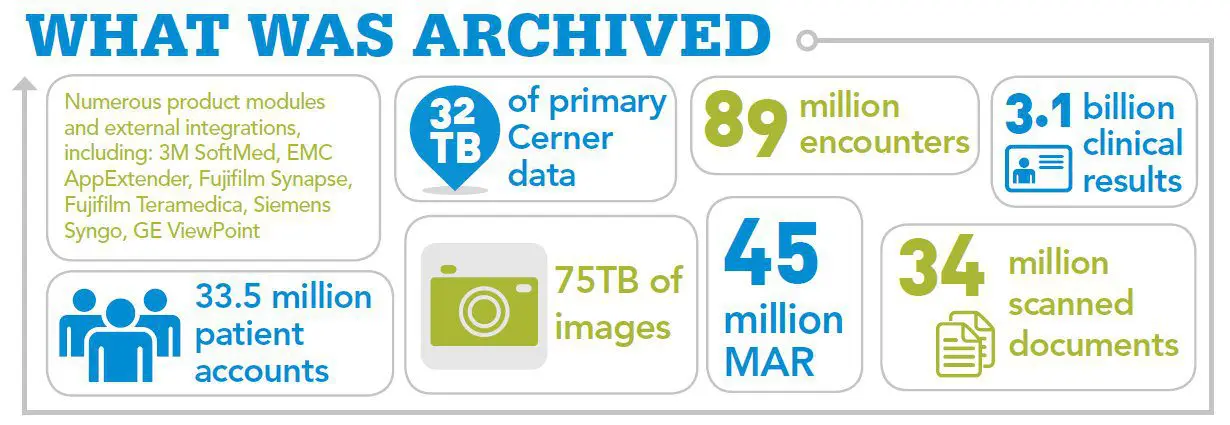
When Aurora Health Care in Wisconsin made a shift in its EMR system from Cerner Millennium to Epic, they faced 32 terabytes of legacy records, 75 terabytes of images and 34 million scanned documents -- all of which needed to be retained. For a solution, Aurora turned to the archiving experts at Harmony Healthcare IT to get the help they needed to decommission its Cerner system.

Join Fellow Healthcare IT Pros

Tips, Guides, News & More

Sign Me Up
Case Study Aurora Healthcare

The Organization

Aurora Health Care is a large private not-for-profit integrated provider in the Midwest. More than $4 billion in annual revenue from 15 hospitals, 159 clinic sites and 70 retail pharmacies. It has more than 1.2 million unique patients with 7.8 million patient encounters annually. The organization includes 31,000 caregivers and 1,700 employed physicians.

The Situation

Migrating from Cerner to Epic, the health system was under a time crunch to decommission Cerner as its AIX/Oracle 8 platform was coming to end-of-life on support. In addition, the system retirement would return a significant savings on system maintenance costs and IT labor burden, both of which were being re-directed to the Epic implementation. The requirements of the project were to:

  • retain 100% of the patient care and system audit information for an indefinite number of years
  • access historical records via a user interface that minimized training requirements as the user base was focused on learning how to use Epic
  • preserve user access levels, ensuring ready and secure enterprise-wide accessibility to historical records
  • ensure the capability to efficiently respond to release of information requests

The Project Scope

Cerner to Epic Data Migration Archive

Solution

The Harmony Healthcare IT team analyzed the record retention policy, gathered cross-departmental system requirements and put the right resources in place to comprehensively archive all of the legacy data.

The Services Provided

  • Retention Consulting Services
  • Data Extraction
  • Data Migration
  • Data Harmonization
  • Data Scrubbing
  • Data Validation
  • Reporting
  • Support

The Results

The project was completed on time and on budget within 12 months from signature. There were 6,358 active users at the time of transition. Today, there are about 2,000 named users total, 650 of which login concurrently each day.

  • Return on Investment – less than 12 months
  • Integrity of Archived Data – data required for full compliance with audits or litigation was maintained
  • User Access Roles/Privileges – respected in the archive, including historical chart access
  • Clinical Context – user views and custom tabs preserved and applied in the archive
  • User Accounts – simple account provisioning and clean up
  • Existing Reports – clinical and administrative reports and data extracts ported over to the archive (i.e., chart access reports to information security, account provisioning/de-provisioning processes)
  • No Changes to External Dependencies – external systems and processes that relied on Cerner data continue to receive the information in original format

“Our archive is an enterprise-wide win that exceeds our expectations. The solution is smart. The training was simple. The customer service is excellent.  Mission accomplished.”  — Vince Trier, Director IT Applications for Aurora Healthcare

About Harmony Healthcare IT

Since 2006, health IT analysts at Harmony Healthcare IT have extracted demographic, financial, clinical and administrative data from more than 500 healthcare systems – both ambulatory and acute. Headquartered in South Bend, Indiana, the company employs experts in data extraction, migration, archival, integration and analytics to provide its clients with trusted solutions. Working with hundreds of systems, billions of records and terabytes of data, Harmony Healthcare IT provides clients with access to historical records. Simply.

Contact Harmony Healthcare IT

To learn more about how we can help with your healthcare organization’s Cerner decommissioning or Cerner to Epic EMR migration, contact Harmony Healthcare IT .

© 2015 Harmony Healthcare IT. All rights reserved. Cerner Millennium is a registered trademark of Cerner Corporation.

Healthcare IT tips, guides, news & more delivered to your inbox

Learn More

Summary

Migrating data from McKesson Horizon to any new go-forward system can be costly and complex. An alternative to migrating data and images from one system to another is to archive legacy patient records, migrating only demographics and recent, key clinical data points. That makes legacy data easily accessible to clinicians, HIM resources and other staff members who'll need to access it. It also keeps the go-forward system "clean."

Join Fellow Healthcare IT Pros

Tips, Guides, News & More

Sign Me Up
Strategy On Road

As reported on HIStalk, it’s been about four years since McKesson announced it would increase investment, research and development to make Paragon its centerpiece hospital IT system.  Since then, McKesson has faced an uphill battle in its attempts to convert Horizon customers to Paragon.  While some Horizon customers have made the McKesson HPF to Paragon conversion, others have been evaluating their options to replace McKesson entirely.

McKesson HPF Data Archive as a part of a Migration Strategy

Migrating data from McKesson Horizon to any new go-forward system can be costly and complex.  An alternative to migrating data and images from one system to another is to archive all legacy patient records, migrating only demographics and recent, key clinicals to the go-forward system.  Discrete data element archives of today are far superior to their .pdf predecessors and offer searchable data fields for streamlined eDiscovery and response to request for information for years to come.   That makes legacy data easily accessible to clinicians, HIM resources and other staff members who’ll need to access it.  It also keeps the go-forward system “clean.”

The timing may be right to archive Horizon and other outdated electronic health record (EHR) systems to systematically save time, effort and cost down the road. One of the best reasons to archive is that it is vendor neutral, so, multiple EHR’s can be housed together for the long haul. Having a well-built archive eliminates the cost of keeping ongoing maintenance contracts with multiple vendors of disparate outdated systems.

If you’re a McKesson HPF shop that hasn’t yet made a move, there are a lot of considerations at play to determine which go-forward system makes the most sense for your organization. Regardless of the direction you take, archival of the historical records that won’t or can’t migrate is a sure-fire way to comply with state and federal retention mandates, reduce maintenance costs and mitigate long-term technical risks associated with leaving the application up and running in read-only mode.

To hold a discussion about the details of a McKesson HPF data archive, browse our websitelearn about how efficiently we archive McKesson HPF and contact us.

Healthcare IT tips, guides, news & more delivered to your inbox

Learn More

Summary

When Aurora Health Care in Wisconsin made a shift in its EHR system from Cerner to Epic, they faced 32 terabytes of legacy records, 75 terabytes of images, 34 million scanned documents and other important items that needed a long-term, secure and accessible home. Aurora turned to the archiving experts at Harmony Healthcare IT to develop and implement one of the largest archives of its kind in the country.

Join Fellow Healthcare IT Pros

Tips, Guides, News & More

Sign Me Up
Aurora Health Care Case Study

To tackle this extremely large data set, Aurora turned to the archiving experts at Harmony Healthcare IT to develop and implement one of the largest archives of its kind in the country in completing the Cerner to Epic EMR migration.

“We needed a comprehensive solution to address a change in our go-forward EHR system, mountains of legacy data and thousands of concurrent users, with no room for downtime or errors,” said Vince Trier, Director, IT Applications at Aurora Health Care, which operates 15 hospitals, 159 clinic sites and 70 retail pharmacies. “Our archive is an enterprise-wide win that exceeded our expectations. It takes only minutes to learn how to use it and it will provide accessible and secure data storage forever. Best yet, there is significant ROI.”

Managing legacy data is a hot topic for healthcare IT teams as every 18 months, the amount of data in most healthcare systems is multiplying by 100%. Healthcare organizations of all sizes are challenged with how to securely manage and provide access to historical patient data when the complexity of converting it into a new EHR is cost prohibitive.

For the Aurora archive, the Harmony Healthcare IT team analyzed the record retention policy, gathered cross-departmental system requirements and put the right resources in place to comprehensively archive all of the legacy data. The project was completed on time and on budget within 12 months from signature. There were 6,358 active users at the time of transition to the archive. Today, there are about 2,000 named users, 650 of which login concurrently each day.

To learn more about how we can help with your healthcare organization’s Cerner to Epic EMR migration, contact us.

Cerner Millennium is a registered trademark of Cerner Corporation.

Healthcare IT tips, guides, news & more delivered to your inbox

Learn More

Summary

As hospitals continue to replace EHR systems, the inquiries to decommission McKesson HPF and archive the patient data for long-term storage are on the rise. If your hospital has replaced McKesson HPF and is investigating best practices to archive HPF data along with other disparate legacy data stores, contact Harmony Healthcare IT, the makers of Health Data Archiver. A patient data archive includes most if not all of the data in its full integrity. This all-inclusive long-term storage of patient data adheres to state and federal medical record retention regulations for protected health information.

Join Fellow Healthcare IT Pros

Tips, Guides, News & More

Sign Me Up
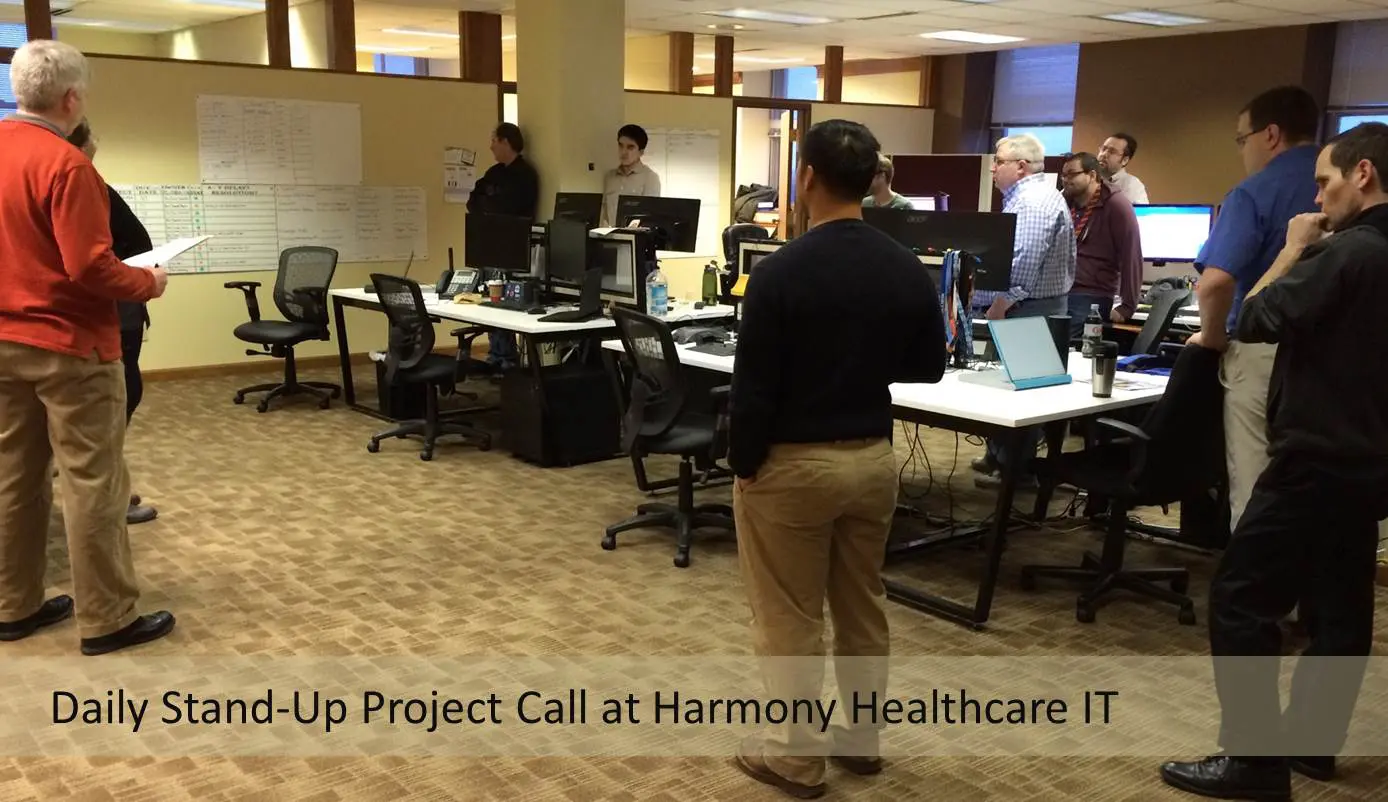
Harmony Healthcare IT Daily Standup Call

Lean Processes in Data Extraction, Migration and Retention

According to lean.org, a lean organization is one that is always striving to minimize waste and maximize customer value. Harmony Healthcare IT (HHIT) is an organization specializing in health data extraction, migration and storage.  James E. Hammer, PMP, HHIT’s VP of Product & Program Management, says that one area where lean processes have really paid off is in working repetitively with legacy hospital systems like McKesson Horizon Patient Folder (HPF).

Efficient McKesson HPF Clinical Data Management

“We have dealt with quite a few hospitals that have replaced McKesson HPF in recent years,” says Hammer.  “In last week’s morning stand-up project meeting alone, we discussed putting a wrap on the migration, conversion and data archival of three McKesson Horizon Patient Folder (HPF) systems from different parts of the country by year end.”

With each new exposure to a McKesson HPF legacy system, Hammer says his database analysts gain efficiencies so there is less waste of time, energy and money. We are constantly focusing on processes to improve our speed and accuracy for extracting, migrating and retaining clinical data from McKesson HPF. At this point, Id say we’ve got the nuances related to the proprietary nature in which McKesson HPF images are stored and indexed down pat. There isn’t much we haven’t seen as we’ve archived terabytes of information captured into McKesson HPF via scans, HL7 interfaces, faxes, text-based reports and other feeds.

EHR Replacement Causes Rise in Patient Data Archiving

As hospitals continue to replace EHR systems, the inquiries to decommission McKesson HPF and archive the patient data for long-term storage are on the rise. If your hospital has replaced McKesson HPF and is investigating best practices to archive HPF data along with other disparate legacy data stores, contact Harmony Healthcare IT, the makers of Health Data Archiver. A patient data archive includes most if not all of the data in its full integrity. This all-inclusive long-term storage of patient data adheres to state and federal medical record retention regulations for protected health information.

Horizon Patient Folders and McKesson Patient Folders are trademarks of McKesson Corporation and/or one of its subsidiaries.

Healthcare IT tips, guides, news & more delivered to your inbox

Learn More

Summary

CPSI recently announced it will purchase Healthland to bolster services to small and rural hospitals. It is not clear how the combined suite of products will fare long-term. It is possible that Healthland Classic and even Healthland Centriq will sunset. Conversely, the CPSI platform (now branded as Evident) could go. Time will tell which way CPSI goes with their product strategy, regardless of intentions communicated as a part of the announcement.

Join Fellow Healthcare IT Pros

Tips, Guides, News & More

Sign Me Up

Visit Resources Center

Computer Programs and Systems, Inc. (CPSI) recently announced it will purchase fellow healthcare information solutions vendor, Healthland, to bolster its services to the small and rural healthcare market. While CPSI reports plans to support and invest in Healthland’s Centriq platform for years to come, it mentions supporting (but not investing) in the Healthland Classic platform.

What does this mean for current Healthland users? With health IT vendor transactions such as this one, it is not always clear how the combined suite of products will fare long-term. It is possible that Healthland Classic and even Healthland Centriq will sunset as options are weighed for how best to serve the rural and community hospital market with both development and operational efficiencies. Conversely, the CPSI platform (now branded as Evident) could go. Time will tell which way CPSI goes with their product strategy, regardless of intentions communicated as a part of the announcement.

Archiving as an option for Healthland and CPSI users Should any combination of the CPSI or Healthland products sunset over time, data archiving is always an alternative to the more costly and complex CPSI or Heartland EMR data conversion when one system replaces another. Harmony Healthcare IT, the makers of Health Data Archiver, specializes in decommissioning systems like Healthland Classic, Healthland Centriq and CPSI among other acute and ambulatory EMR systems. A well- planned legacy system and patient data strategy alleviates future IT costs, risks and burdens as platforms come and go. Storage and archive of CPSI Evident, Healthland Classic, or Healthland Centriq offers a secure, long-term solution that ensures data integrity and meets all HIPAA requirements.

When you look at the real cost of maintaining multiple legacy systems, including licensing, vendor support and internal labor support, the ongoing management of outdated systems become difficult to justify. Plus, the risk exists that the old systems may become obsolete and non-supported, which is a distinct possibility for Healthland Classic and Healthland Centriq with their recent acquisition by CPSI. Keeping the organization’s long term vision in mind, there can be business value and strategic benefits to adopting an EMR archive to keep legacy data intact in a searchable, manageable and HIPAA-compliant format.

Harmony Healthcare IT as an EMR archiving partner The team of data management experts at Harmony Healthcare IT can help when the strategy is to migrate disparate legacy patient and HR data sources into a single, secure archive. Complete ROI usually is realized in 18-24 months. Harmony Healthcare IT has experience extracting, migrating and retaining data for systems like Healthland Classic, Healthland Centriq and CPSI. Should you need to decommission any one of these systems, contact us.

If you have specific questions about healthcare information archiving, contact Harmony Healthcare IT or check out some of the resources on the Health Data Archiver website.

Visit Our Resource Center

Healthcare IT tips, guides, news & more delivered to your inbox

Learn More

Summary

Switching EHRs to or from NextGen? If so, stop in and see Harmony Healthcare IT, the makers of Health Data Archiver, at the NextGen ONE User Group Meeting (Booth #706) in Las Vegas on Nov 1-4 at Mandalay Bay Resort. Harmony Healthcare IT specializes in extraction, EMR data conversion, data migration and EMR archives. That means we’re...

Join Fellow Healthcare IT Pros

Tips, Guides, News & More

Sign Me Up
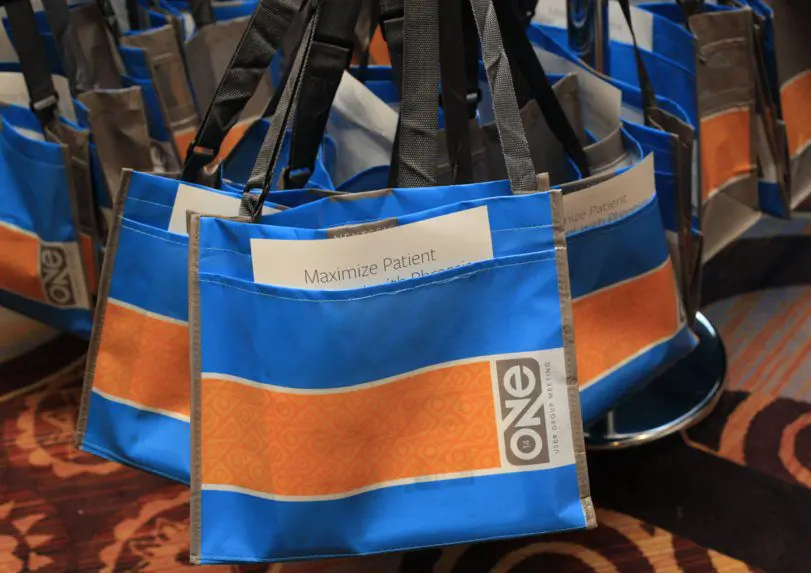
Nextgen UGM ONE totebags

Switching EHRs to or from NextGen? If so, stop in and see Harmony Healthcare IT, the makers of Health Data Archiver, at the NextGen ONE User Group Meeting (Booth #706) in Las Vegas on Nov 1-4 at Mandalay Bay Resort.

Harmony Healthcare IT specializes in extraction, EMR data conversion, data migration and EMR archives. That means we’re a perfect fit if you’re planning an EMR data migration to NextGen or if you’re replacing NextGen. We archive both financial and clinical data so maintenance payments on an aging infrastructure to legacy vendors can be eliminated.  We help you securely and affordably store patient data for the next 10-25 years to comply with state retention mandates and respond to release of information requests from patients, payers, lawyers and employers.

NextGen EMR Data Migration Discussions and Health Data Archiver Demonstrations

Health Data Archiver
Brian Liddell, CFO

“Last year, we spoke to well over 100 healthcare organizations about NextGen data migrations,” says Brian Liddell, Chief Financial Officer at Harmony Healthcare IT. “Most practices and hospitals have at least one legacy application in their IT portfolio to retire, if not more. Eliminating the legacy maintenance cost and labor burden is the biggest driver for archiving NextGen or the system NextGen replaced. We’re anxious to hold more archiving discussions at this year’s event to help IT Directors streamline their department.”

The Expo Hall at the NextGen ONE UGM15 allows ample opportunity for you to get one-on-one demo time on Health Data Archiver and to hold NextGen EMR data migration discussions. Join us on Sunday from 6-8pm for the welcome reception, on Monday from 10:30am -6pm, Tuesday from 8:30am -6pm or on Wednesday from 8:30am -1pm. The Expo Hall is located in Mandalay Bay Resort in Bayside B.

Healthcare IT tips, guides, news & more delivered to your inbox

Learn More

Summary

In the midst of a growing hospital EMR market, GE Healthcare plans to leave the arena that is dominated by a few large vendors. At the April HIMSS15 conference in Chicago, the company confirmed its plans to phase out its Centricity Enterprise product, the acute-care focused EMR. GE Healthcare has not decided if it will sell the Centricity Enterprise line or help customers transition to vendors of their choice, according to a MedCity News report. What does this mean for GE Centricity Enterprise EMR Users? As existing GE Centricity Enterprise EMR users replace their system with something new, they will be faced with how to manage legacy patient data.

Join Fellow Healthcare IT Pros

Tips, Guides, News & More

Sign Me Up

Visit Resources Center

In the midst of a growing hospital EMR market, GE Healthcare plans to leave the arena that is dominated by a few large vendors.

At the April HIMSS15 conference in Chicago, the company confirmed its plans to phase out its Centricity Enterprise product, the acute-care focused EMR. Jon Zimmerman, general manager of clinical business solutions at GE Healthcare, told MedCity News that the company will help customers transition to “a solid and effective acute-care EMR.”

GE Healthcare has not decided if it will sell the Centricity Enterprise line or help customers transition to vendors of their choice, according to the MedCity News report.

What does this mean for GE Centricity Enterprise EMR Users?

As existing GE Centricity Enterprise EMR users replace their system with something new, they will be faced with how to manage legacy patient data.  As a general rule, a system-wide EMR conversion is too costly and complex. While demographics and perhaps some key clinical data may be migrated to a new system, long-term storage of the volumes of other data points and financial line items must be addressed for these sites to comply with medical record retention regulations. With GE exiting this market space, counting on them as a support vendor by leaving the system up and running in read-only mode might be risky.

Health Data Archiver offers access to historical patient records

Harmony Healthcare IT’s Health Data Archiver offers a cost effective solution to migrate legacy data sources into a single, secure archive that typically results in a complete ROI within 18-24 months of decommissioning the legacy system. Data would be extracted from GE Centricity and made accessible in an easy-to-use, browser-based viewer for years to come. An option with this solution is to make CCD/CDA summaries of historical clinical data available to systems like Epic, Cerner and other major acute care EMR market vendors.  Another option is to migrate as much clinical data into the go-forward system as the new vendor will allow.  Harmony Healthcare IT specializes in clinical and financial data migration from one EMR to another.

With the consolidation of EMR providers and go-forward systems, as well as data management regulatory requirements, it is important to build a solid archiving solution into the mix.

Visit our website for more info on the HealthData Archiver®.

Visit Our Resource Center

Healthcare IT tips, guides, news & more delivered to your inbox

Learn More