Summary

While October was National Cybersecurity Month, increasing security measures is something healthcare IT teams need to focus on every day.  A main focus to protect against security breaches is the number of data sources on a network and the number of people, inside and outside the organization, who have access to the network. Every time...

Join Fellow Healthcare IT Pros

Tips, Guides, News & More

Sign Me Up
Cybersecurity

While October was National Cybersecurity Month, increasing security measures is something healthcare IT teams need to focus on every day.  A main focus to protect against security breaches is the number of data sources on a network and the number of people, inside and outside the organization, who have access to the network.

Every time a disparate data source is added or removed from a network there is an increased chance of a security breach, according to a recent Healthcare IT News article.

The article suggests tips that urge healthcare systems to: maintain an accurate inventory of hardware, software and data flow; enable visibility into these systems through audit trails that track who is accessing them and when that access is occurring, and of course, inventory all data stored on them.

It makes sense. The more doors and windows to a network create more opportunities for hackers to gain entrance. Besides the systems themselves, it is critical to protect and monitor vendor access to the network and ensure that any outside company has up to date security measures in place.

Most hospitals require a Business Associate Agreement (BAA) that vendors are required to sign prior to doing business. Recent changes to many BAA’s now include a provision that states: If a subcontractor or business associate errs and data becomes compromised, they can be sued directly. In a recent article in HealthIT Security, the status of government penalties against healthcare breaches now are focusing on organizations that are very knowingly carrying these risks and just not making an attempt or any effort at all to mitigate their risk and uphold their responsibilities.

EHR vendors are at the top of the IT technology vendor food chain and are expected to employ robust security protocols. Yet, not all EHR products or security protocols are created equal.

HITRUST ensures vendors have adequate IT security measures

The HITRUST Assessment Exchange, a third-party security organization, is the most widely adopted security framework and certification program in healthcare. It was created to integrate with, and not replace, an organization’s existing vendor risk management system, allowing specific vendors and assessments to be assigned to the HITRUST Assessment Exchange and to receive the HITRUST CSF Assessment report in a fully consumable format – eliminating the manual posting of key assessment details. This certification and standard reporting protocol ensures an apples to apples comparison among vendors and eases the burden of security fact checking by the requesting healthcare organization.

HITRUST certification is not only for large healthcare systems, recently the group released a cybersecurity framework, which will assist smaller healthcare organizations create stronger risk management programs, cybersecurity measures, and help them achieve NIST Cybersecurity Framework (NIST CSF) certification, which is from the National Institute of Standard and Technology as well as HITRUST certification.

For more information about the HITRUST Alliance, visit their website.

Are you ready to take a close look at all the doors and windows (disparate systems and legacy data sources) that are hanging on your network? Our team provides secure, cost-effective solutions to help you safely retire legacy software and minimize the number of locations data exists on your network.

Harmony Healthcare IT can guide your organization through the legacy EHR and/or ERP streamlining process and give your organization something to celebrate.

Healthcare IT tips, guides, news & more delivered to your inbox

Learn More

Summary

While hospitals nationwide have spent the last decade achieving a 90+% adoption rate for electronic health records (EHR), they are hovering below a 30% adoption rate for Enterprise Resource Planning (ERP) adoption. We recognize, according to recent data from Definitive Healthcare that adoption of ERPs among hospital and health systems is still relatively low, at...

Join Fellow Healthcare IT Pros

Tips, Guides, News & More

Sign Me Up
Developer working on computer

While hospitals nationwide have spent the last decade achieving a 90+% adoption rate for electronic health records (EHR), they are hovering below a 30% adoption rate for Enterprise Resource Planning (ERP) adoption.

We recognize, according to recent data from Definitive Healthcare that adoption of ERPs among hospital and health systems is still relatively low, at just 27%. In most cases, health systems are still relying on several disparate systems to accomplish the tasks that one ERP may be able to achieve. But change is hard, and on a scale this large it’s also complicated. Without a program like Meaningful Use driving your ERP decisions, it may also inadvertently become a lower priority. With the right data partner, however, positive changes for your organization may be closer than you thought.

The remainder of 2017 and the years to come promise significant market disruption and product development that create exciting new opportunities to streamline, automate, enhance, and connect operational functions from payroll to team building to supply chain management at your healthcare facility. It’s clear that as these new technologies in the ERP space become more commonplace, the positive impact on your organization will be vast.  But first comes the long journey of product selection and implementation. Often times we recognize that one of the most arduous parts of that implementation may be dealing with all of those legacy employee, financial or materials management systems and the legacy data that comes with them. While the challenge may feel daunting, we’ve compiled a starter list of tips and strategies for easing the ERP transitions and conversions when it comes to legacy data management.

  • Consult your experts in legacy data archiving and management to prepare for the best timing. We’ll be able to evaluate your current inventory of systems from EHR to HR payroll to supply chain management and help you devise a plan that will be least disruptive to the entire organization, and, consolidate legacy patient, employee and business data to ONE archive.
  • Don’t be afraid of retiring as many legacy systems as you can. Leading vendors in the ERP arenas are working hard to create innovative functionality that could put your old systems to shame. Don’t miss out on the chance to evaluate retiring each disparate system that may just be old news.
  • Look on the horizon for ERP vendor mergers and acquisitions that could change the way your current applications operate or even signal an inevitable sun setting of the systems you have grown accustomed to.
  • Adopt common sense policies on employee and business data retention. Even if you’ve been using the same system to do your HR management for the last 15 years, that doesn’t necessarily mean you have to archive all of the data in that system.  Consult with your data governance team.
  • Ensure your data archiving partner is committed to managing your data transfer all the way from beginning to end. As the professionals in that space, we want you to lean on us to extract the data from your legacy systems and ensure it makes it safely and accurately into your archive system to be fully searchable, the way you expect it.  Proven data validation methodologies are critical.

Legacy data management should never be the reason you choose not to move forward with new product adoption. A true data archiving partner will be the leader you need to make your data headaches during an ERP replacement disappear. In the end, we hope you will take advantage of the exciting new functions in these enterprise applications and join the increasing number of health systems adopting enterprise systems for their finance, operations, and human resource needs.

Think you’re ready to get started replacing disparate EHR and/or ERP systems and need a legacy data archiving partner? You can start with our free inventory tool available for download here.

Contact us with legacy data management questions.

Healthcare IT tips, guides, news & more delivered to your inbox

Learn More

Summary

The 1,100+ vendors currently in the EHR marketplace are in turbulent times. Rapid consolidation is inevitable and increasing Meaningful Use criteria certainly will force many companies to the sidelines. Currently, it is estimated that the top 10 EHR vendors account for about 90 percent of the hospital EHR market, based on 2015 Meaningful Use attestation...

Join Fellow Healthcare IT Pros

Tips, Guides, News & More

Sign Me Up
Medical Workers Looking at Tablet

The 1,100+ vendors currently in the EHR marketplace are in turbulent times. Rapid consolidation is inevitable and increasing Meaningful Use criteria certainly will force many companies to the sidelines.

Currently, it is estimated that the top 10 EHR vendors account for about 90 percent of the hospital EHR market, based on 2015 Meaningful Use attestation data from the Centers for Medicare and Medicaid Services (CMS).

The name of the game is interoperability and providing robust technology that is architected to do more than scrape by the base regulatory requirements.

What is Meaningful Use 3?

Meaningful Use 3 is the third phase of the EHR incentive program developed by The Centers for Medicare & Medicaid Services (CMS) and the Office of the National Coordinator for Health IT (ONC).  Meaningful Use 3 basically rewrites the former two phases with an entirely new program. As things stand, in summer 2016, Meaningful Use stage 3 was optional for providers in 2017 and mandatory for all participants in 2018. Objectives and measures for all providers, regardless of prior participation, are finalized for the 2018 reporting period with this rule.

There are eight objectives in Meaningful Use 3 that are summarized in a recent article by Tech Target. They include:

  1. Protected health information (PHI):Provide proof of a security risk analysis.
  2. Electronic prescribing: Achieve more than 80% of permissible prescriptions transmitted electronically.
  3. Clinical decision support (CDS):Implement five CDS interventions and drug-drug and drug-allergy interaction checks during the reporting period.
  4. Computerized provider order entry (CPOE):  Meet three different measures for medication, lab and diagnostic imaging orders.
  5. Patient electronic access:Provide access to EHRs to more than 80% of patients, with the option to view and download the records. Plus, offer an option to receive educational data to more than 35% of patients.
  6. Coordination of care through patient engagement: Encourage patients to actively engage in their care by necessitating physicians to educate them on and offer capabilities to view patient health data. Encourages physicians to have more than 25% of patients interact with the EHR, more than 35% of patients receive a secure digital communication from a care provider and encourages the collection of patient generated health data from fitness trackers or wearable devices from more than 15% of patients.
  7. Health information exchange (HIE):  More than 50% of care transition and referrals include the exchange of care records, such as continuity of care documents (CCD), electronically; requires physicians who are seeing a patient for the first time to receive care documents electronically from a secondary source more than 40% of the time and requires physicians to use e-prescribing services to reconcile medication lists from online sources with their own for more than 80% of new patients they see.
  8. Public health and clinical data registry reporting: Providers must choose three out of five available EHR reporting destinations to which they will submit data periodically. Reporting options include an immunization registry, syndromic surveillance, cases, a public health registry and a clinical data registry.

For the complete document that outlines Meaningful Use 3, click here.

What if your EHR vendor doesn’t reach Meaningful Use 3?

While the best case is to do your homework before signing on with an EHR vendor, most health systems already are down the road and banking on one or more EHR vendors.

If the unforeseen happens and your EHR vendor goes bankrupt or doesn’t achieve Meaningful Use 3, there are options that could include your EHR being acquired by another provider or the need to transition to a new system.

If a change to a new EHR becomes necessary, it is recommended to choose an EHR vendor whose customers are similar in size to your organization and who has references and a development track record that is appropriate and well-funded. Regardless of how good the EHR looks on paper, it may be a good idea to have the EHR source code and patient data in an escrow as an insurance policy just in case there is an unfortunate change of events in the future.

Archiving is a steady solution in a turbulent EMR market.

Should any combination of your EMR products be acquired or sunset over time, data archiving is always an alternative to the more costly and complex EMR data conversion.  A well-planned legacy data management strategy alleviates future IT costs, risks and burdens as platforms come and go. Long-term medical data storage vendors who know the EMR market inside and out offer secure solutions that ensure data integrity and meet HIPAA and state medical record retention requirements.

When you look at the real cost of maintaining multiple legacy systems, including licensing, maintenance and support as well as the associated internal IT labor burden, the ongoing management of outdated systems becomes difficult to justify. Plus, the risk exists that the old systems may become obsolete and non-supported. Keeping the organization’s long term vision in mind, there is business value and strategic benefits to adopting an EMR archive to keep legacy data intact in a searchable, manageable and HIPAA-compliant format.

Is it time to shore up disparate data silos in your organization?  We can help.

Healthcare IT tips, guides, news & more delivered to your inbox

Learn More

Summary

Cybersecurity is a Growing Issue in Healthcare For healthcare IT departments, threats and cyber-attacks are gaining momentum. Recently, healthcare surpassed the public sector as the most-breached industry in North America, according to a McAfee Labs report. The mid-2017 report is the first time that healthcare surpassed all other sectors with healthcare accounting for 26% of Q2...

Join Fellow Healthcare IT Pros

Tips, Guides, News & More

Sign Me Up
Security Breach Hacker

Cybersecurity is a Growing Issue in Healthcare

For healthcare IT departments, threats and cyber-attacks are gaining momentum. Recently, healthcare surpassed the public sector as the most-breached industry in North America, according to a McAfee Labs report. The mid-2017 report is the first time that healthcare surpassed all other sectors with healthcare accounting for 26% of Q2 2017 security incidents. For reference, the health, public, and education sectors comprised more than 50% of total worldwide incidents in 2016-2017.

Healthcare IT Leaders to Increase Cyber Security Spending

It isn’t surprising that at the HIMSS (Healthcare Information and Management Systems Society) 2017 conference, in a survey of 100 healthcare IT leaders, 81% said their organizations were looking to increase cybersecurity spending in 2017. While the need to address cybersecurity was known, only 42% of those surveyed said their healthcare organization has a C-level executive in charge of cybersecurity. But what’s worse, only 62% of those who have a C-level executive in charge of security indicated that security was discussed at their quarterly board meetings.

Beyond strengthening data security, the survey further outlined CIOs’ top priorities for the remainder of 2017 and 2018 as: increasing patient satisfaction, improving physician satisfaction, complying with federal regulations, and maximizing Electronic Health Record (EHR) integration with other hospitals.

Each of these Priorities can be Positively Impacted by Managing Legacy Data

One of the most vulnerable areas in healthcare is outdated technology and legacy data.

Vulnerabilities from aging applications and technologies is the number one concern IT executives cited with respect to cybersecurity in a recent survey by Grant Thornton and The Professional Services Council. The survey isn’t limited to just healthcare, but aging and outdated EMRs certainly plague the IT landscape at many healthcare organizations. Depending on the size of a health system, often there can be 30-40 legacy systems in various stages of use, phasing out of support and with less than vibrant capabilities. These systems can present security issues and potentially become sitting ducks for cybersecurity attacks.

Click here for the entire survey.

Bottom line: “vulnerable” isn’t a good word in healthcare IT.

Where are you at with the security of your legacy application portfolio?  

Do you have out-of-production systems still running in read-only format?  Are there disparate systems on various platforms, or, have you consolidated legacy data stores to a single, secure archive?  Work with Harmony Healthcare IT , the makers of Health Data Archiver, to secure your legacy EHR and ERP data in a HIPAA-compliant archive to help protect your organization from additional cyber security threats.

Let’s work together and get healthcare off the leader board for security breaches.

Healthcare IT tips, guides, news & more delivered to your inbox

Learn More

Summary

Preparing for Enterprise Resource Planning (ERP) software changes and interested in how to approach legacy HR and payroll data storage? Our resident expert, Fria Kurowski, has over 20 years of experience with data management and support of HR and payroll systems, and she is eager to share best practices. A smart employee data retention strategy considers...

Join Fellow Healthcare IT Pros

Tips, Guides, News & More

Sign Me Up
HR and Payroll Data Storage

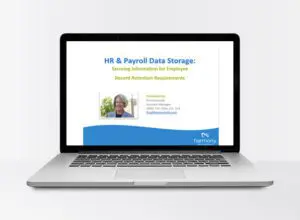
Preparing for Enterprise Resource Planning (ERP) software changes and interested in how to approach legacy HR and payroll data storage? Our resident expert, Fria Kurowski, has over 20 years of experience with data management and support of HR and payroll systems, and she is eager to share best practices.

A smart employee data retention strategy considers data specifications, reviews all legal and regulatory obligations, and develops a strong plan for execution. From interpreting the EEOC to diving into the nuts and bolts of data extraction from your legacy system, this quick video is here to guide you.

Interested in viewing the Health Data Archiver and getting a front row view of how it will work with HR and payroll data storage? Fria also includes a brief demonstration of our ERP data storage solution.

You can view our expert’s guide on HR and Payroll Data Storage here.

Webinar HR & Payroll Data Storage

Healthcare IT tips, guides, news & more delivered to your inbox

Learn More

Summary

Should McKesson or any combination of your EMR products be acquired or sunset over time, data archiving is always an alternative to the more costly and complex EMR data conversion. A well-planned legacy data management strategy alleviates future IT costs, risks and burdens as platforms come and go. Long-term medical data storage vendors who know the EMR market inside and out offer secure solutions that ensure data integrity and meet HIPAA and state medical record retention requirements.

Join Fellow Healthcare IT Pros

Tips, Guides, News & More

Sign Me Up
Woman in meeting talking to colleagues

With the recent sale of its EHR technology business to Allscripts, McKesson seems to be focusing on its core pharmacy and lab system businesses. The sale to Allscripts includes McKesson’s Enterprise Information Solutions (EIS) portfolio of Paragon (EHR); STAR and HealthQuest (revenue cycle solutions); Lab Analytics and Blood Bank; and OneContent (content management solutions).

The $185 million-dollar sale boosts Allscripts into a strong third place in the EHR market of more than 1,000 vendors and the combination of Paragon and Allscripts Sunrise, hospitals will double the company’s EHR hospital client count in the United States.

Some industry analysts also see Allscripts as a more viable international EHR option as their overall product costs are lower than some of the solutions from the other large competitors. Read more here.

The EHR market includes 1,000+ vendors. The EHR market leaders and 2016 revenues include:

  1. Cerner – 4.8 billion
  2. Epic (privately held with 2016 reported revenue of 1.7 billion)
  3. Allscripts – 1.6 billion
  4. Meditech – 462 million

What do all the changes in the EHR market mean for customers? Consolidation, products sunsetting and acquisitions all spark business case scenarios for a robust data management strategy.

In a recent report, 39 percent of current McKesson Paragon customers surveyed plan to find a new vendor.

For a summary of the KLAS Research survey of current McKesson Paragon EHR customers from 38 organizations, click here.

Archiving is a steady solution in a turbulent EMR market

Should any combination of your EMR products be acquired or sunset over time, data archiving is always an alternative to the more costly and complex EMR data conversion.  A well-planned legacy data management strategy alleviates future IT costs, risks and burdens as platforms come and go. Long-term medical data storage vendors who know the EMR market inside and out offer secure solutions that ensure data integrity and meet HIPAA and state medical record retention requirements.

When you look at the real cost of maintaining multiple legacy systems, including licensing, maintenance and support as well as the associated internal IT labor burden, the ongoing management of outdated systems becomes difficult to justify. Plus, the risk exists that the old systems may become obsolete and non-supported. Keeping the organization’s long term vision in mind, there is business value and strategic benefits to adopting an EMR archive to keep legacy data intact in a searchable, manageable and HIPAA-compliant format.

Is it time to shore up disparate data silos in your organization?  We can help.

Healthcare IT tips, guides, news & more delivered to your inbox

Learn More

Summary

The Center for Data Information recently ranked each state for adoption of health information technology, including adoption of electronic health records (EHR) and e-prescribing. They looked at office-based physicians and non-federal acute care hospitals. The top five for EHR adoption include: Top Five States Hospital percentage Physician’s office percentage 1.       Massachusetts 93 90 2.       Wyoming...

Join Fellow Healthcare IT Pros

Tips, Guides, News & More

Sign Me Up
Glass Chess Piece King

The Center for Data Information recently ranked each state for adoption of health information technology, including adoption of electronic health records (EHR) and e-prescribing. They looked at office-based physicians and non-federal acute care hospitals.

The top five for EHR adoption include:

Top Five States Hospital percentage Physician’s office percentage
1.       Massachusetts 93 90
2.       Wyoming 94 88
3.       Washington 94 86
4.       Minnesota 88 89
5.       Indiana 88 89

For the complete list of rankings, click here.

Rankings are interesting, especially when there are some unexpected market leaders and some states that would seem to be technology-advanced and yet lag behind in adoption.

It’s also interesting to note that the five largest states in terms of population mostly rank in the lower half of the list in terms of health-information technology adoption.

Largest States
(ranked by population)
Population
(in millions)
Health Information Adoption Ranking
1.       California 39.8 29
2.       Texas 28.4 31
3.       Florida 21.0 18
4.       New York 19.8 39
5.       Pennsylvania 12.8 43

Note: Population stats were compiled from the World Population Review.

Another way of looking at this is the 37 percent of the people in the United States, who comprise the population of the five largest states, are in states that are lagging in terms of health information technology adoption.

The study also ranked the states in order of adopting e-prescribing, where the doctor electronically sends the prescription to a pharmacy. The top five in this list include:

State Percentage
1.       New York 37.7
2.       Nebraska 20.2
3.       Delaware 11.8
4.       California 9.6
5.       Texas 9.4

More than half of the states reported they have less than 2.5 percent of prescriptions for controlled substances issued electronically at this time.

Our team is encouraged by the many initiatives that are moving the quality of care for patients in a positive direction.  For example, a recent survey published in the American Journal of Health-System Pharmacy, reports that around 99 percent of U.S. hospitals had partially or completely implemented EHRs in 2016, up from 33.6 percent in 2003. (43.3 percent of hospitals had completely implemented EHRs and 55.7 percent had partially implemented the systems.)

Harmony Healthcare IT is positioned with technology solutions to provide healthcare experts with clinical health data at the point of care to improve patient safety and outcomes.

Wherever your organization falls on the continuum of healthcare IT adoption, we can help.

Healthcare IT tips, guides, news & more delivered to your inbox

Learn More

Summary

Nick Moskolis, a Psychology major from Indiana University – South Bend, joined Harmony Healthcare IT as a summer intern and later became a full-time Quality Assurance Analyst. He appreciates the company’s growth and the supportive work atmosphere. Nick is dedicated to staying updated on healthcare technology trends and plans to continue growing in the Software Quality Assurance field.

Join Fellow Healthcare IT Pros

Tips, Guides, News & More

Sign Me Up
Nick Mosk

Nick Moskolis joined Harmony Healthcare IT (HHIT) as a 2017 summer intern and ended the season with a full time position as a Quality Assurance Analyst. A Psychology major from Indiana University – South Bend, Nick says he appreciated the opportunity to meet everyone at Harmony Healthcare IT and learn from the development team before he was hired in full time.

“The most exciting thing I learned was how the software development life cycle works and how each team fits into that process,” explained Nick.

Nick on Harmony Healthcare IT:
Harmony is a growing company, which provides a lot of opportunities. The work atmosphere here is great and it is awesome to see fellow millennials working hard and all striving toward the same goals.

Quote from Nick’s supervisor Dan Brubaker Horst:
“Internships are a great opportunity to get hands-on experience. The best ones are where the interests of the intern and the needs of the company align perfectly. From the very beginning, Nick has been dedicated to and enthusiastic about his role in testing and validating our software. He is a crucial member of our team and we are delighted that he could join us in a permanent position.”

Nick on trends in healthcare technology:
It is important to stay up to date with all the new advances in IT or you will quickly be outdated. This is a field that is continuously growing and people who work in the field need to be informed on new advances.

Nick’s Career Goals:
My plan is to continue to grow and learn in the Software Quality Assurance field.  I will strive to be the best I can possibly be for Harmony Healthcare IT and myself. This is the beginning of the road for my career and I plan to do great things!

Nick on being a lifelong South Bend resident:
I love South Bend and intend on living here for the rest of my life. From the Notre Dame games to the South Bend Cubs games, I have a variety of sport activities I can follow. Also, downtown South Bend is continually growing and has new activities and restaurants popping up often, including awesome food and fun activities on the East Race!

Healthcare IT tips, guides, news & more delivered to your inbox

Learn More

Summary

Harmony Healthcare IT launched “Harmony HITters” recreational volleyball team in May, aiming to bond employees and foster new collaboration.

Join Fellow Healthcare IT Pros

Tips, Guides, News & More

Sign Me Up
Volleyball set

Harmony Healthcare IT, a firm dedicated to preserving vital patient information to improve lives, launched a recreational volleyball team this summer. The “Harmony HITters” made its debut on the sand in early May and played every Wednesday night for 12 weeks straight.

The league play was hosted at Outpost Sports in Mishawaka, Indiana — just a few miles down the road from the Harmony Healthcare IT headquarters in South Bend.  With top-of-the-line courts comprised of imported white sands from Lake Michigan, Outpost has offered a unique Midwest meeting place for corporate teams to bond for the past 30 years.   Each week, six to eight Harmony HITters signed up, kicked off their shoes and posted at the courts to strategize, scout the competition and play to win.

“It’s great to get out of the office with co-workers to come together as a different kind of team,” says Colleen Dalton, marketing coordinator for Harmony Healthcare IT.  “I was happy to run lead on coordinating this effort because I feel like it really brought us together in new ways.  Employees either played or cheered us on each week, and, that’s great bonding that makes its way back to the workplace.”

The summer season was a win for the team, so expect to see the Harmony HITters back on the courts bumping, setting and spiking in 2018.

Healthcare IT tips, guides, news & more delivered to your inbox

Learn More

Summary

If your organization uses eCW software, it might be an opportune time to consider replacing eClinicalWorks EHR. Among other provisions, the eCW settlement with the federal Department of Justice includes provisions that require the company to assist its customers in making the switch to the products of other competitors, at no charge. Now, customers can get updated versions of their software free of charge, and upon request, eCW must transfer customers’ data to another EHR vendor without penalties or service charges. Contact Harmony Healthcare IT, the makers of Health Data Archiver, for a consultation about system replacement and data retention.

Join Fellow Healthcare IT Pros

Tips, Guides, News & More

Sign Me Up
Uncertainty on the road

The aftermath of the recent False Claims Act lawsuit against eClinicalWorks (eCW) has some good news for the company’s clients. Recently, the Center for Medicare & Medicaid Services (CMS) announced healthcare providers who used the eCW software to attest to meaningful use criteria will not have to repay any incentives they received.

http://www.healthcareitnews.com/news/cms-wont-punish-eclinicalworks-customers-meaningful-use-ehr-attestations

As for eCW, the company must pay $155 million and upgrade existing customers to a new version or transfer their data to a rival EHR, both free of charge. The agreement mandates that it retain an Independent Review Organization watchdog to monitor eClinicalWorks activity for five years.

For more information about the lawsuit and claims against eCW, please see our recent blog.

While eCWs’ customers may not face any financial penalties, there still are costs. This includes the cost of determining the level of faulty records as well as the expense to clean up the errors. Some of the errors may take a long time to uncover, if they are able to be uncovered at all. There is uncertainty about the damages, even if there aren’t penalties assessed by CMS.

Replacing eClinicalWorks EHR

If your organization uses eCW software, it might be an opportune time to consider replacing eClinicalWorks EHR.  Among other provisions, the eCW settlement with the federal Department of Justice includes provisions that require the company to assist its customers in making the switch to the products of other competitors, at no charge. Now, customers can get updated versions of their software free of charge, and upon request, eCW must transfer customers’ data to another EHR vendor without penalties or service charges.

Source: https://www.healthdatamanagement.com/news/settlement-may-affect-rate-at-which-clients-leave-eclinicalworks

Looking for a Solution for Legacy EHRs?

If your organization is affected by the eCW suit or just looking for a secure storage solution for legacy data from out-of-production EHRs, an archive could provide an opportunity to efficiently consolidate numerous disparate systems into one streamlined, vendor neutral repository.

A well-planned legacy data management strategy alleviates future IT costs, risks and burdens as platforms come and go. Long-term medical data archive vendors that know the EMR market inside and out offer secure solutions that ensure data integrity and meet HIPAA, state and agency medical record retention requirements.

If your organization is working through the burden of what to do with its eCW system or with having numerous outdated legacy systems, this might be the time to contact Harmony Healthcare IT, the makers of Health Data Archiver, for a consultation about system replacement and data retention.

Be certain. We can help.

Healthcare IT tips, guides, news & more delivered to your inbox

Learn More