Summary

As hospitals continue to replace EHR systems, the inquiries to decommission McKesson HPF and archive the patient data for long-term storage are on the rise. If your hospital has replaced McKesson HPF and is investigating best practices to archive HPF data along with other disparate legacy data stores, contact Harmony Healthcare IT, the makers of Health Data Archiver. A patient data archive includes most if not all of the data in its full integrity. This all-inclusive long-term storage of patient data adheres to state and federal medical record retention regulations for protected health information.

Join Fellow Healthcare IT Pros

Tips, Guides, News & More

Sign Me Up
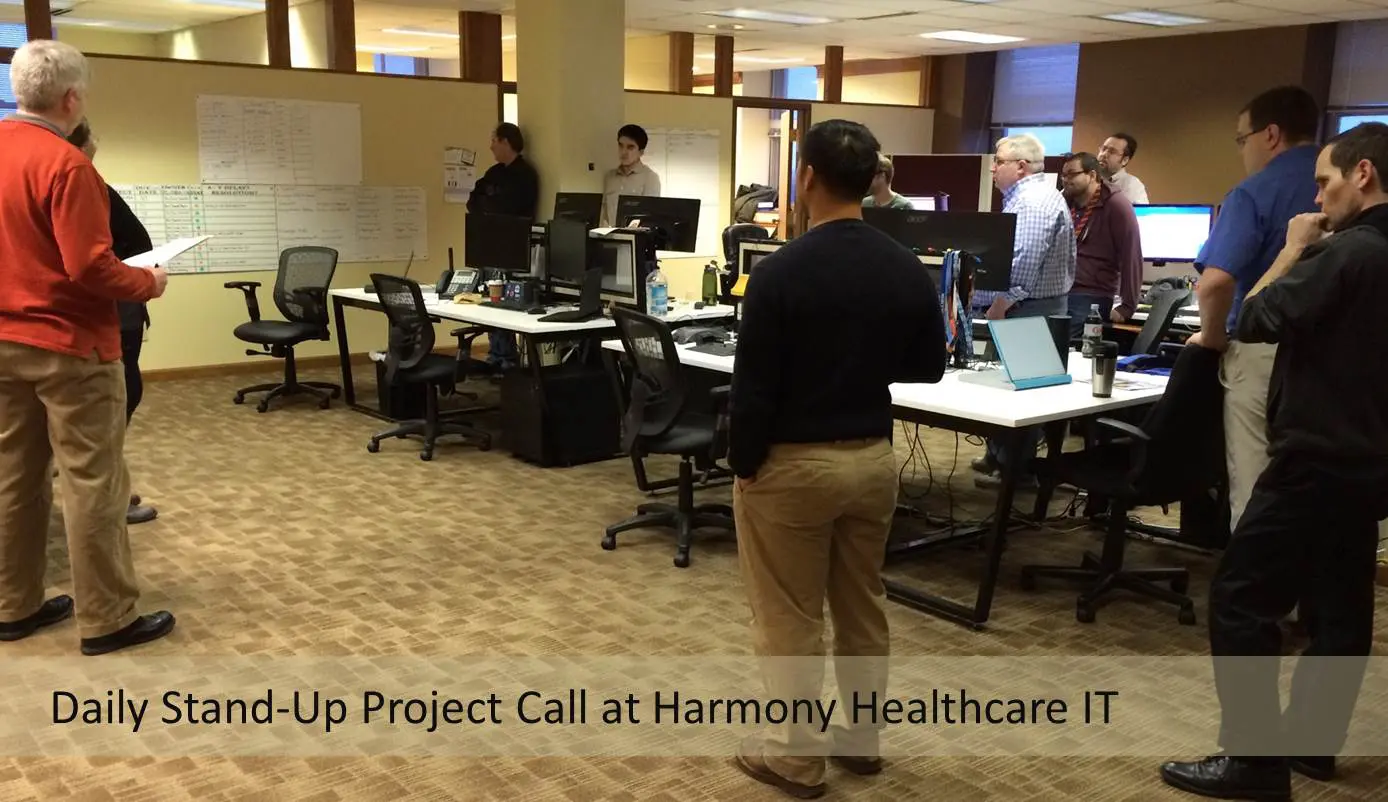
Harmony Healthcare IT Daily Standup Call

Lean Processes in Data Extraction, Migration and Retention

According to lean.org, a lean organization is one that is always striving to minimize waste and maximize customer value. Harmony Healthcare IT (HHIT) is an organization specializing in health data extraction, migration and storage.  James E. Hammer, PMP, HHIT’s VP of Product & Program Management, says that one area where lean processes have really paid off is in working repetitively with legacy hospital systems like McKesson Horizon Patient Folder (HPF).

Efficient McKesson HPF Clinical Data Management

“We have dealt with quite a few hospitals that have replaced McKesson HPF in recent years,” says Hammer.  “In last week’s morning stand-up project meeting alone, we discussed putting a wrap on the migration, conversion and data archival of three McKesson Horizon Patient Folder (HPF) systems from different parts of the country by year end.”

With each new exposure to a McKesson HPF legacy system, Hammer says his database analysts gain efficiencies so there is less waste of time, energy and money. We are constantly focusing on processes to improve our speed and accuracy for extracting, migrating and retaining clinical data from McKesson HPF. At this point, Id say we’ve got the nuances related to the proprietary nature in which McKesson HPF images are stored and indexed down pat. There isn’t much we haven’t seen as we’ve archived terabytes of information captured into McKesson HPF via scans, HL7 interfaces, faxes, text-based reports and other feeds.

EHR Replacement Causes Rise in Patient Data Archiving

As hospitals continue to replace EHR systems, the inquiries to decommission McKesson HPF and archive the patient data for long-term storage are on the rise. If your hospital has replaced McKesson HPF and is investigating best practices to archive HPF data along with other disparate legacy data stores, contact Harmony Healthcare IT, the makers of Health Data Archiver. A patient data archive includes most if not all of the data in its full integrity. This all-inclusive long-term storage of patient data adheres to state and federal medical record retention regulations for protected health information.

Horizon Patient Folders and McKesson Patient Folders are trademarks of McKesson Corporation and/or one of its subsidiaries.

Healthcare IT tips, guides, news & more delivered to your inbox

Learn More

Summary

This week, we tuned in to HISTalk's webinar called "CPSI's Takeover of Healthland" featuring Vince Ciotti and Frank Poggio. On the webinar, they talk about what CPSI's purchase of Healthland will mean for Healthland users. Will you soon replace Healthland with another EMR? Should you need assistance with Healthland data extraction, migration or retention, contact our Healthland experts at HealthDataArchiver.com.

Join Fellow Healthcare IT Pros

Tips, Guides, News & More

Sign Me Up
Cows In Large Green Pasture

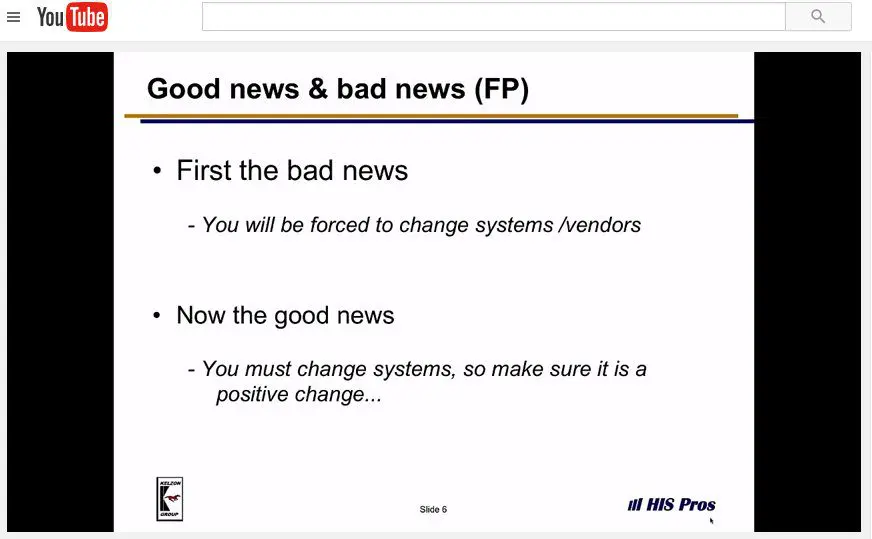
Last week, we reported that CPSI acquired Healthland. This week, we tuned in to HISTalk’s webinar called “CPSI’s Takeover of Healthland” featuring Vince Ciotti and Frank Poggio. On the webinar, they talk about what CPSI’s purchase of Healthland will mean for Healthland users. Will users need to replace Healthland? If they replace the Healthland EMR, which new system might make the most sense?

Vince and Frank’s message was aimed largely at the approximately 1,000 hospitals and LTC/PAC facilities affected by CPSI’s acquisition of Healthland. They advised that, based on other major EMR/HIS takeovers, hospitals can get burned when the acquirer forces clients into a “take it or leave it” situation.

replace healthland emr
Screenshot from the “CPSI Takeover of Healthland” HISTalk Webinar

We encourage you to watch the webinar recording. It covers some of the issues every affected Healthland health facility faces, specifically:

  • Lessons from other takeovers in the HIS industry, such as the recent Cerner/Siemens and Allscripts/Eclipsys combinations
  • The possible fate of each of Healthland’s products and impact on ongoing support and R&D
  • What the alternative systems in the market are based on a Healthland hospitals’ size & app suite
  • Whether you will be forced to upgrade to the newer Healthland Centriq product, or whether CPSI will promote Thrive, a much older, yet more stable product
  • Steps you should take now to prepare your organization for typical vendor positioning after acquisitions

According to HISTalk, the webinar sponsor, this recording is geared toward CIOs and other HIT professionals who are running Healthland products, CPSI clients running legacy CPSI products and any CIO concerned about his/vendor takeover.

Are you a current Healthland user impacted by the CPSI acquisition? Will you soon replace Healthland with another EMR?  Let us know what you think about the content of the “CPSI’s Takeover of Healthland” webinar in the comments below.  Should you need assistance with Healthland data extraction, migration or retention, contact our Healthland experts at HealthDataArchiver.com.

Healthcare IT tips, guides, news & more delivered to your inbox

Learn More

Summary

CPSI recently announced it will purchase Healthland to bolster services to small and rural hospitals. It is not clear how the combined suite of products will fare long-term. It is possible that Healthland Classic and even Healthland Centriq will sunset. Conversely, the CPSI platform (now branded as Evident) could go. Time will tell which way CPSI goes with their product strategy, regardless of intentions communicated as a part of the announcement.

Join Fellow Healthcare IT Pros

Tips, Guides, News & More

Sign Me Up

Visit Resources Center

Computer Programs and Systems, Inc. (CPSI) recently announced it will purchase fellow healthcare information solutions vendor, Healthland, to bolster its services to the small and rural healthcare market. While CPSI reports plans to support and invest in Healthland’s Centriq platform for years to come, it mentions supporting (but not investing) in the Healthland Classic platform.

What does this mean for current Healthland users? With health IT vendor transactions such as this one, it is not always clear how the combined suite of products will fare long-term. It is possible that Healthland Classic and even Healthland Centriq will sunset as options are weighed for how best to serve the rural and community hospital market with both development and operational efficiencies. Conversely, the CPSI platform (now branded as Evident) could go. Time will tell which way CPSI goes with their product strategy, regardless of intentions communicated as a part of the announcement.

Archiving as an option for Healthland and CPSI users Should any combination of the CPSI or Healthland products sunset over time, data archiving is always an alternative to the more costly and complex CPSI or Heartland EMR data conversion when one system replaces another. Harmony Healthcare IT, the makers of Health Data Archiver, specializes in decommissioning systems like Healthland Classic, Healthland Centriq and CPSI among other acute and ambulatory EMR systems. A well- planned legacy system and patient data strategy alleviates future IT costs, risks and burdens as platforms come and go. Storage and archive of CPSI Evident, Healthland Classic, or Healthland Centriq offers a secure, long-term solution that ensures data integrity and meets all HIPAA requirements.

When you look at the real cost of maintaining multiple legacy systems, including licensing, vendor support and internal labor support, the ongoing management of outdated systems become difficult to justify. Plus, the risk exists that the old systems may become obsolete and non-supported, which is a distinct possibility for Healthland Classic and Healthland Centriq with their recent acquisition by CPSI. Keeping the organization’s long term vision in mind, there can be business value and strategic benefits to adopting an EMR archive to keep legacy data intact in a searchable, manageable and HIPAA-compliant format.

Harmony Healthcare IT as an EMR archiving partner The team of data management experts at Harmony Healthcare IT can help when the strategy is to migrate disparate legacy patient and HR data sources into a single, secure archive. Complete ROI usually is realized in 18-24 months. Harmony Healthcare IT has experience extracting, migrating and retaining data for systems like Healthland Classic, Healthland Centriq and CPSI. Should you need to decommission any one of these systems, contact us.

If you have specific questions about healthcare information archiving, contact Harmony Healthcare IT or check out some of the resources on the Health Data Archiver website.

Visit Our Resource Center

Healthcare IT tips, guides, news & more delivered to your inbox

Learn More

Summary

Harmony Healthcare IT is pleased to participate in the Disruptive Healthcare Conference 2015 today in Madison, WI. This event, produced by WTN Media, brings together experts in healthcare, technology, law and finance to ask questions and share insights about how to improve healthcare delivery and outcomes. The purpose of the conference is to collectively address the question “How...

Join Fellow Healthcare IT Pros

Tips, Guides, News & More

Sign Me Up

Harmony Healthcare IT is pleased to participate in the Disruptive Healthcare Conference 2015 today in Madison, WI. This event, produced by WTN Media, brings together experts in healthcare, technology, law and finance to ask questions and share insights about how to improve healthcare delivery and outcomes. The purpose of the conference is to collectively address the question “How do we develop and respond to disruptive healthcare business models in a world of accelerating disruptive technologies?”

CEO and Founder of WTN Media, Mike Klein, says that disruption in healthcare is profound. He says that the transformation of the US Healthcare Market is not just about digital disruption but a complete transformation that is driving healthcare organizations to re-think their business strategies as they experience pressure on their margins and profitability.

The one-day event includes high-profile healthcare provider and vendor speakers in sessions titled:

  • Overcoming the Madness of EMRs
  • Avoiding Digital Report Overload: Analytics that Drive Improvement
  • Putting the Patient in Customer Relationship Management
  • Wall Street’s Perception of the Financial Impact of Healthcare Technology Investments
  • Prescriptions for Engaging the C-Suite in Analytics – Case Study: Gulfport Memorial Hospital
  • Marketplace Consolidation: Don’t Forget the EMRs
  • Obstacles to Interoperability: Can’t We all Get Along?
Jim Hammer
VP Product & Program Management at Harmony Healthcare IT

“I’m looking forward to the session on marketplace consolidation,” says Jim Hammer, VP of Product & Program Management for Harmony Healthcare IT. “Healthcare organizations that are merging and acquiring must address the high costs of supporting multiple systems or consolidate legacy data sources. This is where our Health Data Archiver solution plays a role. We help providers transition from one EMR to another — like converting from Cerner to Epic — and manage the consolidation of legacy patient data.”

The other session of interest titled “Obstacles to Interoperability…” occurs at the end of the day and includes presenters from both Cerner and Epic. In this session, attendees will explore the technical and non-technical obstacles to interoperability, review the importance of clinical workflow in delivering useful interoperability and learn about the importance of the new FHIR standard in facilitating better use of clinical information.

“As Harmony Healthcare IT is passionate about providing historical patient information to providers when and where needed,” says Hammer, “we are very interested in learning what the two industry leaders, Cerner and Epic, have to say about interoperability.”

The event runs from 7am-6pm CT at Fluno Center in Madison, WI.

Healthcare IT tips, guides, news & more delivered to your inbox

Learn More

Summary

Switching EHRs to or from NextGen? If so, stop in and see Harmony Healthcare IT, the makers of Health Data Archiver, at the NextGen ONE User Group Meeting (Booth #706) in Las Vegas on Nov 1-4 at Mandalay Bay Resort. Harmony Healthcare IT specializes in extraction, EMR data conversion, data migration and EMR archives. That means we’re...

Join Fellow Healthcare IT Pros

Tips, Guides, News & More

Sign Me Up
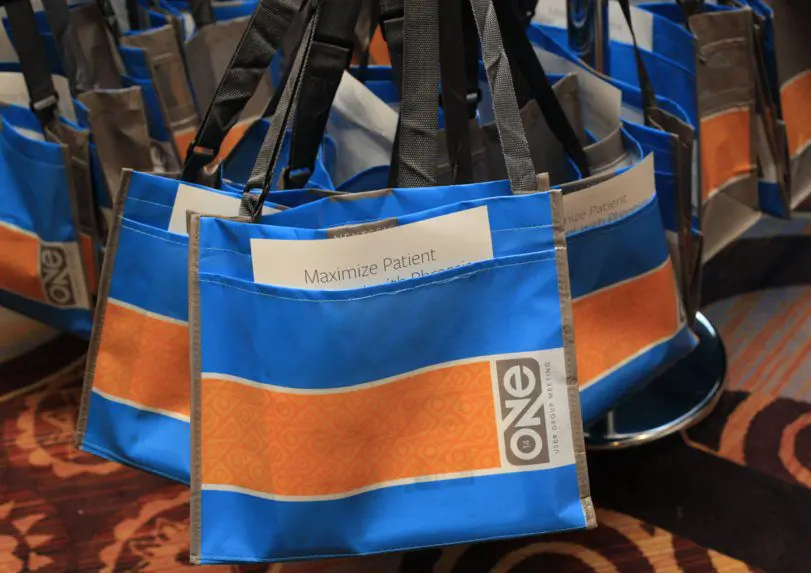
Nextgen UGM ONE totebags

Switching EHRs to or from NextGen? If so, stop in and see Harmony Healthcare IT, the makers of Health Data Archiver, at the NextGen ONE User Group Meeting (Booth #706) in Las Vegas on Nov 1-4 at Mandalay Bay Resort.

Harmony Healthcare IT specializes in extraction, EMR data conversion, data migration and EMR archives. That means we’re a perfect fit if you’re planning an EMR data migration to NextGen or if you’re replacing NextGen. We archive both financial and clinical data so maintenance payments on an aging infrastructure to legacy vendors can be eliminated.  We help you securely and affordably store patient data for the next 10-25 years to comply with state retention mandates and respond to release of information requests from patients, payers, lawyers and employers.

NextGen EMR Data Migration Discussions and Health Data Archiver Demonstrations

Health Data Archiver
Brian Liddell, CFO

“Last year, we spoke to well over 100 healthcare organizations about NextGen data migrations,” says Brian Liddell, Chief Financial Officer at Harmony Healthcare IT. “Most practices and hospitals have at least one legacy application in their IT portfolio to retire, if not more. Eliminating the legacy maintenance cost and labor burden is the biggest driver for archiving NextGen or the system NextGen replaced. We’re anxious to hold more archiving discussions at this year’s event to help IT Directors streamline their department.”

The Expo Hall at the NextGen ONE UGM15 allows ample opportunity for you to get one-on-one demo time on Health Data Archiver and to hold NextGen EMR data migration discussions. Join us on Sunday from 6-8pm for the welcome reception, on Monday from 10:30am -6pm, Tuesday from 8:30am -6pm or on Wednesday from 8:30am -1pm. The Expo Hall is located in Mandalay Bay Resort in Bayside B.

Healthcare IT tips, guides, news & more delivered to your inbox

Learn More

Summary

With the NHIT Week theme: One Voice, One Vision: Transforming Health and Care, Harmony Healthcare IT will hold a webinar tomorrow, October 6, 2015, at 2pm ET called "System Replacement Impact on Legacy Data." The session will cover how clinical, financial or ERP system replacement impacts legacy data retention in healthcare organizations.

Join Fellow Healthcare IT Pros

Tips, Guides, News & More

Sign Me Up
I love Health Information Technology

Health information technology improves the quality of healthcare delivery, increases patient safety, decreases medical errors, and strengthens the interaction between patients and healthcare providers.

To mark the important role health information technology plays in improving healthcare delivery in America, Harmony Healthcare IT, the makers of Health Data Archiver, and others across the U.S. have joined together to celebrate National Health Information Technology (NHIT) Week.

With the NHIT Week theme: One Voice, One Vision: Transforming Health and Care, Harmony Healthcare IT will hold a webinar tomorrow, October 6, 2015, at 2pm ET called “System Replacement Impact on Legacy Data.” The session will cover how clinical, financial or ERP system replacement impacts legacy data retention in healthcare organizations. Four common strategies will be reviewed for decommissioning old software and storing the data that resided in them. Each strategy will consider cost, risk and level-of-effort.

To view the replace ERP webinar, click here.

For additional information about National Health IT Week, visit the website.

Healthcare IT tips, guides, news & more delivered to your inbox

Learn More

Summary

As a corporate partner of National Health IT Week, Harmony Healthcare IT will host a webinar entitled "System Replacement Impact on Legacy Data Retention" on Tuesday, October 6, 2015 at 2pm ET. Register today!

Join Fellow Healthcare IT Pros

Tips, Guides, News & More

Sign Me Up
Laptop in Medical Workspace

As a corporate partner of National Health IT Week, Harmony Healthcare IT will host a webinar entitled “System Replacement Impact on Legacy Data Retention” on Tuesday, October 6, 2015 at 2pm ET.

EMR system replacement

Session Description:

When EHR replacement occurs, legacy data is at risk. Mandates call for record retention ranging from 7-25+ years. We will cover how clinical, financial or ERP / EMR system replacement impacts legacy data retention in healthcare organizations. Four common strategies will be reviewed for decommissioning old EMR software and storing the data that resided in them. Each strategy will consider EHR system replacement risk, cost, and level-of-effort.

Session Duration and Target Audience:

This session will last for 30 minutes and is ideal for representatives from IT, HIM, legal, finance, clinical, operations and audit & compliance.

Session Handout:

EMR system replacement-1Each participant may download a copy of our paper “System Replacement Impact on Legacy Data Retention.” This resource provides information for healthcare providers engaged in determining and implementing best practices for managing legacy data. It addresses data retention exposures as well as strategies for when a system is replaced. It also takes a look ahead at the proliferation of health data volumes.

Session Presenter:

Scott Kidder 100x99Scott Kidder is the Director of Business Development for Harmony Healthcare IT.  With nearly 20 years of experience in healthcare information technology, Scott started his career with Marsh & McLennon where he served as an Associate Vice President for their STARS Risk Management Information System division. In 2005 Scott joined the Michiana Health Information Network (MHIN) where he oversaw operations and business development for the Cerner-based Health Information Exchange for eight years. At Harmony, Scott helps design data retention and archiving solutions as well as provide corporate strategy and product development guidance.

System Replacement Webinar Registration:

To register for this event, click here.

EHR system replacementHarmony Healthcare IT is a proud corporate partner of National Health IT Week

National Health IT Week is a collaborative forum and virtual awareness week that assembles key healthcare constituents dedicated to working together to elevate the necessity of advancing health through the best use of information technology. 

Healthcare IT tips, guides, news & more delivered to your inbox

Learn More

Summary

Harmony Healthcare IT offers cost-effective, efficient denial management solution using The Medical Manager software.

Join Fellow Healthcare IT Pros

Tips, Guides, News & More

Sign Me Up

Although 90% of denials are preventable and 67% are recoverable, many providers don’t aggressively pursue claims adjustments. That’s because traditional denial management workflows are costly, inefficient, time-consuming, and frustrating. And the payer-specific appeal paperwork they require can be confusing and difficult to streamline.

We now offer a denial and appeal management solution to our clients using The Medical Manager(r) software (as well as healthcare providers using other billing software).  This solution delivers a streamlined, easy-to-use best-practices workflow.

Features include:

  • Streamlined productivity tools and information to help you quickly, easily—and effectively—appeal denials
  • A powerful, user-friendly Denial Dashboard so you can focus first on denials with the highest potential for reimbursement
  • Status information on all denials so you can identify workflow bottlenecks and take steps to correct them
  • Root cause analyssis of denials to you can identify and prevent them
  • Tracking for staff productivity, appeal effectiveness, and payer denial trends

We help users of The Medical Manager software by supporting their helpdesk needs and facilitating claims submission.  Contact Harmony Healthcare IT today to learn more about its revenue cycle management offering, specifically denial and appeal management.  Ask about upcoming webinars to learn more about this newest feature.

Healthcare IT tips, guides, news & more delivered to your inbox

Learn More

Summary

Who knew that a high school cross country race near an old cemetery would lead me – a crisis intervention specialist in the emergency room -- to consult for a health IT firm that archives patient data? Near the start line of the 5000 meter course for my sonâ€s race was a reader board providing a map and explanation of a special project to restore the historic Western State Hospital Cemetery...

Join Fellow Healthcare IT Pros

Tips, Guides, News & More

Sign Me Up
Technology with mental health

Who knew that a high school cross country race near an old cemetery would lead me – a crisis intervention specialist in the emergency room — to consult for a health IT firm that archives patient data? It was a crisp fall afternoon on the grounds of Fort Steilacoom Park in Lakewood, WA.  Near the start line of the 5000 meter course for my son’s race was a reader board providing a map and explanation of a special project to restore the historic Western State Hospital Cemetery.

The old graveyard contained thousands of flat, overgrown markers placed there between the years of 1876 to 1953.  Due to the shame and stigma of mental illness during this time, patients were buried there if they were unclaimed by their family or if no alternative interment arrangements had been made.  Numbered grave markers, without names, were placed above the plots.  It struck me that beneath these easily overlooked stones were the precious stories of many people who struggled with mental illness. That same notion is what drove others to put the special project into motion.

Restoring Dignity and Humanity for Sufferers of Mental Illness

In 2000, a volunteer group formed to locate the old, sunken markers and reset them in the soil, reversing some of the neglect of the cemetery of years past.  Four years later, WA state law allowed for the release of patient records for the purpose of restoring state mental health hospital cemeteries.  This allowed these same volunteers to now pour through legacy patient records, matching patient names to the numbered markers.  As people were identified, the group set about replacing old stones with newer ones that included a name as well as dates of birth and death. Dignity and humanity was being restored one stone marker at a time.

So, what did exposure to this special project at the graveyard make me realize? It made me think more deeply about the importance of not leaving patient legacy behind in the world of electronic medical records (EMR). In the IT race to achieve interoperability, meaningful use and scalability, we run the risk of losing the legacy data that tells a more comprehensive story of the patient.  In the same way the names got buried right along with the patients in the cemetery, so too can insightful clinical narrative get buried in a data warehouse and become difficult to access.

In behavioral health, the historical clinical narrative offers observations from multiple clinicians and providers over the years. As the patient is often a poor historian, having difficulty with memory and concentration, it is this clinical narrative that connects some dots to serve as the most reliable roadmap to treatment. It contains valuable artifacts such as medication trials, suicide attempts, TBI’s, battles with substance abuse, clinical formulations, contextual frameworks, risk factors, support systems and co-morbid illnesses – just to mention a few.  So, especially in the case of behavioral health, it’s the historical clinical narrative – or legacy patient data – that provides hope.  It provides the full history for a crisis worker, psychiatrist, psychiatric nurse practitioner or treatment team to make an informed plan that helps care for the patient, preserving their dignity and respect.

Making Legacy Patient Data Readily and Easily Accessible

As consolidation in healthcare continues and older EMR systems get replaced with new, I believe there is a moral obligation to keep legacy patient data accessible to complete the clinical picture and make a positive impact on how we treat patients with mental illness. The ethics departments in hospitals should be given a chair at the data governance table when considering what information to keep as a part of the patient chart. Otherwise, we could be creating a moral hazard, putting both patients and providers at risk.

When I mentioned to my son that I was writing this article he said “Well, I guess it’s not always about the race, because, I remember less about my results that day and more about the un-named people buried there.”  I couldn’t agree more.  And, it seems that the same insight applies today with EMR.  All too often, I hear stories about silos of neglected legacy patient data stores.  I hear “we’ll get to that later” from CIOs whose energy is almost entirely focused on the go-forward EMR.  It should be less about the technology race and more about the care of the patient. It should be about preserving the legacy of the clinical narrative to better inform future care decisions so that patients afflicted with mental illness can receive proper treatment and have a longer life expectancy.

That is one of the reasons why, today, I consult to make healthcare providers aware of Health Data Archiver.  Health Data Archiver is a HIPAA data retention compliant healthcare data storage solution for legacy patient data.  While it stores data for any medical specialty, I have a special interest in ensuring that it plays a major role in securing the historical clinical narrative of behavioral health patients.

What kind of legacy data management strategy does your hospital have in place?  Who is making the final call on what information to keep or not keep as a part of the medical record?

Guest Blog submitted by Jeff Liddell

Jeff cropped for webinarJeff is a Licensed Clinical Social Worker who has worked in emergency psychiatric services for the past 21 years.  He received his MSW from Portland State University and his Master of Divinity from The University of Notre Dame.  His Master of Divinity Thesis titled, “Healthcare of the Poor” has kept him attuned to ethical issues in the healthcare arena.  He has been consulting for Harmony Healthcare IT and continues to provide psychiatric services.
Healthcare IT tips, guides, news & more delivered to your inbox

Learn More

Summary

In the midst of a growing hospital EMR market, GE Healthcare plans to leave the arena that is dominated by a few large vendors. At the April HIMSS15 conference in Chicago, the company confirmed its plans to phase out its Centricity Enterprise product, the acute-care focused EMR. GE Healthcare has not decided if it will sell the Centricity Enterprise line or help customers transition to vendors of their choice, according to a MedCity News report. What does this mean for GE Centricity Enterprise EMR Users? As existing GE Centricity Enterprise EMR users replace their system with something new, they will be faced with how to manage legacy patient data.

Join Fellow Healthcare IT Pros

Tips, Guides, News & More

Sign Me Up

Visit Resources Center

In the midst of a growing hospital EMR market, GE Healthcare plans to leave the arena that is dominated by a few large vendors.

At the April HIMSS15 conference in Chicago, the company confirmed its plans to phase out its Centricity Enterprise product, the acute-care focused EMR. Jon Zimmerman, general manager of clinical business solutions at GE Healthcare, told MedCity News that the company will help customers transition to “a solid and effective acute-care EMR.”

GE Healthcare has not decided if it will sell the Centricity Enterprise line or help customers transition to vendors of their choice, according to the MedCity News report.

What does this mean for GE Centricity Enterprise EMR Users?

As existing GE Centricity Enterprise EMR users replace their system with something new, they will be faced with how to manage legacy patient data.  As a general rule, a system-wide EMR conversion is too costly and complex. While demographics and perhaps some key clinical data may be migrated to a new system, long-term storage of the volumes of other data points and financial line items must be addressed for these sites to comply with medical record retention regulations. With GE exiting this market space, counting on them as a support vendor by leaving the system up and running in read-only mode might be risky.

Health Data Archiver offers access to historical patient records

Harmony Healthcare IT’s Health Data Archiver offers a cost effective solution to migrate legacy data sources into a single, secure archive that typically results in a complete ROI within 18-24 months of decommissioning the legacy system. Data would be extracted from GE Centricity and made accessible in an easy-to-use, browser-based viewer for years to come. An option with this solution is to make CCD/CDA summaries of historical clinical data available to systems like Epic, Cerner and other major acute care EMR market vendors.  Another option is to migrate as much clinical data into the go-forward system as the new vendor will allow.  Harmony Healthcare IT specializes in clinical and financial data migration from one EMR to another.

With the consolidation of EMR providers and go-forward systems, as well as data management regulatory requirements, it is important to build a solid archiving solution into the mix.

Visit our website for more info on the HealthData Archiver®.

Visit Our Resource Center

Healthcare IT tips, guides, news & more delivered to your inbox

Learn More