Summary

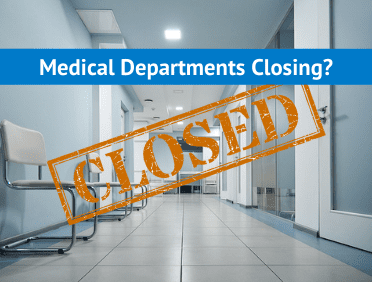
COVID-19 put hundreds more hospitals, nationwide, at risk for closure than were already identified pre-pandemic. As 30% of rural hospitals across the country (more than 600 facilities) are at risk of closing in the near future, many other hospitals and health systems are facing financial difficulties which has led to discontinuing certain specialty services. Beyond department and facility closings, industry consolidation through mergers and acquisitions (M&A) is expected to continue through 2030. If your organization is facing facility closures or an impending acquisition, there are steps to follow to ensure that patient, employee, and business records are retained in compliance with federal, state and condition-specific guidelines.

Join Fellow Healthcare IT Pros

Tips, Guides, News & More

Sign Me Up
departments-closing

The strain of COVID-19 is one of many reasons why medical departments in hundreds of at-risk hospitals, nationwide, have closed, moved or ended services. There also is a shift away from inpatient hospital stays toward alternative care settings that is contributing to the financial strain for health systems nationwide. As the industry shifts toward care delivery at home, virtually or in other outpatient settings, some providers are changing gears in terms of the services they offer or turning to merger and acquisition to be better equipped to meet the market demands. While the main drivers behind most shifts is finances, saving resources and focusing more on in-demand services is key.

At the time of a medical department or hospital closure or acquisition, one question is how to best retain access to patient, employee, and business records.

What are the record retention rules for protected health information (PHI) during a medical department or hospital closure?

HIPAA covered entities must keep EHR and other medical records that demonstrate compliance for at least six years. However, there may be additional state laws that expand medical retention requirements. During the record retention period, records within these guidelines must be available.

Best practices when a health facility, department or practice is being acquired or closing

AHIMA has detailed guidance to help walk through the general and state/license requirements, Medicare requirements, HITECH Act considerations, and specific facility guidance for a closure or acquisition.  The organization also recommends contacting professional associations including HIM associations, hospital associations, medical societies, and other associations in preparation for closure.

In terms of medical records management, AHIMA has guidance for what to do with medical records for healthcare providers who are working through plans to close or to acquire a new entity. This includes a recommendation that: If records are not transferred to another healthcare provider, records may be archived with a reputable commercial storage firm.

Harmony Healthcare IT provides Records Release services

While each hospital or medical practice closure is unique, our firm offers broad experience with more than 550 clinical and software brands that supports our ability to manage the future release of information of clinical, financial and business records. We work with clients of all sizes to provide data extraction, store historical records in an active archive, and monitor a web landing page where requestors can ask for a copy of their records.  Finally, we securely fulfill records requests for patients, employers and payers through a portal that contains a chain of custody audit trail.

Key considerations for planning for an upcoming closure or acquisition include:

  • Records management discussions – Talks should begin immediately upon consideration of closure or acquisition and involve the relevant departments within the organization (i.e., HIM, IT, legal, finance, etc.).
  • Long-term plan for medical records – There are many factors here, such as if the facility/department is closing or has been sold to another provider. If the records are not transferred to another healthcare provider, the records should become part of a documented, long-term archival plan. AHIMA provides a sample patient letter that explains where the records will be stored. It is important to follow the HIPAA definition of healthcare operations to ensure the applicable state and other federal laws are being followed and to determine if stricter requirements exist before transferring records.
  • Ensure planning for all media types – Planning for archiving and record retention needs to include an inventory and strategy to account for the various types of formats of the incoming information. Electronic information includes structured and unstructured data ranging from PDFs to video to diagnostic images – each requiring specific storage considerations. Plus, there will likely be a variety of EHRs, revenue cycle systems, and maybe even some historical paper records. HIM and IT teams need to collaborate during the acquisition and closure process.

Archiving provides easy access and usability while keeping legacy records secure and compliant

One of the most valuable steps for an organization that is involved in closing departments, facilities or acquiring new segments is to create a legacy data management plan. The data experts at Harmony Healthcare IT have put together a process that has helped hundreds of healthcare delivery organizations evaluate their legacy clinical, financial, HR, EHR and ERP system portfolio to create a Legacy Data Management Strategy that works. The process guides providers through a system inventory, financial forecast and system prioritization for decommissioning legacy systems enterprise-wide.

If you haven’t already invested in transferring legacy medical records into an active archive, now might be the time to investigate options.

Our team is ranked number one as the top Data Archiving, Data Extraction and Migration company according to Black Book Rankings, a division of Black Book Market Research. We’ve earned this ranking for four years in a row. It underscores our commitment and keeps patient, employee, and business records accessible, usable, interoperable, secure, and compliant.

Our team is ready to help secure your legacy data in the event of a medical department or hospital closure

Let’s connect.

Updated from a post that originally was published on Jan 05 2022

Updated from a post that originally was published on Jan 05 2022

Healthcare IT tips, guides, news & more delivered to your inbox

Learn More

Summary

While the 21st Century Cures Act has focused on requirements for providers to share clinical information, other records are included in the longer-range guidelines. Revenue cycle records that support increased transparency into the cost and outcomes of a patient’s care join the Cures Act requirements in late 2022. What does this mean for an organization’s data management strategy?

Join Fellow Healthcare IT Pros

Tips, Guides, News & More

Sign Me Up
rev Cycle records need a strategy

The health information included in the scope of the  21st Century Cures Act soon will expand to include a broader range of data, all aimed at helping patients gain easier and virtually unrestricted access to their complete record set. While current attention is focused on clinical data, other administrative/revenue cycle records are included in the longer-range Cures Act requirements.

From a revenue cycle perspective, the Cures Act seeks to ensure transparency into the cost and outcomes of a patient’s care and to provide competitive options in getting medical care. Revenue cycle records that contribute to the capture, management and collection of patient service revenue can include:

  • Registration – Informs the patient record demographic set up and scheduling.
  • Insurance Coverage – Indicates payer plan billing information with insurance versus patient financial responsibility.
  • Point of Service Collections – Shows co-pay and deductible information so patients know what their portion of the bill will be in advance of service.

Being prepared with a well-rounded active and legacy data Cures Act strategy is vital for the IT, HIM, and Revenue Cycle departments.

First, there are deadlines to plan ahead for:

One major deadline was Jan. 1, 2022, when Medicare Advantage plans, Medicaid and CHIP managed care plans, and QHPs became required to share patient data with other payers. Payers must respond to requests from a patient to share their data, up to five years after their coverage ends.

Then, on October 6, 2022, the definition of EHI expands beyond the USCDI to all ePHI that is in the designated record set under HIPAA. This includes some financial information. There are options for providers in how they deliver patient access to records if the information is retrievable.

Next up, the current date for Conditions of Certification for EHI export rollout is May 1, 2023.

New ways of doing business may require revenue cycle employee training.

To assist patients, revenue cycle staff may need training on how to navigate the patient portal or other tools/processes to access requested records. While revenue cycle staff members may not be answering clinical questions, they may need to know how to work with HIM to respond to record requests – or vice versa.

Legacy data may need to be a part of the Cures Act strategy.

The time span required to retain the majority of healthcare data is seven to 10 years — but it is often even longer. As records dating that far back may not be stored in the current electronic health record or revenue cycle software, there may be a need to consider an active archive to meet those requirements if one is not already in place. Records from various legacy systems can be consolidated and secured in a HIPAA-compliant active archive. An intuitive user interface enables workflows for clinical and financial information management so teams can easily access and release historical records.

To learn more, listen to this podcast “Six Phases of Data Life Cycle Solutions: Put Health Data Archives to Work for You.”  And, check out this eBook: How to Manage Legacy Data in the Age of Information Blocking to recognize how successful legacy data management will benefit patients and inform your team about staying compliant with information blocking mandates.

Ebook-Info-Blocking

There’s a lot of data to track and be prepared to potentially share within the guidelines of the 21st Century Cures Act.

Most healthcare delivery organizations have legacy systems that store data in a read-only format.  Many of those legacy systems are outdated, yet, they contain critical data.  That means that these legacy systems may be ripe for a better long-term data storage plan – and one that takes release of historical clinical and financial information into account for compliance with the Cures Act. The Harmony Healthcare IT team works with healthcare delivery organizations of all sizes to make sure data is available, reportable, researchable, and interoperable.

Our full-service legacy data management solutions: HealthData Archiver®, HealthData AR Manager®, and HealthData Locker are ready to help your team meet its best practices  goals for complete lifecycle data management. We’re proud to announce Black Book Rankings, a division of Black Book Market Research ranked Harmony Healthcare IT as the top Data Archiving, Data Extraction and Migration company for the third year running (2019-2021).

Are you looking for a strong data management partner to help your team with a long-term strategy?

Let’s connect.

Healthcare IT tips, guides, news & more delivered to your inbox

Learn More