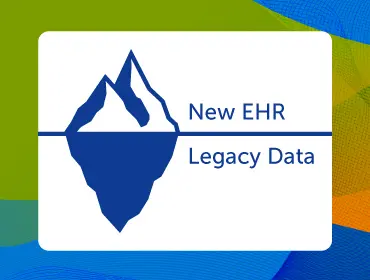
When planning an EHR migration, many project leaders focus primarily on the migration itself — extracting data, data analysis and modeling, data testing and validating, and data ingestion. While legacy data archiving typically gets some consideration, at some point, it does not always receive the strategic focus and planning it deserves at the outset.
This is a missed opportunity. In our experience supporting hundreds of data migration and archiving projects, we’ve found that organizations that experience the most successful and streamlined migrations treat legacy data archiving as a core component of their transition strategy from day one, not as a separate initiative to address later.
Legacy Data Archiving: The Problem with Waiting
When legacy data archiving is not part of decision-making at the start of migration projects, several challenges tend to emerge:
End-user confusion and frustration. Without a clearly defined archive solution, clinical staff, HIM teams, and other end-users can’t easily understand what the future state of data access will look like once they’re live on the new EHR. This can create anxiety during an already stressful transition.
Missed efficiency opportunities. When migrating and archiving efforts happen independently, organizations tend to duplicate work. Teams might make key decisions in isolation and create separate project plans that could have been coordinated and streamlined.
Delayed system decommissioning (and cost savings). Without an archiving plan in place, organizations often keep legacy systems running long after migration, continuing to pay maintenance fees and licensing costs that could have been eliminated.
Compliance and legal exposure. Unclear data retention strategies can create compliance risks and make it difficult to respond to requests for historical patient records.
The Benefits of Integrating Legacy Data Archiving into EHR Migration Planning
“Creating a strong legacy data archiving strategy early on in the project can provide significant benefits,” says Laurie Seall, VP of Operations at Harmony Healthcare IT. “It enables clarity around which data elements and years of historical data will be available in the new environment, and how full legacy data can be accessed through the archive.”
When archiving and migration efforts are executed in parallel, organizations gain several advantages:
- Streamlined workflows. Aligning key decisions and planning across both initiatives allows teams to reduce duplication and work more efficiently.
- Accelerated timelines to cost savings. Instead of waiting until after the migration to tackle archive planning, teams can get started sooner, which can help them get to decommissioning faster.
- More engaged stakeholders. When end-users understand from the beginning how they’ll access legacy data, they feel more confident about the transition.
- More complete data governance. Taking a holistic view of both migrations and archiving from the start can support more informed decisions about which data should be migrated, archived, or purged based on compliance requirements and clinical needs.
What IT Leaders Should Look for in a Migration Partner
Given the importance of integrating archiving into migration projects, hospitals and health systems should prioritize finding a partner that specializes in both areas, rather than engaging separate vendors for each initiative.
The right partner should help you:
- Create combined migration and archival goals with measurable success criteria
- Determine which data should be migrated to the new EHR, which should be archived, and what can be purged
- Develop compliant, secure, and accessible archiving processes that meet regulatory requirements
- Execute both your migration and archiving rollout efficiently
- Identify additional legacy systems beyond the primary EHR that could be decommissioned and integrated into the archive
“The migration partner should come in strategically and advise, ‘Here’s what’s worked well for others and here’s what we recommend for you,’” says Seall. “The best partners will combine previous experience with customized solutions for your unique circumstances.”
Key Considerations for Your Archiving Strategy
As you develop your archiving approach alongside your migration plan, it’s also crucial to consider the top capabilities you require in an archiving solution. These should include:
- Clinical workflow integration. Single Sign-On access from the new EHR to the archive is critical.
- Strong search and retrieval capabilities. This makes it easy for HIM teams to fulfill Release of Information requests.
- Dynamic A/R capabilities. Don’t overlook the financial data component. Your archiving strategy should address how billing and revenue cycle teams will access historical accounts receivable information. Harmony’s solution has a dynamic A/R component, so the legacy billing data can be brought into the archive and gradually run down — rather than having to keep the full Rev Cycle component separate (at a potentially high cost).
Making Archiving a Priority from Day One
The most successful EHR migration projects treat legacy data archiving as an essential component of the overall transition strategy, not a separate project to tackle later. By integrating archiving planning into your migration from the start, you’re more likely to experience better user adoption and a more streamlined and efficient process.
Planning an EHR migration? Reach out to learn how we can support an integrated migration and archiving strategy.
FAQs
Why should legacy data archiving be a priority during an EHR migration?
Legacy data archiving is essential because it directly impacts user experience, compliance, decommissioning timelines, and overall project success. When treated as a foundational part of the migration strategy, archiving helps eliminate future confusion, streamline workflows, and accelerate legacy system decommissioning and cost savings.
What happens if we wait to plan legacy data archiving until after the migration?
Delaying archive planning often leads to:
- End‑user confusion about where and how historical records will be accessed
- Duplicated work, as migration and archiving teams make decisions in silos
- Prolonged legacy system maintenance, delaying decommissioning and extending costs
How does planning for legacy data archiving early improve the EHR migration process?
When archiving and migration discussions run in parallel, organizations benefit from:
- Streamlined workflows and reduced duplication
- Better end‑user engagement because staff understand the future state from day one
- Improved data governance with clearer decisions on what to migrate, archive, or purge
This integrated approach sets clearer expectations and reduces project friction.
Why is it important to choose a partner that supports both EHR migrations and legacy data archiving?
Using separate vendors often leads to fragmented decisions, duplicated work, and inconsistent data strategies. A unified partner helps you:
- Set shared goals and success metrics
- Determine what to migrate, archive, or purge
- Build a compliant, secure archive
- Execute coordinated rollout plans
- Identify additional legacy systems that could also be decommissioned
This leads to a smoother transition and more holistic decision‑making.
What should an EHR migration partner provide to ensure legacy data archiving success?
There are several things to consider, but at a fundamental level, your partner should offer:
- Strategic guidance based on experience
- A combined migration + archive roadmap
- Expertise in clinical, financial, and operational data
- Strong security and regulatory compliance support
- Advice on best practices for your specific environment
- Support identifying additional systems that can be archived